Most storage conversations begin with the daily rhythm of the grid. Solar rises, peaks, and fades. Demand climbs in the evening. Batteries charge when power is abundant and discharge when the grid is tighter. That pattern matters, but it is not the whole storage problem. Some of the hardest grid questions stretch across days, weeks, and seasons. A calm winter spell can arrive when solar output is weak. A hot, still evening can push cooling demand higher after the sun drops. A rainy season can change hydropower. A drought can reduce water availability. A week of storms can damage lines while demand stays high.
Seasonal energy storage is the name people give to the longer version of moving energy through time. It does not mean one universal technology that fills in every gap from summer to winter. It means a planning problem: how can an electric system carry enough usable energy, capacity, and flexibility across long weather patterns without relying only on the easiest hours?
Daily storage and seasonal storage ask different questions
A four-hour battery can be extremely valuable. It can shift midday solar into the evening, respond quickly to disturbances, reduce peaks, and help avoid running expensive plants during brief tight periods. Grid Batteries and Long-Duration Storage explains why that flexibility is central to a cleaner grid. But a four-hour resource is not the same as stored energy for a long cold snap, a low-wind week, or a season when demand and renewable output do not line up neatly.
The difference is not only duration. It is also frequency. A daily battery may cycle often. A seasonal resource may sit ready for rare but important periods. That changes the economics, the operating strategy, and the way planners measure value. A storage system that saves the grid during a handful of difficult weeks may look idle much of the year, but those weeks can decide reliability. The same is true for some firm power plants, fuel reserves, and demand flexibility programs. Their value appears when the easy options are exhausted.
This is why Resource Adequacy is the right companion idea. Adequacy planning asks whether the grid has enough dependable options during stressful periods. Seasonal storage is one way to answer part of that question, but it has to be judged by what it can deliver during the hard pattern, not by how impressive it looks on an average day.
Weather is the calendar
Electricity planning used to rely on seasons in familiar ways. Summer air conditioning drove peaks in some regions. Winter heating drove peaks in others. Hydropower followed snowpack, rain, reservoir levels, and river rules. Fuel supply and plant maintenance had seasonal patterns. Those facts still matter, but a renewable-heavy grid makes weather shape both supply and demand more visibly.
Wind can be strong during one season and weak during another. Solar output changes with day length, cloud cover, snow, smoke, and sun angle. Heat pumps can increase winter electricity demand in colder regions. Cooling demand can rise during heat waves. Transmission can move energy between regions, but only when the lines exist and are not congested. Renewable Forecasting and Grid Operations covers the near-term operating forecast. Seasonal storage lives in the longer forecast, where planners ask what kinds of weather patterns deserve insurance.
No storage technology removes uncertainty. A reservoir can face drought. A fuel supply chain can be disrupted. A battery can be depleted by a previous event. A thermal store can lose heat over time. The honest seasonal question is not whether a resource is perfect. It is how a portfolio of imperfect resources behaves when weather stops being convenient.
Pumped water is old and still relevant
Pumped storage hydropower is one of the oldest large-scale storage tools. When electricity is abundant, water is pumped uphill. When electricity is needed, water runs back down through turbines. The basic idea is simple, but the practical requirements are demanding: elevation difference, water management, land, geology, transmission access, environmental review, community trust, and long project timelines.
Pumped Storage Hydropower explains the water-battery story in more detail. For seasonal questions, pumped storage can help when reservoirs are large enough and operating rules allow it, but not every project is seasonal. Many pumped hydro plants are better understood as daily or multi-day resources. They are still valuable, but planners should not casually assume that every water storage project can bridge an entire season.
The same humility applies to conventional hydropower reservoirs. They can provide enormous flexibility where geography supports them, but they also serve flood control, irrigation, ecology, recreation, drinking water, and navigation. Climate patterns can change inflows. A grid plan that leans on water must respect all of those competing uses.
Heat and cold can be stored too
Not every storage resource has to return electricity as electricity. Sometimes the useful stored product is heat or cold. A district energy system can make chilled water before a peak and use it later. A building can preheat or precool within comfort limits. An industrial site can store heat in solids, liquids, or thermal masses. A data center cooling system may have limited thermal inertia that helps during short events. Thermal Energy Storage covers these ideas as practical grid tools, not science fiction.
Thermal storage is especially useful because many loads ultimately need temperature, not electrons for their own sake. If a process needs heat tomorrow morning, storing heat may be more efficient than storing electricity, converting it to heat later, and losing energy along the way. If a building needs cooling during a hot afternoon, making some of that cooling earlier can reduce electric demand at the hardest hour.
Seasonal thermal storage is harder than daily thermal storage because heat leaks away and the storage volume can become large. Still, there are places where underground thermal storage, district heating, industrial heat buffers, or building-scale systems can reduce the amount of electric capacity needed at peak times. The point is not that thermal storage solves the whole grid. It is that storage should match the job. A heat problem may deserve a heat solution.
Molecules can carry energy across time
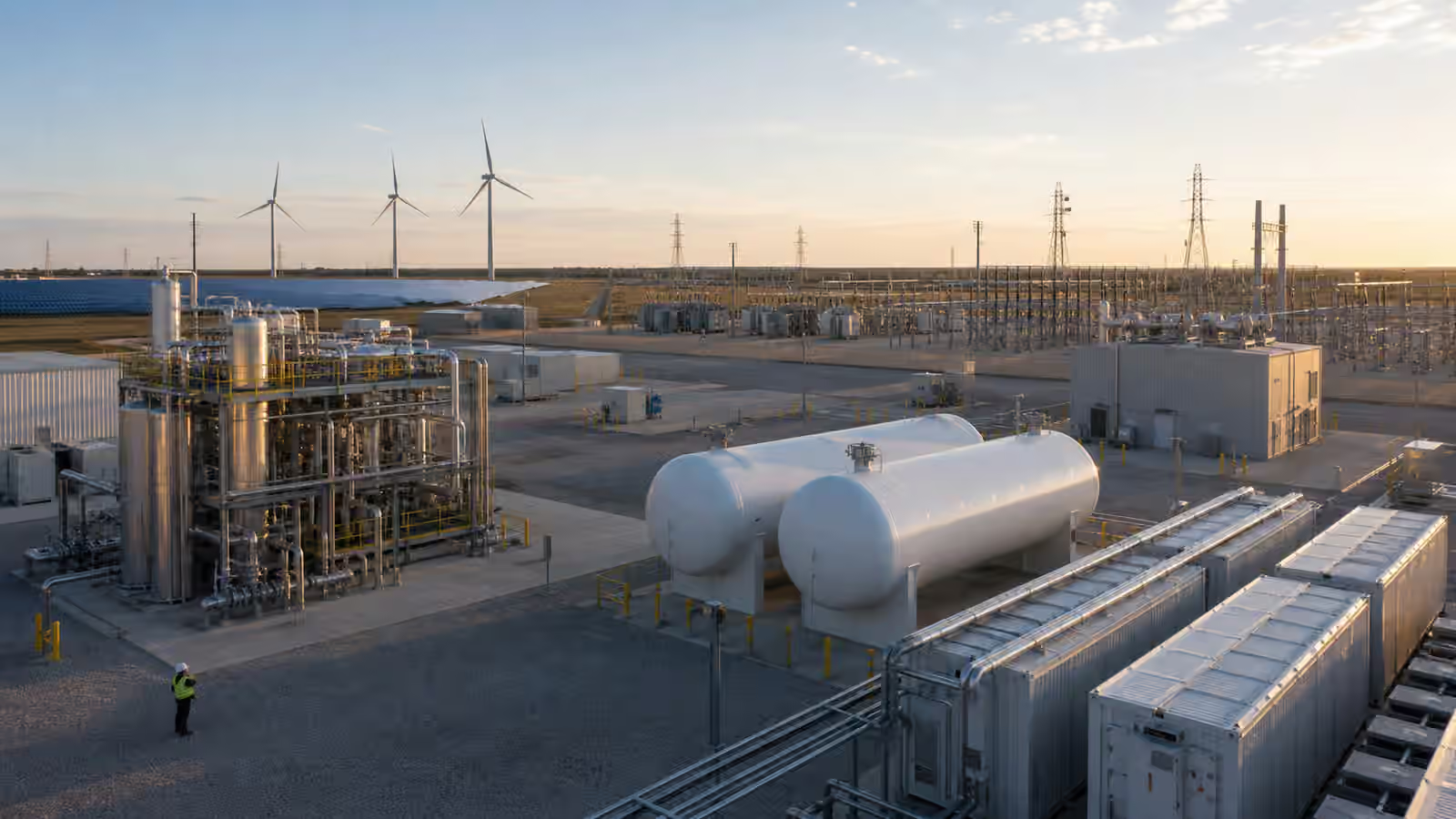
Clean fuels enter the seasonal storage conversation because molecules can sometimes store energy for longer periods than batteries at large scale. Hydrogen, ammonia, synthetic methane, biofuels, or other fuels may be produced when clean electricity or other low-carbon energy is abundant, stored, transported, and later used in turbines, engines, fuel cells, industrial processes, or backup systems. Clean Fuels for the Hardest Grid Hours explains why that possibility is appealing and why the supply chain matters.
The tradeoff is efficiency and complexity. Making a fuel from electricity, storing it, and turning it back into electricity usually loses a lot of energy compared with charging and discharging a battery. The equipment can be expensive. Storage caverns, pipelines, safety systems, water supply, emissions accounting, and end-use devices all matter. A clean fuel that exists only in a spreadsheet will not keep the grid reliable.
Even so, seasonal reliability may reward resources that are not used often. If the fuel sits for months and then runs during a long shortage, round-trip efficiency may not be the only measure of value. The better question is whether the fuel can be produced cleanly enough, stored safely, delivered reliably, and used at the exact times when other resources are scarce.
Transmission is a form of time help
Transmission does not store energy, but it can reduce the need for seasonal storage by connecting regions with different weather, demand, and resource patterns. Wind may be strong in one area while another is calm. Solar seasons differ by latitude and climate. Hydropower, geothermal, nuclear, and flexible demand may have different shapes across regions. Stronger ties let a grid borrow diversity instead of trying to solve every hard hour locally.
That does not make storage unnecessary. Lines can be congested, damaged, delayed, or politically difficult to build. But the interaction matters. A region with weak transmission may need more local storage and firm capacity. A region with stronger interregional ties may need less seasonal storage because it can share surplus and scarcity across a larger footprint. HVDC Transmission and Grid-Enhancing Technologies explain two ways planners try to make that movement more practical.
Curtailment is part of the same story. Curtailment describes what happens when clean power is available but cannot be moved, stored, or used. Seasonal storage can turn some surplus into later reliability, but only if the storage device, grid connection, and operating plan are ready when surplus appears.
The portfolio matters more than the label
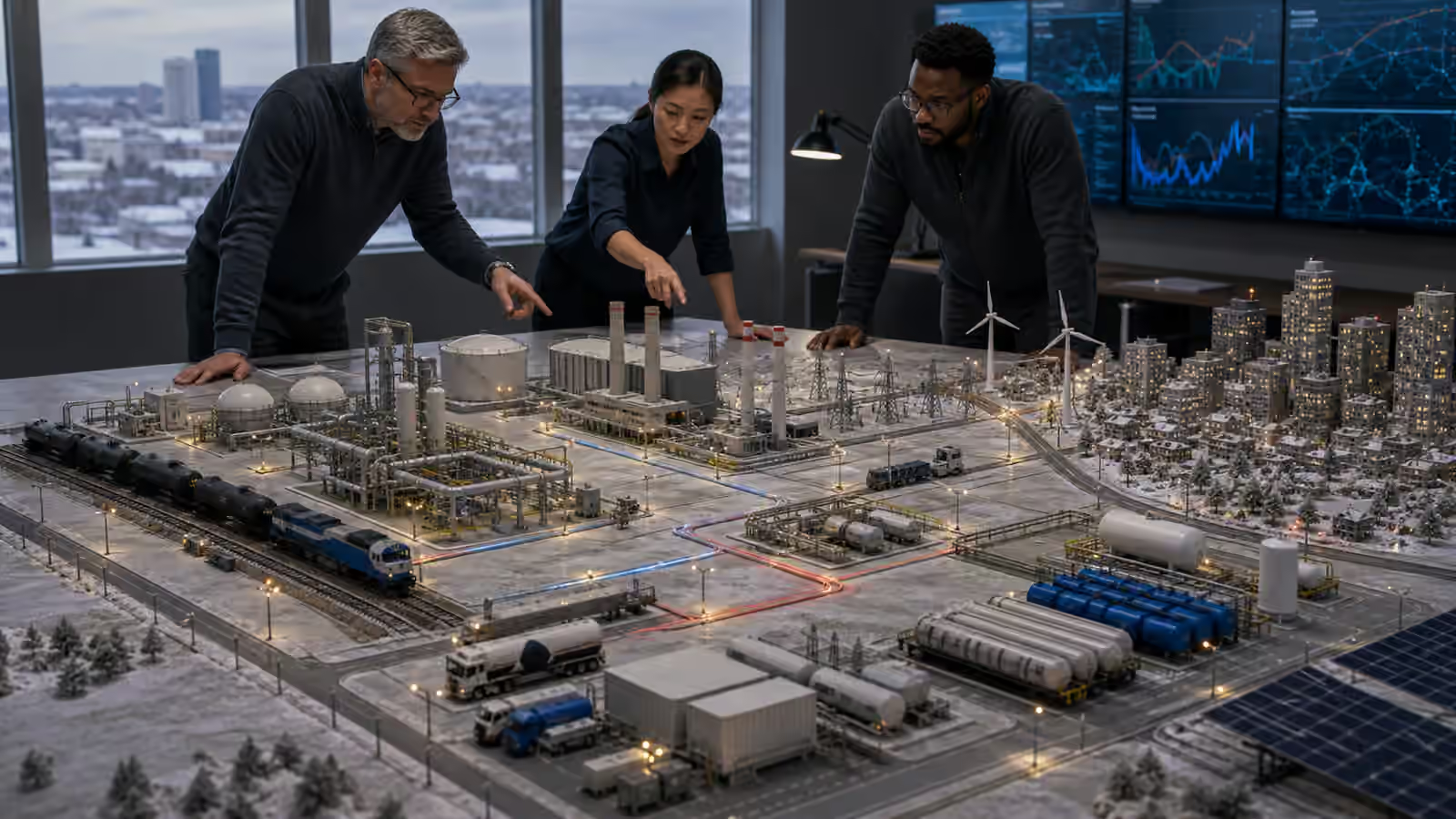
Seasonal storage can sound like a search for a single heroic answer. The more practical view is a portfolio. Short-duration batteries handle fast and daily needs. Pumped hydro and other long-duration systems cover longer gaps where geography and permitting allow. Thermal storage reduces electric peaks for heating and cooling. Clean fuels can provide rare but important backup if their supply chain is real. Demand flexibility can reduce the size of the problem. Transmission can move diversity across regions. Firm clean resources can reduce how much stored energy is needed in the first place.
The right mix depends on local weather, geology, existing infrastructure, load shape, industry, public acceptance, and planning discipline. A cold-region grid with winter heating growth faces a different seasonal problem from a hot-region grid with summer cooling peaks. An islanded system faces a different problem from a region with strong interties. A hydro-rich system faces different risks from a dry inland system with abundant solar.
For a normal reader, the useful habit is to ask about duration and pattern. How many hours must the resource cover? How often will that pattern appear? Can the resource recharge before the next event? Does it provide power, heat, fuel, or reduced demand? Can it reach the place where it is needed? Seasonal energy storage is not a slogan. It is the part of the future energy portfolio that admits the weather can stay inconvenient for longer than an evening.