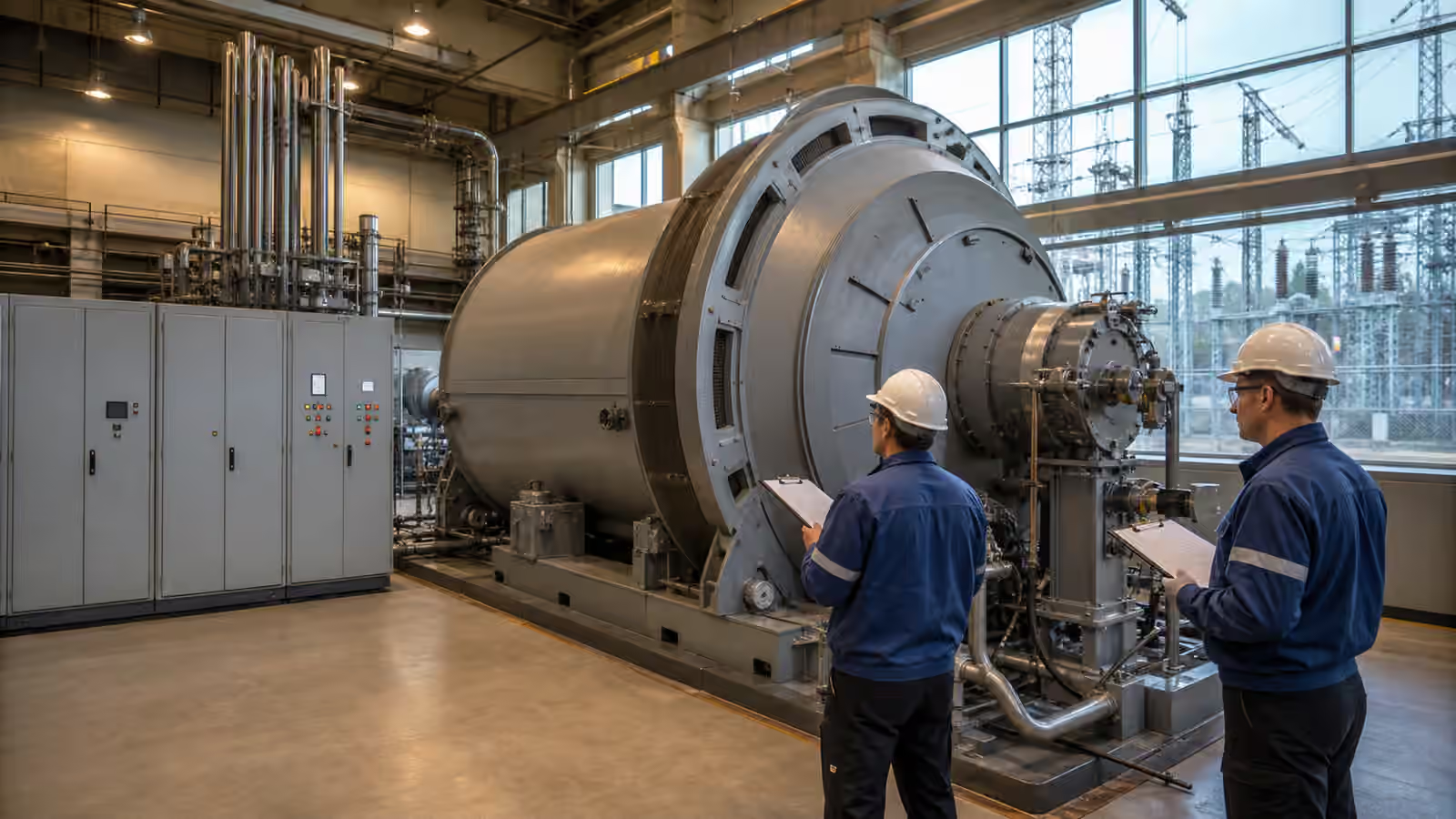
Electricity is useful only when it arrives in a form equipment can actually use. A light, motor, server rack, heat pump, charger, pump, furnace, or medical device does not merely ask for energy over the month. It expects voltage within a workable range, frequency close to its target, waveforms that are not badly distorted, protection equipment that behaves predictably, and enough local support that the grid does not sag every time a large load starts. Power quality is the name for that quieter part of the electricity story.
The broad balancing act is covered in The Electric Grid Is the Machine , where supply and demand have to match moment by moment. Power quality zooms closer. It asks what the electricity looks like at the socket, panel, substation, inverter terminal, motor control center, or data-center switchgear. A grid can have enough megawatt-hours and still make customers unhappy if voltage is poor, harmonics are high, or disturbances trip sensitive equipment.
This matters more as the grid fills with power electronics and large electric loads. Solar farms, batteries, wind turbines, data-center power supplies, variable-speed drives, EV chargers, electrolyzers, and modern industrial equipment all use converters that shape electricity through switching rather than through spinning metal alone. Those devices can be helpful and precise, but they also have to be designed, commissioned, and coordinated carefully. The future grid is not only a question of how clean the energy is. It is also a question of whether the electrical environment remains stable enough for everything connected to it.
Voltage is local
Voltage support is one of the easiest grid ideas to underestimate because people are used to outlets that simply work. Behind that ordinary experience is continuous control. Utilities use transformer taps, capacitor banks, voltage regulators, reactive power resources, inverter controls, and operating procedures to keep voltage within acceptable ranges across feeders, substations, and transmission paths. If voltage falls too low, motors may draw more current, equipment may misbehave, and the system can become harder to control. If voltage rises too high, insulation stress, nuisance trips, and equipment damage become concerns.
Voltage is also more local than energy. A region may have enough generation on paper while one feeder, substation, or industrial pocket struggles with voltage because of distance, equipment limits, reactive power needs, or a sudden change in load. That is why Distribution Grid Upgrades are not only about carrying more current. They are also about holding voltage steady across real neighborhoods where rooftop solar, EV charging, heat pumps, and older transformers share the same circuits.
Large loads make the local nature obvious. When a big motor starts, a fast charger ramps, or an industrial furnace changes operating mode, the electrical system nearby has to absorb the change. If the grid is strong at that location, the event may barely be noticed. If the grid is weak, lights can flicker, relays can operate, drives can trip, and customers may blame the new load even when the deeper problem is an undersized or poorly supported local network. Power quality is where growth becomes visible in small annoyances before it becomes visible as a larger reliability problem.
Reactive power is not optional
Reactive power is one of those phrases that makes electricity sound more mysterious than it needs to be. Many devices, especially motors and transformers, need electric and magnetic fields to operate. Those fields draw current that moves back and forth rather than delivering useful work in the same way as real power. The grid still has to supply and manage that current. If reactive power is short in the wrong place, voltage can sag even when enough real energy exists elsewhere.
This is why power factor matters for industrial customers and utilities. A factory full of motors, compressors, welders, pumps, or furnaces may need capacitors, filters, synchronous condensers, inverter support, or other equipment so it does not burden the local network with unnecessary reactive demand. The same principle applies at larger scale on transmission systems. Long lines, heavy transfers, and changing generation patterns all affect voltage control. A megawatt that cannot be delivered with adequate voltage support is less useful than it looks in a spreadsheet.
The hardware layer described in Transformers and Grid Hardware sits inside this problem. Transformers, cables, switchgear, breakers, instrument transformers, relays, and compensation equipment are not background scenery. They decide how the system behaves under load, during faults, and after disturbances. Clean energy policy can set goals, but voltage support is delivered by equipment installed in particular places and maintained by people who understand those places.
Harmonics come from shaped electricity
The ideal alternating-current waveform is smooth. Real grids are never perfect, but serious distortion can create trouble. Harmonics are extra frequency components riding on the normal waveform. They can heat transformers and cables, interfere with controls, stress capacitors, confuse protection systems, and shorten equipment life. They often appear when devices draw current in pulses rather than as a smooth sinusoidal shape.
Modern power electronics are not automatically a power-quality problem. Well-designed converters can filter harmonics, control reactive power, ride through disturbances, and respond faster than older equipment. Poorly specified or poorly coordinated equipment can do the opposite. A building packed with inexpensive drives, chargers, switch-mode power supplies, or noncompliant devices may create local distortion that nobody intended. An industrial site adding high-power electric heat or an electrolyzer may need harmonic studies before it connects. A data center may need careful coordination between uninterruptible power supplies, backup generation, switchgear, cooling loads, and utility protection.
That is the practical lesson from Data Center Microgrids . Reliability is not only a matter of having backup power. The local electrical system has to transition cleanly, operate within equipment limits, and avoid creating disturbances that damage its own loads or the neighboring grid. A battery, generator, inverter, or transfer switch can be valuable, but only if the controls and protection settings make the system behave predictably.
Inverters can support the grid when asked well
As solar, wind, and batteries grow, more electricity passes through inverters. Older grid practice leaned heavily on large spinning generators for inertia, fault current, and voltage behavior. Inverters behave differently because they are controlled by software and power electronics. That difference is not automatically bad. It means the desired behavior must be specified and tested rather than assumed.
Grid-Forming Inverters explains one important part of this shift. Some inverters can help establish voltage and frequency instead of merely following the grid. Even grid-following inverters can provide reactive power, voltage ride-through, frequency response, and fast controls when standards and interconnection rules require it. A battery inverter near a constrained substation may provide more than energy shifting. It may help stabilize voltage, manage local power flows, and improve resilience during disturbances.
The hard part is coordination. If every device reacts to a voltage dip in a conflicting way, the system may become unstable. If inverter settings are too conservative, many resources may trip offline during a disturbance, making the event worse. If settings are too permissive without proper protection, equipment may be exposed to unsafe conditions. The future grid needs cleaner resources, but it also needs clear technical rules for how those resources behave when the grid is stressed.
Industrial electrification raises the stakes
Power quality becomes especially important when fossil-fueled processes move to electricity. A heat pump in a home matters, but a large electric boiler, arc furnace, kiln, compressor station, cold-storage facility, or electrolyzer can create much larger local effects. These loads may ramp quickly, draw high current, require strict voltage stability, or produce harmonics that need filtering. The guide to Industrial Electrification explains why process heat is not one uniform load. Power quality adds another reason the factory and the grid have to be planned together.
The practical questions are specific. What happens when the largest motor starts? How fast does the load ramp? Does the facility need redundant feeds? Are harmonics within limits? Can the site’s drives ride through a brief voltage dip? Does the utility need new voltage regulators, capacitors, filters, or substation equipment? Are protection settings coordinated with customer equipment? These questions may sound narrow, but they decide whether electrification feels like a smooth upgrade or a source of recurring outages and complaints.
Power quality also affects flexibility. A factory may be willing to shift some load for Demand Response , but only if the shift does not create electrical stress inside the plant. Turning equipment on and off is not always harmless. Motors, heaters, compressors, and drives may have warm-up limits, cycling limits, process constraints, and power-quality effects. A flexible load is most useful when the grid program understands the machine, not just the meter.
The best fixes are usually planned early
Power quality problems are often cheaper to prevent than to diagnose after customers complain. A project can include studies for voltage drop, short-circuit duty, protection coordination, harmonics, flicker, grounding, and power factor before equipment arrives. Utilities can require interconnection tests and performance settings. Customers can choose drives, filters, transformers, and backup systems that match the site rather than relying on generic specifications. Engineers can model how a new facility behaves during normal operation, startup, faults, and recovery.
Early planning also makes public conversations more honest. A community hearing about a new data center, battery project, factory, charging depot, or substation may hear broad claims about clean energy and jobs. Those claims matter, but neighbors may experience the project through local reliability, noise, construction, flicker, outages, and whether utility bills or service quality change. The guide to Energy Permitting and Community Trust makes the broader point: infrastructure needs a public path. Power quality is part of that path because it turns engineering assumptions into daily experience.
None of this means future electric loads should be avoided. It means they should be connected with respect for the electrical system around them. Clean power still has to be stable power. A grid that can produce more low-carbon energy, move it through stronger wires, store it across difficult hours, and keep voltage and waveforms usable will feel ordinary in the best sense. The lights will not flicker, drives will not nuisance-trip, inverters will stay online through manageable disturbances, and large new loads will behave like planned parts of the system rather than surprises bolted onto it.
Power quality is therefore not a side topic. It is the texture of reliability. The future grid will be judged not only by annual energy charts or capacity totals, but by whether the electricity delivered to real equipment is steady, clean enough, and well controlled. That work happens in substations, panels, inverter firmware, protection settings, filters, transformers, studies, and maintenance routines. It is not flashy, but it is what makes electrification livable.