Power plants are often discussed by fuel, emissions, cost, or capacity. A quieter question sits underneath many of them: where does the heat go? Any plant that turns heat into electricity has to reject unused heat somewhere. That includes many nuclear, geothermal, biomass, gas, coal, concentrating solar thermal, and some industrial energy systems. Even a very efficient plant still has heat to manage.
Cooling water is one of the ways that heat leaves the plant. Depending on the design, water may pass through condensers, cooling towers, heat exchangers, ponds, or other systems that move heat from steam cycles and equipment into the environment. The details vary widely, but the reliability lesson is evergreen. A plant may have fuel and mechanical capacity, yet still be limited by cooling equipment, water availability, water temperature, environmental constraints, maintenance, or hot-weather performance.
The guide to data center cooling and water explains that computation becomes heat. Power plants make the same truth visible from the supply side. Electricity is not detached from thermodynamics. Heat rejection is part of the machine.
A thermal plant is also a cooling system
In a steam-cycle plant, heat creates steam, steam moves through a turbine, and the steam has to be condensed so the cycle can continue. The condenser and cooling system are not accessories. They shape efficiency, output, maintenance, and operating limits. If the cooling system cannot remove enough heat, the plant may have to reduce output or shut down even when the generator itself is available.
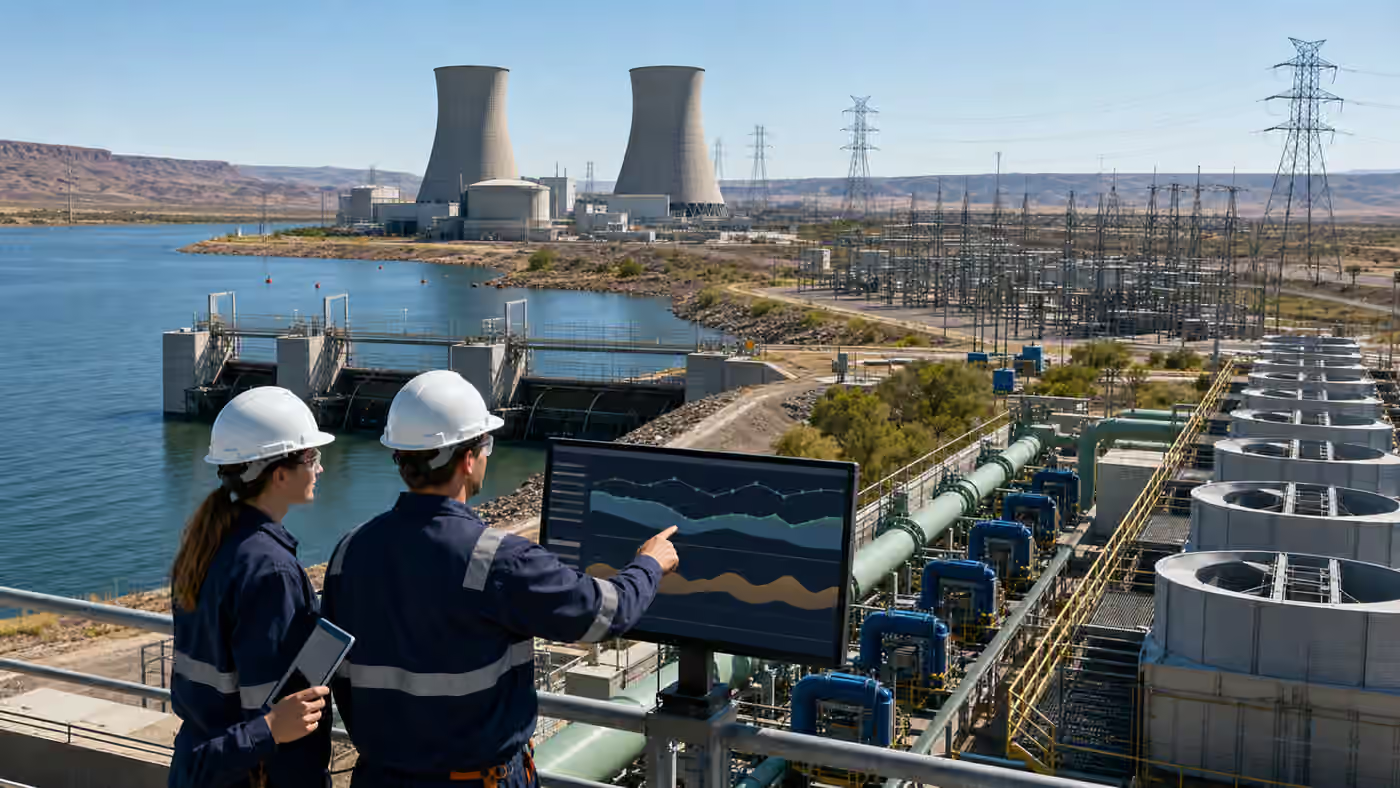
Different cooling designs carry different tradeoffs. Some systems draw water from a river, lake, reservoir, ocean, or other source, pass it through equipment, and return it warmer. Some use recirculating systems with cooling towers that evaporate a portion of the water to reject heat. Some use dry or hybrid cooling that relies more on air and less on water, often with different cost and performance characteristics. The point is not that one design is always best. The point is that cooling design affects reliability as much as it affects permitting and water use.
The guide to existing nuclear plants notes that refueling outages, safety oversight, lifetime planning, and local obligations matter. Cooling belongs in that same operational frame. A plant counted for firm capacity has to be able to run during the stressed hours when the grid needs it, and those stressed hours may include heat waves that challenge cooling performance.
Hot weather tightens both sides of the grid
Hot weather can raise electricity demand because air conditioning, refrigeration, pumping, and ventilation loads rise. At the same time, hot weather can reduce the output or efficiency of some power plants and transmission equipment. Water bodies may be warmer. Cooling towers may reject heat less effectively. Air-cooled equipment may operate with less margin. Workers may face stricter safety limits. The grid can therefore experience higher demand and weaker supply conditions in the same period.
This is one reason resource adequacy cannot rely only on nameplate capacity. A plant’s contribution during hard hours depends on its real operating limits under those conditions. If a unit is dependable in mild weather but derates during extreme heat, planners need to know that. If a plant’s cooling system is robust under the relevant conditions, that value should also be recognized.
Drought and low-flow conditions can add another layer. Some plants depend on enough water volume, enough intake depth, or acceptable discharge conditions. If water is scarce or warm, operation may be constrained. Local rules and environmental requirements vary, so a guidebook should not pretend there is one universal threshold. The evergreen planning point is simpler: cooling assumptions should be tested against the conditions under which the plant is expected to support reliability.
Cooling links generation to place
Cooling water is one of the reasons power plants are tied to specific sites. A plant may need a water source, intake structure, discharge path, cooling tower plume management, pumps, pipes, treatment systems, and enough land for equipment and maintenance. The water system also has neighbors: communities, ecosystems, other water users, flood exposure, drought exposure, and public expectations.
This makes cooling a siting and trust issue, not only a plant engineering issue. The guide to energy permitting and community trust applies here. People may support reliable low-carbon electricity while still asking how water is used, what happens during drought, how heat affects local conditions, and how the plant communicates abnormal operations. Those questions are not distractions. They are part of the physical project.
Cooling also affects future technologies. Advanced geothermal may produce heat steadily, but the surface plant still has to convert and reject heat. Clean fuel plants that burn hydrogen or other fuels for hard grid hours may need cooling systems if they use thermal cycles. Industrial waste heat projects may be useful when the temperature, timing, and nearby heat demand match. Heat is not only a byproduct. It is a system constraint that can sometimes become a resource.
Maintenance shows up in reliability
Cooling systems contain pumps, motors, fans, valves, screens, tubes, basins, water treatment, sensors, controls, and structures exposed to weather and chemistry. Fouling, scaling, corrosion, biological growth, debris, leaking tubes, failing pumps, and instrument problems can reduce performance. The plant may still look available in a capacity table while its cooling margin is narrowing.
The guide to grid maintenance and outage planning covers the broader habit of keeping reliability available between big projects. Cooling systems need that same discipline. Inspections, cleaning, water chemistry control, pump testing, spare parts, winterization or heat preparation, and planned outages all affect how much output the grid can count on later.
Maintenance timing matters because cooling work may require plant derates or outages. If many units need work before summer or winter peaks, outage coordination becomes a grid planning problem. If maintenance is deferred, the risk may appear later during a heat wave when output is most valuable. Reliability is often decided by unglamorous preparation.
Cooling choices interact with emissions and flexibility
Cooling design can shape how a plant operates. A plant with strong cooling performance may ramp or sustain output more confidently under certain conditions. A plant with limited cooling may need derates, operating restrictions, or more careful scheduling. If the plant is used mainly for rare firm capacity, the cooling system still has to be maintained and tested for those rare events.
The guide to firm power fuel logistics follows fuel from storage to delivery. Cooling is the other side of the same readiness question. A firm plant needs fuel, conversion equipment, grid connection, operators, maintenance, and heat rejection. Weakness in any one of those pieces can turn a dependable-looking resource into a constrained one.
Cooling also interacts with emissions strategy. A clean energy portfolio may keep some thermal plants for reliability while adding renewables, storage, demand response, transmission, and efficiency. Those thermal plants should not be counted casually. Planners need to know when they can run, how heat and water affect output, what maintenance they need, and whether alternative resources could reduce operation during the most constrained conditions.
Heat rejection belongs in the power plan
Cooling water is easy to overlook because it rarely appears in public debates as a headline technology. It is a support system, and support systems often become visible only when they fail. But a future grid that depends on firm resources, existing plants, advanced thermal technologies, and heat reuse needs to understand heat rejection clearly.
The useful habit is to ask practical questions. What cooling system does the plant use? What conditions reduce output? How does hot weather affect both demand and plant performance? What maintenance protects cooling capacity? How are drought, floods, debris, chemistry, and intake issues monitored? What happens if cooling equipment fails during a hard grid hour?
Powering tomorrow is partly a story about clean generation and smart demand. It is also a story about water, heat, equipment, and place. A grid that understands cooling constraints will plan firm capacity more honestly and operate thermal resources with fewer surprises.