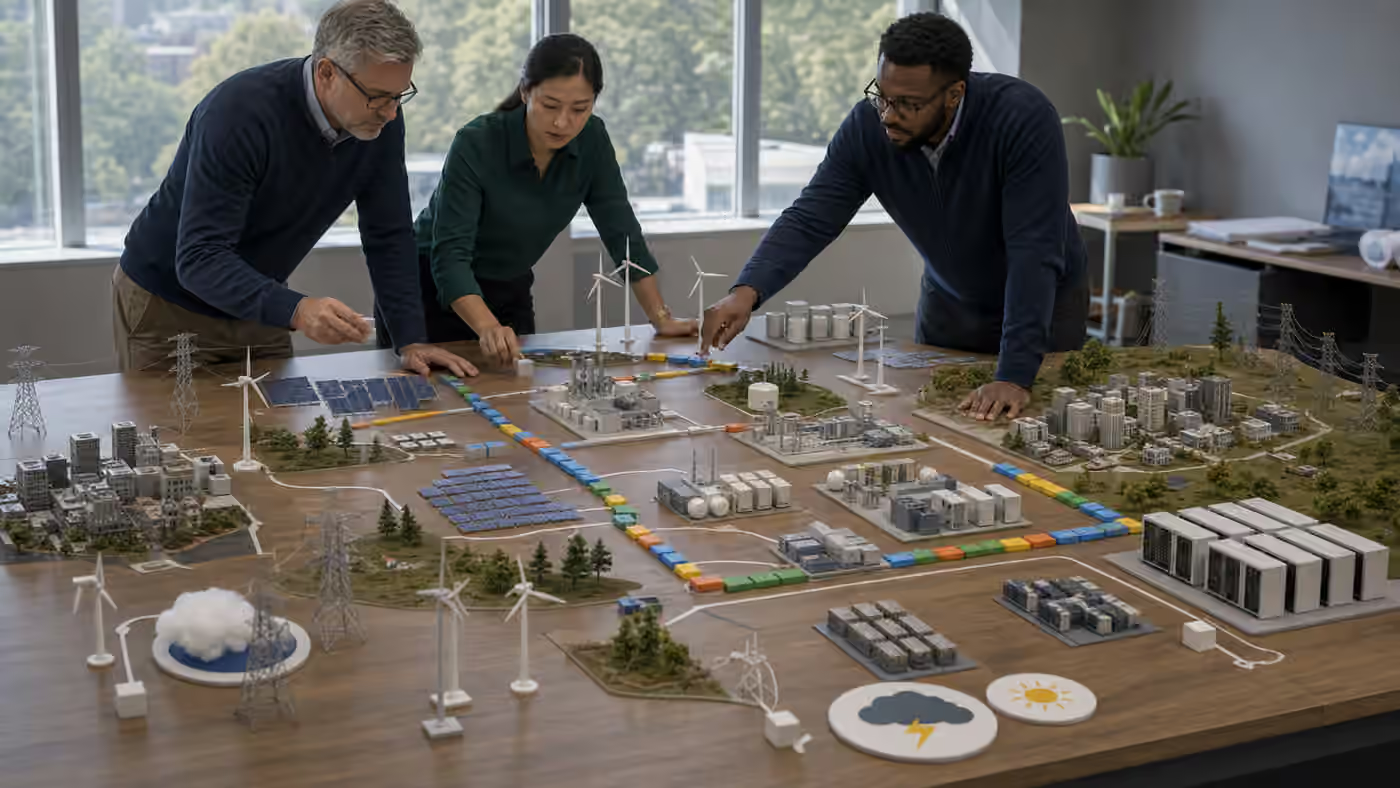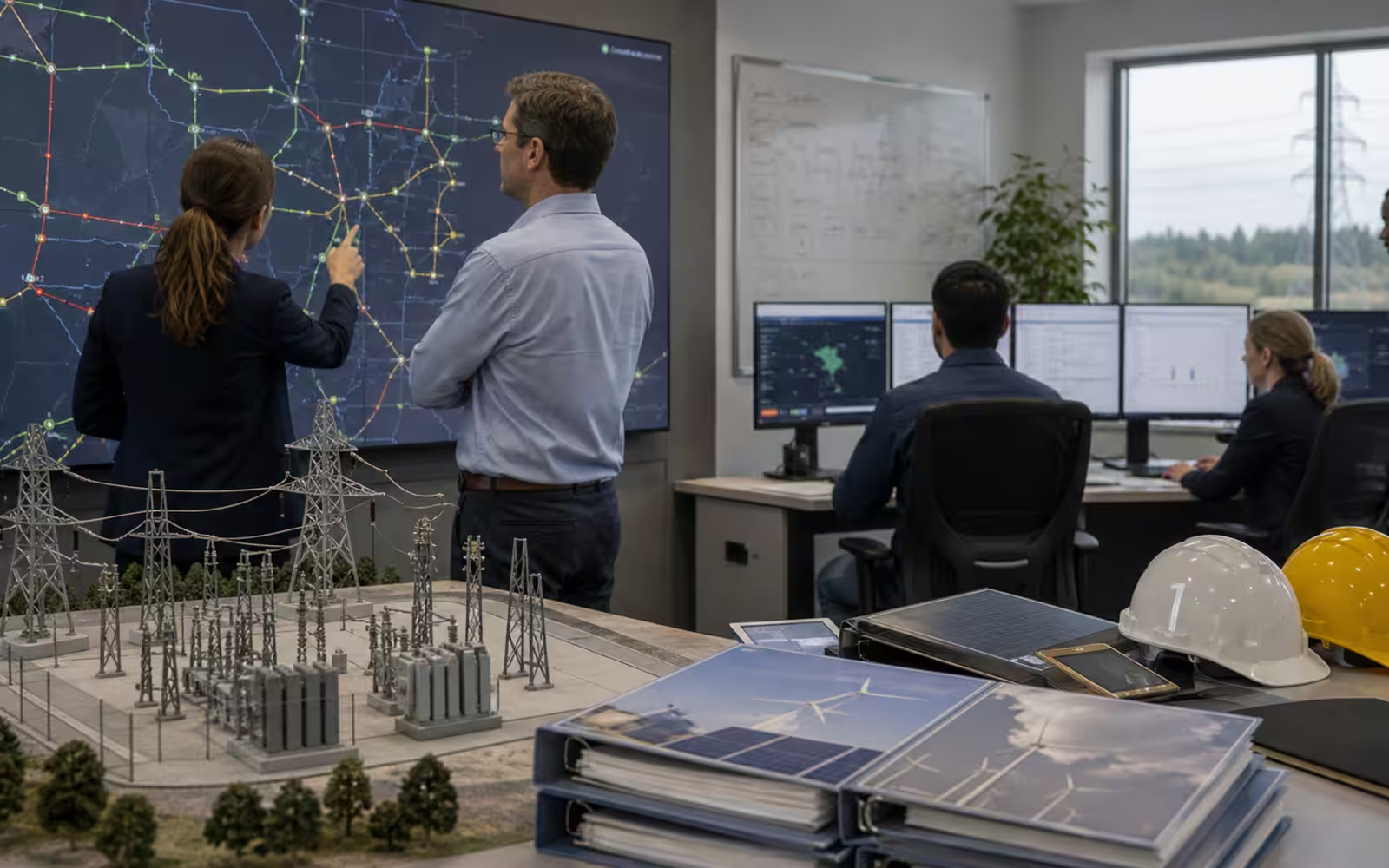
The strange thing about a new power plant is that finishing the project is not the same as joining the grid.
A developer can find land, secure financing, order solar panels or turbines, negotiate a power contract, and still spend years waiting for permission to connect. The project may exist on paper as a clean, useful source of electricity, but the grid is not a wall outlet. It is a synchronized machine with local constraints, regional rules, aging equipment, protection systems, power-flow limits, reliability obligations, and neighbors who are also trying to connect.
The interconnection queue is where those ambitions line up.
At first, the queue sounds like a waiting room. A project applies, waits its turn, receives a study, pays for upgrades, and connects. In practice, it is more like a crowded airport during a storm. Every departure depends on the runway, the weather, the control tower, the aircraft ahead, the maintenance crews, and routes that may already be full. A single large project can change the study assumptions for many others. A proposed transmission upgrade can shift the economics of an entire cluster. A project that looked easy last year can become hard after several neighbors apply nearby.
This is why interconnection has become one of the quiet bottlenecks of the energy transition.
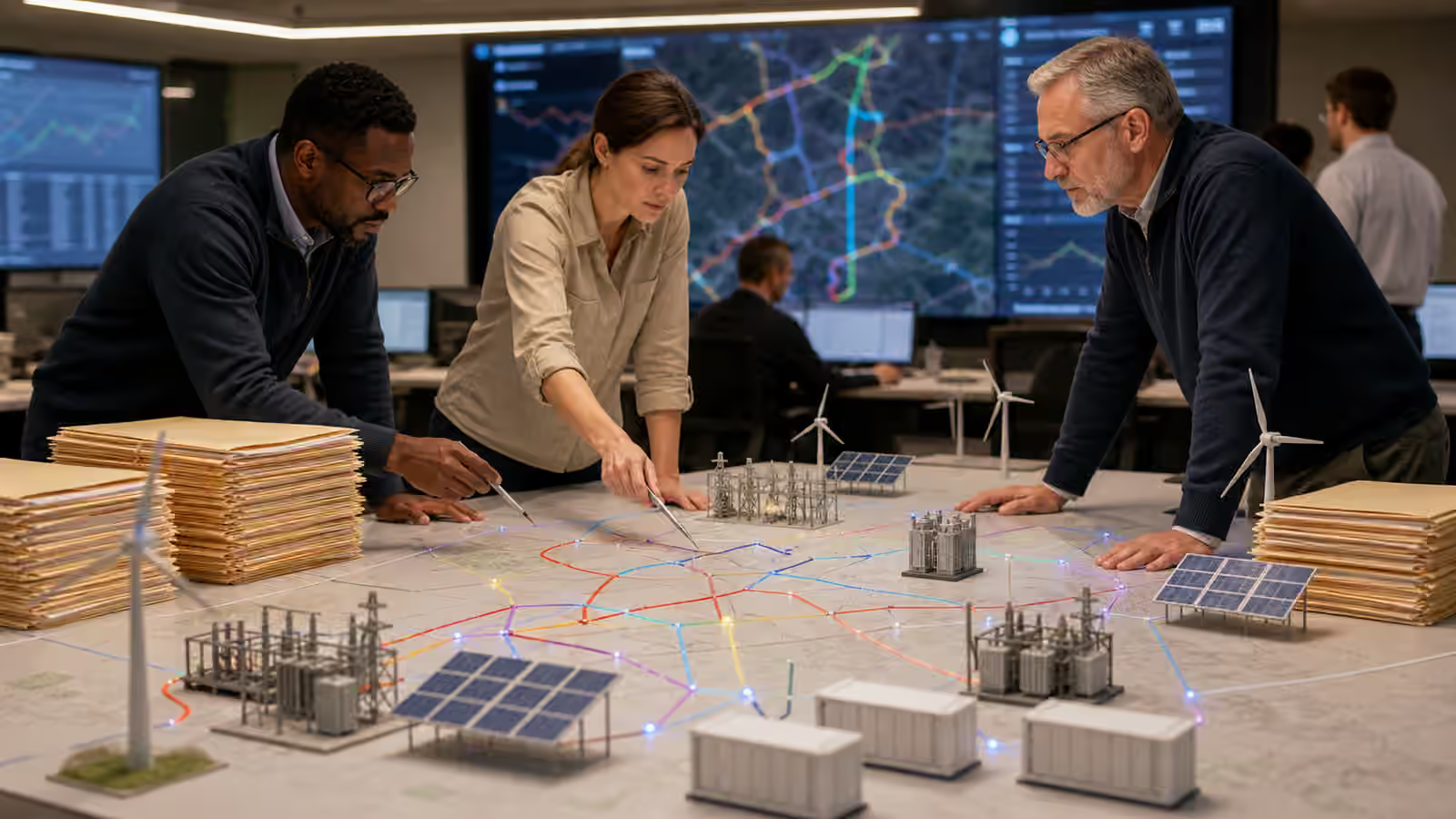
The Grid Has to Say More Than Yes
When a generator asks to connect, the grid operator or utility has to answer a harder question than whether there is physical space for wires. It has to study what happens when that generator produces power under different conditions. Does the local substation have capacity? Do nearby lines overload? Does voltage stay within limits? Do protection systems still trip correctly during faults? Does the project create reliability problems during peak load, light load, high wind, low solar, maintenance outages, or unexpected equipment failures?
Electricity follows physics, not contracts. If a solar farm injects power at one point, that power flows through the network according to impedance and grid conditions. It may relieve congestion in one hour and worsen it in another. A wind project may be valuable overall but require upgrades on a line miles away. A battery may help the system if controlled well, or create new peaks if it charges at the wrong time. The grid has to model these interactions before it accepts responsibility for them.
That study process is necessary. The alternative would be a grid where projects connect faster than engineers understand the consequences. Reliability would suffer, costs would be socialized unpredictably, and public trust would erode. The problem is not that interconnection studies exist. The problem is that the volume of projects, the complexity of the rules, and the shortage of transmission capacity have made the process slow, uncertain, and expensive.
The Queue Is Full of Hope and Attrition
Many projects enter queues. Far fewer get built. Some are speculative. Some are serious but depend on a contract they never win. Some cannot absorb the cost of required upgrades. Some lose land rights or financing while waiting. Some are overtaken by better-positioned projects. A queue can therefore look enormous without representing guaranteed future capacity.
This creates a painful loop. Because many projects drop out, developers may submit more applications than they expect to build. Because many applications arrive, studies become slower and more complex. Because studies are slow, projects face uncertainty. Because uncertainty is high, developers hedge with more options. The queue becomes both a planning tool and a symptom of mistrust.
Cluster studies try to improve this by studying groups of projects together rather than one at a time. The logic is sensible. If several solar, wind, storage, or hybrid projects want to connect in the same region, the grid can evaluate their combined impact and identify shared upgrades. But clustering also requires rules for cost allocation, withdrawal penalties, milestone discipline, and restudies when projects leave. The queue becomes less like a simple line and more like a moving puzzle.
Transmission Is the Long Shadow
Interconnection delays often point back to transmission. A region may have excellent wind or solar resources but weak lines to carry power to load centers. A developer may be ready to build generation faster than the system can build high-voltage capacity. Substations, transformers, breakers, conductors, rights-of-way, and permitting all move on infrastructure time.
Transmission is hard because it crosses land, jurisdictions, ecosystems, neighborhoods, and political boundaries. A line that benefits a regional grid may pass through communities that see few direct benefits. Permitting can take years. Cost allocation can become contentious. Even when everyone agrees that more transmission is needed in the abstract, individual projects face local objections, legal challenges, supply-chain constraints, and coordination problems.
The result is that generation development can sprint while transmission walks. Interconnection queues are where the sprint crashes into the walk.
Storage changes the picture but does not erase it. A battery can absorb excess local generation and discharge when lines are less congested. Hybrid solar-plus-storage projects can be more grid-friendly than standalone solar. But batteries still need interconnection rights, operational controls, and charging assumptions that make sense. They can reduce some upgrade needs and create others. The grid still has to study them.
Upgrade Costs Decide Projects
For a developer, the frightening part of interconnection is often the upgrade bill. A project may appear economically attractive until studies assign the cost of a substation expansion, line reconductoring, protection upgrades, or network reinforcements. Sometimes the assigned cost is manageable. Sometimes it destroys the project.
The fairness question is difficult. If one project triggers an upgrade that benefits later projects, should it pay alone? If many projects contribute to a constraint, how should costs be shared? If the grid needs a major regional upgrade anyway, should the first project in the queue carry the burden? If a speculative project causes expensive restudies and then withdraws, who pays for the wasted work?
These questions are not accounting trivia. They shape what gets built. A bad cost-allocation system can reward queue gamesmanship, punish early movers, delay useful upgrades, or strand good projects behind bad incentives.
The best reforms usually try to make projects more mature before they enter, study related projects together, assign costs more predictably, discourage withdrawals that harm others, and plan transmission proactively rather than waiting for each generator request to expose the same weakness again.
Why This Matters to Normal People
Interconnection queues sound like utility back-office procedure until you connect them to bills, reliability, and climate goals. If clean generation waits years to connect, the energy transition slows even when the technology is ready. If upgrades are planned poorly, customers can pay more than necessary. If the grid cannot add resources near growing demand, reliability margins tighten. If data centers, factories, heat pumps, electric vehicles, and electrified industry increase load, the connection process becomes more important, not less.
The public often hears about a new solar farm, wind project, nuclear proposal, geothermal pilot, or battery site as if construction is the main obstacle. Construction matters, but grid connection can be the deeper story. A project that cannot deliver electrons when and where the grid needs them remains a promise.
For readers, the useful habit is to ask a few grounded questions whenever a power project is announced. Has it secured interconnection? What upgrades are required? Who pays for them? Is the project in a congested region? Does the local grid need transmission, storage, flexible demand, or a different mix of resources? Is the announcement about capacity in a queue or capacity under construction?
Those questions make energy news less theatrical and more real.
The Future Is Built at the Connection Point
The energy transition is often described through technologies: solar panels, wind turbines, advanced geothermal, small modular reactors, long-duration storage, green hydrogen, virtual power plants, and smarter demand. But every technology eventually has to meet the same grid. It has to connect, operate, protect equipment, follow rules, and earn trust.
Interconnection is where ambition becomes engineering paperwork, and paperwork becomes physical upgrades. It is not glamorous, but it is one of the places where the future either speeds up or gets stuck.
The goal is not to remove friction from the process as if every project deserves instant approval. The grid needs rigor. The goal is to make the rigor faster, clearer, better planned, and less wasteful. A clean-energy project should wait because the grid is being protected, not because the system cannot process its own future.
Until that changes, many good projects will remain what they are today: ready to build, nearly useful, and still standing outside the gate.