
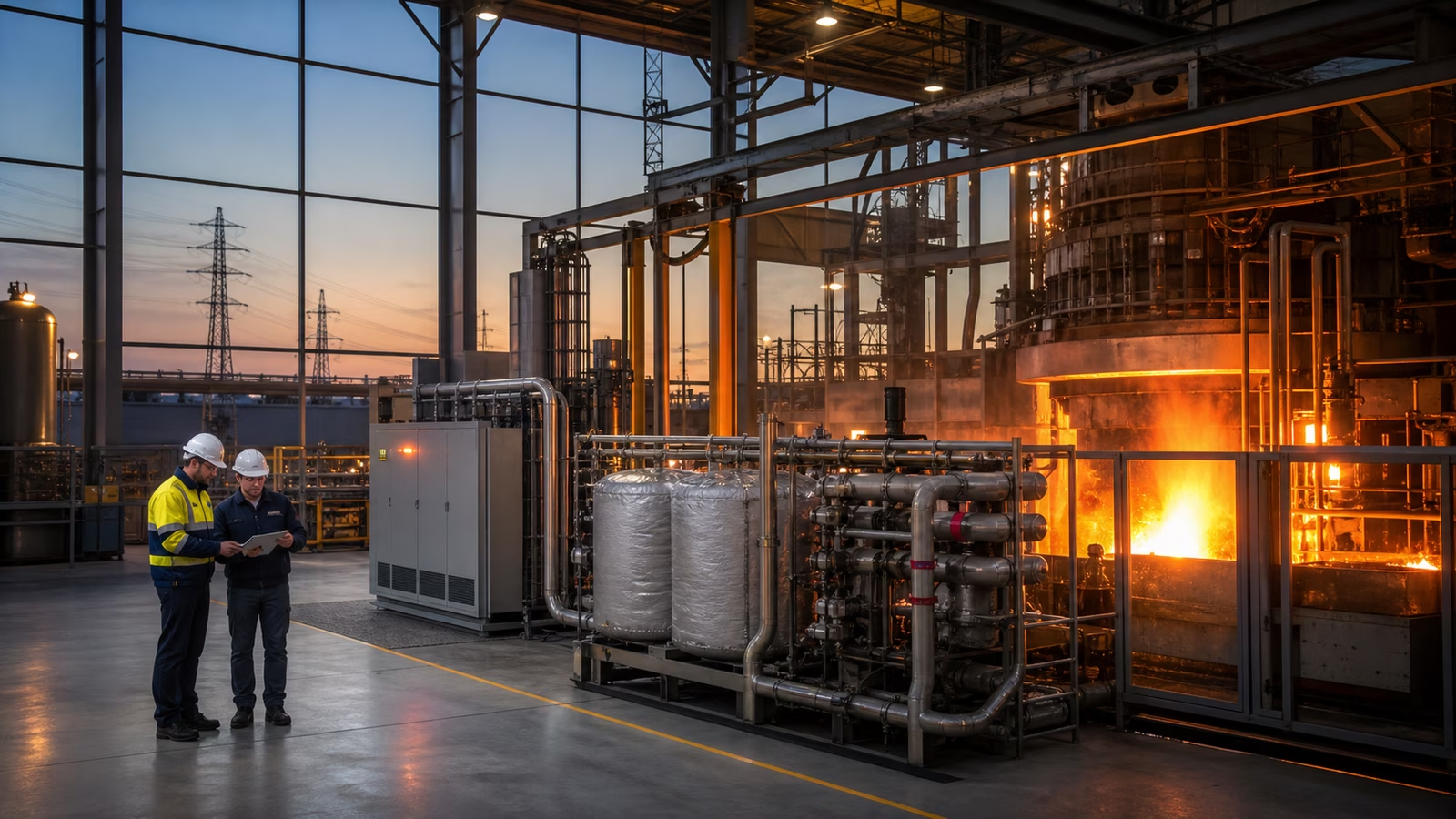
Electrification is often pictured through homes, cars, batteries, solar panels, and data centers. Industry is less tidy. A factory does not only need electricity for lights, motors, pumps, controls, and computers. It may need heat hot enough to dry paper, bake ceramics, melt metal, distill chemicals, cure materials, sterilize equipment, or keep a production line moving through narrow temperature windows. Replacing that heat is one of the hardest parts of powering tomorrow.
The basic idea sounds simple: use clean electricity instead of burning fuel on site. The details become complicated as soon as the word “process” enters the sentence. Industrial heat is not one uniform demand. A food plant, steel mill, glass furnace, data center cooling loop, paper dryer, refinery unit, district heating system, and pharmaceutical line all use heat differently. Some need warm water. Some need steam. Some need direct flame characteristics. Some need precise ramp rates. Some run continuously because stopping and restarting would damage equipment or ruin product quality.
That is why industrial electrification belongs beside the future energy portfolio rather than inside a simple slogan. It can reduce fuel combustion and make better use of clean power, but it also creates large, location-specific electric loads. The factory and the grid have to be designed as one connected system.
Temperature Decides the Tool
Low-temperature heat is often the easiest place to begin. Washing, drying, space heating, preheating, and many food or textile processes may need useful heat rather than extreme heat. Electric heat pumps can be powerful here because they move heat instead of creating all of it from electrical resistance. A well-matched heat pump can turn ambient heat, waste heat, groundwater, or a process stream into useful temperature lift. For a factory that rejects heat from one process while buying fuel for another, the first electrification opportunity may be better heat recovery rather than a larger power connection.
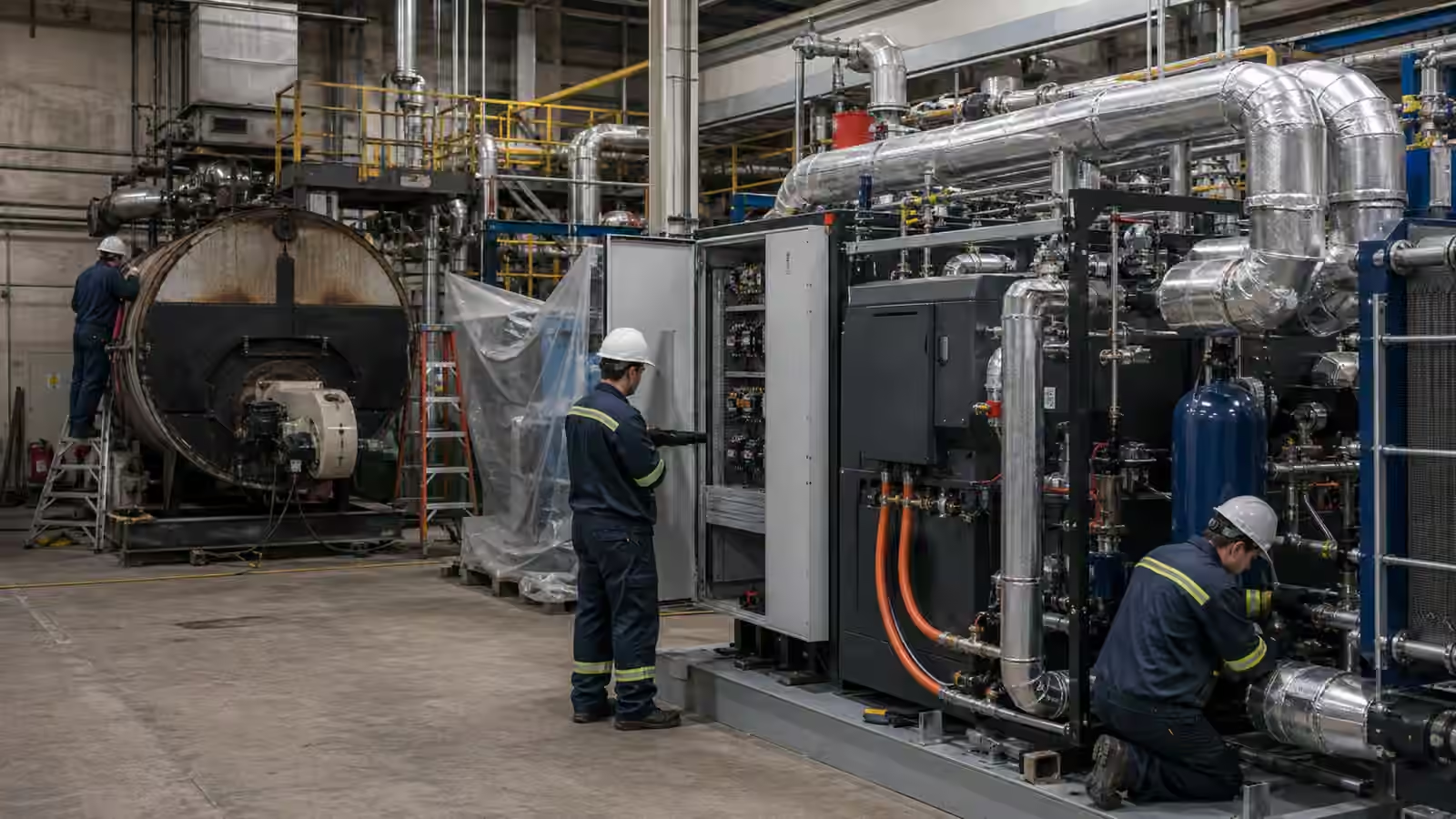
Medium-temperature processes are more mixed. Electric boilers, electrode boilers, resistance heating, induction systems, infrared heaters, microwave heating, and mechanical vapor recompression can all fit certain jobs. The right choice depends on the product, temperature, moisture, material geometry, cleaning requirements, control needs, and the cost of downtime. An electric boiler may be a straightforward replacement for some steam uses, but not for a process that needs direct combustion gases or a very specific flame pattern. Induction heating may be excellent for certain metals and poor for materials that do not respond well to electromagnetic fields.
High-temperature heat is where the problem becomes most visible. Melting steel, making glass, producing cement clinker, processing certain chemicals, or creating very high heat for refining can involve large continuous loads and equipment built around combustion. Some processes already use electricity, such as electric arc furnaces for steel recycling. Others are technically possible but require major redesign. The useful question is not “Can electricity make heat?” Electricity can make very hot heat. The useful question is whether an electric process can meet the product quality, throughput, reliability, maintenance, and cost requirements of the actual plant.
A Factory Load Has a Shape
The grid sees industrial electrification as load, but the load has shape. A batch process may spike when equipment starts. A continuous furnace may draw steady power for months. A cold-storage warehouse may have thermal inertia and can coast for a short time. A chemical process may be unsafe or uneconomic to interrupt abruptly. A plant may have seasonal production, maintenance outages, shift changes, or strict delivery contracts that shape when electricity is needed.
This is where industrial electrification connects to resource adequacy . A new electric furnace does not only add annual energy use. It may add demand during the same hard hours when the wider grid is stressed by heat, cold, low wind, low solar, generator outages, or transmission congestion. If the process cannot pause, the grid must plan dependable capacity around it. If the process can shift some heat production into easier hours, the same factory may become easier to serve.
Industrial flexibility is real but often narrower than outsiders imagine. A plant manager cannot casually stop a kiln if cooling too quickly damages refractory lining. A food processor cannot gamble with temperature control. A chemical batch cannot be interrupted because a grid chart would look better. Good flexibility starts with process knowledge. It asks which loads can move, how long they can move, what quality limits apply, and what compensation or operational value makes the change worthwhile.
That makes demand response more serious in industry than a simple curtailment button. The best programs understand the plant. They may preheat a thermal store, shift compressed-air production, schedule a batch, modulate refrigeration, or use on-site storage to reduce grid draw during a peak. The worst programs count imaginary flexibility and then fail when the hard hour arrives.
Heat Storage Can Decouple Power From Production
Thermal storage is one of the most practical bridges between clean electricity and industrial heat. Instead of using electricity at the exact moment a process needs heat, a plant can charge a thermal store when power is abundant or cheaper, then draw heat later. The store might be hot water, steam, molten salt, ceramic bricks, phase-change materials, heated rocks, or another medium matched to the temperature and process.
The value is not magic storage for every problem. It is decoupling. A factory that needs steady heat may not need steady electricity if it has enough thermal buffer and the process can accept that buffer. A plant can charge during solar-rich hours, avoid the evening peak, or ride through short grid events without shutting down production. Storage can also make an electric boiler or resistance heater more useful by turning a simple device into part of a controlled heat system.
This connects naturally to grid batteries and long-duration storage , but thermal storage is not the same as electrochemical storage. It may be cheaper for heat because it stores heat as heat instead of converting electricity into chemical energy and back into electricity. It may also be less flexible because stored heat is useful only where the temperature and process match. A hot brick store cannot power every machine in the plant. It can be excellent when the job is heat.
The Interconnection Is Part of the Project
A factory electrification plan can fail on ordinary grid hardware. The equipment inside the plant may be ready while the local substation, feeder, transformer, protection system, or transmission connection is not. A large electric boiler, furnace, electrolyzer, or heat pump installation may need service upgrades, redundant feeds, power quality studies, harmonic analysis, switchgear, metering, and construction windows. This is the same physical lesson from transformers and grid hardware , applied to a production site.
Industrial loads can also care about power quality in ways that ordinary consumers rarely see. Voltage sags, flicker, interruptions, harmonics, and restart behavior can affect equipment and product quality. A plant that electrifies heat may need power electronics, filters, protection coordination, backup systems, or on-site controls that keep sensitive processes stable. The grid connection is not a cord. It is a negotiated engineering boundary between a public network and a private production system.
Location matters too. Some industrial sites are near strong transmission, old power infrastructure, ports, rail, or existing substations. Others are in regions where the grid was never built for huge new electric heat loads. Transmission bottlenecks and local distribution limits can decide whether electrification happens quickly, slowly, or in stages. A project that looks clean on a slide can become difficult if the deliverable capacity is not there.
Clean Power Claims Need Time and Place
Industrial electrification reduces direct fuel use at the site, but the emissions story depends on what powers the new load. If a plant switches from a fuel-fired boiler to an electric boiler on a grid that is fossil-heavy during the relevant hours, the climate benefit may be smaller than expected. If the plant uses clean electricity during hours when clean supply is actually available, the case becomes stronger.
That is why hourly clean power matching matters beyond data centers. A factory may use much more energy during certain production runs or seasons. Annual clean-energy purchases can support new generation, but industrial heat consumes electricity in real time. The practical question is what resources serve the plant when the process needs heat, especially during the same hard hours that stress the grid.
Firm clean power can help. Advanced geothermal may be valuable where heat or electricity can be produced steadily near industrial demand, as the advanced geothermal guide explains. Small modular reactors are often discussed partly because some designs may provide both electricity and high-temperature heat, a possibility covered in the small modular nuclear reactors guide. Those options still face siting, cost, licensing, trust, and engineering questions. They are not shortcuts around the need to understand the process.
Electrification Starts With the Plant, Not the Press Release
The most credible industrial electrification projects begin with a heat map of the site. Engineers trace where heat is produced, where it is wasted, what temperatures are needed, what equipment is near end of life, what production lines can tolerate change, and what grid capacity is available. Sometimes the first answer is a heat pump. Sometimes it is insulation, heat recovery, better controls, or repairing steam leaks. Sometimes it is an electric furnace during a scheduled rebuild. Sometimes the honest answer is that a process needs more technology development before full electrification is practical.
This staged approach can sound less exciting than announcing a fully electric factory, but it is how industrial change often works. Plants are capital-intensive and risk-aware. A shutdown can cost more than the equipment being installed. Product quality has customers behind it. Maintenance crews need training. Spare parts matter. Operators must trust the new system at three in the morning when a sensor fails or a batch is drifting out of specification.
Industrial electrification matters because factories are where energy becomes materials, food, medicine, buildings, vehicles, and infrastructure. A future grid that only powers homes, cars, and servers is not a full energy transition. The hard heat of industry has to be part of the story. The right question is not whether factories should electrify all at once. It is which heat demands are ready, which need redesign, which need firm clean power, which can use thermal storage, and which grid upgrades must arrive before the equipment can run.
When those questions are answered honestly, industrial electrification becomes less like a slogan and more like engineering. It is pipes, furnaces, controls, substations, storage tanks, product trials, maintenance plans, and power contracts lined up in the right order. That is slower than a promise, but it is the path that can turn clean electricity into real industrial work.


