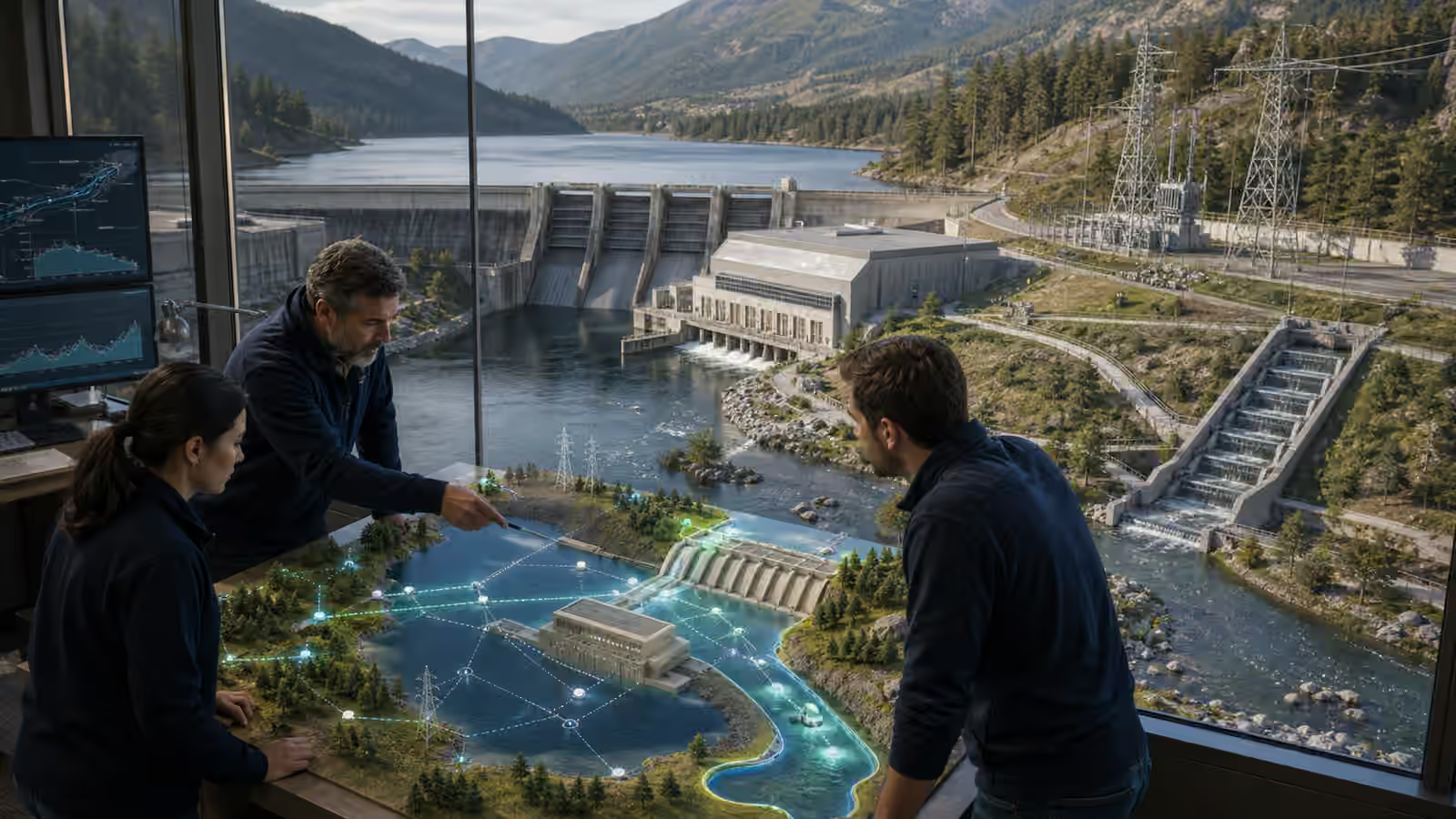
Hydropower is one of the oldest large-scale sources of electric power, which can make it seem like a settled topic. A dam, a reservoir, a powerhouse, turbines, and transmission lines do not carry the novelty of fusion, advanced geothermal, or grid-forming inverters. Yet existing hydropower remains one of the most important flexible resources on many power systems. Water can be stored, released, and shaped over time in ways that wind and solar cannot directly copy.
That does not make hydropower simple or universally expandable. Rivers are living systems. Dams affect fish, sediment, water temperature, recreation, flood control, irrigation, tribal rights, local communities, and downstream ecosystems. Some dams produce electricity. Many do not. Some are valuable infrastructure. Some are harmful or obsolete. The future hydropower question is therefore not “build dams everywhere.” It is how existing water infrastructure can be operated, upgraded, or retired with a clear view of grid value and river value at the same time.
The guide to pumped storage hydropower explains the water-battery version of the story. This guide looks at conventional hydropower modernization: the existing dams and powerhouses that may provide renewable energy, flexibility, reserves, and local reliability if their equipment and operating rules fit the changing grid.
Modernization often starts inside the powerhouse
Many hydropower improvements are not visually dramatic. A project may replace turbine runners, improve generator windings, upgrade controls, refurbish gates, reduce leakage, improve bearings, modernize protection systems, or add better monitoring. These changes can raise efficiency, improve reliability, reduce maintenance problems, and sometimes add capacity without changing the dam’s footprint.
Small percentage gains can matter because hydropower plants may run for decades. A more efficient turbine can produce more electricity from the same water. Better controls can help a plant respond more precisely to grid needs. Modern sensors can detect vibration, temperature, and equipment wear before a forced outage. Digital upgrades can make operations safer, but they also bring cybersecurity and training needs.
The guide to grid visibility and sensor telemetry has a parallel lesson. Better information lets operators use physical assets more intelligently. In hydropower, that information includes water levels, inflows, turbine conditions, ecological constraints, weather forecasts, and grid signals. The plant is both a power resource and a water-management facility.
Flexibility depends on water obligations
Hydropower can be flexible, but not every hydro plant can simply ramp whenever the grid wants. A reservoir may be managed for flood control, irrigation, drinking water, navigation, recreation, fish habitat, or seasonal water supply. Run-of-river plants may have limited storage and must pass water as it arrives. Environmental flow requirements may protect downstream ecosystems. Rapid changes in release can affect riverbanks, fish, recreation, and safety.
That means hydropower flexibility is constrained by water reality. A plant may be able to increase output during an evening peak, but only within operating limits. It may provide reserves, but not if doing so conflicts with river requirements. It may save water for later, but not if flood-control rules require reservoir space. A drought can reduce output precisely when the grid hopes for firm generation. A wet season can create surplus in a different pattern.
The guide to renewable forecasting and grid operations usually brings wind and solar to mind, but hydropower also depends on forecasts. Snowpack, rainfall, temperature, runoff timing, and drought all affect the resource. A future grid with more weather-dependent resources needs hydropower planning that understands water as part of the weather system, not as an infinite battery.
Environmental upgrades are part of modernization
Hydropower modernization should not be reduced to squeezing more megawatts from a river. Fish passage, improved screens, minimum flows, temperature management, sediment handling, safer recreation flows, and habitat restoration can be part of the project. Sometimes the best modernization is removing or bypassing a dam that provides little energy and causes large ecological harm. Other times, a valuable existing facility can be improved so it serves both grid and river needs better than before.
These choices are site-specific. A small dam with poor economics and high ecological impact is different from a large multipurpose reservoir that supports flood control and regional power. A tribal nation, fishing community, irrigation district, city water utility, recreation business, and grid operator may all see the same river differently. Credible planning has to let those views be part of the decision.
The guide to energy permitting and community trust applies strongly to hydropower because many dams sit in contested landscapes. Trust is not created by calling a project renewable. It is created by showing how water, power, ecology, safety, and community obligations are being handled.
Hydropower can support variable renewables
When hydropower has usable flexibility, it can pair well with wind and solar. It may reduce output when solar is abundant, then increase output in the evening. It may provide reserves when renewable forecasts are uncertain. It may help cover ramps, support voltage through its generators, and contribute to system inertia depending on the plant and grid. In some regions, hydropower is the backbone that makes higher renewable shares easier to operate.
That value should be measured carefully. If a hydro plant is forced to cycle more often, equipment wear may rise. If river flows change too quickly, downstream impacts may increase. If markets pay only for energy, the plant may not be compensated for flexibility or readiness. If transmission is constrained, hydro output may not reach the loads that need it. The guide to electricity markets and dispatch explains why operational value depends on rules as well as equipment.
Hydropower’s role can also shift with climate conditions. Earlier snowmelt, heavier storms, longer dry periods, or changing seasonal demand can alter when water is available. Modernization plans that assume the past will repeat exactly may underperform. A plant built for one operating pattern may need new rules, equipment, or expectations in a changing climate.
Existing sites are valuable, but not automatically expandable
Because building new dams can be environmentally and socially difficult, existing sites receive attention. Some non-powered dams may be candidates for adding generation. Some existing hydropower plants may be candidates for capacity uprates. Some pumped storage projects may use existing reservoirs or off-river closed-loop designs. These opportunities are real, but they are not universal.
A non-powered dam may lack enough flow or head to justify generation. Its nearby grid connection may be weak. Adding turbines may complicate water operations. A site that looks attractive on a map may be poor after engineering, ecology, and economics are considered. Conversely, a modest upgrade at an existing powerhouse may deliver dependable value with less conflict than a new project.
The practical path is comparative. Ask what grid service is needed, what water obligations exist, what upgrades are possible, and what alternatives could provide the same service. Batteries, demand response, transmission, geothermal, clean fuels, or efficiency might be better in one region. Hydropower modernization might be better in another.
Hydropower’s future is not a return to the dam-building era as a default answer. It is a careful reexamination of assets that already shape rivers and grids. Some should be improved. Some should operate differently. Some should be removed. The best projects respect both sides of the machine: electricity moving through wires and water moving through a landscape.