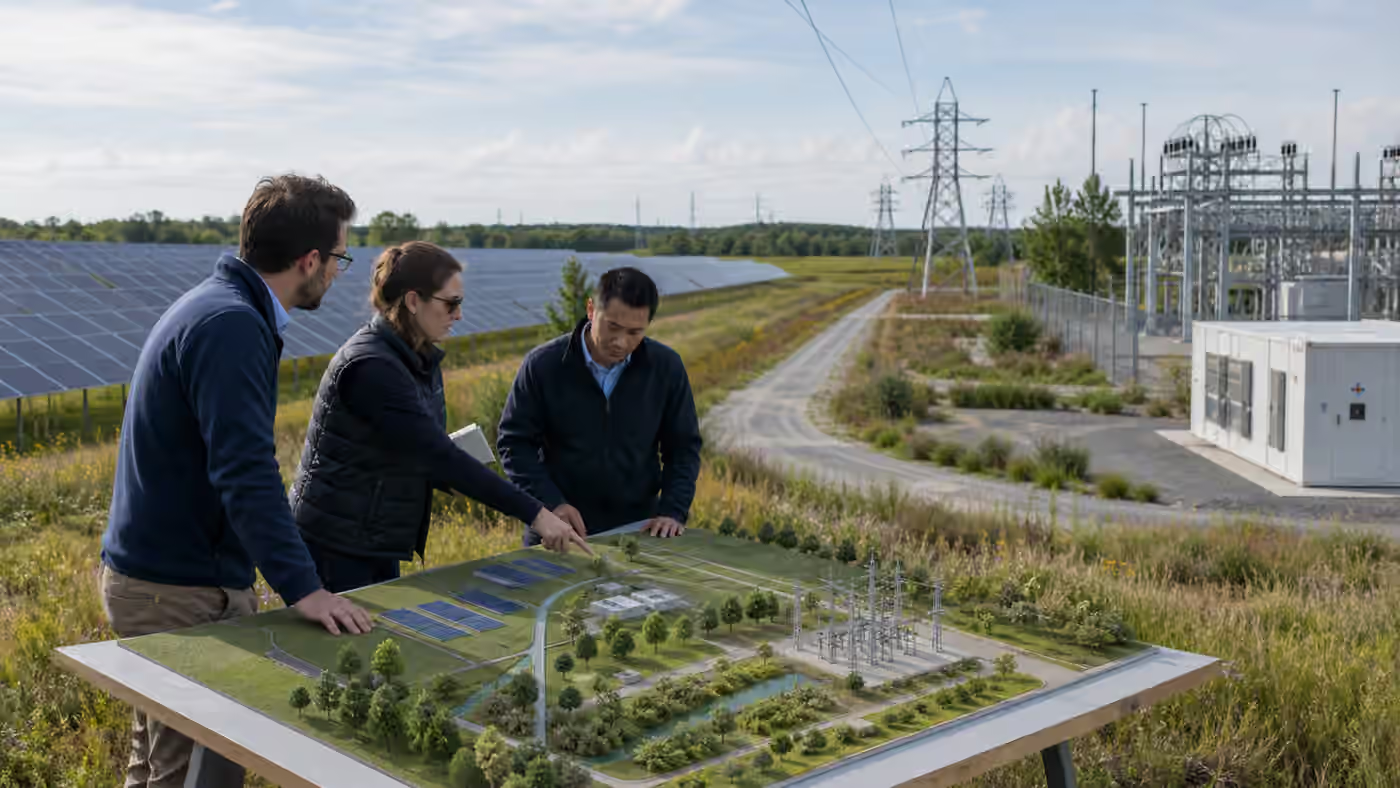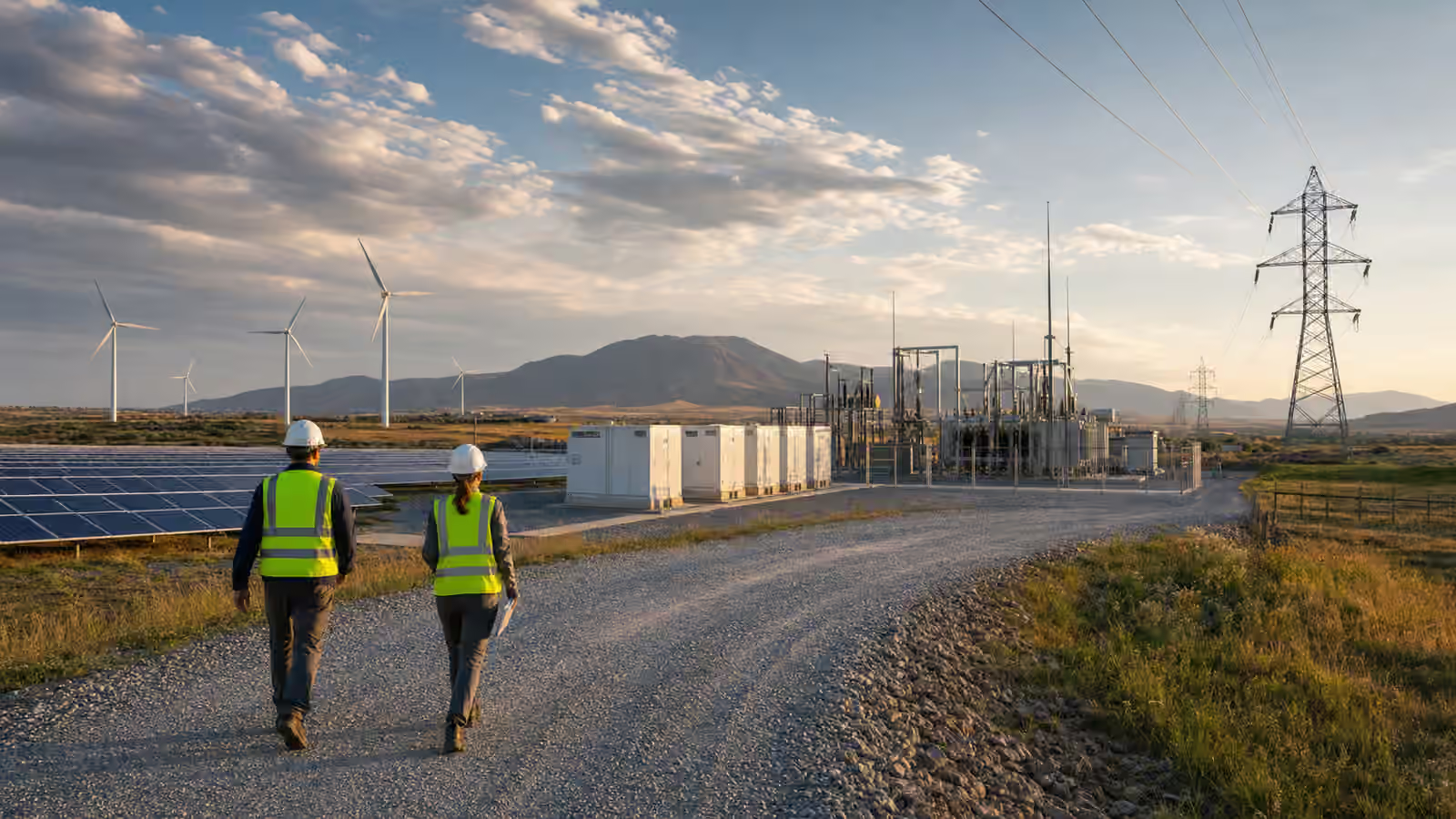
A renewable project is often described by its main resource: a solar farm, a wind plant, or a battery storage project. Increasingly, the more interesting project is a combination. Solar and batteries may share a substation. Wind and storage may use the same transmission path. Solar, wind, and batteries may be planned together so that the site produces a more useful output than any one resource would produce alone. These hybrid plants are not a separate miracle category. They are a practical response to timing, interconnection limits, land, equipment, and market rules.
The central idea is simple. If a grid connection is expensive and scarce, use it better. A solar plant may have its highest output at midday and little output at night. A wind plant may produce more during different hours. A battery can charge when the shared connection is not fully used and discharge when the grid values power more. Co-locating resources can reduce curtailment, smooth output, and make one interconnection serve more energy over time.
The guides to utility-scale solar and grid integration and onshore wind repowering and grid fit explain the resource-specific pieces. Hybrid plants ask how those pieces behave when they share land, controls, contracts, and a path to the grid.
The interconnection is often the scarce asset
Interconnection can take years, and network upgrades can decide whether a project is practical. Interconnection queues explains why projects wait, study, revise, and sometimes drop out. A hybrid plant can make the queue problem easier in some cases because it uses one studied point of interconnection for multiple resources. It can also make the study more complicated because the grid operator has to understand the combined operating modes.
A solar-plus-storage plant may request a grid export limit smaller than the sum of the solar panels and battery inverter capacity. That can be sensible if the battery charges from solar during hours when export would otherwise be clipped. A wind-plus-storage plant may use the battery to manage ramps or shift energy from lower-value hours. A solar-and-wind site may use complementary profiles to fill the same transmission path more often.
The detail that matters is deliverability. A project can install more equipment behind the fence than it is allowed to export to the grid, but the control system must respect the interconnection agreement. If solar output is high and the battery is full, the plant may still need to curtail. If the battery discharges while the renewable plant is producing, the combined export must stay within limits unless upgrades support more. Hybrid does not mean unlimited. It means coordinated.
Batteries change the value of variable generation
Batteries are often paired with solar because the daily pattern is visible. Solar output rises in the morning, peaks around midday, and falls toward evening. Many grids see higher value in the evening when solar fades and demand remains high. A battery can absorb some midday energy and discharge later, reducing curtailment and making the plant’s output better aligned with system needs.
Grid batteries and long-duration storage covers the broader storage role. In a hybrid plant, the battery’s job is partly shaped by the renewable resource beside it. It may smooth short fluctuations, reduce ramp rates, capture clipped energy, provide ancillary services, meet a contract delivery shape, or support local voltage. The same battery cannot do all of those jobs at full strength at the same time. Its state of charge, power rating, duration, degradation, and market commitments decide what it can actually provide.
Hybrid plants also expose a common misunderstanding. Adding a battery does not turn a solar plant into a firm power plant for every hard hour. A four-hour battery can be valuable, but it cannot cover a week of low renewable output. A battery charged from solar may have less energy after cloudy days. A plant designed for evening shifting may not be available for morning peaks. The value is real, but it has a duration and an operating strategy.
Shared controls are the heart of the plant
A hybrid plant is a power plant with multiple internal resources. It needs controls that decide when to charge, discharge, curtail, provide reactive power, respond to prices, follow dispatch instructions, and respect equipment limits. The plant controller has to coordinate inverters, battery management systems, weather forecasts, market schedules, telemetry, protection systems, and the interconnection meter.
This connects to renewable forecasting and grid operations . A hybrid operator needs to forecast solar, wind, battery state, and grid conditions together. If a storm front reduces solar but raises wind, the plant response may differ from a solar-only site. If the next evening peak is expected to be tight, the battery may conserve energy instead of chasing an earlier price. If the grid requests voltage support, inverter headroom matters.
The plant also needs clear responsibility. If one company owns the solar and another owns the battery, contracts must decide who controls charging priority, who gets revenue from ancillary services, who bears degradation costs, and who is responsible if the combined plant misses a delivery obligation. A hybrid plant can look physically simple from outside the fence while being commercially complicated inside it.
Curtailment can be reduced, not abolished
Curtailment happens when available clean power cannot be used in that hour because of demand, transmission, market, or reliability constraints. Hybrid plants can reduce curtailment by storing energy that would otherwise be turned down or by using complementary resources more efficiently. That is one of their strongest arguments.
The word “reduce” is important. A battery can fill. A shared interconnection can still bind. Transmission outside the plant can still be congested. Negative prices or dispatch instructions can still make output uneconomic. If a region builds many similar solar-plus-storage plants behind the same transmission bottleneck, they may all want to discharge during the same evening hours. The local constraint may move rather than disappear.
That is why hybrid projects still need transmission planning and cost allocation . A better plant behind the fence cannot replace every regional wire. It can make existing wires more useful, help projects move through constrained queues, and improve output shape. But if the region needs more transfer capacity, hybridization is a tool, not a substitute for planning.
Land and community questions do not vanish
Co-locating resources can reduce the need for separate sites, roads, substations, and transmission taps. That can be helpful. A solar plant with storage may use an existing fenced area. Repowered wind sites may add batteries near an existing substation. A hybrid site may concentrate maintenance access and reduce duplicate infrastructure. These are real benefits for land use and permitting.
They do not erase local concerns. Batteries bring fire planning, access lanes, emergency response, spacing, and operational trust, as the battery storage siting and safety guide explains. Solar arrays affect land, drainage, habitat, glare, and agricultural tradeoffs. Wind turbines raise questions about views, sound, roads, wildlife, and community benefits. A combined site may be easier to explain because the grid purpose is clearer, or harder to explain because more equipment arrives at once.
Energy permitting and community trust is therefore part of hybrid development. The public deserves a clear explanation of what is being built, why resources are combined, how the site will operate, what emergency plans exist, and how local impacts are handled. Hybrid should not become a label that hides details.
The best hybrid projects are designed around a job
A weak hybrid project begins with a spreadsheet that stacks revenue streams without deciding what the plant is mainly for. A stronger project starts with a job. It might reduce solar curtailment on a constrained line. It might deliver evening clean energy to a buyer. It might provide local voltage support and ramp control. It might use wind and solar profiles to increase utilization of a scarce interconnection. It might support resource adequacy during defined hours, with honest limits.
That job determines equipment sizing. A battery meant to capture clipped solar may be sized differently from one meant to provide firm evening delivery. A wind-solar hybrid needs a different forecast and controls strategy from solar-plus-storage. A project selling ancillary services needs telemetry and response testing. A plant built around a clean power contract needs an output shape that matches the contract language.
For a reader, the practical question is not “Is this a hybrid plant?” The sharper question is “What shared constraint is this combination solving?” If the answer is specific, a hybrid plant can make clean resources more useful and grid connections less wasteful. If the answer is only that several technologies sound better together, the grid will still judge the plant by its actual output, controls, interconnection limits, and performance during the hours that matter.