Power systems are planned around expected conditions, then judged during hard ones. A grid can look adequate in a normal forecast and still struggle during a heat wave, cold snap, wildfire, ice storm, flood, hurricane, drought, or equipment failure that arrives at the wrong time. Weatherization and resilience are the parts of grid planning that ask what happens when the ordinary assumptions stop being ordinary.
Weatherization means preparing equipment and operations for the conditions they may face. Resilience is broader. It includes the ability to withstand stress, limit damage, keep critical service going, restore power safely, and learn from the event before the next one. A resilient grid is not a grid that never fails. No large physical system can promise that. It is a grid designed so failures are less likely to cascade, recovery is faster, and the most important loads have credible plans.
The topic belongs beside Resource Adequacy because capacity planning and resilience planning answer different questions. Resource adequacy asks whether enough deliverable supply exists for difficult hours. Weatherization asks whether the equipment expected to deliver that supply can actually perform when heat, cold, fire, water, wind, or ice stresses it. A power plant, transformer, substation, pipeline, communications link, or control system that fails during the critical hour is not available in the way the spreadsheet hoped.
Heat stresses both demand and equipment
Heat waves are a double stress. Demand rises as air conditioners, chillers, pumps, and refrigeration systems work harder. At the same time, some grid equipment becomes less capable. Transmission lines can sag as they heat. Transformers run hotter. Power plants may face cooling limits. Batteries and inverters need thermal management. Workers face safety limits during field repairs. A hot evening after sunset can be especially hard because solar output fades while cooling demand remains high.
Resilience planning for heat begins before the emergency. Utilities can inspect and replace overloaded transformers, improve vegetation management, add sensors, use dynamic line ratings where appropriate, and plan operating reserves around realistic temperature patterns. Buildings can reduce peak demand through insulation, efficient cooling, shade, controls, and thermal storage. Demand response can help if it protects health and comfort rather than treating people as abstract load. Energy Efficiency and Load Shape is resilience work when it reduces the peak that equipment must carry during dangerous heat.
Heat also exposes inequality. A wealthy customer with efficient cooling, rooftop solar, a battery, and good insulation experiences an outage differently from a medically vulnerable person in a poorly insulated apartment. Grid resilience therefore cannot be measured only in megawatts restored. It has to consider which customers lose power, for how long, and with what consequences. Critical cooling centers, hospitals, water systems, communications, and emergency services need plans that do not depend on luck.
Cold snaps test fuel, equipment, and buildings
Cold weather stresses the grid in different ways. Heating load can rise quickly, especially in regions where electric resistance backup, heat pumps, or building leaks create high demand. Thermal plants may have trouble with frozen equipment, fuel supply, water systems, or instruments. Wind turbines, gas infrastructure, coal piles, sensors, and substations can all need cold-weather preparation. Solar output may be lower in winter, and storms can reduce visibility or cover panels.
Weatherization is practical work. It can mean heat tracing, insulation, enclosures, drainage, lubricants rated for low temperatures, wind protection, freeze protection for instruments, fuel assurance, spare parts, winter maintenance procedures, and operator training. None of that sounds as exciting as a new power plant, but a generator that cannot start because a sensor line froze does not help anyone. The future grid needs clean energy, but it also needs boring readiness.
Buildings matter here as much as power plants. A leaky building with poor insulation becomes a grid stressor during a cold snap. A well-sealed building with efficient equipment can stay comfortable with less power and can sometimes coast through short disturbances. Home Electrification and Grid Flexibility explains how small loads add up. In extreme cold, small inefficiencies add up too.
Fire, wind, water, and ice change the network
Some hazards attack the wires directly. Wildfire risk can force utilities to manage vegetation, inspect lines, harden poles, install covered conductors, sectionalize circuits, add weather stations, or shut off power under dangerous conditions. Hurricanes and windstorms can damage overhead lines, substations, poles, and communications. Floods can reach equipment that was safe under old assumptions. Ice can load conductors and trees until they fail.
Hardening is not one answer. Undergrounding can reduce wind and vegetation exposure, but it is expensive, slow, and not immune to flooding or repair delays. Covered conductors can reduce some ignition risks, but they are not magic. Microgrids can support critical facilities, but only if fuel, controls, islanding, protection, and maintenance are real. Batteries can help ride through short outages, but duration and recharge matter. Vegetation management can reduce risk, but it must be planned with ecology, property access, and community trust in mind.
This is why Energy Permitting and Community Trust is part of resilience. A utility trimming trees, rebuilding a line, siting a battery, or installing a new substation is changing places where people live. The work may be necessary, but residents will judge it through local impacts, communication, fairness, and whether past promises were kept. Resilience projects fail when they treat the public path as an afterthought.
Restoration is a design problem
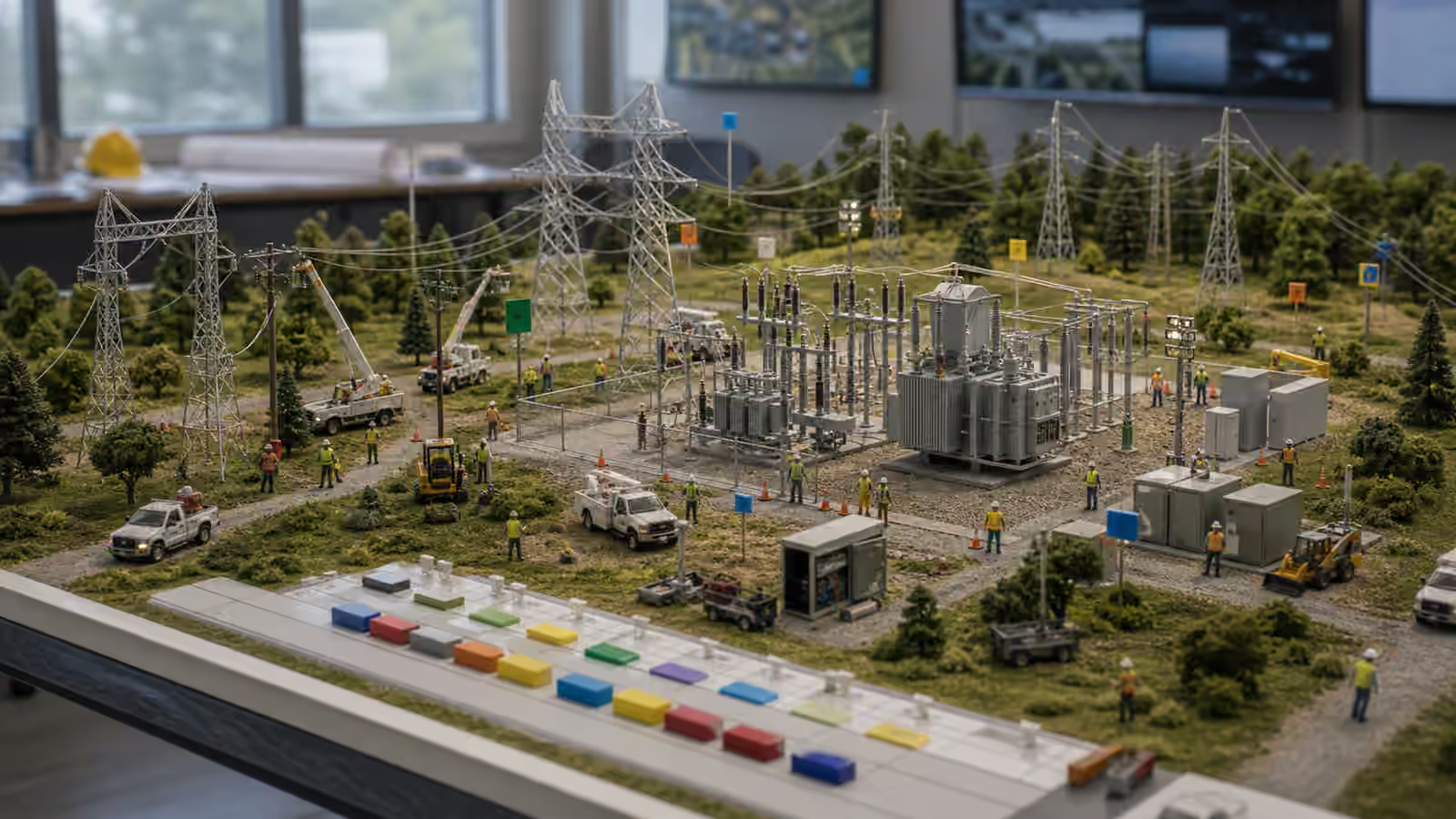
Outages are not over when the storm passes. Crews must inspect damage, isolate faults, repair equipment, re-energize lines, manage switching, coordinate with generators, and avoid creating new hazards. Restoration can be slow because the grid is physical. Roads may be blocked. Floodwater may remain. Fires may still be active. Replacement transformers or poles may not be nearby. Communications may fail. Workers may be moving through dangerous conditions.
The guide to Grid Restoration and Black Start explains the careful sequence of bringing power back after major outages. Weather resilience adds a field layer to that story. The restoration plan needs spare equipment, mutual-aid agreements, staging areas, crew training, maps, communications, damage prediction, and clear priorities for critical loads. A control-room plan that assumes roads are open and radios work may not match the event.
Modern sensors and analytics can help by locating faults, estimating damage, and prioritizing crews. But digital visibility must be backed by field capability. A dashboard does not replace a lineworker, a spare transformer, or a safe switching procedure. Resilience is the combination of information, hardware, people, and practice.
Distributed resources can help if they are coordinated
Rooftop solar, batteries, electric vehicles, building controls, and community microgrids can support resilience, but only when designed around real outage behavior. A solar array without islanding capability may shut down during an outage to protect workers. A battery without enough reserve may be empty when needed. An EV can provide backup only if the vehicle, charger, building wiring, controls, and customer needs allow it. A microgrid has to separate safely from the grid and reconnect without causing trouble.
That does not make distributed resources weak. It means they need honest design. Virtual Power Plants describes how many small devices can act as a grid resource during normal operations. Resilience asks whether some of those devices can also support customers or critical facilities during abnormal operations. The answer depends on local circuits, protection settings, communications, ownership, maintenance, and customer consent.
Critical facilities deserve special attention. Hospitals, shelters, water and wastewater plants, emergency communications, fuel stations, grocery distribution, and cooling centers may need more than ordinary backup. A generator that has not been tested, a battery that cannot support the required load, or a fuel contract that fails during a regional emergency can create false confidence. Resilience planning should test the chain, not just own equipment.
Resilience should be measured by recovery
The most useful resilience metrics look beyond whether the lights are on in a normal hour. They ask how often customers lose power, how long restoration takes, which critical loads are protected, how equipment performs during extremes, whether outages cluster among vulnerable customers, and whether the system learns after events. They also ask whether investments reduce expected harm enough to justify their cost and disruption.
This is difficult because resilience value is partly about avoided damage. A line that does not fail during a storm rarely makes news. A transformer replaced before it overloads looks ordinary. A building efficiency program that lowers peak demand during a heat wave may prevent an emergency that no one can easily prove would have happened. Good planning still has to value prevention, even when prevention is quiet.
Future grids will carry more of society’s essential work: transportation, heating, cooling, communications, industry, water, and computing. That makes resilience more important, not less. More clean energy does not remove the need for hardened substations, trained crews, spare equipment, weather-aware operations, flexible demand, and honest emergency planning. The energy transition succeeds only if the physical system can live in the weather it actually faces.
Weatherization is the unglamorous promise behind reliable power. It says the grid should not be designed for a mild average day alone. It should be prepared for the difficult week, the damaged circuit, the cold morning, the hot evening, the flooded yard, the smoky horizon, and the slow restoration shift after midnight. The work is specific, local, and often expensive. It is also the difference between a future grid that looks impressive in plans and one that keeps serving people when conditions turn hard.