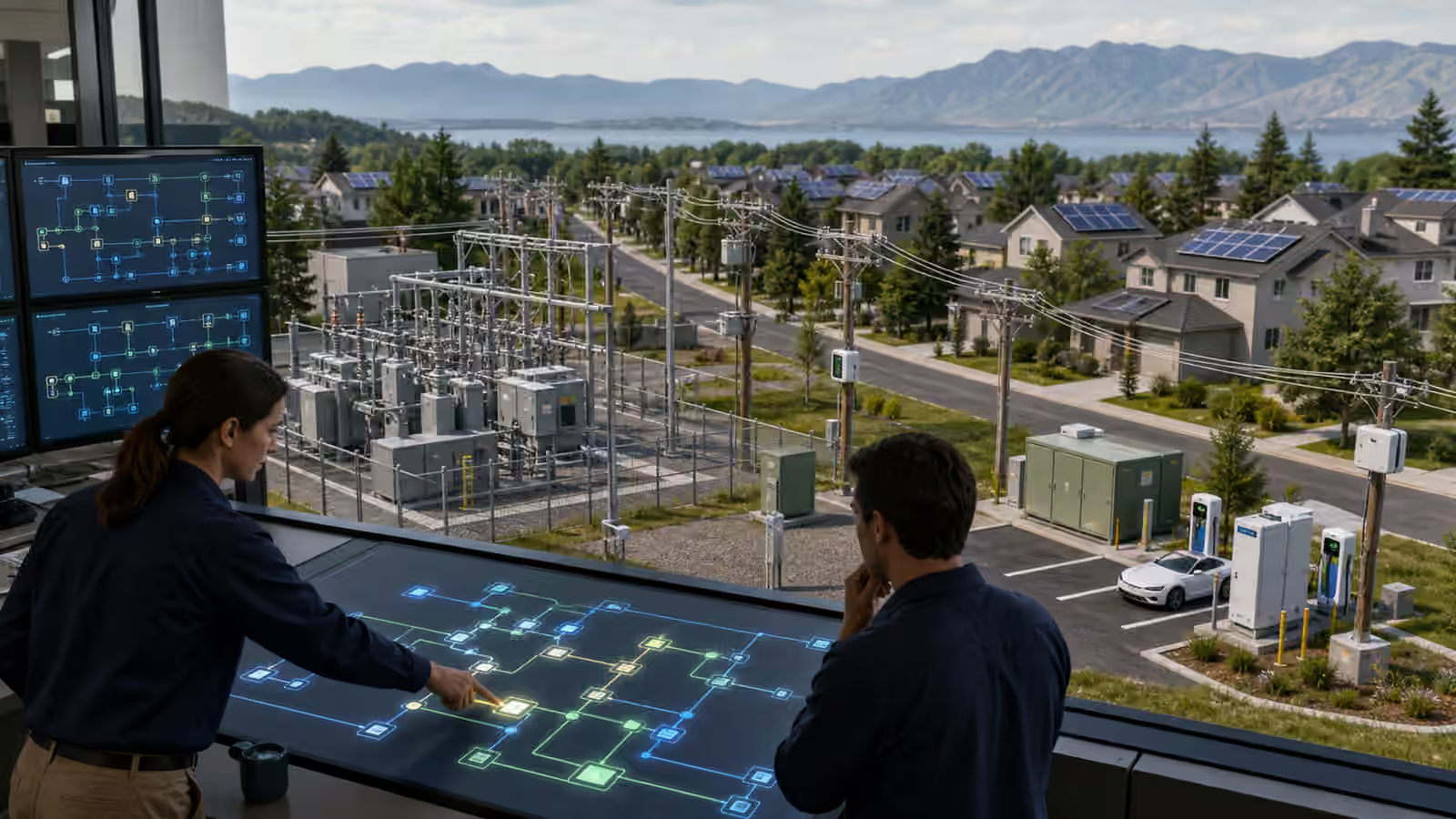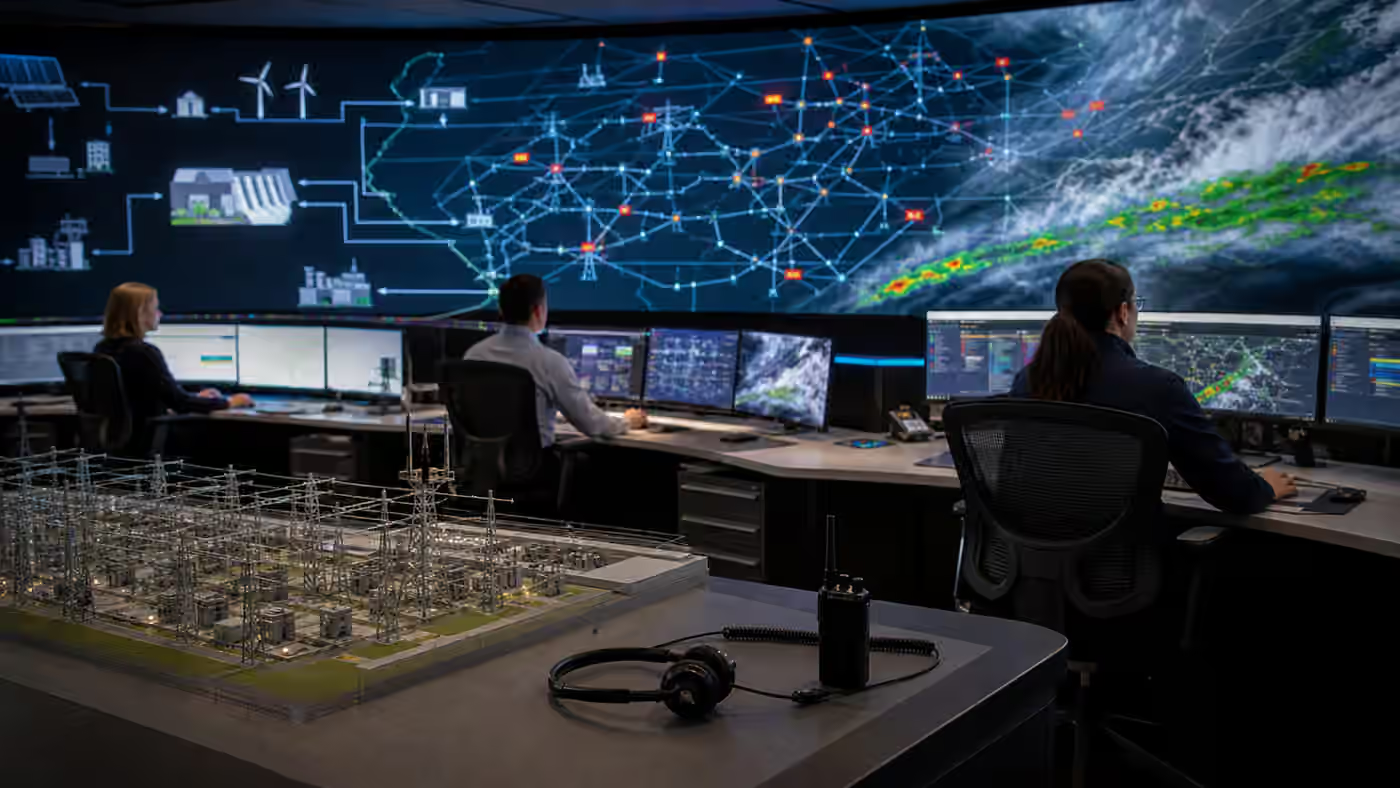
The electric grid is often described as if it were mostly a collection of equipment. That is partly true. Lines, transformers, breakers, substations, generators, batteries, inverters, relays, sensors, and meters all matter. But electricity also depends on people sitting in control rooms, interpreting what the system is doing, and making careful decisions before small problems become large ones.
A control room is not a movie version of crisis management. Most of the work is disciplined routine. Operators watch load, generation, voltage, frequency, transmission flows, weather, outages, forecasts, market schedules, switching orders, alarms, communications, and equipment limits. They coordinate with field crews, neighboring systems, generators, large customers, reliability coordinators, and emergency managers. The guide to grid visibility and sensor telemetry explains the observation layer. Control room workflow is what turns that observation into action.
Future energy plans usually focus on what should be built. Control rooms ask how the built system will be operated every hour after it exists. That question becomes more important as the grid adds weather-dependent generation, large new loads, distributed resources, power electronics, flexible demand, and more digital controls.
Operators manage time at several speeds
Grid operation happens on overlapping clocks. A day-ahead schedule may decide which generators are expected to run, which batteries may charge, which imports are planned, and how much reserve should be ready. An hour-ahead adjustment may respond to a wind forecast change, a data-center load update, a planned line outage, or a storm moving faster than expected. A five-minute dispatch may rebalance supply and demand as the actual system comes into view. A protection relay may act in fractions of a second before any person can intervene.
The operator’s work sits between those speeds. Operators cannot manually control every inverter, thermostat, or breaker. They rely on automation, procedures, dispatch systems, relay settings, and market instructions. At the same time, they have to understand when an automatic output is plausible and when it deserves scrutiny. A bad measurement, stale model, failed communication link, or incorrect switching status can make the screen lie.
The guide to renewable forecasting and grid operations shows why forecasts matter. Control room work adds judgment. If a solar ramp is coming, operators may schedule flexible resources before the ramp becomes urgent. If wind drops faster than expected, they may call reserves. If a transmission corridor is loaded heavily before a storm, they may change dispatch, prepare switching options, or communicate with neighboring areas.
Alarms need discipline
Control rooms live with alarms. Some alarms warn about equipment limits, abnormal voltage, communication failure, breaker status, cyber events, weather exposure, generation deviations, or line loading. A good alarm system helps operators notice what matters. A poor alarm system buries them in noise.
Alarm discipline is a form of reliability engineering. If every minor change creates a loud warning, operators may become numb. If alarms are suppressed too aggressively, a real event may be missed. The hierarchy has to match the physical system. A failed sensor should not look like a line outage, but it should still matter if that sensor supports a critical decision. A voltage warning near a stressed substation may deserve more attention than the same number in a less sensitive location.
This connects to grid cybersecurity and digital controls . A connected grid gives operators more visibility and control, but it also creates more signals to validate. Vendor access, remote devices, control commands, and software updates become part of operating discipline. The control room has to know what changed, who authorized it, and whether the physical system agrees with the digital record.
Switching is careful language
One of the most important control room jobs is switching: changing the state of lines, breakers, transformers, buses, capacitor banks, generators, or other equipment. Switching may be done for maintenance, construction, outage restoration, safety isolation, voltage control, or emergency response. It sounds mechanical, but it is also a language of precision.
A switching order has to identify the equipment, the sequence, the hold points, the safety boundaries, and the expected result. Field crews need to know which equipment is energized, grounded, isolated, or available. Operators need to know how each step changes flows and voltage. A single ambiguous instruction can put workers at risk or create an outage. That is why utilities use formal communication, repeat-backs, tagging systems, procedures, and training.
The guide to grid maintenance and outage planning covers the scheduled side of this work. Control rooms carry the plan into the operating day. They may approve an outage window, delay it because conditions are unsafe, adjust it because another asset failed, or restore equipment sooner than planned when the system tightens.
Reserves are not only numbers
Operating reserves are usually described in megawatts, but a control room sees more than quantity. It cares how quickly a resource can respond, how long it can sustain output or reduction, where it is located, what fuel or state of charge it has, which communications path controls it, and what else it is already committed to do. A battery providing fast frequency response is not the same as a generator that can run all evening. A demand response program that needs thirty minutes of notice is not the same as a load that can reduce immediately.
The guide to ancillary services gives names to these support jobs. In the control room, they become operating choices. If a large generator trips, fast response may arrest the frequency decline, but operators still need replacement energy and restored reserves. If a line overload appears, redispatch may help only if the resources are on the right side of the constraint. If a heat wave continues for several days, stored energy and customer flexibility have to be managed so they are not exhausted too early.
This is where future resources earn trust. A virtual power plant, grid battery, flexible data-center load, electrolyzer, or inverter-based plant can be valuable if the control room can see it, call it, measure it, and understand its limits. A resource that exists only in a contract but does not respond cleanly under stress is not an operating resource in the moments that matter.
Restoration has to be practiced
Most days, the control room is trying to keep the system inside normal limits. Some days, it is trying to recover. Storms, fires, equipment failures, cyber incidents, fuel disruptions, or cascading trips can force operators into restoration mode. Restoration is not improvisation from zero. It depends on black-start resources, feeder priorities, crew coordination, communications, switching plans, voltage control, and knowledge of which facilities must return first.
The guide to grid restoration and black start explains the staged return after a major outage. Control room workflow is the place where that plan becomes human work. Operators have to build electrical islands, synchronize areas, manage cold-load pickup, avoid overloading damaged equipment, and communicate clearly while public pressure is high.
Practice matters because restoration conditions are different from normal operation. Protection settings may behave differently. Communications may be degraded. Customer load may return sharply. Distributed generation may be unavailable or uncertain. A procedure that looked complete in a document may reveal gaps when tested in a drill. The future grid needs restoration practice that includes batteries, inverter-based resources, microgrids, flexible loads, and large customers, not only the equipment mix of the past.
The future grid needs operator-centered design
Technology vendors often promise more automation, better dashboards, smarter controls, and faster optimization. Some of those tools are useful. But the control room should not become a dumping ground for every signal a device can produce. Operators need displays that match real decisions, alarms that respect attention, models that match field conditions, and procedures that acknowledge human limits.
The cleanest power plan can fail if it is not operable. A transmission upgrade has to fit outage windows and switching practice. A battery plant has to report status clearly. A virtual power plant has to respond in a way operators can trust. A data center microgrid has to coordinate transitions. A new inverter setting has to be documented and tested. Future energy is not only a portfolio on paper. It is a set of decisions made hour after hour by people responsible for keeping the lights on.