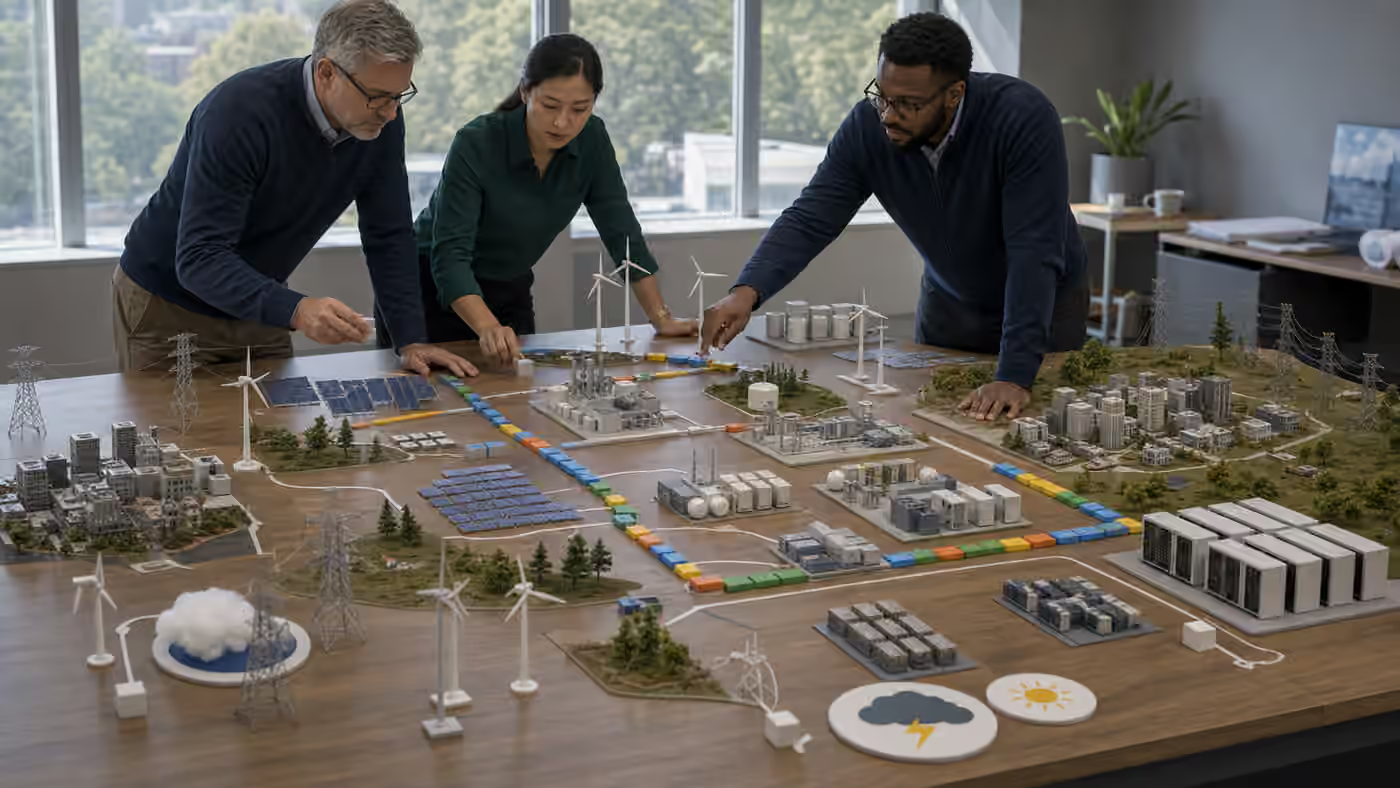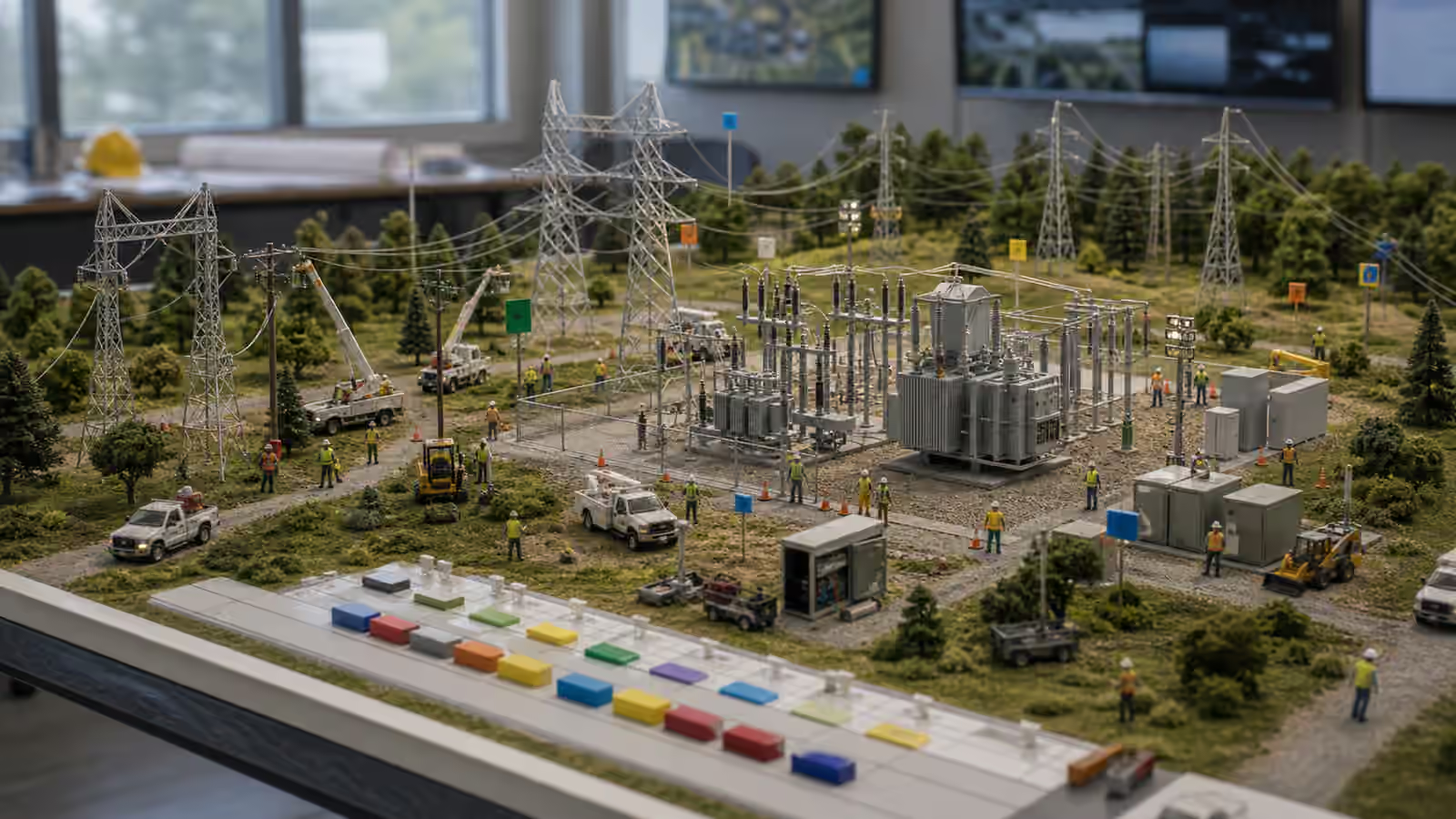
The future grid is often described through construction: new transmission lines, new batteries, new renewable plants, new data centers, new chargers, new substations, new software platforms. Maintenance is quieter. It is the work that keeps the existing system available while the new system is being built around it. Crews inspect equipment, clear vegetation, test relays, replace aging parts, wash insulators, repair storm damage, update controls, schedule outages, and restore circuits after failures. Without that work, even the best long-term plan becomes fragile.
Maintenance is not separate from the energy transition. It is one of the ways the transition stays reliable. A grid carrying more variable generation, more power electronics, more large loads, more electrified heating, and more distributed resources has less room for careless outage scheduling. The grid weatherization and resilience guide explains preparation for hard conditions. Maintenance and outage planning explain how preparation becomes routine work before those conditions arrive.
The basic tension is simple. Equipment has to be taken out of service to keep it healthy, but taking equipment out of service reduces the grid’s flexibility for a period of time. A transformer inspection, line rebuild, relay replacement, vegetation job, or breaker repair may be necessary, yet the grid still has to serve load while the work happens. Outage planning is the discipline of making that temporary weakness acceptable.
Availability Is a Reliability Resource
Resource adequacy studies often focus on whether enough capacity exists. Availability asks whether the equipment expected to provide that capacity is actually in service when needed. A power plant on maintenance, a transmission line out for repair, a transformer waiting for replacement, or a communications system under upgrade cannot be counted the same way as fully available equipment. The capacity accreditation guide looks at reliability value by resource type. Maintenance planning protects that value by reducing avoidable outages and making unavoidable outages visible.
Availability is built through small decisions. A utility may schedule major transmission work during mild seasons when demand is lower. A generator may plan maintenance before summer heat or winter cold. A distribution crew may replace a weak component before it fails during a storm. A control center may coordinate overlapping outages so one project does not remove the backup path needed for another. These choices rarely appear in public energy debates, but customers feel the result.
Deferred maintenance can look inexpensive until it is not. A delayed inspection, postponed vegetation cycle, aging relay, or scarce spare part may save money in one budget year and increase outage risk later. The cost is not only the failed component. It can be the emergency crew time, customer interruption, lost trust, damaged equipment, and limited operating options during a broader grid stress.
Outage Windows Are Scarce
Grid equipment cannot always be repaired while energized. Crews need safe working conditions, and operators need stable configurations. That means utilities need outage windows, periods when a line, transformer, feeder, breaker, or control system can be taken out of service without unacceptable risk. Those windows are becoming more valuable.
Electrification can raise seasonal peaks. Data centers and industrial loads can make demand steadier across the year. Renewable output can create new congestion patterns. Extreme weather can shorten the mild seasons when work is easiest. Construction backlogs can put many projects in the same calendar. A region may have enough crews and equipment in theory but too few safe windows to do all the work quickly.
This is one reason a new project can wait even after the main engineering question is answered. The grid may need an upgrade, but the upgrade may require taking a line or transformer out of service. If the outage would overload another element, the work has to wait for a better season, a temporary configuration, mobile equipment, or another project to finish first. The large load interconnection guide describes this as part of the path from requested megawatts to energized load. The schedule is not only a paperwork timeline. It is an operating timeline.
Vegetation Is Grid Equipment’s Unofficial Neighbor
Vegetation management is one of the least glamorous reliability jobs and one of the most important. Trees and branches can contact lines, start fires, cause faults, block access, or slow restoration. Vegetation work also affects communities because it changes streets, yards, rights of way, and landscapes. Good programs need electrical knowledge, arborist judgment, fire-risk awareness, customer communication, and careful scheduling.
Climate stress can make the job harder. Drought, heat, storms, pests, and changing growth patterns can alter risk. In some places, wildfire prevention changes how utilities manage corridors. In others, stronger storms make clearance and access more urgent. Maintenance planning has to adapt instead of assuming yesterday’s cycle is always enough.
Vegetation also interacts with public trust. A rushed crew that leaves a neighborhood feeling damaged can create opposition to future grid work. A neglected corridor that fails during a storm creates a different kind of anger. The right balance is local and practical. It requires explaining why the work is needed, doing it professionally, and treating the landscape as something people live with, not just a clearance problem.
Protection and Controls Need Testing
The grid fails safely only when protection systems behave as intended. Relays, breakers, fuses, reclosers, communication channels, inverter settings, and control logic decide whether a fault is isolated quickly or allowed to spread. The grid protection and relays guide explains the fault-isolation layer. Maintenance keeps that layer credible.
Testing protection equipment is not optional background work. Settings can become outdated as new generation connects, fault current changes, feeders become bidirectional, or inverter-based resources replace older machines. A relay that was correct ten years ago may not be correct after a solar plant, battery, feeder reconfiguration, or large load changes the local system. Digital controls also need cybersecurity updates, backup procedures, and clear rollback plans.
This is where maintenance meets modernization. A utility cannot simply add smarter controls and assume reliability improves. The controls have to be documented, tested, monitored, secured, and integrated into operator training. A clever device that no one trusts during an emergency is not a reliability resource. A simple device with known behavior may be safer until the smarter system proves itself.
Spare Parts Decide Restoration Speed
Some grid equipment has long lead times, especially large transformers and specialized switchgear. A failure can therefore become a supply-chain event. Spare equipment, mutual assistance agreements, standardized designs, mobile substations, and repair contracts all shape how quickly service can be restored. The critical minerals and grid supply chains guide follows the material side of this problem. Maintenance planning turns it into an operating question: what happens if this part fails next month?
Holding spares is not free. Large equipment costs money, requires storage, and may not match every site. Too much customization can make spares less useful. Too little customization can make projects harder to optimize. Utilities often have to choose between standardization that supports maintenance and specialized designs that fit a particular site or performance target.
The decision becomes more important as the grid grows. If every new substation, battery yard, data center interconnection, and renewable plant uses unique equipment, the maintenance burden can rise. If designs are standardized thoughtfully, crews can train more easily, spares can serve more sites, and restoration can be faster. Reliability is partly a design habit.
Construction and Maintenance Compete for Crews
The same skilled workforce often supports both maintenance and new construction. Lineworkers, substation technicians, protection engineers, operators, vegetation crews, planners, project managers, inspectors, and equipment specialists are finite. A large buildout can stretch that workforce. Storm restoration can pull crews away from planned work. A wave of interconnection projects can compete with routine maintenance. Retirements can remove experienced field knowledge faster than training programs replace it.
The grid construction workforce guide looks at this from the buildout side. Maintenance planning looks at the reliability side. If all attention goes to visible new projects, the existing system can become brittle. If all attention goes to maintenance, the grid may fail to expand for new loads and clean resources. A serious plan protects both.
Sequencing matters. A utility may need to clear a maintenance backlog before energizing a new load. It may need to upgrade a substation before taking a nearby line out for rebuild. It may need temporary generation, mobile transformers, or demand flexibility to create an outage window. These are not glamorous solutions, but they are how construction becomes safe enough to perform.
Reliability Is Mostly Boring Until It Is Not
Grid maintenance has a strange public rhythm. When it works, few people notice. When it fails, everyone asks why the equipment was not ready. This creates a political problem because routine maintenance can be easy to defer and hard to celebrate. A new project gets a ribbon cutting. A well-maintained breaker gets silence.
The future grid needs that silence. It needs equipment that is inspected before failure, corridors cleared before storms, controls tested before emergencies, spare parts planned before they are needed, and outage windows coordinated before construction crews arrive. Maintenance is the connective tissue between ambition and service.
For readers, the useful question is not only what the grid is building. It is what the grid can safely take out of service while it builds, repairs, and upgrades. A system with honest maintenance planning will look slower on some days because it refuses to pretend equipment is always available. Over time, that honesty makes the grid faster where it matters. It reduces surprises, protects hard-hour reliability, and keeps the old machine working while the new one is assembled around it.