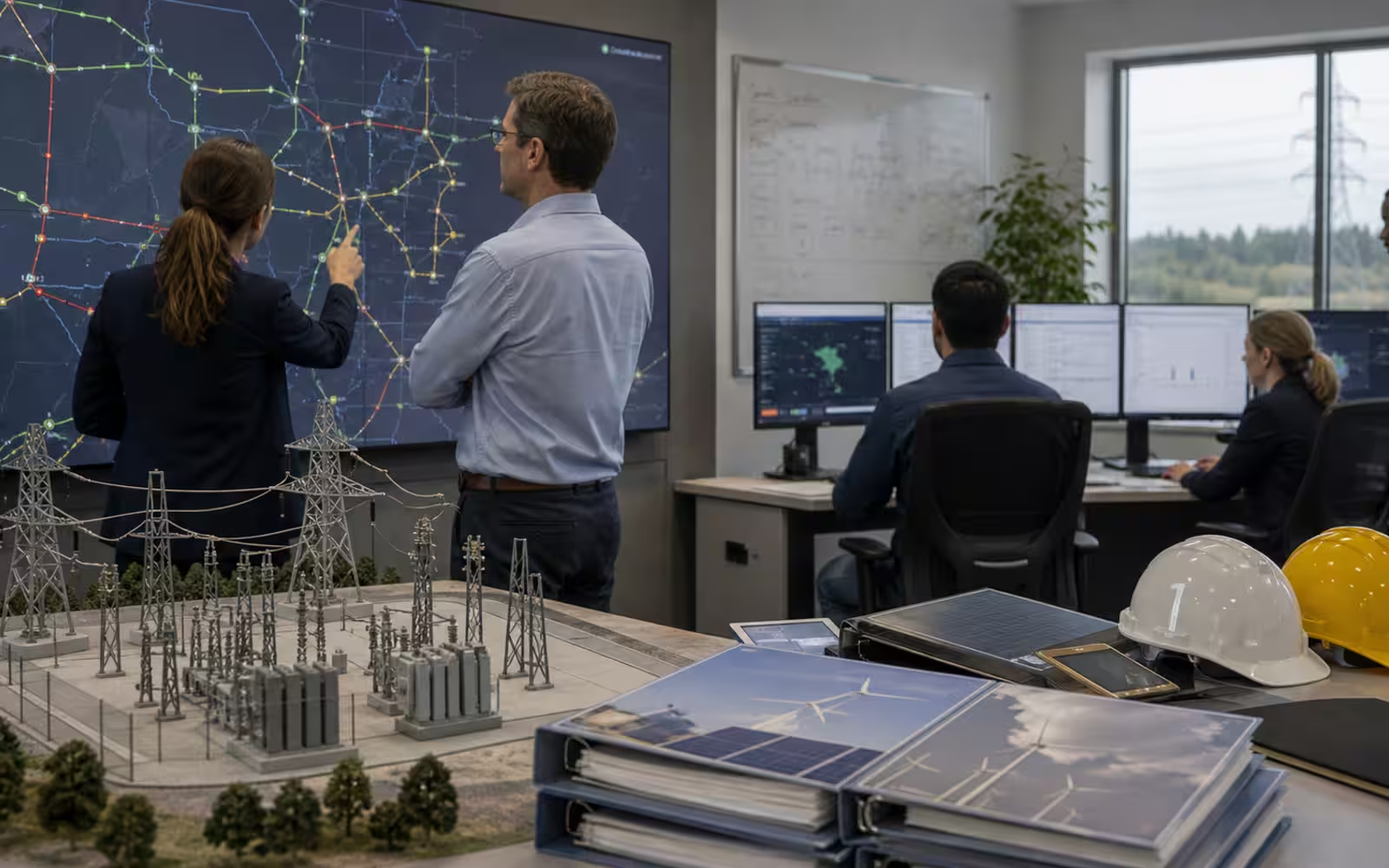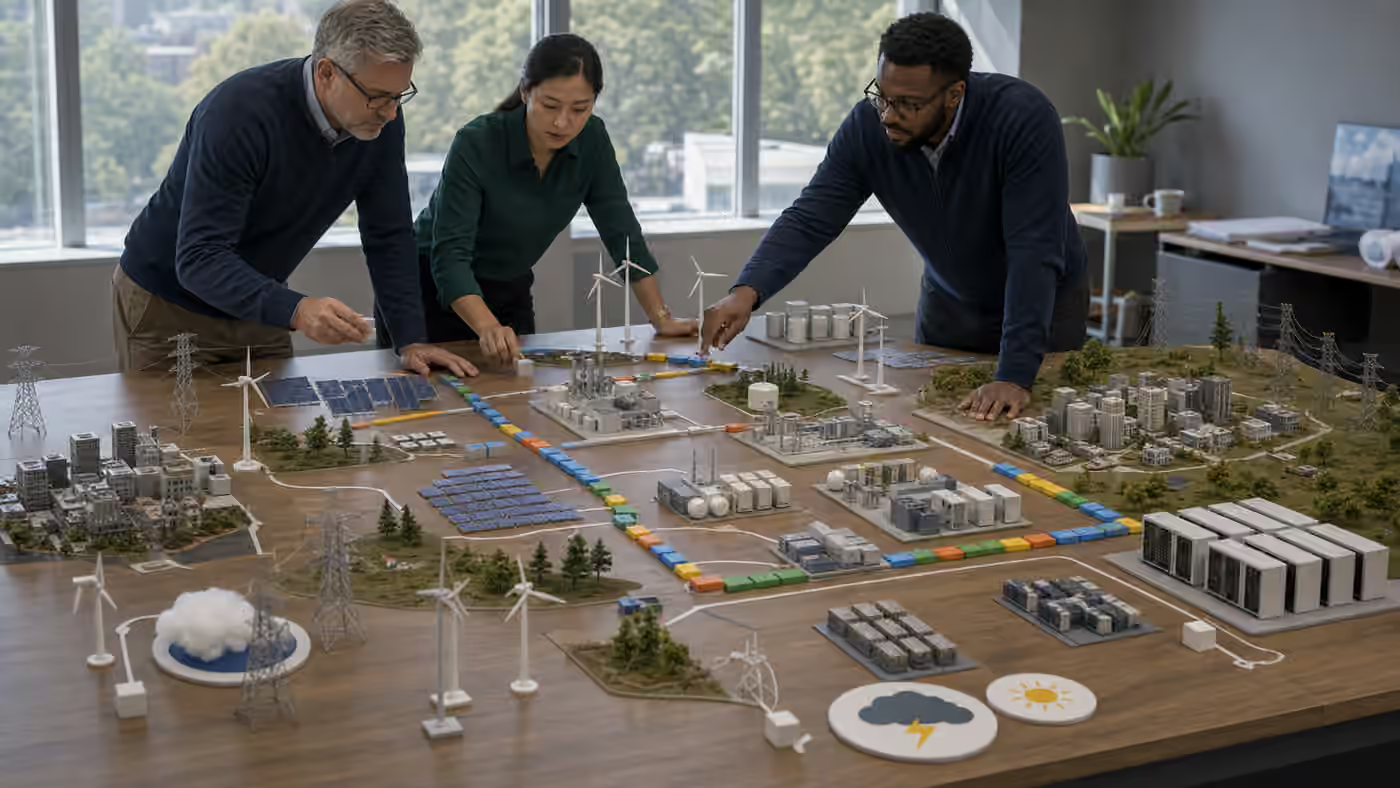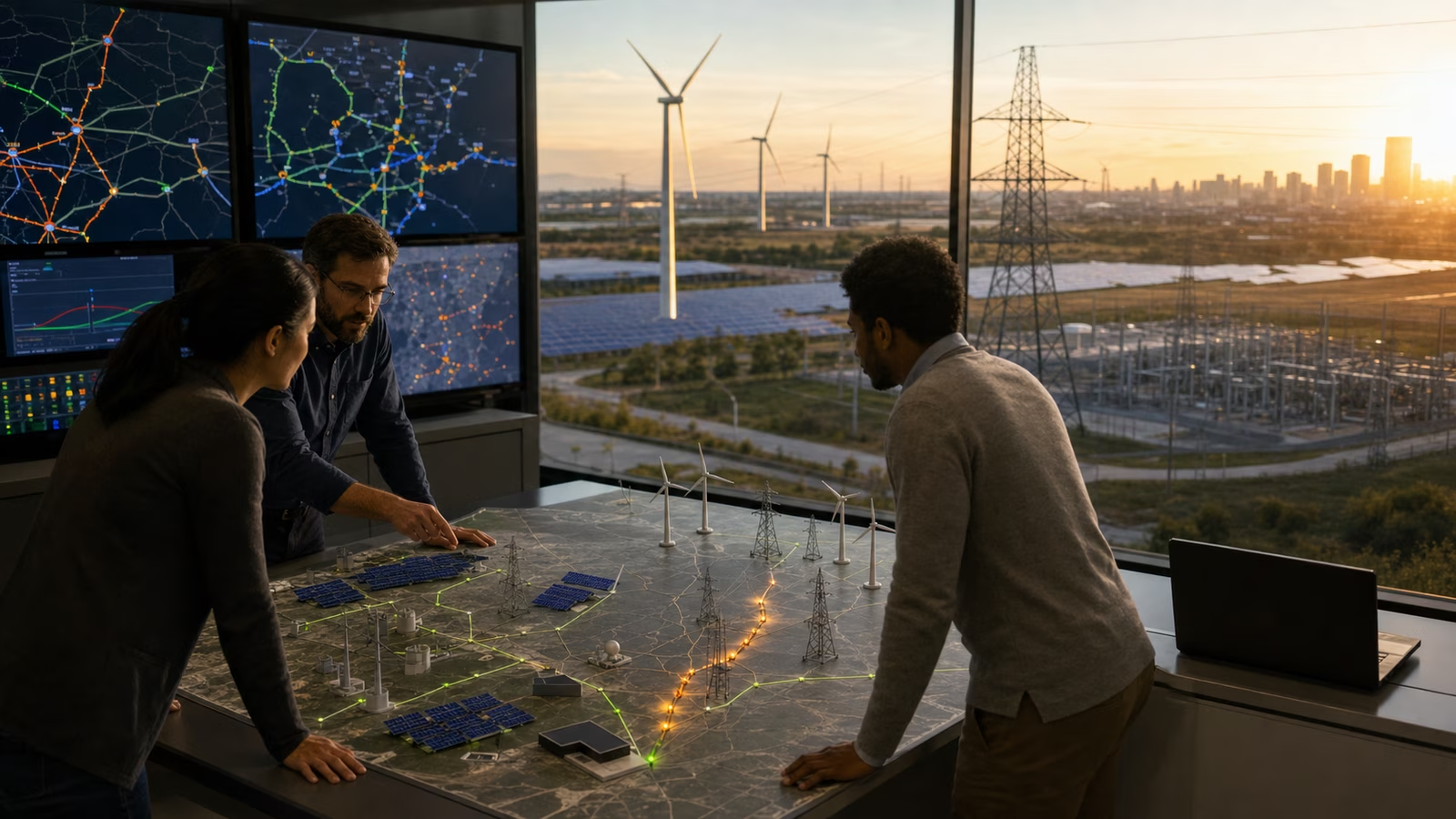
Curtailment is one of the strangest ideas in the modern power system. A solar farm can be ready to produce. A wind plant can have strong wind. The electricity can be clean, useful, and technically available. Then the grid operator tells the project to turn down anyway.
That sounds wasteful because it is, at least in the ordinary sense. But it is not usually a sign that the equipment failed. Curtailment happens when the grid cannot safely absorb or deliver all the power that is available at a particular place and time. The power exists, but the system around it is not ready for that exact combination of supply, demand, wires, voltage, reserves, and operating limits.
The idea matters because future energy systems will often have more clean electricity in some hours than they can immediately use. That is good news compared with scarcity, but it is not automatically simple. A grid with large amounts of solar, wind, batteries, data centers, electric vehicles, heat pumps, and industrial loads has to move power through both space and time. Curtailment is what happens when one of those paths is too narrow.
The grid cannot put electricity on a shelf
A power system is not a warehouse with a neat inventory aisle. Electricity has to be balanced almost continuously. When generation rises above what the system can use or move, operators need a response. They can reduce output from controllable plants, charge storage, export power, move flexible demand into that hour, or curtail renewable generation. If those options are limited, curtailment becomes the pressure valve.
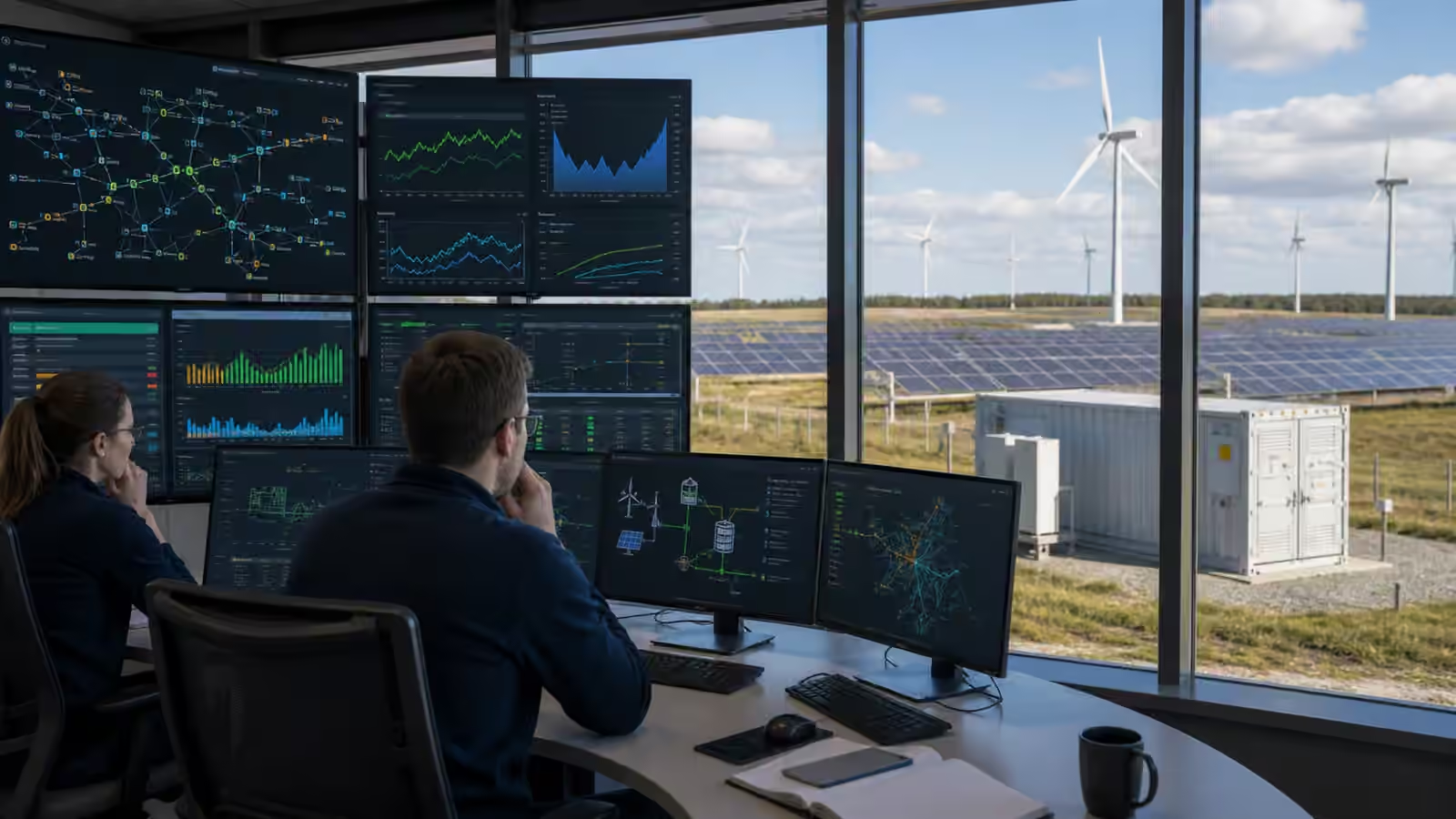
The timing problem is easiest to see with solar. A region may build enough solar to produce a large share of its annual electricity, but the panels do not spread that energy evenly across the day. Output rises in the morning, peaks around midday, and falls toward evening. If midday demand is modest and neighboring regions cannot take the surplus, some solar may be turned down. Later, when the sun fades and homes, businesses, cooling systems, or data centers still need power, the same region may need batteries, imports, flexible demand, geothermal, nuclear, hydro, gas, or another firm resource.
This is why The Electric Grid Is the Machine starts with timing and location rather than with a single winning technology. A megawatt-hour at noon behind a congested line is not the same as a megawatt-hour at 8 p.m. near a load center. Curtailment makes that difference visible.
Wires can strand good energy
Transmission constraints are one of the clearest causes of curtailment. The best wind may be far from cities. The best solar may be in wide rural areas where the local grid was never built for large exports. A power plant can generate electricity, but if the lines leaving the region are full, the power has nowhere safe to go. Operators may have to reduce output even while customers elsewhere are buying more expensive electricity from other resources.
This is not a moral flaw in wind or solar. It is a physical and planning problem. The power is being produced in a place where the delivery path is too small for the new pattern of generation. Transmission Bottlenecks explains the same issue from the wires side: building generation faster than the network around it can expand creates congestion. Curtailment is one of the ways that congestion shows up in daily operations.
Sometimes the constraint is a high-voltage line. Sometimes it is a substation, transformer, protection setting, voltage limit, or local feeder. The public conversation often treats the grid as if the only question is how many miles of line exist. Operators also care about thermal ratings, stability, reactive power, fault behavior, maintenance outages, and the consequences of losing another piece of equipment during a stressed hour. A line that can carry power safely under one condition may be limited under another.
This is why interconnection studies can be slow and strict. A proposed renewable project is not only asking for a socket. It is asking to inject power into a shared machine. Interconnection Queues are partly about determining whether a project will increase congestion, require upgrades, or force curtailment that changes the value of the project.
Curtailment can be sensible until it becomes a warning sign
Not all curtailment is a crisis. In a well-planned system, a small amount of curtailment can be cheaper than building enough wires, storage, and flexible demand to use every last kilowatt-hour in every rare surplus hour. A grid designed to avoid all curtailment at any cost might overbuild infrastructure that sits underused most of the year. Some spill is acceptable if it makes the whole system cheaper and cleaner.
The trouble begins when curtailment grows from an occasional pressure valve into a recurring pattern. If a region is turning down clean power often while still burning fuel in other hours or importing expensive electricity from elsewhere, the system is saying something important. It may need more transmission, different storage duration, better siting, more flexible loads, improved market signals, or a slower pace of generation additions until the delivery network catches up.
Curtailment also changes project economics. A solar farm that expects to sell most of its production may struggle if it is frequently ordered down during its best hours. A wind project in a congested region may produce less usable energy than its resource quality suggests. Developers, utilities, buyers, and communities all need to understand that nameplate capacity is not the same as deliverable energy.
This is especially important when clean-energy claims are tied to annual totals. A buyer may contract for enough renewable generation over a year to match its consumption, but curtailment can affect what actually reaches the grid and when. Hourly Clean Power Matching pushes the question further by asking what powers a load in each hour, not only whether the annual accounting looks balanced.
Storage helps, but only in the right place and duration
Storage is the obvious response to surplus power, and often a useful one. A battery near a solar-heavy area can charge during midday and discharge in the evening. A storage project near a constrained substation can reduce local peaks. Long-duration storage can help carry energy across longer gaps when daily cycling is not enough. In each case, storage turns some curtailed energy into later usable energy.
But storage is not a bottomless drawer. It has a power rating, an energy capacity, a location, a state of charge, efficiency losses, operating rules, degradation limits, and economics. If a battery is already full during a sunny hour, it cannot absorb more. If the battery is on the wrong side of the transmission constraint, it may not reduce curtailment where it occurs. If the surplus lasts for days, a short-duration battery may fill quickly and then wait.
That does not weaken the case for storage. It sharpens it. Grid Batteries and Long-Duration Storage is useful here because it treats storage as a set of tools rather than one magic category. Curtailment asks a specific storage question: what duration, location, charging pattern, and dispatch behavior would turn stranded clean power into useful power later?
In some regions, batteries will capture much of the daily solar surplus. In others, transmission will matter more. In still others, flexible industry, pumped hydro, thermal storage, hydrogen production, or better regional coordination may do more. The answer depends on the shape of the surplus and the shape of the shortage.
Flexible demand can move toward clean supply
Curtailment is often described as a supply problem, but demand can help solve it. If some electricity use can move into surplus hours without harming people, the grid has another tool. Water heating, cold storage, EV charging, some pumping loads, some industrial processes, and certain data-center tasks may have flexibility under the right contracts and controls. The point is not to make life inconvenient. The point is to shift demand that does not need to happen at a stressed hour into a cleaner, easier hour.
Demand Response usually gets discussed during peaks, when the grid asks customers to reduce demand. Curtailment shows the other side of the same idea. Sometimes the grid needs less load. Sometimes it needs more load at the right moment. A flexible system can do both, within limits that respect comfort, reliability, production schedules, and human needs.
Data centers make this question more complicated. Large computing loads can be steady and demanding, but not all computation has the same urgency. Some batch workloads may be schedulable, while customer-facing services and reliability systems are not. A data center that can move some nonurgent work toward clean surplus hours may reduce curtailment and improve the usefulness of its energy procurement. A data center that runs flat-out through every constrained hour may be harder for the grid to serve cleanly.
Flexible demand should not be treated as a slogan. It requires metering, controls, prices or contracts, operational trust, and a clear understanding of which loads can move. If a customer promises flexibility and then cannot deliver during the relevant hours, the grid still needs a backup plan.
Planning for less waste
Reducing curtailment is not one project. It is a planning discipline. Generation needs to be sited with the grid in mind. Transmission needs to be planned ahead of obvious congestion rather than after every queue study rediscovers it. Substations and transformers need enough capacity where new resources and loads are likely to appear. Markets need to reward flexibility, not only energy volume. Clean-power buyers need to care about time and place, not only annual totals.
There are also lower-profile grid tools that can help. Reconductoring can increase the capacity of existing corridors in some cases. Dynamic line ratings can reflect actual weather conditions instead of relying only on conservative static assumptions. Power-flow control devices can shift flows away from overloaded paths. Better forecasting can help operators make more confident decisions. None of these removes the need for major infrastructure, but each can widen a narrow path in the right setting.
Community trust matters here as much as engineering. A transmission line, substation expansion, storage project, or new flexible industrial load has a physical footprint. If residents see only regional benefits and local disruption, projects slow down or fail. Energy Permitting and Community Trust belongs in the curtailment conversation because unused clean power is not only a technical failure. It can also be the result of social processes that could not turn a needed project into an accepted one.
What curtailment teaches
Curtailment teaches a useful humility about energy abundance. More clean generation is essential, but more generation alone does not finish the job. The grid also needs deliverability, timing, controllability, and enough demand that can respond intelligently. A region can have excellent renewable resources and still waste some of them if the rest of the system is not ready.
For a reader trying to make sense of energy news, curtailment is a clue to look beneath the headline. When a report says renewable output was turned down, the next question is not simply why anyone would waste clean power. The better question is what the grid lacked at that hour. Was the constraint a transmission corridor, a local substation, a full battery fleet, low demand, inflexible conventional generation, weak exports, market rules, or some combination of those? The answer points toward different fixes.
The future grid will sometimes have surplus clean electricity, and that is not a bad problem to have. It is better than a system with too little clean energy and no options. But surplus becomes valuable only when the system can move it, store it, or use it. Curtailment is the quiet reminder that the energy transition is not just about producing clean electrons. It is about making them useful.