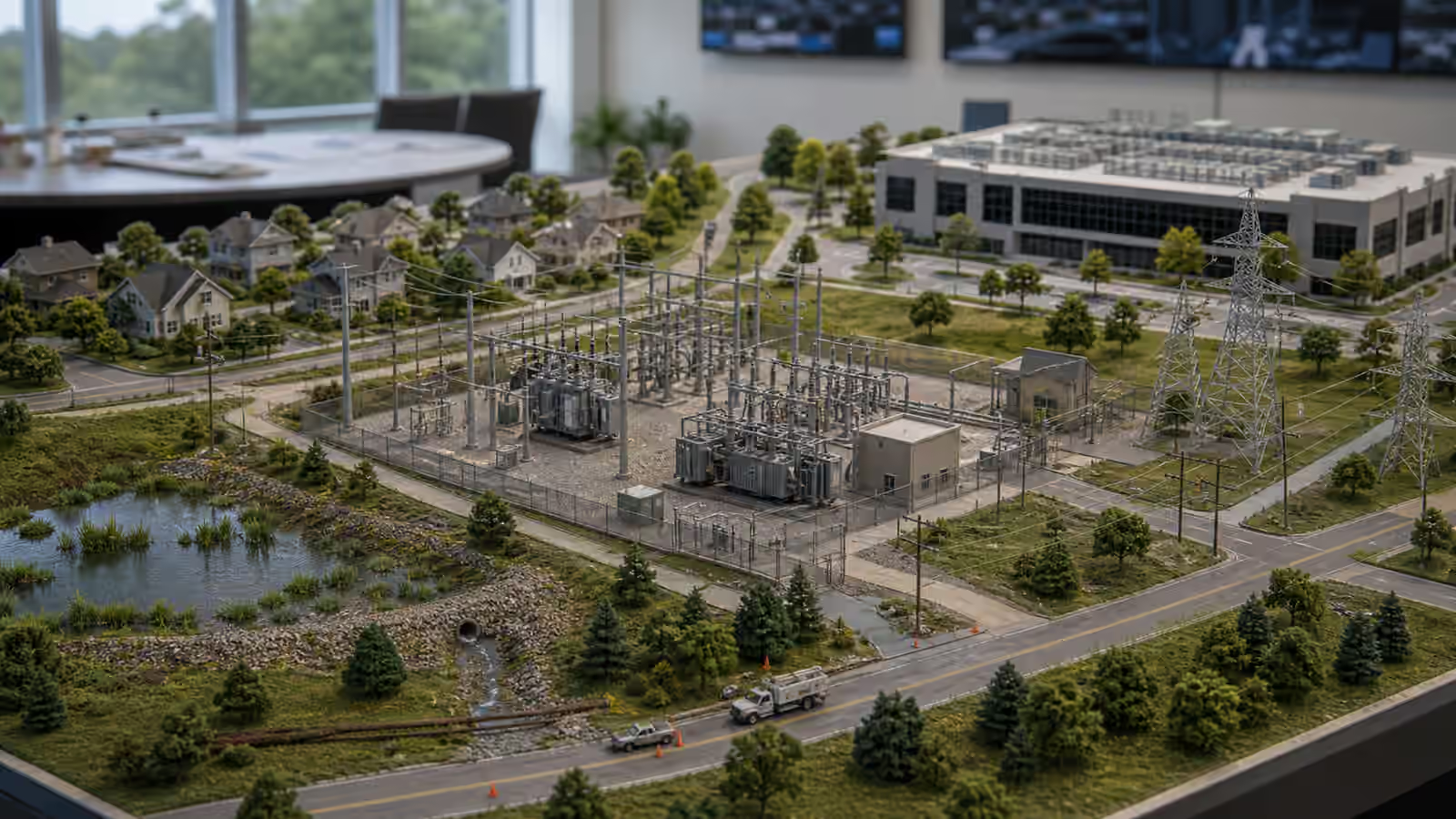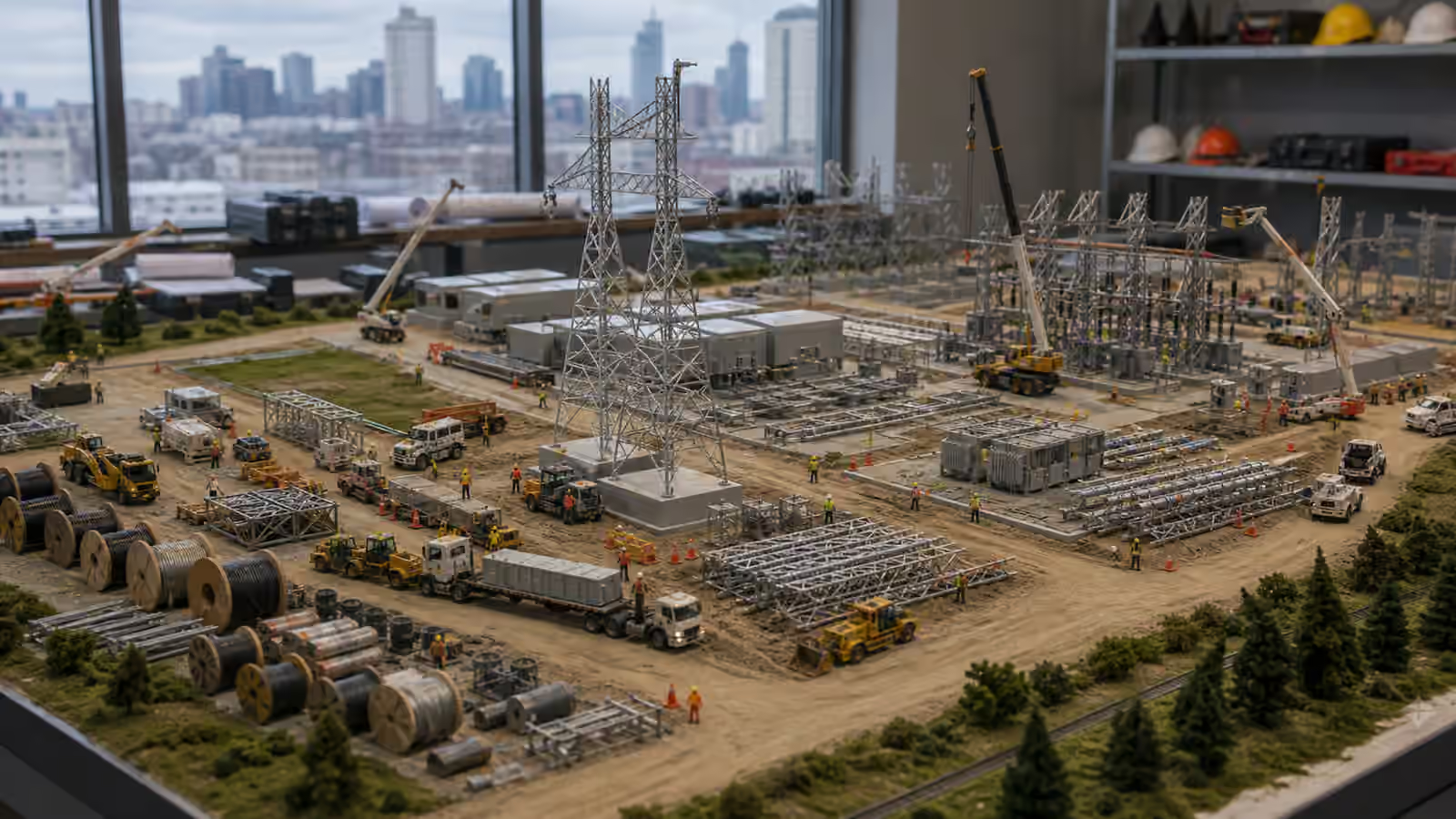
The energy buildout is often measured in megawatts, miles of line, gigawatt-hours of storage, and dollars of investment. Those numbers matter, but they can hide the people and sequence required to turn a plan into energized infrastructure. Transmission lines need survey crews, engineers, permitting staff, land agents, tower foundations, steel delivery, lineworkers, crane operators, safety supervisors, protection engineers, inspectors, and control-room coordination. Substations need civil work, heavy transformers, switchgear, relay settings, communications, testing, and commissioning. Distribution upgrades need local crews who can work safely near customers while keeping service interruptions short.
A grid plan that ignores workforce and sequencing is not a build plan. It is a wish list. The transmission bottlenecks guide explains why wires can slow clean energy. The construction workforce explains one reason those wires cannot appear at software speed. Even when money is available and permits are in hand, the project still has to be built by skilled people using scarce equipment in a live power system.
This does not mean the buildout is impossible. It means the pace depends on practical execution. Training, standard designs, equipment staging, regional coordination, safety culture, outage windows, and predictable project pipelines can make the same workforce more effective. Chaotic stop-start planning can waste the same talent.
Skilled Labor Is a Grid Resource
Lineworkers, substation technicians, relay engineers, control-room operators, vegetation crews, civil contractors, welders, heavy-haul specialists, project managers, and inspectors are as real a constraint as transformers or conductors. They carry knowledge that cannot be replaced instantly. A crew that knows local terrain, switching procedures, storm patterns, access roads, and equipment quirks can work faster and safer than a team assembled at the last minute.
This workforce is already busy. It maintains the existing grid, responds to storms, connects customers, replaces aging equipment, manages vegetation, and supports emergency restoration. New clean-energy projects, large load interconnections, EV charging corridors, data centers, and distribution upgrades add to that workload. If every project assumes the same crews are available at the same time, the schedule will break.
Workforce planning therefore belongs inside energy planning. Apprenticeship pipelines, training centers, contractor capacity, mutual assistance agreements, safety requirements, and retention all affect how fast the grid can grow. A region can order more equipment, but it cannot instantly create experienced foremen, protection specialists, or substation commissioning teams.
Sequence Matters Because the Grid Stays Live
Grid construction is not like building on an empty field. Much of the work happens around energized equipment and customers who still need electricity. A line may need to be taken out of service to rebuild it. A transformer may need a temporary bypass before replacement. A substation expansion may require careful switching so nearby feeders remain served. A relay upgrade may need testing before a new generator can connect. Every step has to fit into the operating grid.
The grid maintenance and outage planning guide covers this from the reliability side. Construction sequencing covers it from the project side. A project manager may know the final design, but the work still has to be broken into safe stages. Which equipment arrives first? Which outage window is needed? Which temporary configuration keeps customers served? Which crews can work in parallel without getting in each other’s way? Which inspections must happen before energization?
Poor sequencing creates delays that look mysterious from outside. A project may appear mostly built but wait for protection testing. A substation may have the transformer installed but lack communications integration. A line may be complete except for a crossing that requires a special outage or permit. A battery may be ready behind the fence but unable to export until a breaker and relay package is commissioned. The final five percent can be decisive.
Standardization Can Speed the Work
Custom designs have a place, especially where terrain, voltage, land, or reliability needs are unusual. But excessive customization slows construction and maintenance. Standard substation layouts, standard relay panels, standard communication packages, standard transformer specifications, and repeatable distribution upgrade designs can reduce engineering time, simplify procurement, support spares, and make crews more familiar with the work.
Standardization does not mean careless copy-paste. It means designing families of solutions that fit common needs. A utility might use a repeatable package for a feeder upgrade, a modular approach to a battery interconnection, or a standard control house design for a substation expansion. The benefit is not only speed. It is quality. Crews make fewer mistakes when equipment behaves predictably, documentation is familiar, and testing procedures are known.
The substation siting guide shows why each site still has local constraints. Standardization works best when it leaves room for those constraints while avoiding unnecessary reinvention. The goal is to make common work common, so scarce engineering attention can focus on the truly hard cases.
Equipment Staging Is Part of the Schedule
Construction depends on materials arriving in the right order. Cable, poles, towers, conductors, transformers, breakers, control cabinets, concrete, steel, fiber, batteries, inverters, and safety equipment all have lead times. A missing component can idle a crew or force resequencing. Heavy equipment may require special transport routes, cranes, foundations, and storage space. Weather can close access roads or delay concrete work. Ports, rail, trucking, and warehouse capacity can all affect the grid.
The critical minerals and grid supply chains guide looks upstream at materials and manufacturing. Construction sequencing looks at the job site. A transformer ordered late can delay a substation. A conductor shipment that arrives before foundations are ready may create storage problems. A battery enclosure may be installed before a communications path is ready, leaving the project physically present but not operational.
Good staging reduces wasted mobilization. If crews, equipment, and outages are aligned, the project moves. If they are misaligned, the grid pays through delay, extra cost, and sometimes reduced reliability. This is why project controls, procurement, and field supervision are not bureaucratic overhead. They are part of the buildout itself.
Permitting and Construction Should Inform Each Other
Permitting is often discussed as a preconstruction hurdle, but construction knowledge should shape permitting from the beginning. A route that looks acceptable on a map may require difficult access, long outages, sensitive construction windows, or unusual staging areas. A substation site may be electrically attractive but impossible to build without heavy traffic through a narrow neighborhood street. A transmission corridor may need seasonal restrictions for environmental reasons, changing the labor plan.
The energy permitting and community trust guide emphasizes public legitimacy. Construction sequencing adds practical credibility. Communities should know not only where infrastructure will go, but how it will be built, how long disruption may last, what roads will be used, when outages may occur, how restoration will be handled, and who is accountable for field conduct.
Early construction input can also improve the project. A slightly different route, laydown area, access road, or equipment choice may reduce disruption and speed completion. Treating construction as an afterthought can lock in avoidable problems that crews then have to solve under pressure.
The Workforce Needs a Predictable Pipeline
Training people for grid work takes time, and firms invest more confidently when the project pipeline is credible. A boom-and-bust cycle makes that difficult. If projects are announced, delayed, canceled, revived, and redesigned unpredictably, contractors hesitate to hire and train. Skilled workers move to other industries. Suppliers hold back. When the buildout finally accelerates, capacity is not ready.
A predictable pipeline does not guarantee that every project is built. It means utilities, regulators, developers, and public agencies provide enough clarity for workforce planning. Which regions need transmission? Which substations are likely to expand? Which distribution upgrades are recurring? Which large loads are credible? Which standards apply? Which projects are funded? The answers help training programs, contractors, and equipment suppliers prepare.
This is especially important for smaller utilities and rural areas. They may not have deep internal staff or large contractor pools. A sudden wave of projects can overwhelm local capacity. Regional coordination, shared standards, and mutual support can help, but only if the need is visible early.
Safety Is a Pace Setter
Grid construction is dangerous work. High voltage, heights, heavy lifts, confined spaces, traffic, weather, energized equipment, and time pressure all create risk. A faster buildout cannot depend on cutting safety corners. A serious accident can harm workers, traumatize crews, delay projects, and damage public trust. Safety planning is therefore not a competing value against speed. It is one of the conditions for sustained speed.
Good safety culture shows up in ordinary habits: clear switching orders, job briefings, lockout procedures, fall protection, traffic control, fatigue management, weather decisions, equipment inspection, and the authority to stop work. It also shows up in design. Projects that are easier to maintain safely will perform better over decades.
The future grid will be built by people doing physical work in real conditions. Respecting that fact makes plans better. It pushes planners to sequence realistically, standardize where useful, stage equipment carefully, coordinate outages, communicate with communities, and train before the shortage becomes acute.
Megawatts and miles will remain useful metrics, but they are not enough. A grid buildout is a choreography of crews, equipment, permits, outages, inspections, and energization steps. When that choreography is planned well, infrastructure appears faster and fails less often. When it is ignored, even a well-funded plan can stall in the field.