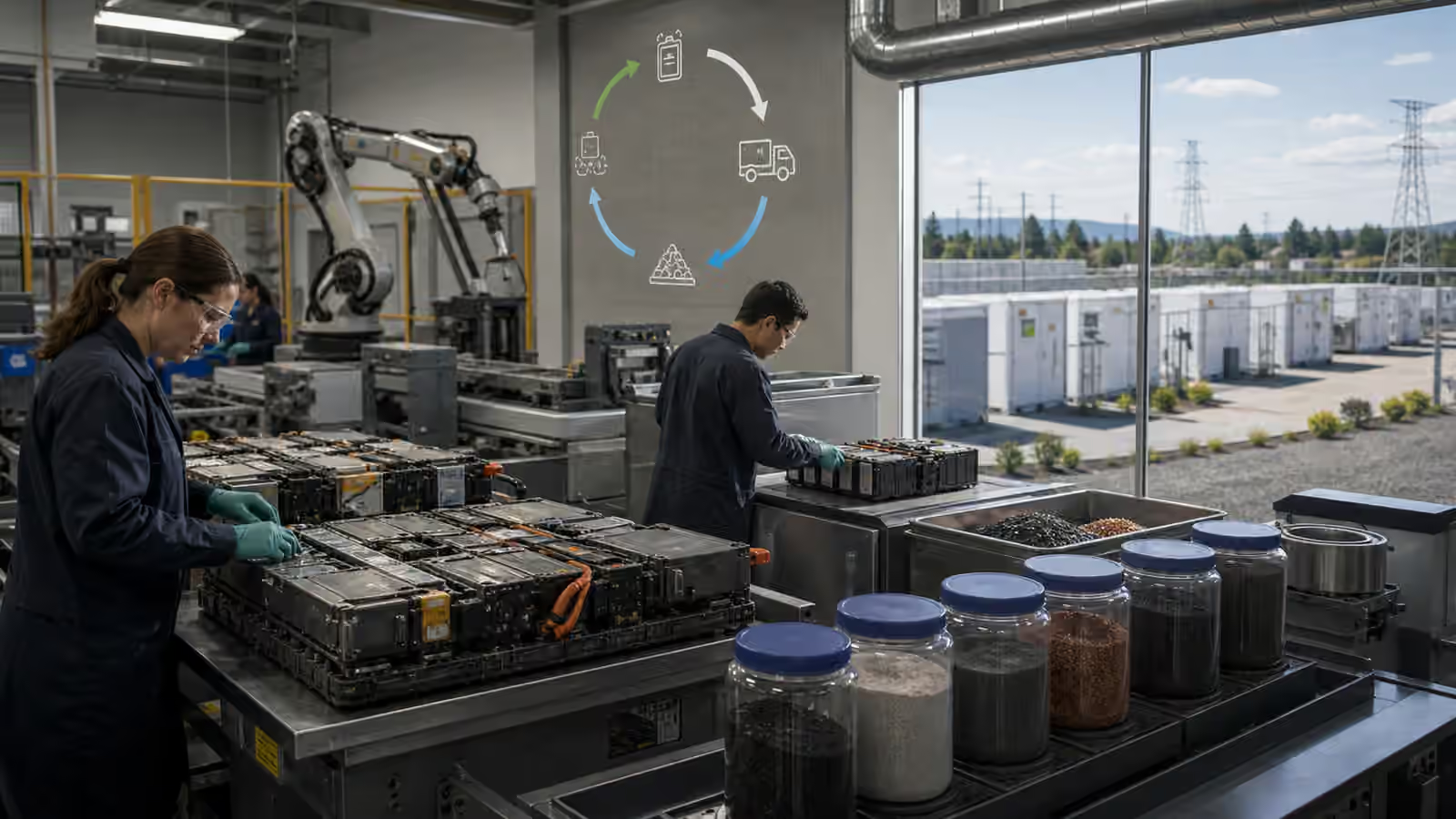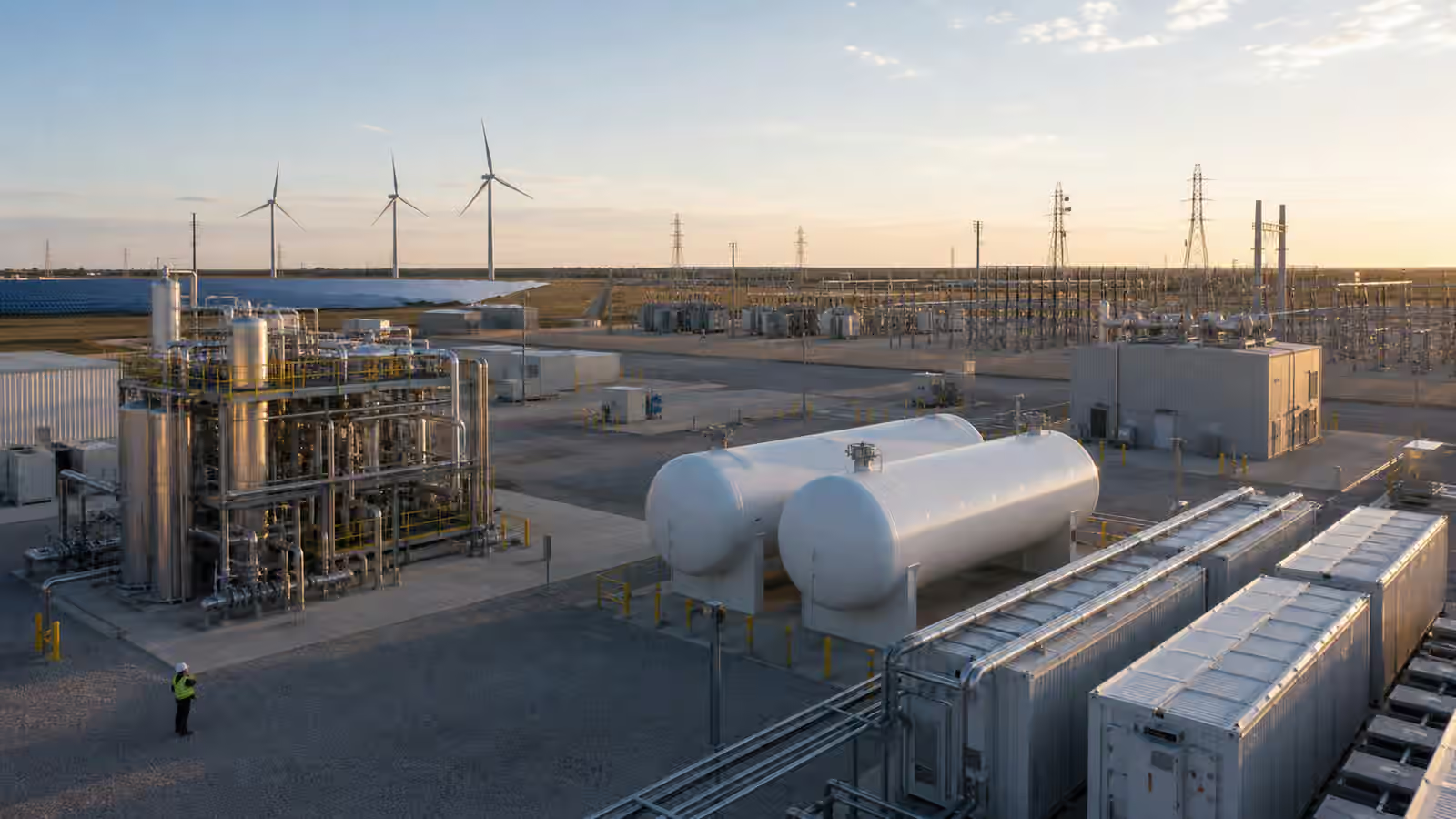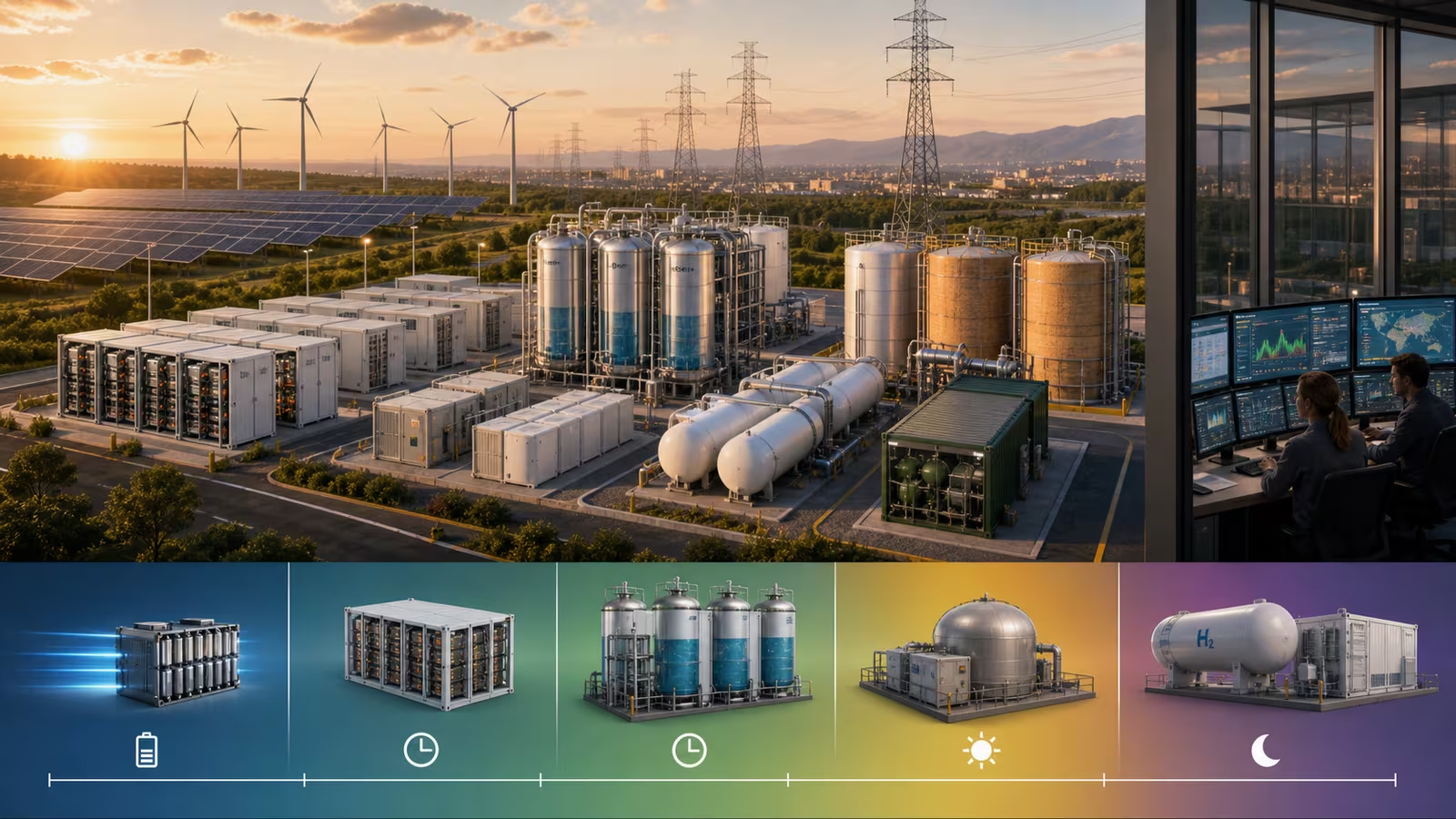
Storage is the part of the energy system that sounds easiest until you ask how long it must last. A phone battery and a pantry both store useful things, but they solve different problems. A phone battery gets you through the day. A pantry gets you through a storm. Grid storage has the same split. Some storage is perfect for seconds, minutes, and a few hours. Other storage is trying to cover long nights, calm weather, seasonal gaps, or multi-day emergencies.
The modern grid needs storage because supply and demand do not naturally line up. Solar produces during daylight, often strongest before evening demand peaks. Wind can be strong at night or during certain weather patterns, but not always when demand is highest. Data centers may run around the clock. Homes use more power at certain times. Heat waves and cold snaps change load. Storage helps move energy from a good time to a harder time.
Lithium-ion batteries are the sprinters
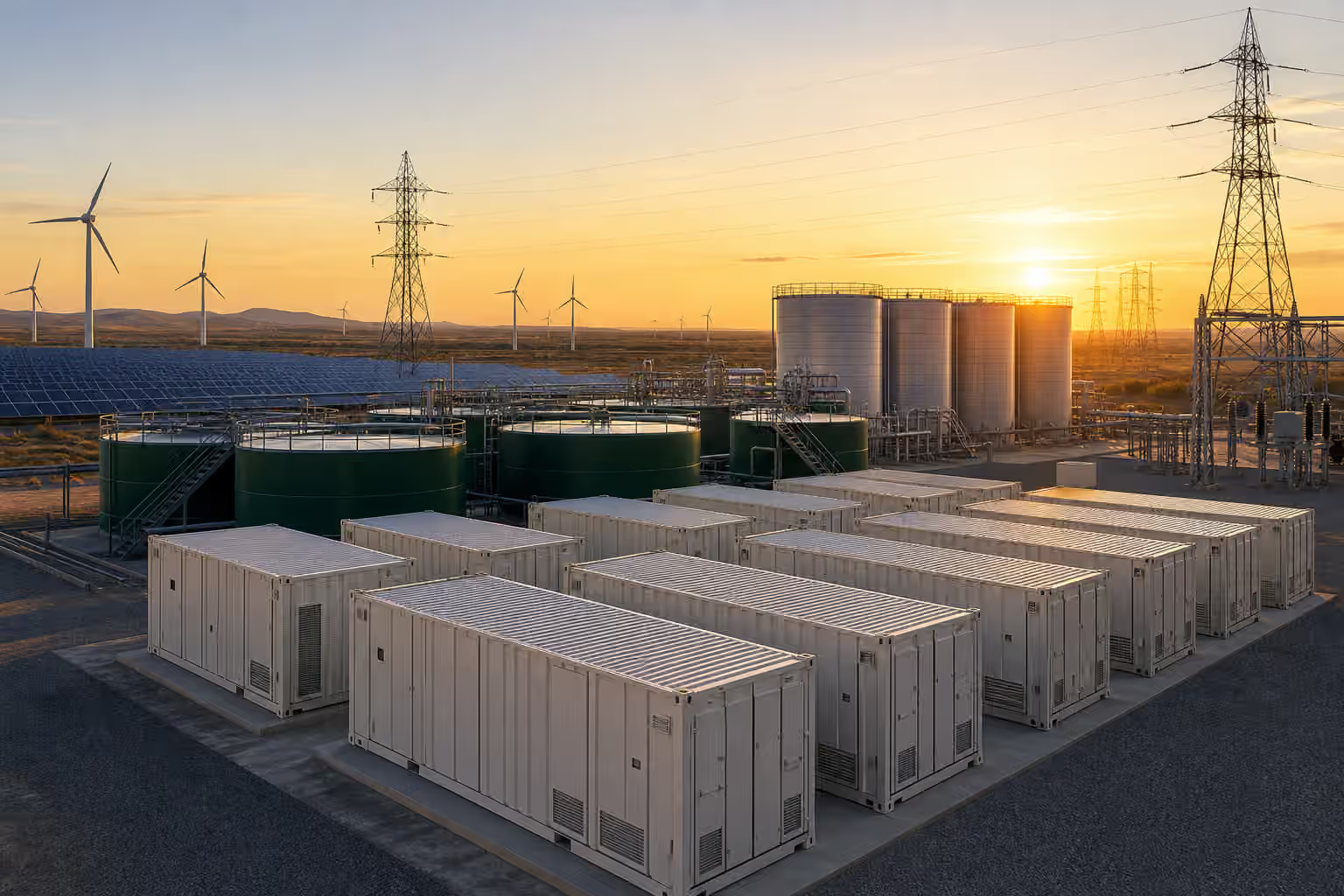
Lithium-ion batteries have grown quickly on electric grids because they are modular, fast, and increasingly familiar. They can respond in fractions of a second to help stabilize the grid. They can charge when solar is abundant and discharge during evening peaks. They can reduce curtailment, support local reliability, and delay some upgrades. Many grid battery projects are built from container-like units connected to inverters and controls.
Their strength is speed and short-duration work. A lithium-ion battery is excellent for smoothing daily swings and providing quick response. It is not usually designed to power an entire region through a long winter shortage. That does not make it bad. It means the job matters.
Think of lithium-ion grid batteries as the athletic midfielder in a soccer match. They move quickly, cover gaps, and respond to sudden changes. You still need defenders, forwards, a goalkeeper, and a strategy. A grid made only of short-duration batteries would struggle during extended gaps unless it had enormous overbuild and charging energy.
Long-duration storage is the pantry
Long-duration energy storage covers a family of technologies that aim to discharge for many hours, days, or longer. Flow batteries store energy in liquid electrolytes that can be scaled with tank size. Pumped hydro moves water uphill and releases it through turbines later. Compressed air stores energy as pressurized air. Thermal storage stores heat in materials such as molten salt, bricks, or other media. Hydrogen can be made with electricity and later used in fuel cells or turbines, though efficiency and infrastructure are challenges. Iron-air and other chemistries aim for low-cost multi-day storage.
These technologies are different because they optimize for different tradeoffs. Some are efficient but geography-limited. Some are cheap in materials but large in footprint. Some can store for a long time but lose energy in conversion. Some are best for industry rather than normal grid dispatch. Long-duration storage is not a single product category like a laptop battery. It is a toolbox.
The value grows as grids depend more on variable renewables. The first few batteries on a grid may make money covering daily peaks. As renewable penetration grows, the hard periods become longer and more complex. Storage that can last beyond the daily cycle becomes more valuable.
Storage needs something to store
A common mistake is talking about storage as if it creates energy. It does not. Storage moves energy. A battery discharged at 8 p.m. had to charge earlier. A pumped hydro reservoir released at night had to pump water uphill before. Hydrogen burned in a turbine had to be produced, compressed, stored, and transported. Storage is like a bank account. It can help you time spending, but deposits still matter.
This is why storage works best as part of a system. If a region has lots of cheap solar at noon, batteries can carry some of that value into the evening. If a region has strong wind at night, storage can shift it into morning. If a grid has surplus nuclear or geothermal during low-demand hours, storage can capture value. Without surplus or low-cost charging energy, storage becomes expensive backup.
Duration changes economics
The economics of storage depend on how often it cycles and what problem it solves. A four-hour battery may charge and discharge frequently, earning value from daily price differences and grid services. A multi-day storage system may sit idle for long periods, then become extremely valuable during rare stress events. That is harder to finance because markets often pay for frequent energy movement better than they pay for insurance.
This is similar to a fire station. A fire truck is valuable even when parked, because you need it during emergencies. But if you paid firefighters only by the gallon of water sprayed, the system would underpay readiness. Grid markets face similar design questions for long-duration storage and firm capacity.
Safety and siting
Storage projects are infrastructure. They need fire safety, spacing, controls, interconnection, permitting, and community trust. Lithium-ion battery fires are rare relative to the number of systems, but they require specific safety planning. Flow batteries may have different chemical considerations. Hydrogen has its own handling risks. Pumped hydro changes landscapes. Compressed air needs suitable geology or tanks. Thermal storage needs heat management.
No energy technology is impact-free. The goal is to match the technology to the site, manage risks honestly, and compare alternatives fairly. A battery near a substation may avoid a more disruptive line upgrade. A pumped hydro project may be valuable but controversial. A hydrogen storage site may make sense for industrial clusters but not everywhere.
Why this matters
Storage matters because it turns more clean electricity into useful electricity. It lets grids absorb more solar and wind. It gives operators fast tools. It can support reliability near large loads such as data centers. It can reduce the need to run fossil plants for short peaks. Long-duration storage could help with the hardest periods of a clean grid.
For a normal reader, the key is to ask “how long” and “how often.” A battery that covers four hours is not the same as a system that covers four days. A technology that responds instantly is not the same as one that stores seasonal energy. Storage is not a magic drawer where the grid hides unlimited power. It is a set of time machines, each built for a different trip.