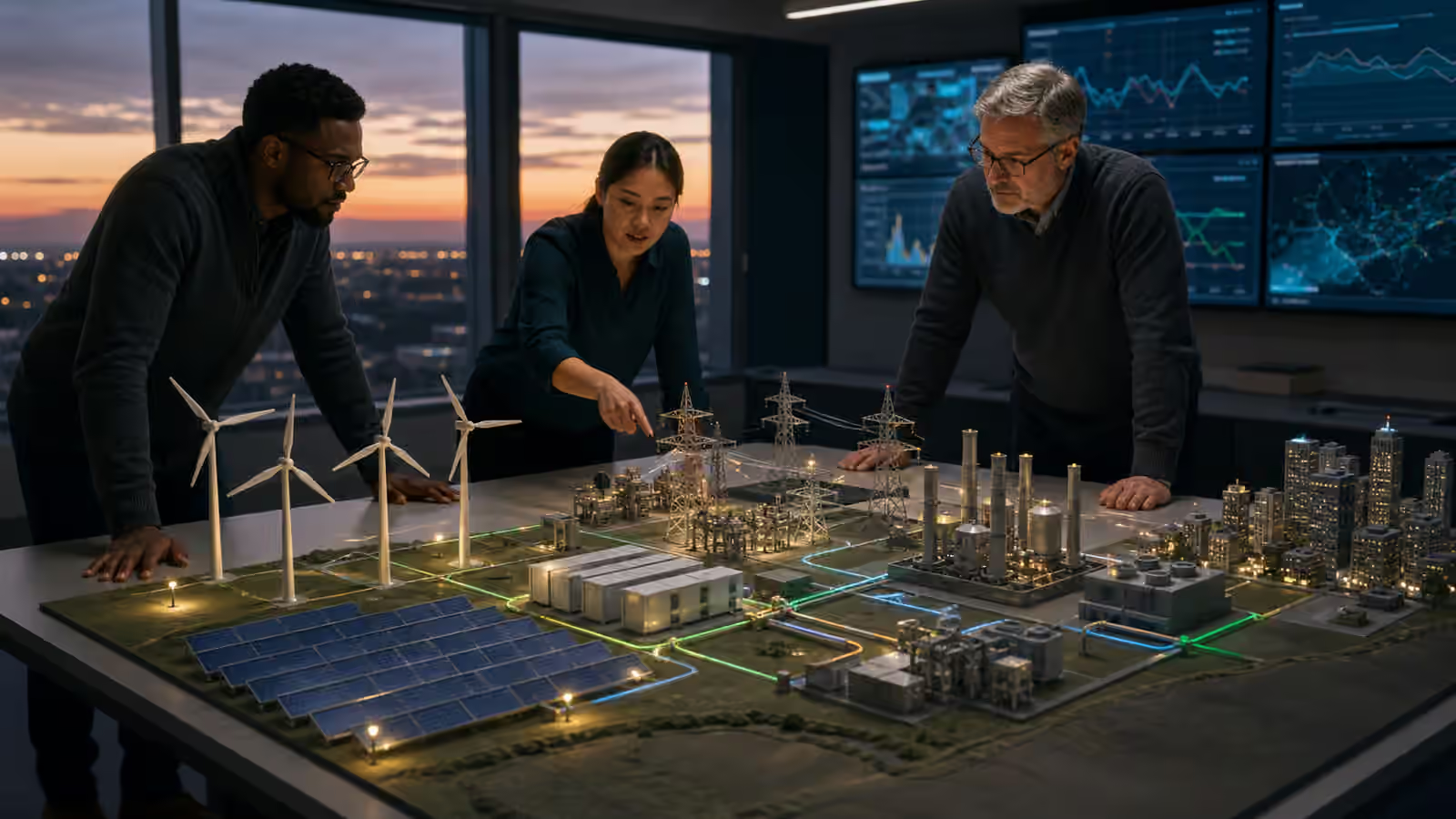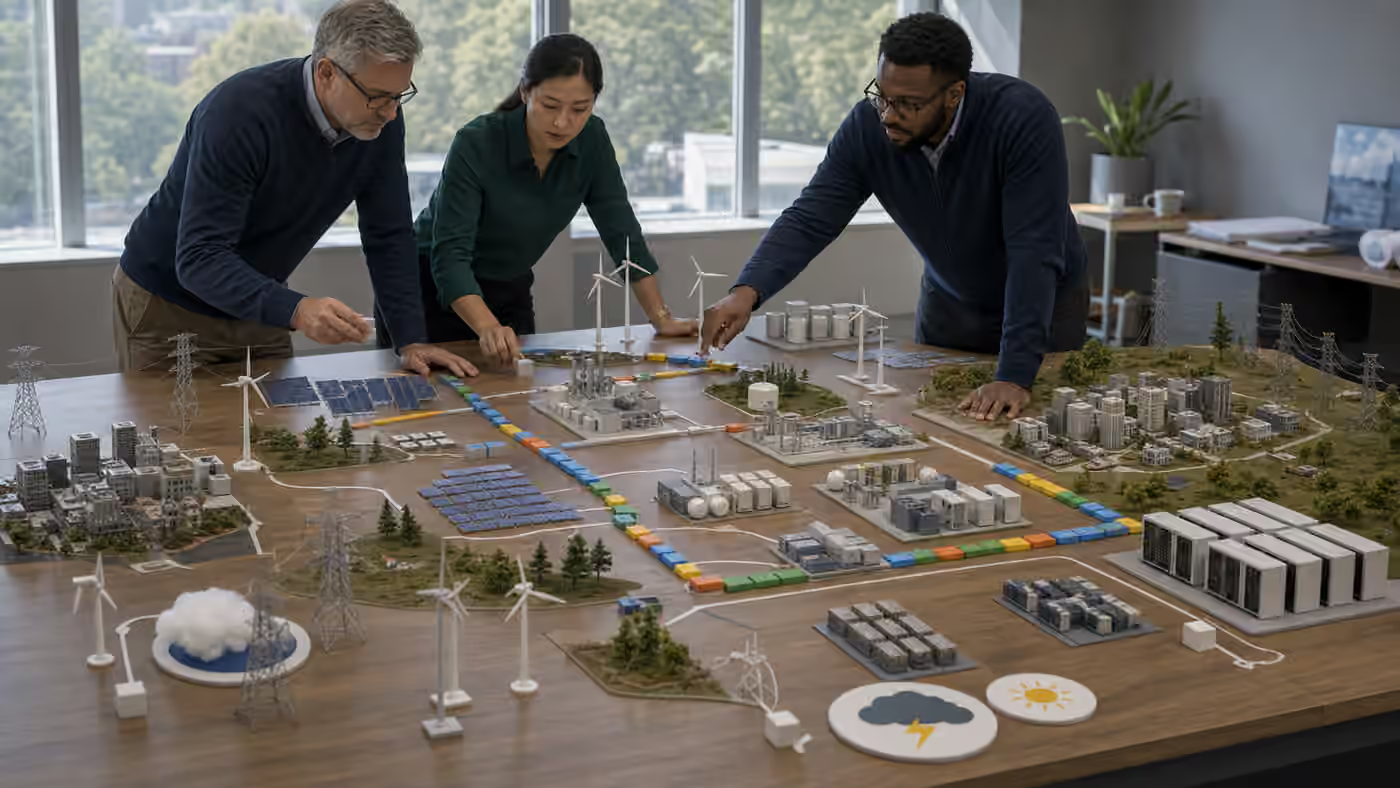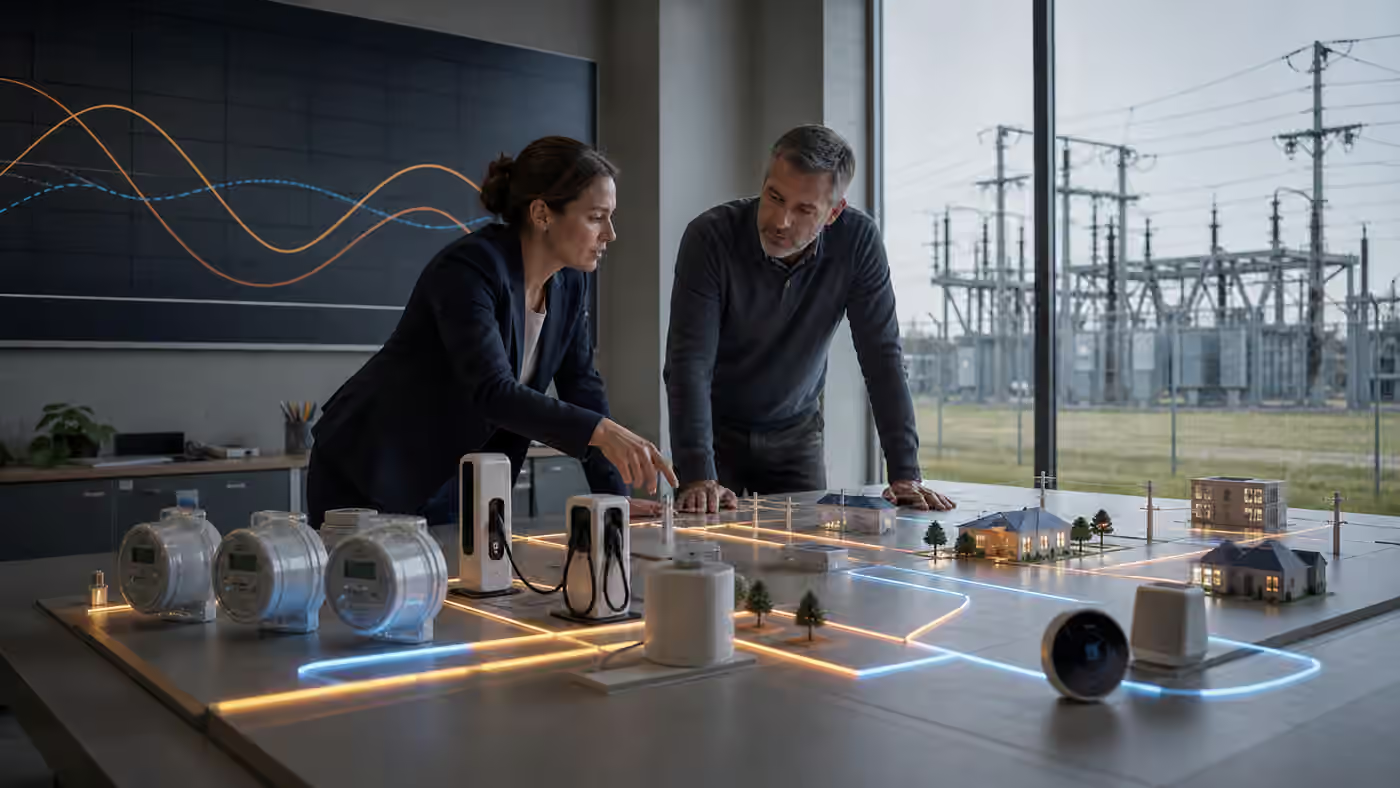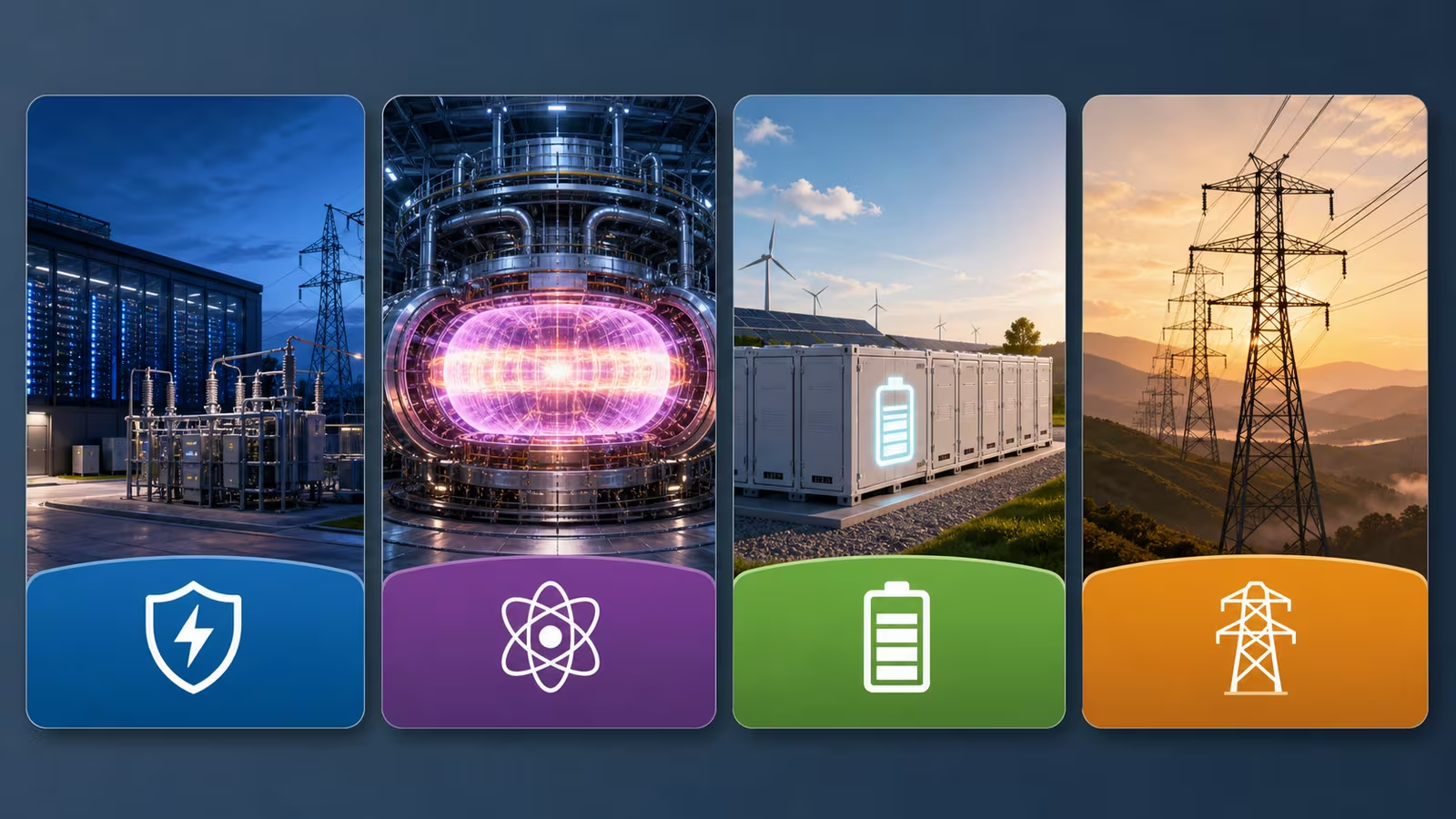
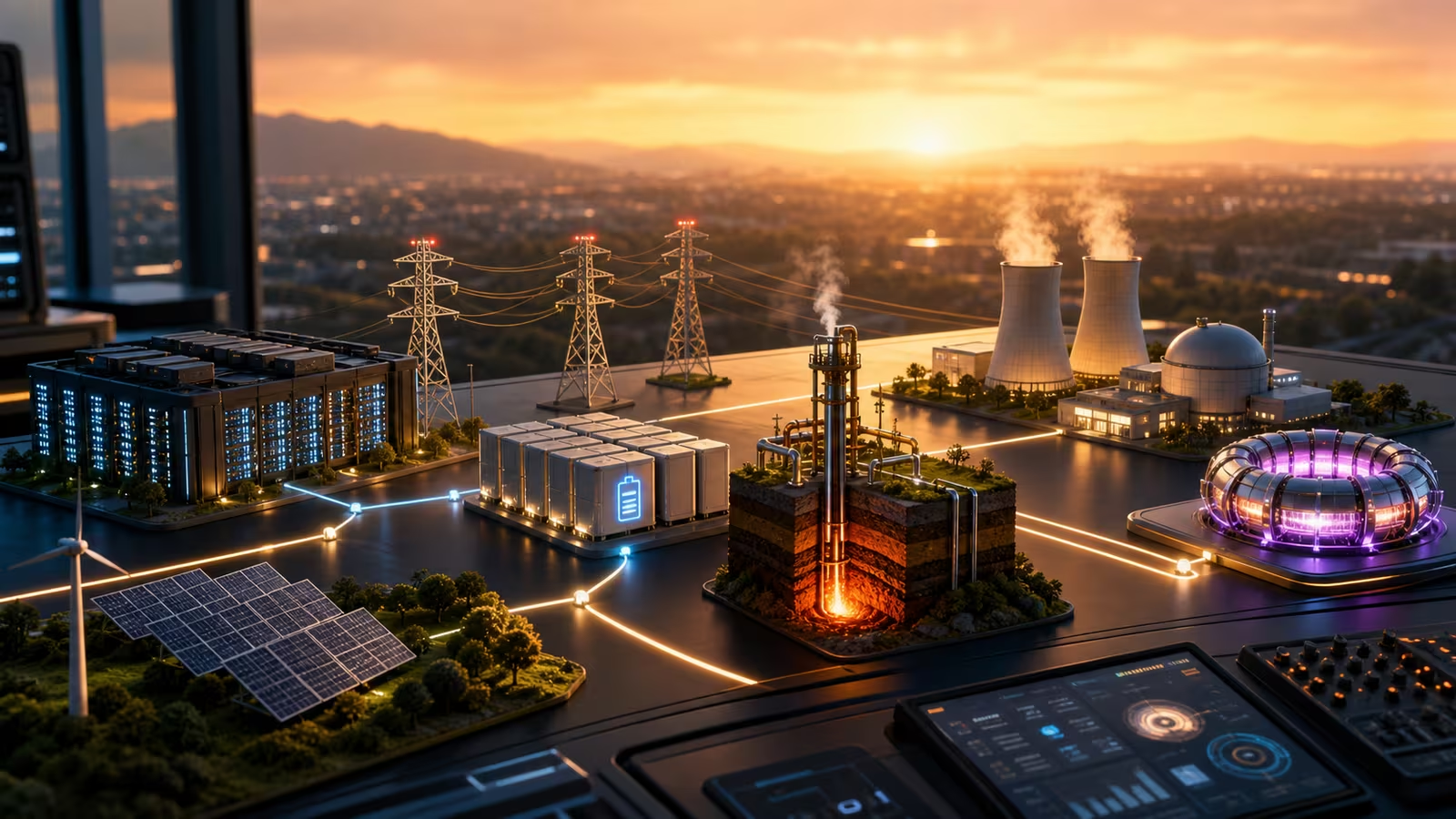
The future energy system will probably not have one hero. That can feel disappointing because one-hero stories are easier to tell. Fusion saves everything. Nuclear saves everything. Solar plus batteries saves everything. Geothermal saves everything. The grid saves everything. Efficiency saves everything. In real infrastructure, the better story is a portfolio. Different tools do different jobs, and the best system is the one that covers the jobs reliably, affordably, and cleanly.
Think of the electricity system like a city transit network. Walking, bicycles, buses, trains, delivery trucks, ferries, and emergency vehicles all matter. You would not ask one vehicle type to do every job. The question is how the network fits together. Energy is similar. Solar may be cheap and abundant during the day. Wind may complement it in certain seasons and regions. Batteries may shift power into peaks. Transmission may share resources across distance. Geothermal and nuclear may provide firm clean power. Demand response may reduce stress. Efficiency may reduce the size of the problem.
Start with the load
A good portfolio begins with demand. What needs power, where, and when? Homes have morning and evening patterns. Factories may run shifts. Heat pumps can raise winter demand. Electric vehicles may charge at night or after work. Data centers may run continuously. Air-conditioning peaks during heat waves. The grid has to serve the shape of demand, not just the annual total.
This is why a megawatt-hour is not always equal in practice. A megawatt-hour at noon during a sunny spring day may be easy to produce. A megawatt-hour during a cold, still evening may be much harder. Energy planning that ignores time will overpromise. Energy planning that understands time can choose the right mix.
Data centers sharpen this lesson. An AI training cluster may be flexible if software allows it, but many digital services are expected to be always available. If data centers can shift some work, locate near clean capacity, use efficient cooling, and support grid services, they become easier to integrate. If every load insists on maximum power during every stress hour, the grid has to build more expensive backup.
Use cheap clean energy when it is available
Solar and wind are likely to remain major parts of future grids because they can produce low-cost electricity in many regions. They are not perfect, but perfection is not the test. The test is system value. Solar can be especially valuable where daytime demand is high. Wind can provide energy at night and in seasons when solar is weaker, depending on the region. Both can be built in smaller increments than many large thermal plants.
Their challenge is variability. The sun sets. Wind changes. Weather can cover large areas. That means high-renewable grids need storage, transmission, flexible demand, forecasting, and firm resources. This is not a reason to avoid renewables. It is a reason to build the rest of the system with open eyes.
Add storage for time
Short-duration batteries help daily balancing. They can charge during sunny hours and discharge during evening peaks. They can respond quickly to disturbances and provide grid services. Long-duration storage tries to cover longer gaps and rare stress periods. The right portfolio may use both.
Storage should be deployed where it solves a clear problem: reducing curtailment, easing congestion, serving peaks, providing reserves, supporting local reliability, or replacing fossil peakers. Storage built without a charging strategy is like a warehouse with no supply chain. It looks useful, but the value comes from what flows through it.
Add transmission for space
Transmission moves energy across geography. It connects windy regions, sunny regions, hydro resources, geothermal sites, cities, factories, and data centers. It also improves resilience by letting regions help each other. A portfolio without transmission may overbuild local resources while cheaper power sits trapped elsewhere.
Transmission is hard because it crosses real land and communities. But avoiding wires has costs too: more local generation, more curtailment, more expensive reliability, and slower clean-energy growth. The future portfolio needs both better use of existing lines and new lines where the value is strong.
Add firm clean power for hard hours
Firm clean power is the hardest and most valuable part of the puzzle. Existing nuclear plants, geothermal, hydro, biomass in limited contexts, fossil plants with credible carbon management, future advanced nuclear, and possible fusion all sit in this conversation. They are not interchangeable. Each has geography, cost, fuel, safety, emissions, land, water, and public acceptance questions.
The reason firm clean power matters is that grids need reliability during difficult periods. If a region has many days of low wind and low sun, short batteries alone may not be enough. Firm resources can reduce the amount of storage and overbuilding required. They can also support industrial loads and data centers that need steady power.
Efficiency is the quiet multiplier
The cleanest megawatt-hour is often the one you do not need to produce. Efficient chips, better cooling, building insulation, heat pumps, industrial process improvements, efficient motors, and smarter software all reduce demand. In data centers, efficiency can show up as better chips, better utilization, liquid cooling, workload scheduling, and less wasteful computation.
Efficiency is not as exciting as a glowing reactor, but it changes the size of every other problem. If demand grows more slowly, fewer lines, plants, batteries, and fuels are needed. If demand grows wastefully, every energy technology has to work harder.
Why this matters
The future energy portfolio matters because the AI age, electrification, and climate goals will all arrive through the same grid. A weak portfolio creates bottlenecks and fights. A strong portfolio gives societies room to build, compute, move, heat, cool, and manufacture with fewer emissions and better reliability.
For a normal reader, the practical test is fit. When someone promotes an energy technology, ask what job it does. Does it produce cheap energy, firm capacity, fast response, long storage, local resilience, industrial heat, or transmission capacity? What problem remains after it is built? What does it need around it? The future will not be powered by a single answer. It will be powered by a set of tools that respect time, place, physics, cost, and people.