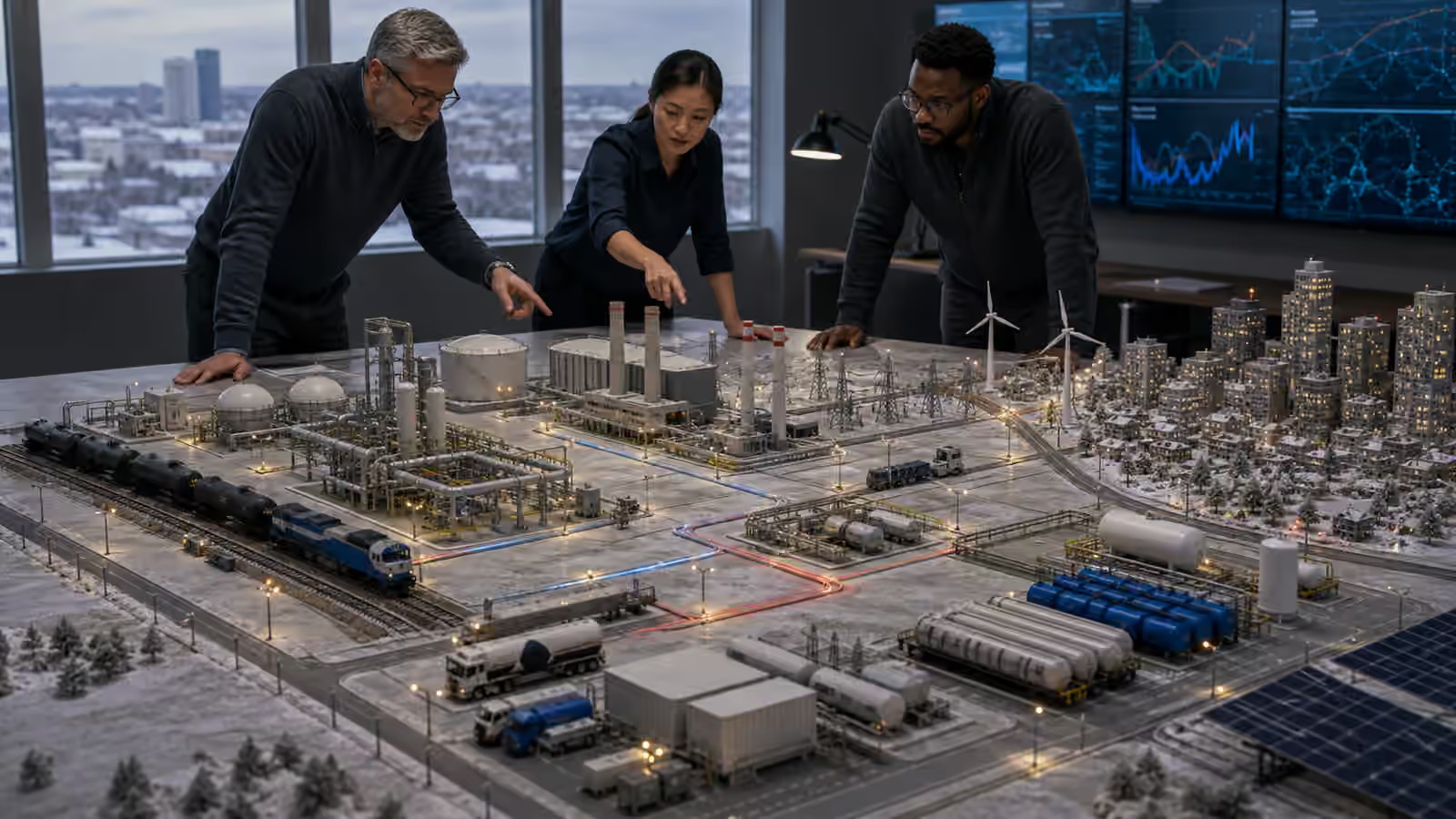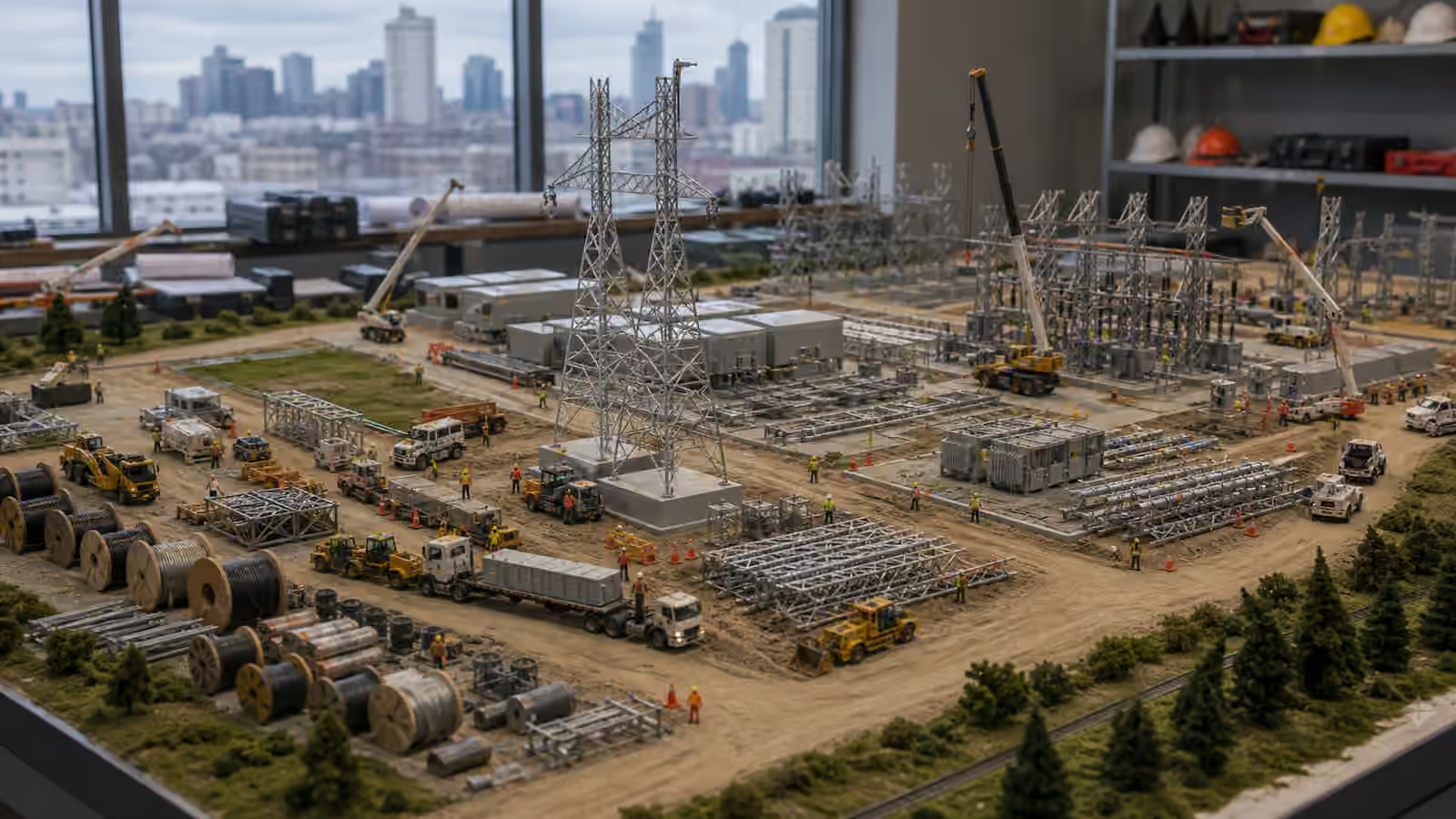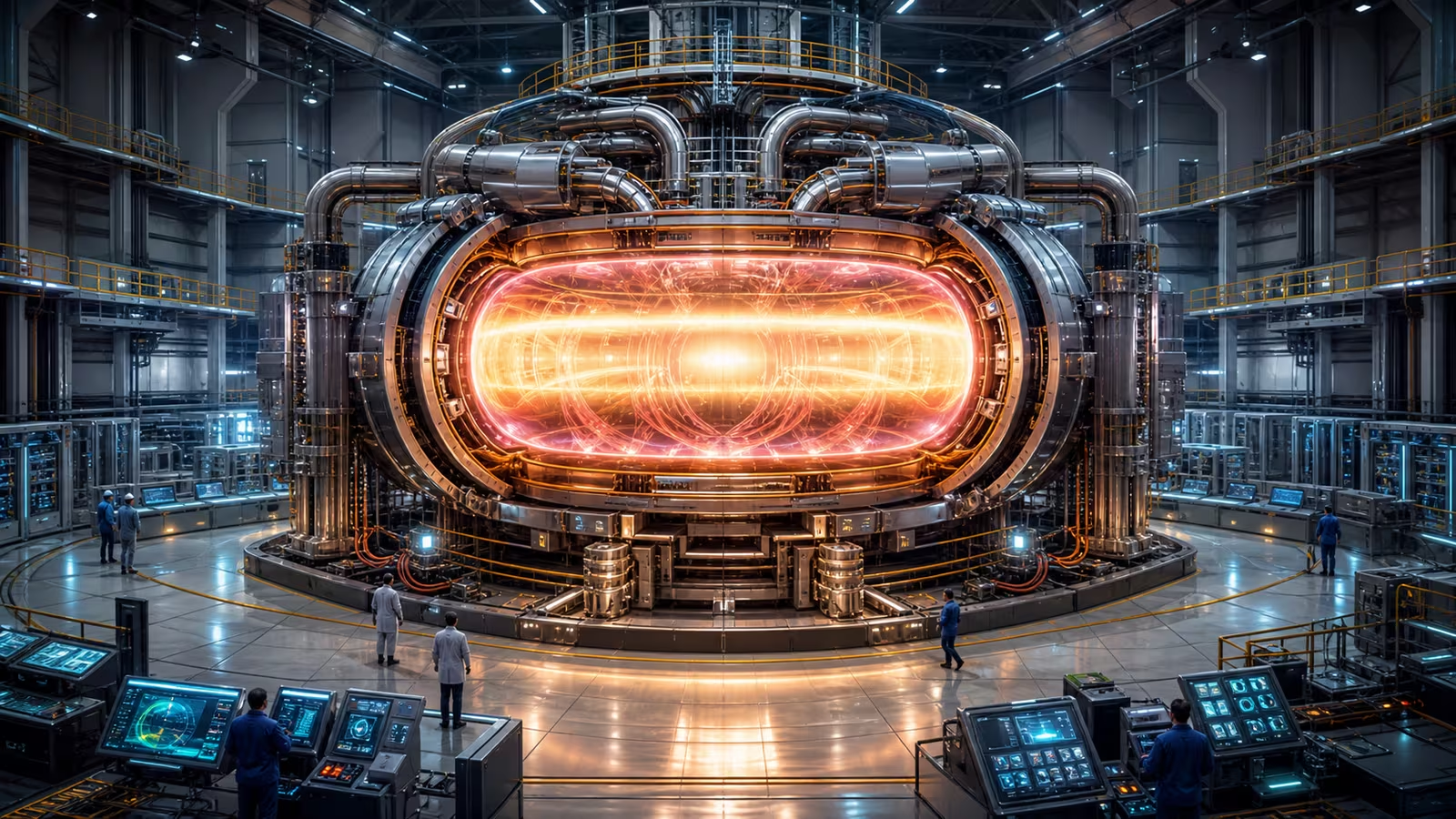
Fusion is the energy dream that refuses to leave the room. It promises the kind of power story people want to believe in: abundant fuel, no carbon dioxide from operation, no chain reaction like a fission reactor, and the basic physics that powers the sun. The phrase “star in a bottle” is dramatic, but it points at the real idea. Fusion tries to make light atomic nuclei join together, releasing energy, while keeping the process controlled on Earth.
The reason fusion is exciting is also the reason it is hard. The fuel does not want to fuse under normal conditions. It must be brought to extreme temperatures and pressures, then held long enough for useful reactions to happen. A commercial fusion plant would need not only a hot plasma or target reaction, but a complete power system: fuel supply, heat capture, materials that survive radiation and stress, maintenance, safety systems, power conversion, grid connection, and economics.
Fusion is not one machine
When people say fusion, they often picture one device, but there are several approaches. Magnetic confinement uses powerful magnetic fields to hold hot plasma away from the walls. Tokamaks are the most famous shape, often looking like a doughnut wrapped in coils. Stellarators use more complex magnetic geometry to produce stable confinement. Inertial confinement uses lasers or other drivers to compress tiny fuel targets very quickly. Other companies and labs explore compact magnets, field-reversed configurations, magnetized target fusion, pulsed systems, and alternative fuels.
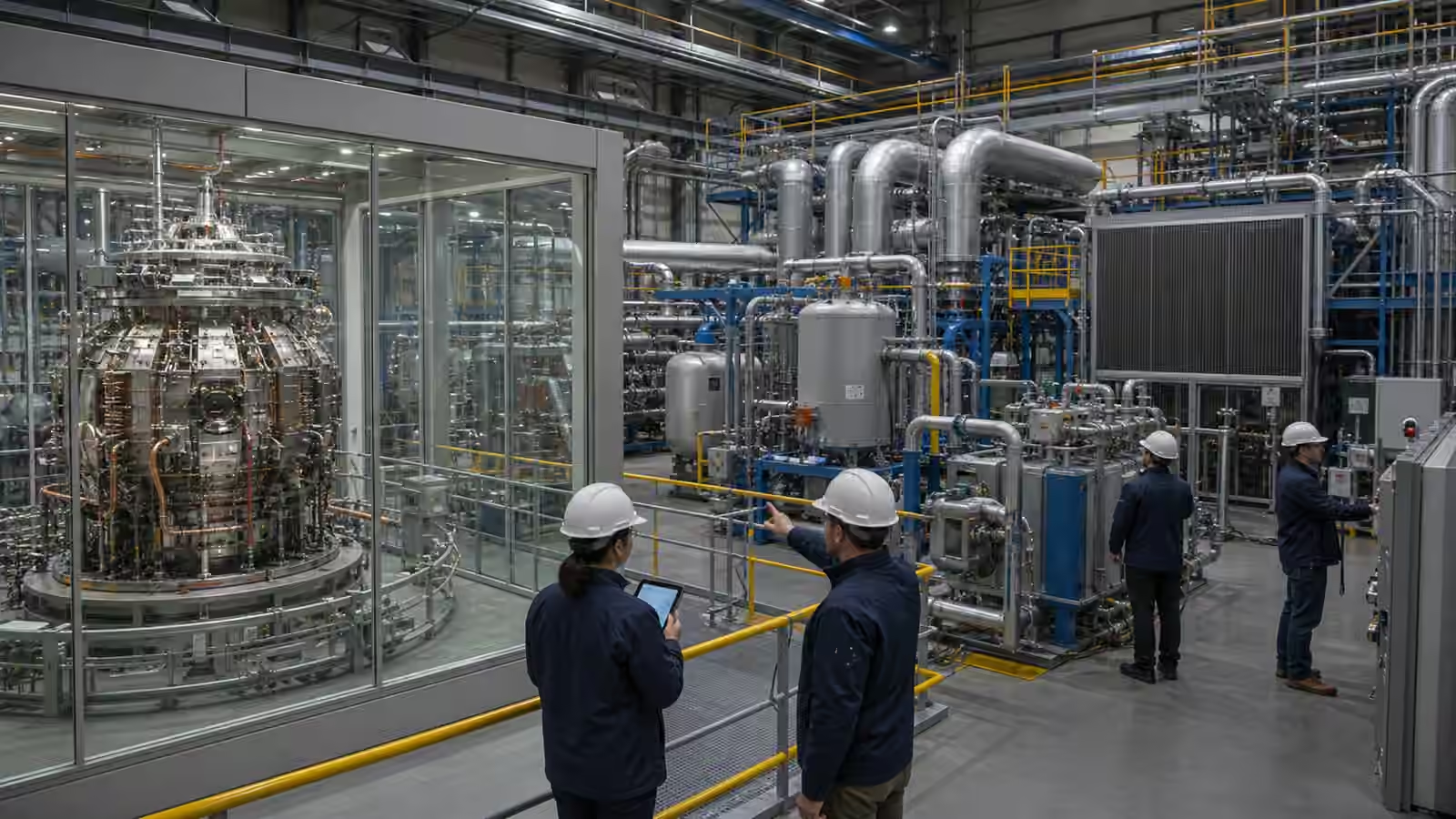
These approaches are like different attempts to hold a campfire without touching it. Magnetic systems try to keep the fire suspended and controlled. Inertial systems try to squeeze fuel so intensely that fusion happens before the material flies apart. Each has strengths and problems. Magnetic systems can imagine steady operation but need plasma stability and durable materials. Laser systems can produce impressive bursts but need repetition, target manufacturing, and energy efficiency. Compact concepts may promise faster development, but they still must prove performance.
Scientific gain is not grid power
Fusion headlines can be confusing because “gain” has several meanings. A physics experiment may produce more fusion energy than the energy delivered directly to the fuel target, while the whole facility still consumes far more energy from the wall. That can be a scientific milestone and still not be a power plant. A commercial plant must produce net electricity after accounting for all the real equipment, not just the reaction.
Think of a kitchen. If the pan gets hotter than the flame input for a moment because of a clever trick, that is interesting. But a restaurant needs a stove, fuel, ventilation, staff, reliable operation, cleaning, repair, and customers. Fusion must leave the lab milestone and become an industrial machine that works repeatedly and economically.
This distinction does not make progress meaningless. It makes progress easier to understand. Fusion has crossed real scientific thresholds. The remaining question is whether those thresholds can be turned into reliable, affordable electricity.
The materials problem
One of fusion’s quiet challenges is materials. A fusion reaction can produce high-energy neutrons that slam into surrounding structures. Those neutrons can damage materials, create heat, and change the properties of metal over time. A power plant must capture heat while surviving this harsh environment. It also needs components that can be replaced without shutting down for impractical lengths of time.
This is why fusion is not only plasma physics. It is materials science, robotics, manufacturing, tritium handling, heat exchange, and maintenance strategy. The plasma can be beautiful, but the wall around it decides whether the plant can run.
Fuel also matters. Many leading concepts use deuterium and tritium. Deuterium is relatively available. Tritium is scarce and radioactive, so a commercial plant may need to breed tritium from lithium in a surrounding blanket. That breeding system must produce enough fuel, capture heat, and remain safe. It is a central engineering challenge, not a side note.
Why fusion would matter
If fusion becomes practical, it could provide firm clean power. That means electricity available when needed, not only when the weather cooperates. A grid with lots of solar and wind benefits from storage and transmission, but it also values firm sources that can run through long gaps. Fusion could help power cities, industry, desalination, synthetic fuels, and large data-center loads without carbon emissions from operation.
Fusion plants might also have different siting possibilities than wind or solar because they could be compact relative to output. They would still need cooling, grid connections, trained staff, supply chains, regulation, and public trust. But if the technology worked, it could become a powerful anchor in clean electricity systems.
The phrase “if the technology worked” is doing a lot of work. Fusion is not a near-term excuse to avoid building today’s clean energy. A future fusion plant cannot reduce emissions this decade unless it exists, connects, and operates. The sensible view is to support fusion progress while also building the tools that are ready now: renewables, storage, transmission, efficiency, demand flexibility, advanced fission where appropriate, geothermal, and cleaner industry.
The investment wave
Fusion has moved from mostly public laboratories into a mixed ecosystem of national labs, universities, startups, private capital, and industrial suppliers. Better magnets, computing, materials tools, additive manufacturing, and plasma modeling have made new approaches more plausible. Governments are also thinking about regulatory pathways and pilot plants. This does not guarantee success, but it changes the pace and diversity of attempts.
Private fusion companies often talk about aggressive timelines. Treat those timelines as goals, not promises. Energy hardware is difficult. Even after a first working pilot, commercial scale-up would take factories, supply chains, operators, financing, and experience. The first fusion electricity will not instantly make every other source obsolete. It would begin a long learning curve.
Why this matters
Fusion matters because the upside is enormous and the uncertainty is real. It is worth following without turning it into a savior story. A healthy energy future can hold two thoughts at once: fusion is one of the most exciting long-term power possibilities, and it is not a replacement for building the grid we need now.
For a normal reader, the best fusion question is not “Did they make a miniature sun?” The better question is “What part of a real power plant has been proven?” Has the system produced net electricity to the grid? Can it run repeatedly? Can its materials survive? Can it breed or supply fuel? Can it be maintained? Can it compete with other firm clean options? Those questions keep the wonder and remove the fog. Fusion is a star story, but the future will judge it like any other power plant: by whether it can reliably make useful electricity.