Firm power is often discussed as if the machine itself were the whole story. A turbine, engine, fuel cell, existing thermal plant, or backup generator is either available or not. In real grid reliability, the fuel path matters just as much. A generator that can run for days only helps if fuel reaches it, storage is adequate, delivery routes remain open, contracts hold during stress, emissions and operating limits are understood, and operators know when to conserve fuel for later. Firm capacity is partly a logistics system.
This is easiest to see during hard weather. A cold snap can raise heating demand, strain fuel delivery, freeze equipment, and create demand for the same fuel across homes, industry, and power plants. A storm can block roads needed for backup fuel deliveries. A heat wave can reduce plant performance and increase electricity demand at the same time. A long outage can exhaust on-site diesel or hydrogen storage unless resupply is planned. The resource adequacy guide asks whether capacity exists for the hard hours. Fuel logistics asks whether that capacity can keep operating through them.
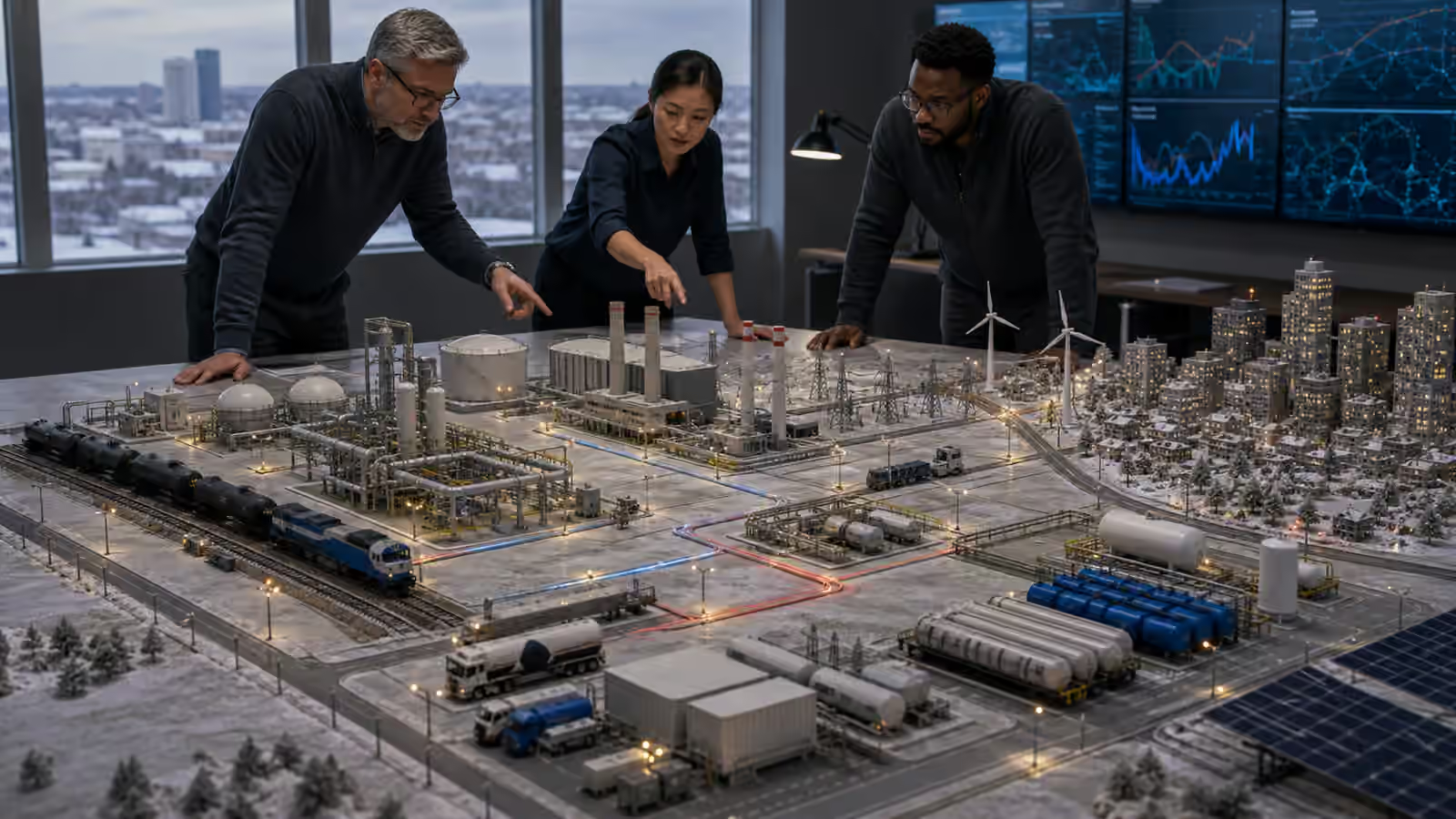
The point is not to favor one fuel over another. It is to make the physical support system visible. Natural gas, diesel, hydrogen, ammonia, biomethane, liquid fuels, stored heat, and other firm-power options all have different logistics. Some use pipelines. Some use trucks, rail, ships, or storage caverns. Some are easier to store but harder to decarbonize. Some can be clean in principle but difficult to produce, move, and verify. Reliability depends on the whole chain, not only the final generator.
Fuel Availability Is Not the Same as Fuel Deliverability
A region can have fuel in the broader market and still struggle to deliver it to a specific generator during a stressed period. Pipelines have capacity limits. Compressors need power. Storage fields have withdrawal rates. Roads can flood or freeze. Ports can close. Truck fleets can be stretched. Rail deliveries can be delayed. A generator’s tank may be full at the start of an event and inadequate by the third day.
This distinction mirrors the difference between energy and deliverable capacity in the electric grid. The transmission bottlenecks guide explains why electricity must be able to move through actual wires. Fuel must also move through actual infrastructure. A power plant connected to a constrained fuel system can be electrically available and logistically limited at the same time.
Contracts matter too. A generator with interruptible fuel service may be lower cost in normal times but less dependable during scarcity. A backup generator with a fuel delivery contract may still face delays if many customers call for refills after the same storm. A clean fuel facility may promise future supply before production, storage, and transport are proven at the required scale. The reliability value of firm power depends on those details.
On-Site Storage Buys Time, Not Infinity
On-site fuel storage is a buffer. It can let a facility run through a short interruption, provide backup during grid outages, and reduce dependence on immediate delivery. It does not make fuel infinite. The useful duration depends on tank size, generator load, operating strategy, weather, resupply access, fuel quality, safety rules, and maintenance. A site that can run for twelve hours has a different reliability role from one that can run for a week.
Data centers, hospitals, water facilities, telecom sites, and emergency shelters often think carefully about on-site fuel because outages have direct consequences. The community microgrids guide explains why critical loads need more than a purchase order for equipment. They need duration planning. Which loads are truly critical? How long must they run? Who refuels the site? What happens if roads are blocked? How is fuel tested and rotated? Can the system operate at partial load to extend duration?
The same questions apply to grid-scale firm resources. A plant may be credited for capacity, but the credit should reflect its ability to operate through the event being studied. A fuel-limited resource can still be valuable, especially for short peaks or restoration support. It should not be counted as if it has unlimited duration.
Clean Fuels Add Accounting and Infrastructure
Clean fuels are attractive because they may provide dispatchable energy during hours when wind, solar, short batteries, and imports are not enough. Hydrogen, synthetic fuels, biomethane, renewable liquid fuels, or other low-carbon molecules may help in some hard-hour roles. The clean fuels guide covers that possibility and its caveats. Fuel logistics adds another caveat: a clean fuel claim needs a working supply chain.
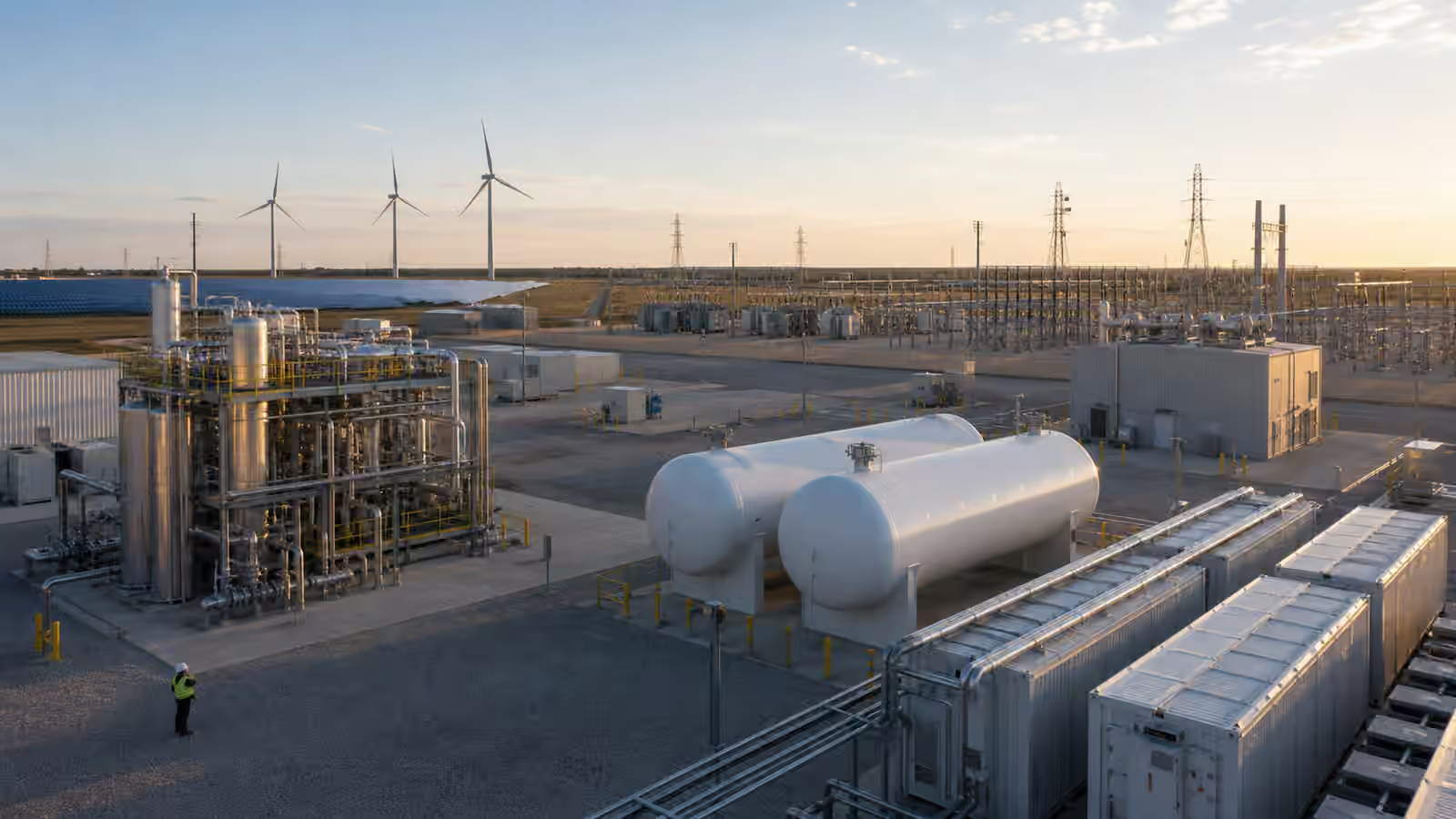
Hydrogen, for example, can be produced by electrolyzers, but production is only the front end. The fuel may need compression, storage, pipelines, trucks, blending decisions, safety procedures, sensors, compatible turbines or fuel cells, water planning, and hourly clean-power accounting. If hydrogen is produced only during surplus clean-power hours, storage has to bridge the gap between production and use. If it is produced continuously from grid power, the emissions claim depends on the electricity mix and accounting method.
Biomethane and renewable liquid fuels have different constraints. Feedstock supply, land use, processing, transport, quality, and competing uses all matter. A fuel can be low-carbon in one context and scarce or expensive in another. A reliability plan should be specific about where the fuel comes from, how much can be delivered, how long it can be stored, and what other sectors are counting on the same supply.
Fuel Systems Can Fail Together
Reliability planning has to consider correlated failures. Fuel systems and power systems can depend on each other. Gas compressors, pipeline controls, fuel terminals, water pumps, and communications may need electricity. Power plants may need gas or liquid fuel. During a wide-area event, both systems can be stressed at once. A plan that assumes each system supports the other without testing the loop may be weaker than it appears.
Cold weather is a common stress case. Heating demand can rise sharply, increasing competition for gas. Power plants may also need gas to serve electric demand. If fuel deliverability is constrained, some generators may not run even though they are mechanically capable. Liquid fuel backups may help, but only where storage, permits, emissions limits, and delivery plans are in place. Fuel switching may be possible at some plants and impossible at others.
This is why grid weatherization and resilience includes more than insulation and equipment heat tracing. It includes fuel assurance, communication between gas and electric operators, emergency procedures, and realistic assumptions about what happens during the same hours when everyone needs energy.
Backup Power Should Not Become Invisible Grid Planning
Many large customers install backup generation because they need high reliability. Data centers are the most visible example, but backup systems also serve hospitals, factories, campuses, water systems, and telecommunications. These systems can protect the customer, but they can also affect the wider grid. A campus with large backup generators may reduce load during an outage, support restoration, or participate in limited demand response. It may also create local emissions, fuel delivery traffic, noise, and operating questions.
The data center microgrids guide looks behind the fence at backup power, batteries, switchgear, and controls. Fuel logistics asks how that behind-the-fence system behaves during long events. If a data center relies on frequent fuel deliveries, nearby roads and suppliers become part of its reliability plan. If it stores large amounts of fuel, safety and community concerns become part of the site plan. If it claims to support the grid, the operating rules and fuel duration have to be explicit.
Backup power should not be treated as invisible because it sits behind a customer meter. It is still physical infrastructure. It occupies land, uses supply chains, interacts with emergency planning, and may affect local air and noise. A credible plan accounts for those impacts while recognizing why the customer needs resilience.
Conservation Can Be a Fuel Strategy
When fuel is limited, operating strategy matters. A generator does not always need to run at full output from the first minute. A microgrid may shed noncritical loads to extend duration. A data center may move flexible computing tasks or reduce nonessential demand. A building may use thermal storage to reduce generator runtime. A battery may cover short interruptions so a fuel-based generator starts less often. Demand flexibility can stretch fuel in the same way it stretches electrical capacity.
This connects fuel logistics to flexible computing loads and energy efficiency and load shape . The less energy a critical site needs during stress, the longer its stored fuel lasts. The more precisely it can prioritize loads, the more useful the fuel becomes. A gallon, kilogram, or cubic foot of fuel is not just an input. It is a limited reliability budget.
Operators need those strategies before the event, not after. Load priorities, automatic controls, manual procedures, fuel monitoring, refill triggers, and communications should be practiced. A plan that depends on improvising under stress is not a plan.
Firm Power Needs Honest Duration
Firm power will remain part of many reliability conversations because some hours are difficult to serve with weather-dependent generation and short storage alone. That does not make every firm-power claim equally strong. The value depends on duration, fuel deliverability, emissions constraints, startup performance, maintenance, local grid connection, and the specific stress case being studied.
The honest question is not whether a resource has fuel somewhere in the economy. It is how long it can run, where the fuel is stored, how resupply works, what other demands compete for the same fuel, what happens during extreme weather, and how the emissions or clean-fuel claim is supported. Those questions may make planning more complicated, but they also make reliability more real.
Firm capacity is not only steel, turbines, engines, or fuel cells. It is tanks, pipelines, compressors, roads, contracts, sensors, operators, safety rules, and conservation plans. A future grid that wants dependable low-carbon power has to design that support system with the same seriousness it applies to the generator. Otherwise the hard hour will reveal that the machine was ready, but the fuel chain was not.