Electric vehicles turn transportation planning into power-system planning. A car, bus, truck, or delivery van still looks like a vehicle to its driver, but to the grid it is a flexible electrical load with a battery attached. That load can be gentle if it arrives slowly, charges during easier hours, and uses existing capacity well. It can be difficult if many vehicles appear at the same place, at the same time, behind equipment that was never sized for transportation fuel.
The shift is easy to underestimate because one home charger does not look dramatic. It may use less power than a few large household appliances combined, and the car is parked for many hours. But scale changes the question. A neighborhood where many households charge after work, a highway plaza with fast chargers, a school bus yard, a transit garage, a port drayage depot, or a delivery hub can all create load patterns that look less like ordinary buildings and more like new industrial customers.
That is why EV charging belongs beside Distribution Grid Upgrades and Home Electrification and Grid Flexibility . The future grid is not only serving more heat pumps and data centers. It is also becoming part of the fuel supply for roads, depots, campuses, and freight corridors. The engineering challenge is not simply making enough electricity over the year. It is delivering enough power to the right parking spaces during the hours when vehicles actually need it.
Charging speed changes the grid problem
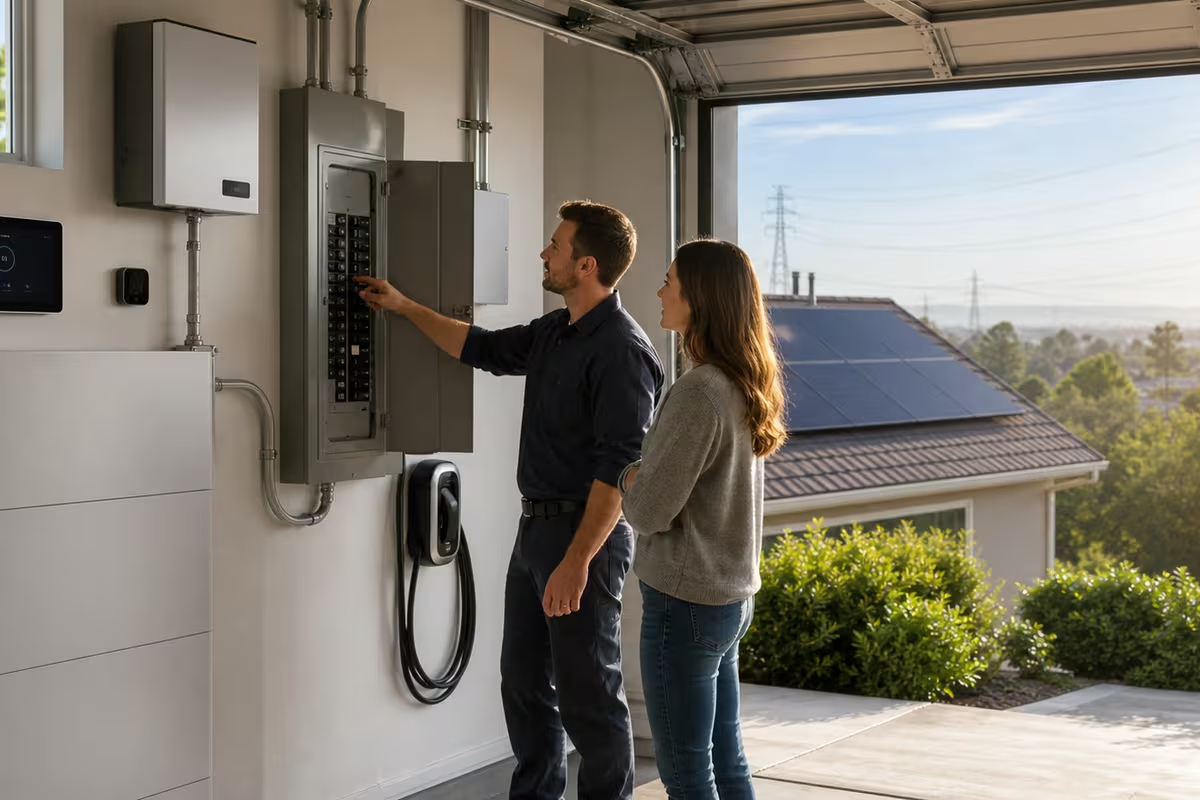
Slow charging and fast charging are different grid customers. A vehicle parked overnight at home or all day at work may need only modest power spread across many hours. That kind of charging can often be managed around local peaks. It can wait until later in the evening, follow a time-of-use price, respond to a utility signal, or absorb midday solar at a workplace lot. The service the driver needs is a charged vehicle by departure, not instant full-power charging.
Fast charging is different because it compresses energy delivery into a short window. A highway driver, taxi, ride-hail vehicle, delivery van, or long-haul truck may not have hours to wait. Fast charging stations therefore need stronger electrical service, larger transformers, heavier switchgear, careful protection settings, and sometimes on-site batteries to buffer the grid connection. The station may be quiet for part of the day and then see sharp peaks when traffic flows, weather, route schedules, or fleet operations line up.
This distinction matters because public discussion often treats chargers as one category. A level of convenience that is sensible for a road-trip corridor may be unnecessary and expensive for a depot where vehicles sit every night. A charger that makes sense for a household may be too slow for a bus route. A fleet operator that buys vehicles before planning electrical capacity may discover that the real bottleneck is not the vehicle purchase. It is the service upgrade, transformer lead time, utility study, trenching, switchgear, and construction window.
Fleet depots are small power systems
Fleet electrification makes the planning problem concrete. A depot manager may know the route schedule, parking layout, maintenance cycle, and vehicle turnover. The utility knows the feeder, substation, transformer limits, and local load forecast. Good charging design has to join those two forms of knowledge. If the vehicles return at 6 p.m. and all plug in at full power, the depot may create a new local peak. If the route schedule leaves vehicles parked for twelve hours, software can sequence charging so the same fleet is ready by morning with less strain on the grid.
The fleet site itself becomes a small energy system. It may include chargers, a transformer, switchgear, metering, a battery, solar canopies, backup power for critical routes, and controls that decide which vehicle charges first. The right design depends on operations. A school bus fleet has different dwell times than an ambulance service. A delivery depot has different urgency than an airport shuttle. A refuse truck may need a predictable overnight refill, while a shared fast-charging hub may need to handle unpredictable arrivals.
This is where Demand Response becomes practical rather than abstract. A flexible fleet can reduce or shift charging during a tight grid hour if it still meets the next day’s routes. The depot may be paid for that flexibility, or it may avoid demand charges and expensive upgrades. But the grid program has to respect the transportation job. If a bus is not charged when children are waiting, the charging strategy has failed no matter how elegant the grid model looked.
Local wires decide what is easy
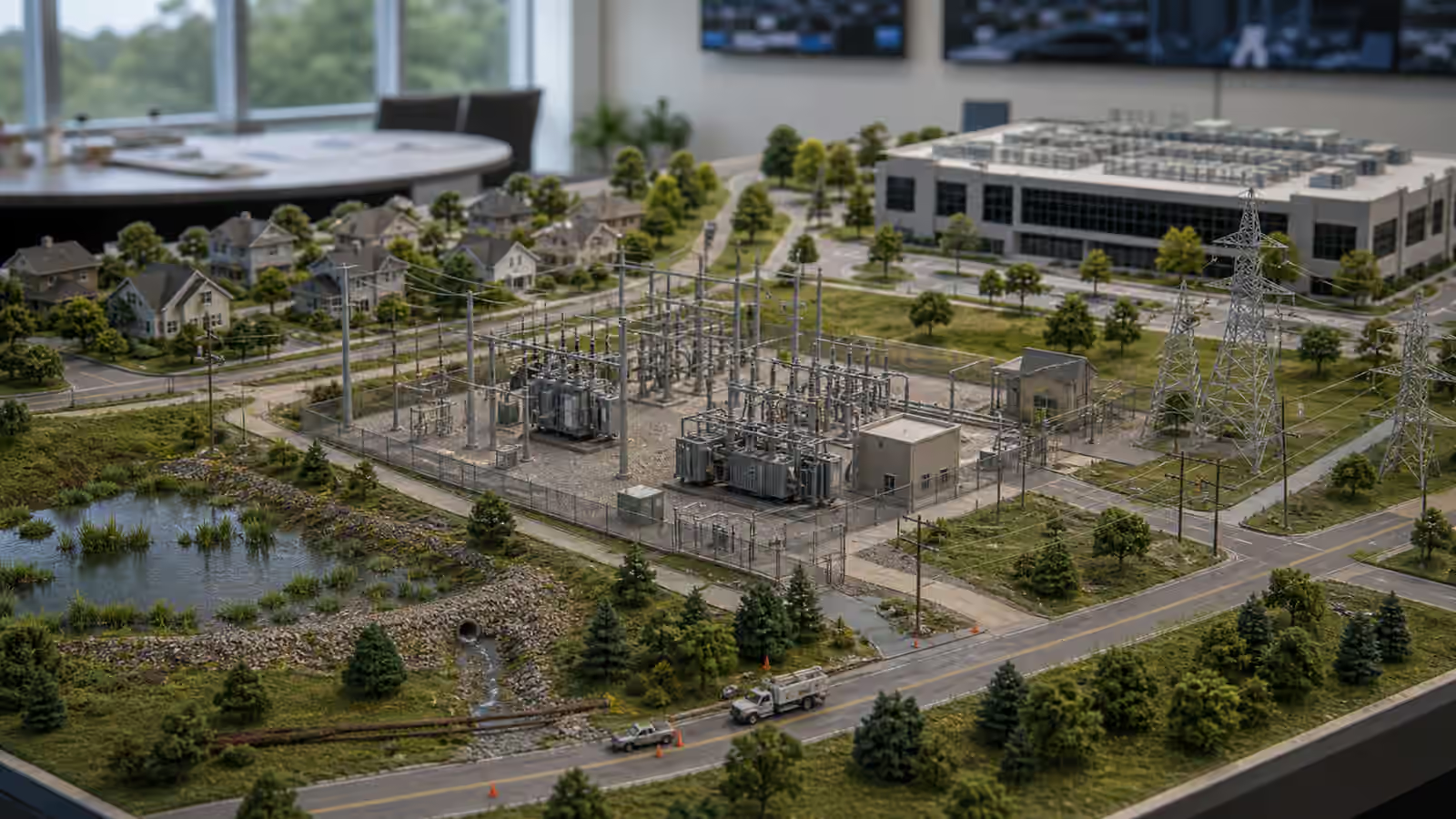
Transportation electrification often fails to line up neatly with existing electrical capacity. Fuel stations were sited around roads, tanks, deliveries, and real estate. Warehouses were sited around land, highways, labor, and logistics. Bus yards were sited around routes and municipal property. None of those choices necessarily placed large electric capacity exactly where future charging needs it. A promising depot can sit at the end of a constrained feeder. A highway plaza can be far from a strong substation. A dense neighborhood can have high EV demand and older local equipment.
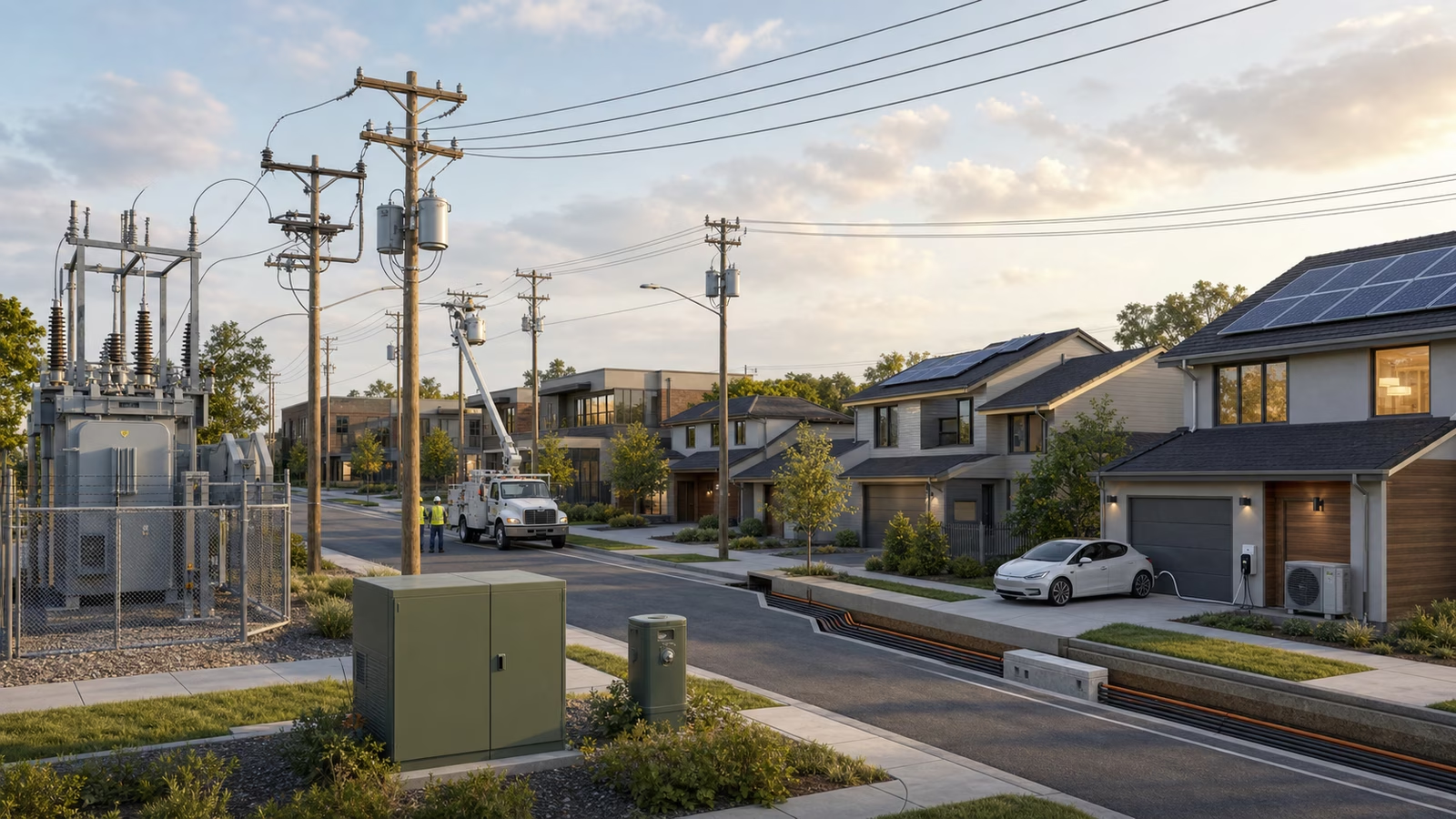
The result is a queue of practical work: new service drops, transformer upgrades, feeder reconductoring, substation additions, easements, permits, civil construction, and protection studies. Those are not side details. They decide when chargers can be energized. The same lesson appears in Transformers and Grid Hardware . Electrification depends on heavy assets that have manufacturing lead times, installation windows, and maintenance requirements. A charging plan that ignores hardware is a spreadsheet, not an infrastructure plan.
Utilities also need better visibility. Residential charging can cluster on a transformer long before the utility has a perfect picture of who owns which vehicle. Public chargers may be announced before load requests are filed. Fleet operators may phase vehicles in over several years. Forecasting has to improve so local upgrades can happen before overloads or service delays become routine. That does not mean every street needs to be rebuilt immediately. It means planners need enough information to target upgrades where transportation load is actually coming.
Managed charging is not the same as rationing
Managed charging sometimes sounds like a loss of convenience, but its best version is simply good scheduling. The charger understands when the vehicle must be ready, how much energy it needs, what the local grid is experiencing, and whether electricity is cleaner or cheaper in certain hours. Then it fills the battery without treating every plug-in moment as urgent.
The difference between helpful management and customer frustration is trust. Drivers and fleet operators need clear override options, dependable departure readiness, simple settings, and programs that do not hide the real tradeoffs. A household may accept slower overnight charging if the car is ready by morning. A fleet may accept staggered charging if route reliability improves and costs fall. A public fast-charging customer usually expects immediate service and may not tolerate much flexibility. The program has to match the use case.
Managed charging also connects EVs to Virtual Power Plants . A group of chargers can reduce demand during a grid peak, absorb surplus renewable energy, or coordinate with local batteries. Vehicle-to-grid power export is more complicated because it raises questions about warranties, cycling, customer consent, interconnection rules, and the value of backup energy. Still, the core idea is important: parked vehicles create timing flexibility. The grid should use that flexibility where it is reliable and fair.
Highways and heavy vehicles need corridor thinking
Passenger cars get much of the attention, but freight and highway charging raise different infrastructure questions. Heavy vehicles use larger batteries, need more power, and operate around schedules that may be less flexible. A charging corridor for trucks is not just a line of plugs on a map. It is a sequence of grid interconnections, rest areas, depots, substations, land parcels, queueing space, and operations. If one link is weak, the corridor may not work as a corridor.
This is similar to transmission planning at a smaller scale. Transmission Bottlenecks explains why power plants are not useful unless energy can move from where it is produced to where it is needed. Charging corridors have the same geography problem. Electricity has to reach the vehicles where route timing requires it. A station that is easy to build but poorly located may see little use. A station that is perfectly located but electrically constrained may open slowly or require expensive upgrades.
On-site batteries can help some sites by reducing the peak draw from the grid connection. They can charge slowly and discharge quickly into vehicles. That can defer an upgrade or make a weak location more workable. But a battery is not a substitute for energy supply. It still has to be refilled, maintained, protected, and sized around real traffic patterns. It is a buffer, not a magic source.
The charging buildout is a coordination test
EV charging is not only a technology deployment. It is a coordination test among automakers, fleet owners, utilities, cities, landlords, charging companies, equipment makers, regulators, and customers. Each group sees a different piece of the system. The driver sees convenience. The fleet manager sees vehicle uptime. The utility sees load growth and local constraints. The city sees curb space, equity, construction, and public access. The charging company sees utilization and interconnection timelines.
Good planning starts with the service being delivered. Home charging should feel ordinary and dependable. Fleet charging should protect routes. Public fast charging should be visible, maintained, and easy to use. Grid planning should then support those services with the least unnecessary peak load. That means right-sized chargers, managed timing, local upgrades, clear interconnection processes, and honest forecasts.
Transportation electrification can help the future grid if it is treated as a flexible load with real-world needs. It can strain the grid if planners pretend vehicles are either tiny appliances or impossible burdens. The truth is more useful. EVs add significant demand, but much of that demand is schedulable. The work is to make charging fit the grid without making transportation feel fragile. When the car, route, depot, charger, transformer, software, and utility plan all line up, electricity becomes a practical fuel rather than a new bottleneck.