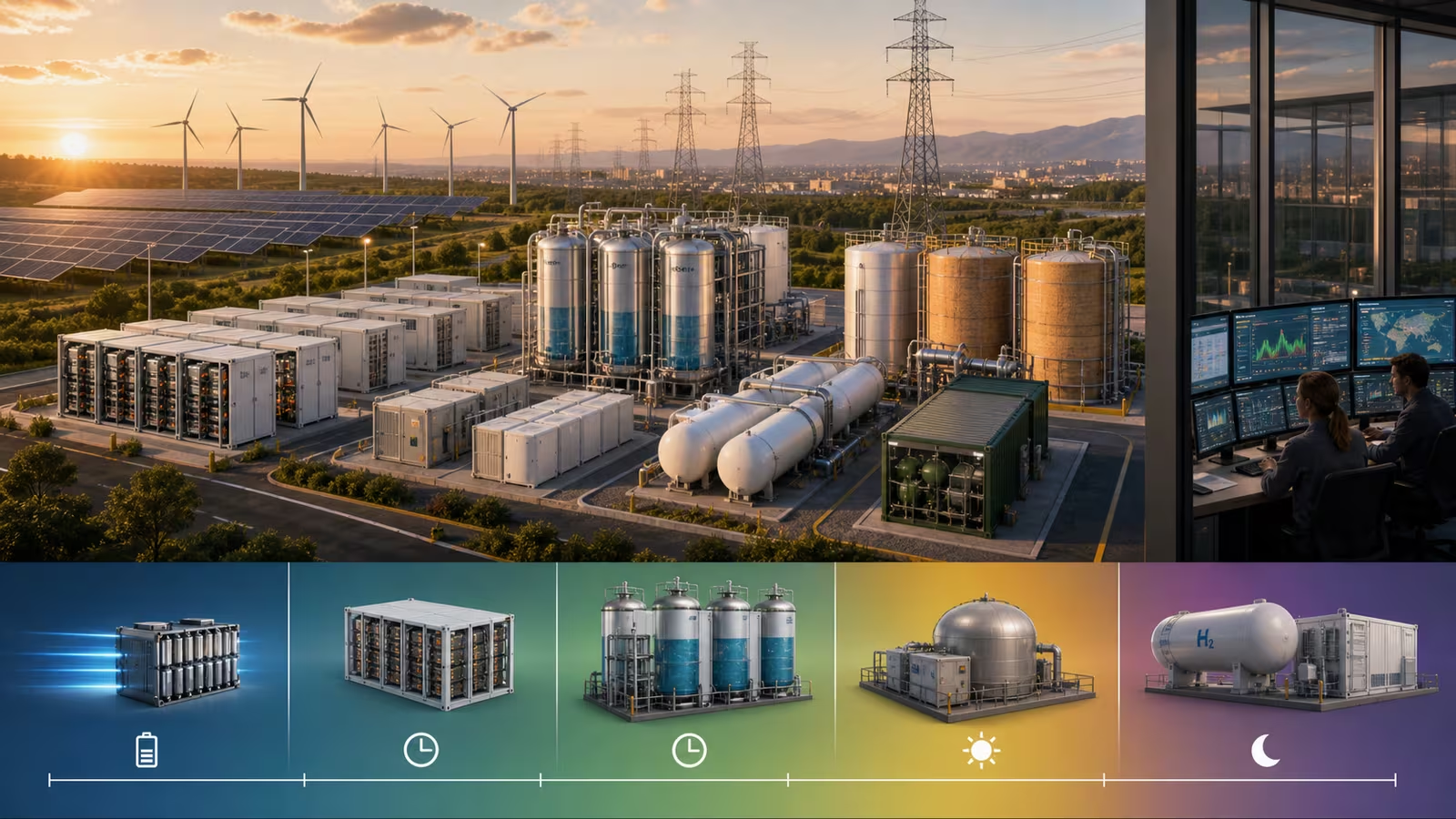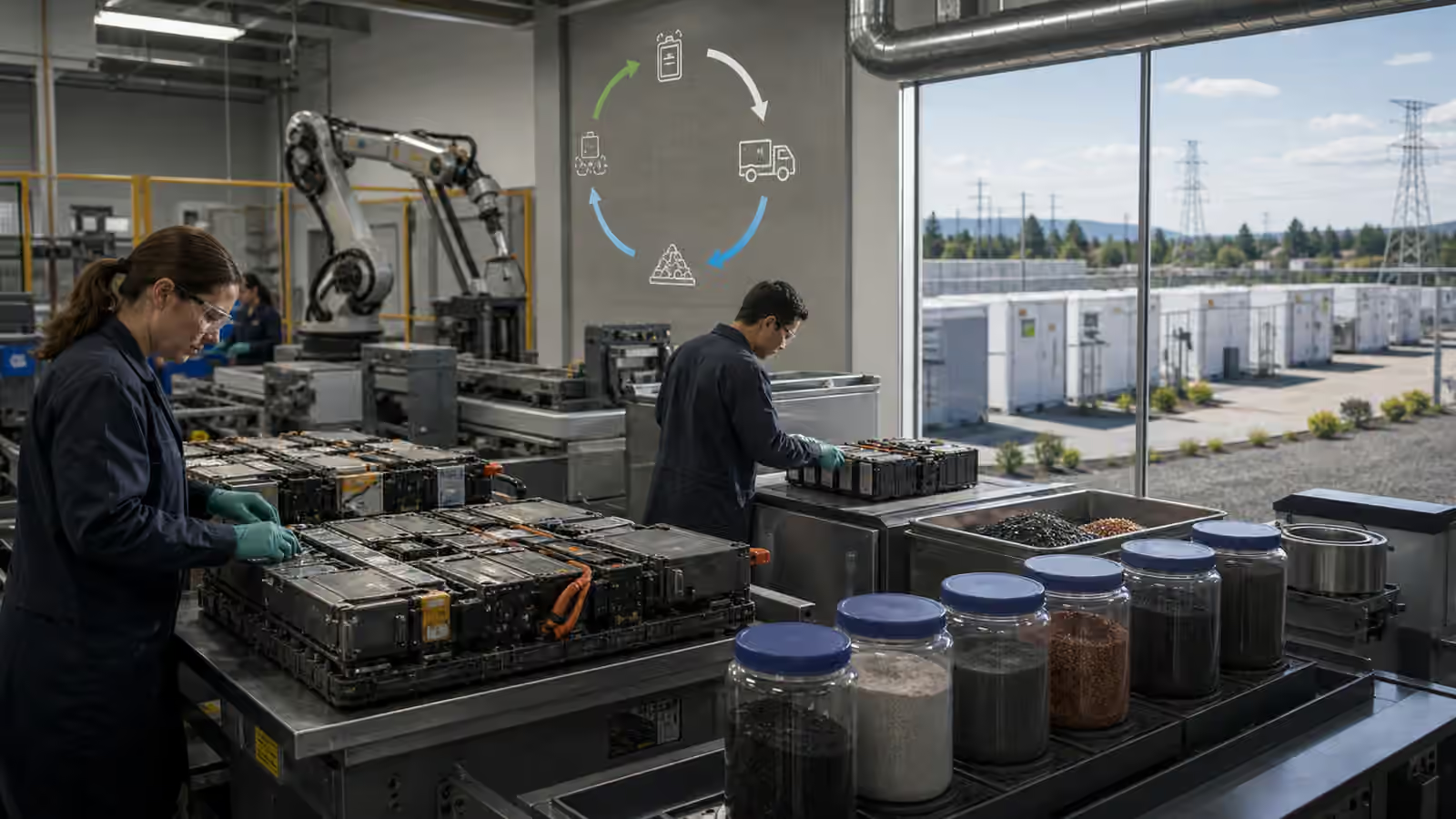
Grid batteries are usually discussed at the beginning of their lives. A project is announced, containers arrive, a substation connection is built, and the battery begins shifting energy, responding to frequency, relieving congestion, or supporting local reliability. The photographs show neat rows of cabinets and a clean fence line. The harder question sits years later: what happens when the cells no longer meet the project’s needs?
Energy storage recycling is the back end of the battery boom. It connects chemistry, safety, logistics, critical minerals, project finance, design, and public trust. A battery that helps the grid for a decade or more should not become an abandoned box or a waste problem when its first use ends. Nor should recycling be treated as a magic eraser that removes all supply-chain concerns. It is an industrial system that has to be built, regulated, paid for, and designed into the battery life cycle from the start.
The guide to critical minerals and grid supply chains explains why future energy depends on materials as well as ideas. The guide to battery storage siting and safety explains why storage projects are real infrastructure. Recycling sits between them. It asks how material moves after the battery has already done useful work.
End of life starts before installation
A good recycling story begins long before a battery is removed from service. The project owner, manufacturer, installer, insurer, and local authority should understand who is responsible for end-of-life handling. The battery system should have documentation, serial records, chemistry information, maintenance history, and a plan for safe transport. If those details are missing, recycling becomes harder and riskier.
Design matters too. Battery packs that are easier to disassemble, identify, and handle can reduce recycling cost and safety risk. Clear labeling helps. Modular design can help. Avoiding unnecessary adhesives or confusing pack structures can help. So can digital records that follow a battery through manufacturing, installation, maintenance, repowering, and retirement. The battery is not only a product. It is a future material source.
This does not mean every battery will be recycled in the same way. Chemistries differ. Formats differ. A grid-scale container is not the same as an EV pack, even if both contain valuable materials. Some systems may have enough remaining capacity for a second use. Others may go directly to material recovery because safety, degradation, format, or economics make reuse unattractive. The end-of-life plan should fit the actual equipment.
Second life is useful only when the second job fits
The phrase “second life” can sound elegant. A battery that no longer meets one demanding use might still serve a less demanding one. An EV pack with reduced range may still hold energy for stationary storage. A grid battery module that no longer meets a high-performance duty might serve backup or lower-power applications. Reuse can reduce waste and delay recycling until more value has been extracted from the original manufacturing effort.
But second life is not automatic. A used battery has history. It may have uneven degradation, unknown stress, obsolete controls, warranty complications, missing records, or safety concerns. Testing and repackaging cost money. The second application needs compatible voltage, controls, enclosure, thermal management, fire planning, and interconnection. A cheap used battery that is hard to certify, insure, or maintain may not be cheap in practice.
The strongest second-life cases are specific. The new duty cycle is understood. The remaining capacity is tested. The owner knows who carries responsibility. The installation meets safety standards. The economics work without pretending that used equipment has no handling cost. Otherwise, the phrase becomes a way to postpone the real recycling question.
Recycling is both chemistry and logistics
Battery recycling is often described by the recovery process: shredding, sorting, hydrometallurgy, pyrometallurgy, direct recycling, or other methods. Those details matter, but the logistics are just as important. End-of-life batteries have to be collected, discharged or stabilized, packaged, transported, stored, and processed safely. Damaged batteries may need special handling. Large grid containers may require site work before modules can be moved. Regulations and transport rules may vary, but the practical concern is evergreen: stored energy and reactive materials deserve respect.
The recovery value depends on chemistry and market conditions. Some batteries contain high-value nickel, cobalt, lithium, copper, aluminum, and graphite. Others use chemistries with lower material value but other advantages during operation. A recycling system built around one chemistry may not be ideal for another. As battery technology changes, recycling facilities have to adapt.
This is one reason claims about recycling rates need care. A material can be technically recoverable and still not be recovered economically at every site. A facility can recover some metals while losing others. A process can be promising at pilot scale and harder at industrial scale. The useful question is not whether recycling exists. It is whether the supply chain can handle the volume, chemistry mix, safety requirements, and quality standards of real batteries retiring from service.
Recycling does not erase mining, but it can reduce pressure
A circular supply chain can reduce the need for newly mined material over time, especially once large numbers of batteries begin retiring. It can also create domestic or regional material sources, reduce waste, and make supply chains more resilient. Recovered materials may feed new battery production if purity and processing meet requirements. That is valuable.
Still, recycling cannot supply the first generation of a rapidly growing industry by itself. If the total battery fleet is expanding quickly, many batteries are still in service while new ones are being manufactured. Material demand can rise faster than recycled supply becomes available. Mining, refining, manufacturing, substitution, efficiency, and recycling all have roles. Treating recycling as the sole answer to critical minerals is another form of wishful accounting.
The guide to grid batteries and long-duration storage explains that storage is not one thing. That lesson applies to materials too. Lithium-ion batteries, flow batteries, thermal storage, pumped storage, compressed air, clean fuels, and other approaches have different material needs and different end-of-life pathways. A diverse storage portfolio can reduce dependence on any single material loop.
Public trust includes the back end
Communities asked to host battery storage sites may ask what happens after the project stops operating. That is a fair question. A developer should be able to explain decommissioning, recycling, fire planning, environmental protection, financial assurance, and site restoration in plain language. If the answer is vague, opposition becomes easier to understand.
Battery recycling facilities also need trust. They are industrial sites with traffic, materials handling, worker safety, emissions controls, water management, and emergency plans. A clean-energy label does not exempt them from local scrutiny. The same public path described in energy permitting and community trust applies to the infrastructure that handles clean-energy equipment at the end of its life.
The stronger story is practical and accountable. Batteries should be tracked. Projects should budget for retirement. Manufacturers should design for recovery where possible. Recyclers should operate safely and transparently. Policymakers should avoid rules that sound circular on paper but fail in real logistics. Grid planners should remember that every technology has a back end.
Energy storage can make the grid cleaner, faster, and more flexible. Recycling helps make that promise more durable. It turns used batteries from a disposal problem into a material stream, but only if the system around them is built with the same seriousness as the first installation.