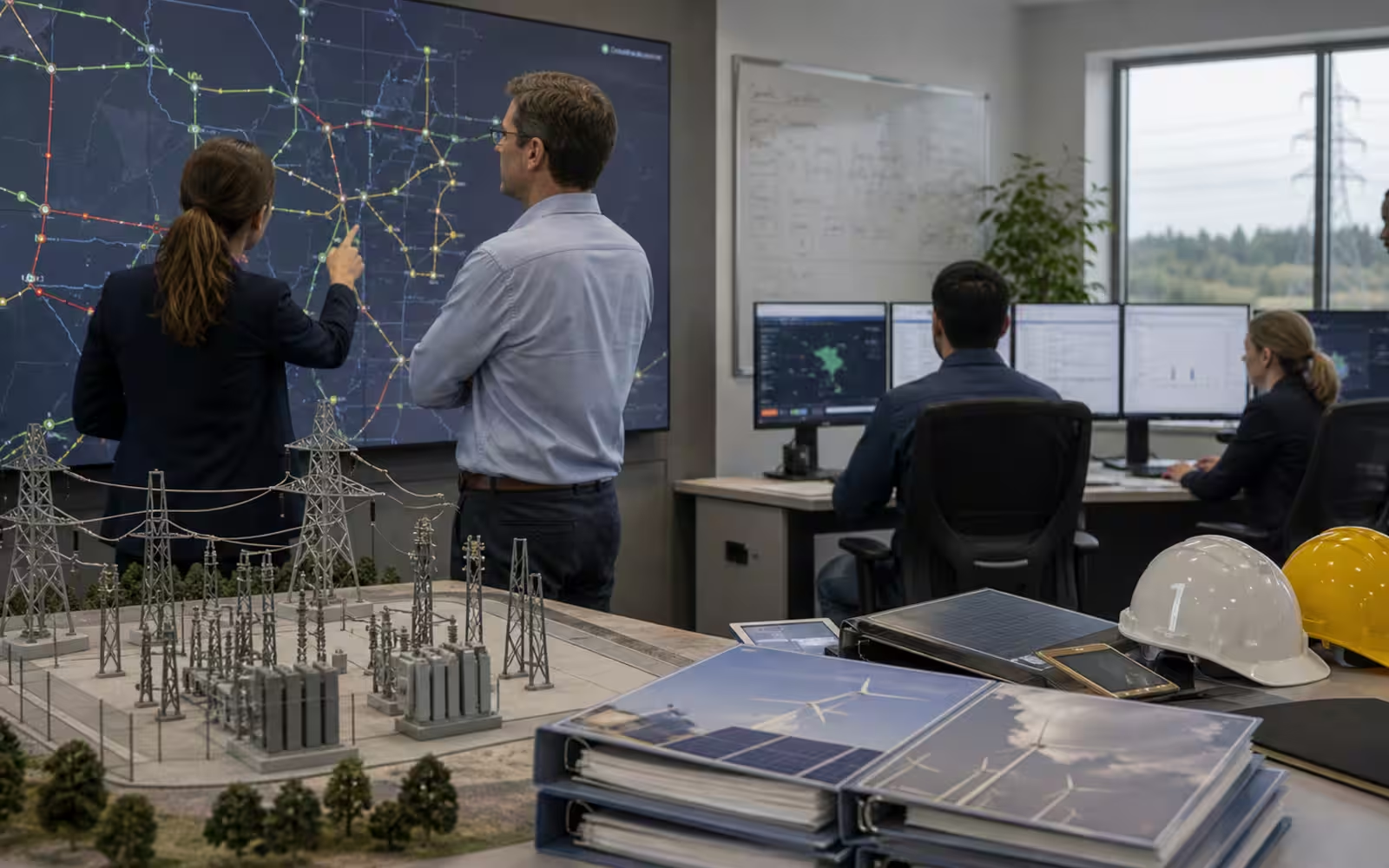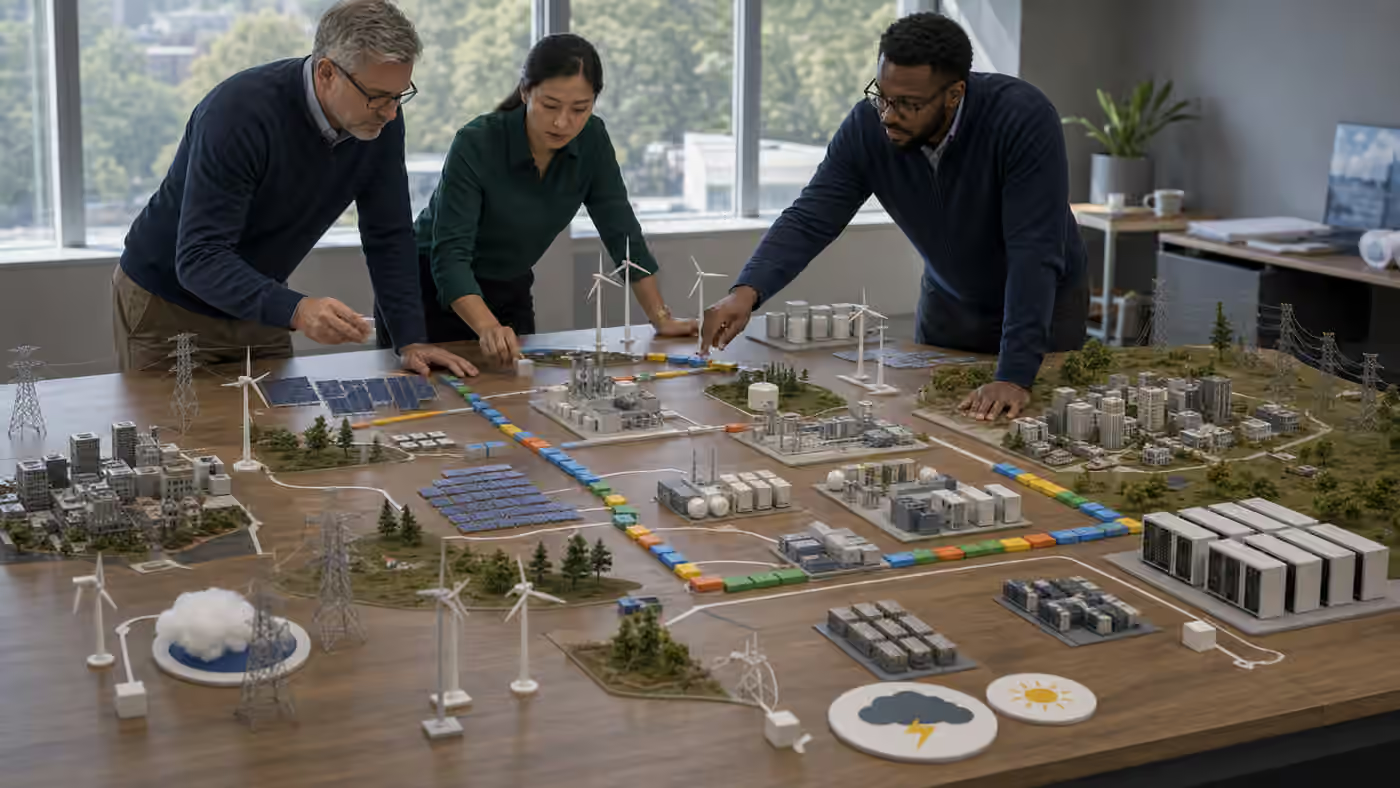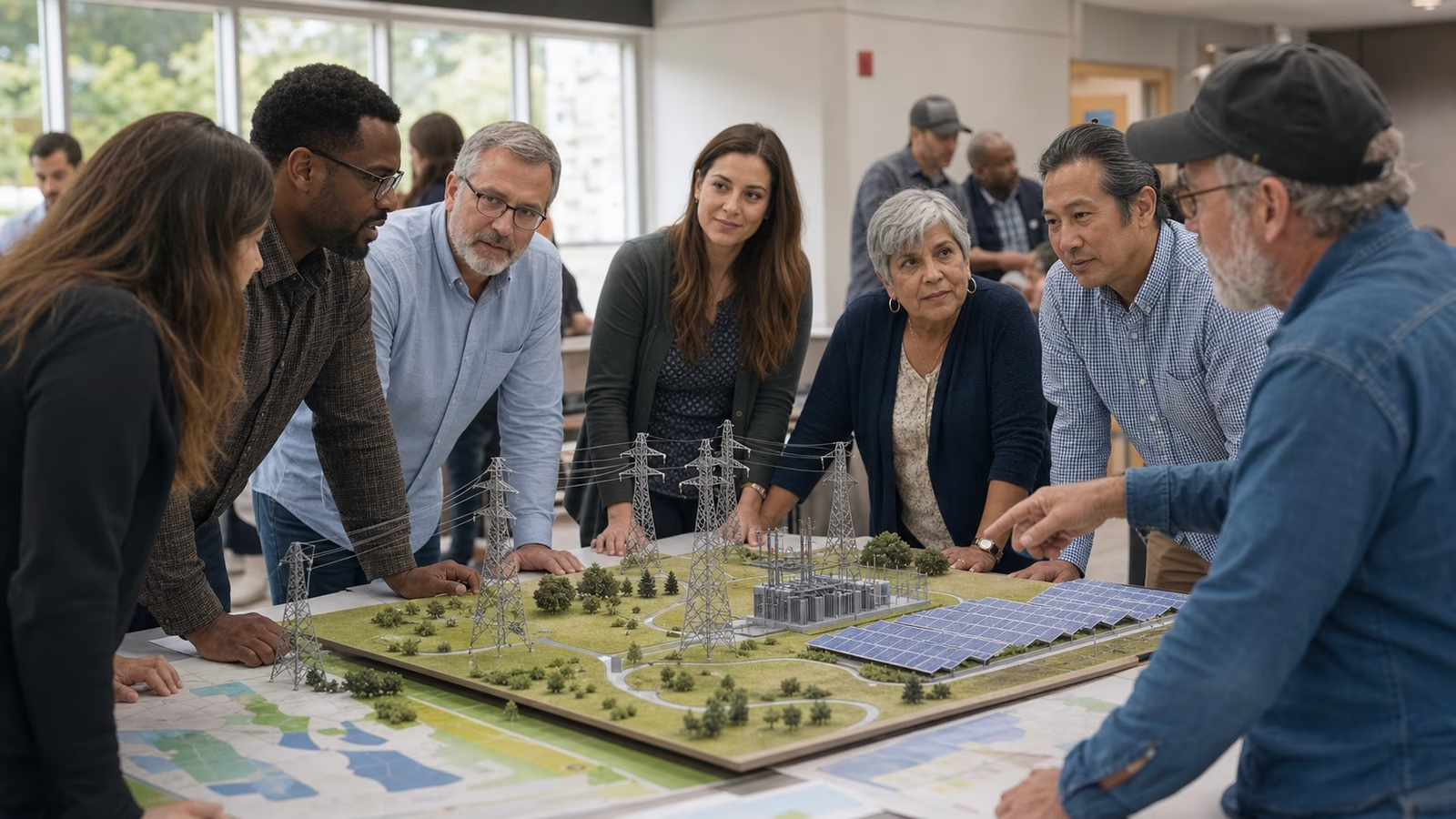
Energy infrastructure is often discussed as if the hard part is choosing the right technology. Build solar. Build wind. Build nuclear. Build geothermal. Build batteries. Build transmission. Build data-center microgrids. Build faster. The sentence sounds simple because it leaves out the place where every project becomes real: land, roads, wires, water, permits, neighbors, views, noise, local tax bases, construction traffic, emergency plans, and the memory of what happened the last time an outside developer promised a community that everything would be fine.
Permitting is easy to mock when people are impatient for cleaner power. It can look like delay, paperwork, meetings, legal caution, and political theater. Sometimes it is exactly that. A process can become slow because agencies are understaffed, rules overlap, studies are duplicated, opponents use procedure as a weapon, or no one has the authority to coordinate across jurisdictions. But permitting also carries a more serious purpose. It is how a society asks whether a project is safe enough, fair enough, well-sited enough, and accountable enough to become part of a shared landscape.
The future grid will need a lot of physical construction. New generation has to connect. Old lines have to be upgraded. Substations have to expand. Transformers have to be delivered. Batteries need sites. Data centers need power and cooling. Industrial loads may return to regions that have not built major electrical infrastructure for decades. Heat pumps, electric vehicles, factories, and digital infrastructure all add pressure. The technical case for building is strong, but the public path still matters. Infrastructure that ignores trust does not move faster for long. It creates resistance that hardens with every meeting.
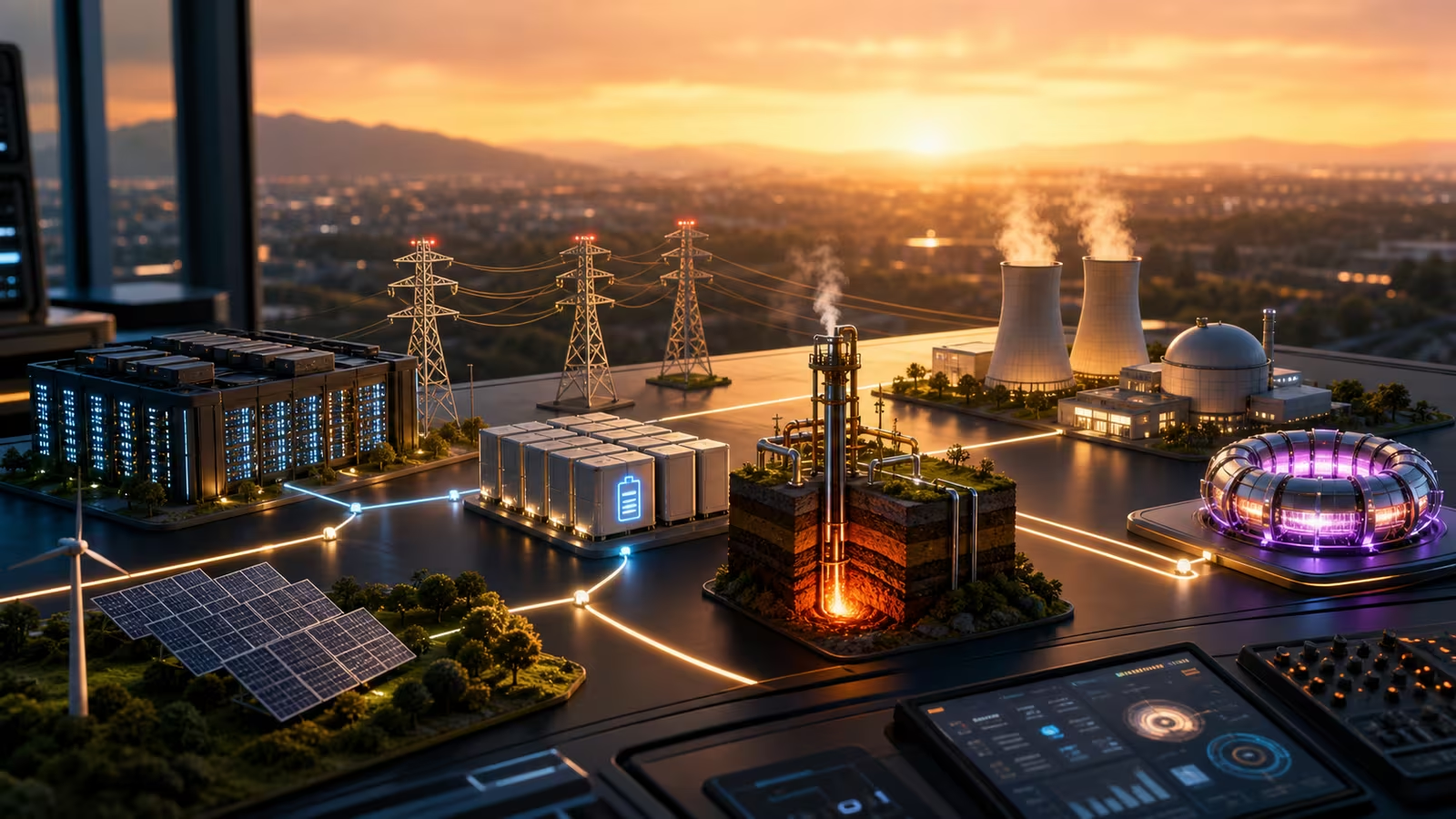
Permitting Is Where Maps Meet People
On a planning map, a transmission line may look like a clean route from resource to load. On the ground, it crosses farms, neighborhoods, forests, roads, wetlands, tribal lands, scenic views, migration corridors, industrial zones, and places people know through family rather than coordinates. A substation may look like a practical node in the grid. To nearby residents, it may mean construction noise, land-use change, visual impact, or fear that their area is being treated as a sacrifice zone.
Those concerns are not all the same. Some are technical and can be mitigated. Some are emotional but still real because place is emotional. Some are based on misinformation. Some are based on accurate memories of previous projects that overpromised benefits and underdelivered respect. A good permitting process does not pretend every objection has equal technical merit, but it also does not treat every objection as ignorance.
Energy projects need land because energy has a physical footprint. Even rooftop solar, virtual power plants, and efficiency programs depend on equipment, wiring, standards, and customer trust. Large infrastructure simply makes the footprint visible. The public argument is not whether the footprint exists. It is whether the footprint has been chosen, explained, reduced, compensated, and governed in a way people can understand.
Speed Without Legibility Backfires
There is a real case for faster permitting. Climate goals, reliability needs, industrial growth, and rising electricity demand do not wait politely while agencies process files at the speed of another era. A clean-energy project that spends years in uncertainty can lose financing, miss tax-credit windows, face supply-chain changes, and eventually die even when the grid needs it. Slow processes can also favor incumbents and large developers who can afford long legal timelines.
But speed without legibility is not the same as competence. If communities only hear about a project after decisions feel settled, every later meeting becomes a referendum on trust. If route choices are explained in vague language, people fill the silence themselves. If benefits are described broadly while impacts are local and specific, resentment grows. If public comment feels ceremonial, opposition becomes the only remaining language.
The better goal is not simply fewer steps. It is clearer steps. People should know what is being decided, who has authority, what evidence is being used, which alternatives were considered, what can still change, what cannot change, and how complaints will be handled after approval. A process can be faster when it is organized, but it also has to be understandable enough that people can see the shape of the decision.
Community Benefits Need to Be Concrete
Developers often talk about jobs, tax revenue, clean energy, reliability, and economic development. Those benefits can be real. They can also sound distant compared with a construction road outside someone’s house. Trust improves when benefits are specific enough to be evaluated. How many construction jobs are local? How many permanent jobs remain? What revenue goes to the town, school district, county, or landowners? Will electricity bills change? Will emergency services need new equipment or training? Who maintains the road after heavy construction traffic? What happens at the end of the project’s life?
Communities have become more sophisticated about these questions. They know that a press release is not a binding commitment. They want agreements, monitoring, timelines, and named responsibilities. That is not hostility to energy development. It is governance.
Some projects use community benefit agreements, local hiring plans, workforce training partnerships, habitat funds, road repair commitments, shared tax arrangements, or direct payments to affected landowners. None of these automatically solves siting conflict. A badly designed benefit package can feel like a payoff or divide neighbors against each other. But a serious package can show that the project understands it is joining an existing place, not landing on an empty map.
Transmission Has a Special Trust Problem
Transmission lines are among the hardest energy projects to explain because their benefits are regional while their impacts are local. A line may reduce congestion, allow cheaper power to reach cities, improve reliability across states, and unlock renewable projects hundreds of miles away. The people living along the route may not feel those benefits directly. They may see towers and easements while distant customers see lower costs or cleaner electricity.
That mismatch makes cost allocation and public explanation especially important. If the case for a line is buried in technical studies, local residents may only see loss. If the region needs the project, the region has to make the need visible. Why this route? Why this voltage? Why not use existing rights-of-way? Why not bury the line? Why not build generation closer to load? Sometimes the answers are technical, economic, environmental, or legal. They still need to be given plainly.
Transmission also suffers from time. A project may be proposed in one political moment, studied in another, litigated in another, and built in another. Leadership changes. Costs change. Public attention fades and returns. The trust work has to survive the full timeline, not just the announcement.
Permitting Reform Should Not Mean Public Erasure
The phrase permitting reform can mean very different things. For some people, it means staffing agencies properly, setting clear timelines, coordinating reviews, standardizing environmental data, reducing duplicated studies, and resolving jurisdictional confusion. For others, it means limiting legal challenges, narrowing public review, or preempting local authority. The difference matters.
A serious reform agenda should start by asking where time is actually lost. Is an agency missing staff? Are developers submitting weak applications? Are studies sequential when they could be coordinated? Are federal, state, and local processes asking the same question in different formats? Are there known low-conflict zones where approval could be simpler? Are grid planners waiting for individual projects to reveal needs that could have been studied regionally? Are communities brought in too late?
Some delay protects people from bad decisions. Some delay is administrative waste. Treating both as the same problem produces bad reform. The public needs protection from careless infrastructure, but it also needs protection from a system so slow that needed infrastructure never arrives.
Trust Is Built Before the Hearing
A formal public hearing is a poor place to begin listening. By then, positions are often fixed. The developer has invested money. Opponents have organized. Supporters and critics arrive with talking points. The room performs democracy under fluorescent lights, but the emotional decision may already be made.
Better engagement starts earlier and sounds less polished. It includes small meetings, local questions, site walks, plain-language materials, honest discussion of tradeoffs, and a willingness to say when a concern changes the project. It also means admitting uncertainty. Communities do not need fake certainty. They need a process that can handle uncertainty without hiding it.
Trust also depends on who speaks. A distant consultant with a slide deck may be necessary, but local institutions often carry more weight. County engineers, fire chiefs, school boards, landowners, tribal representatives, environmental groups, labor organizations, consumer advocates, and local businesses may all see different parts of the project. A stronger process does not flatten those voices into a single public mood. It makes the disagreement visible enough to govern.
The Grid Is a Civic Project
Electricity feels private when it arrives through a wall outlet, but the system behind it is civic. It depends on shared wires, shared reliability standards, shared costs, shared land-use decisions, and shared tolerance for risk. The next era of energy will make that civic character harder to ignore. More of the system will be built in public view. More people will be asked to host equipment. More communities will ask what they receive in return.
That conversation cannot be solved by engineering alone. It needs engineering, law, finance, planning, ecology, labor, local knowledge, and political honesty. It needs faster processes, but also better ones. It needs projects that can explain not only how much power they add, but why they belong where they are proposed and how they will behave as neighbors.
Energy permitting is not a side quest on the way to the future grid. It is one of the places where the future grid earns permission to exist. If the process is opaque, slow, and dismissive, even good projects can become symbols of disrespect. If the process is clear, timely, and serious about local reality, infrastructure still will not be effortless, but it has a better chance of being understood.
The cleanest power in the world still needs a path through the world. Trust is part of that path.