Every future energy plan eventually touches land. A solar project needs rows, inverters, roads, drainage, fencing, and a point of interconnection. A transmission line needs a corridor. A substation needs a site with access and clearances. A battery needs a yard that emergency responders can reach. A data-center power system needs equipment outside the server building. Even offshore wind comes ashore through ports, cables, landing sites, and onshore grid upgrades.
Land use is sometimes treated as a local obstacle to a technical plan. That is the wrong frame. Land is part of the technical plan. The location decides whether a project can connect, whether maintenance is practical, whether drainage works, whether neighbors experience noise or glare, whether emergency access is credible, and whether future expansion remains possible. The guide to energy permitting and community trust makes the public case. This guide looks at the physical fit.
Co-location is the habit of asking whether energy uses can share land, corridors, interconnection points, civil work, or operations. It is not a magic answer to siting conflict. It is a practical way to reduce wasted space and make infrastructure more legible.
The interconnection point shapes the site
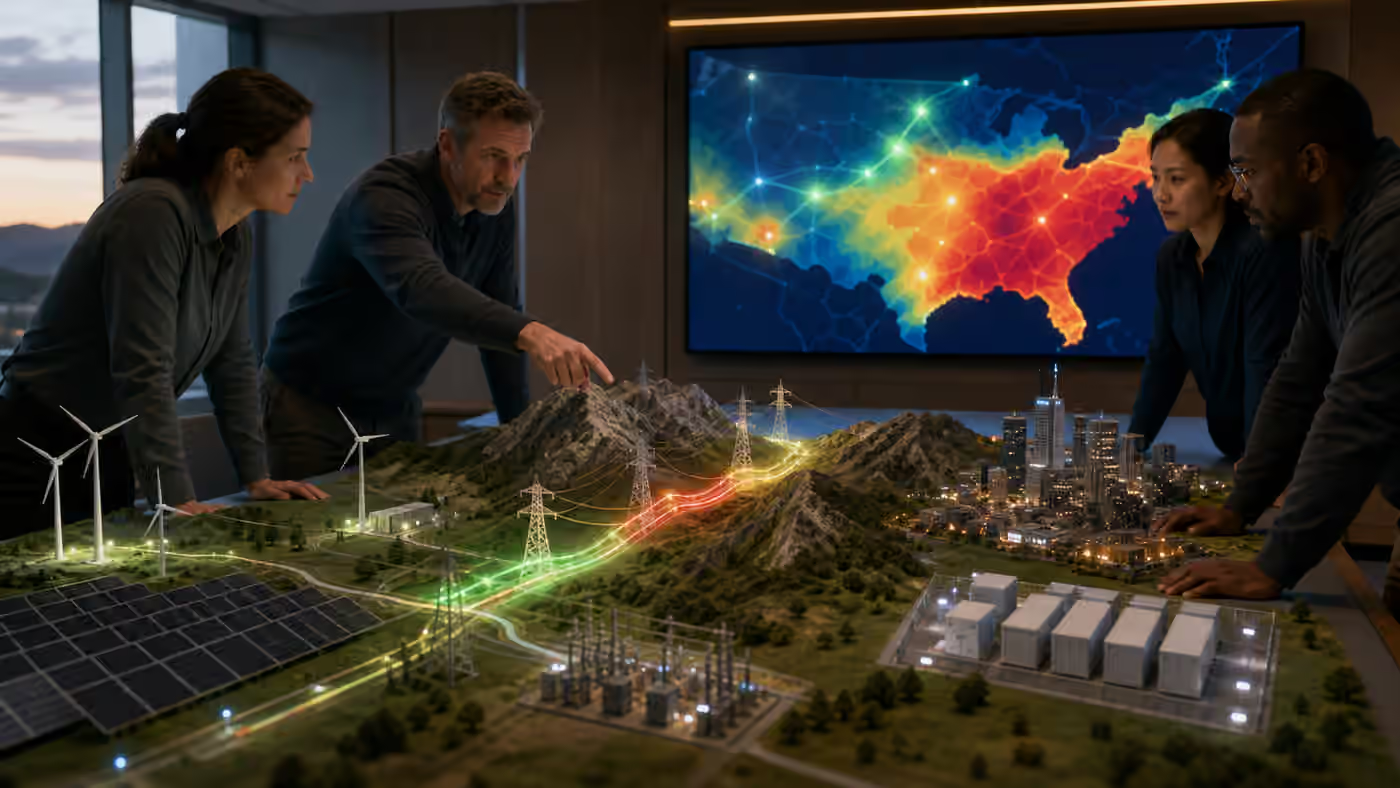
A parcel is not useful for energy because it is empty. It is useful when it sits near the right electrical path. A solar field far from transmission may require a long generator tie line. A battery near a constrained substation may provide more value than a larger battery in a weak location. A clean fuel facility may need both power access and transport access. A substation expansion may be limited by land, road access, drainage, and the ability to bring lines in and out safely.
The guide to substation siting explains why substations are gateways. Land-use planning should start from that gateway question. Where can power enter or leave the network? Where is there room for transformers, switchgear, protection equipment, control houses, access lanes, stormwater handling, and future bays? Where can crews work without blocking public roads or creating unsafe switching conditions?
The electrical answer and the civil answer have to agree. A site that looks perfect on an interconnection map may have poor soils, difficult slopes, flood exposure, limited road access, or neighbors too close to a noisy component. A site that looks easy to build may be electrically weak. Good site selection keeps both truths visible.
Shared infrastructure can reduce waste
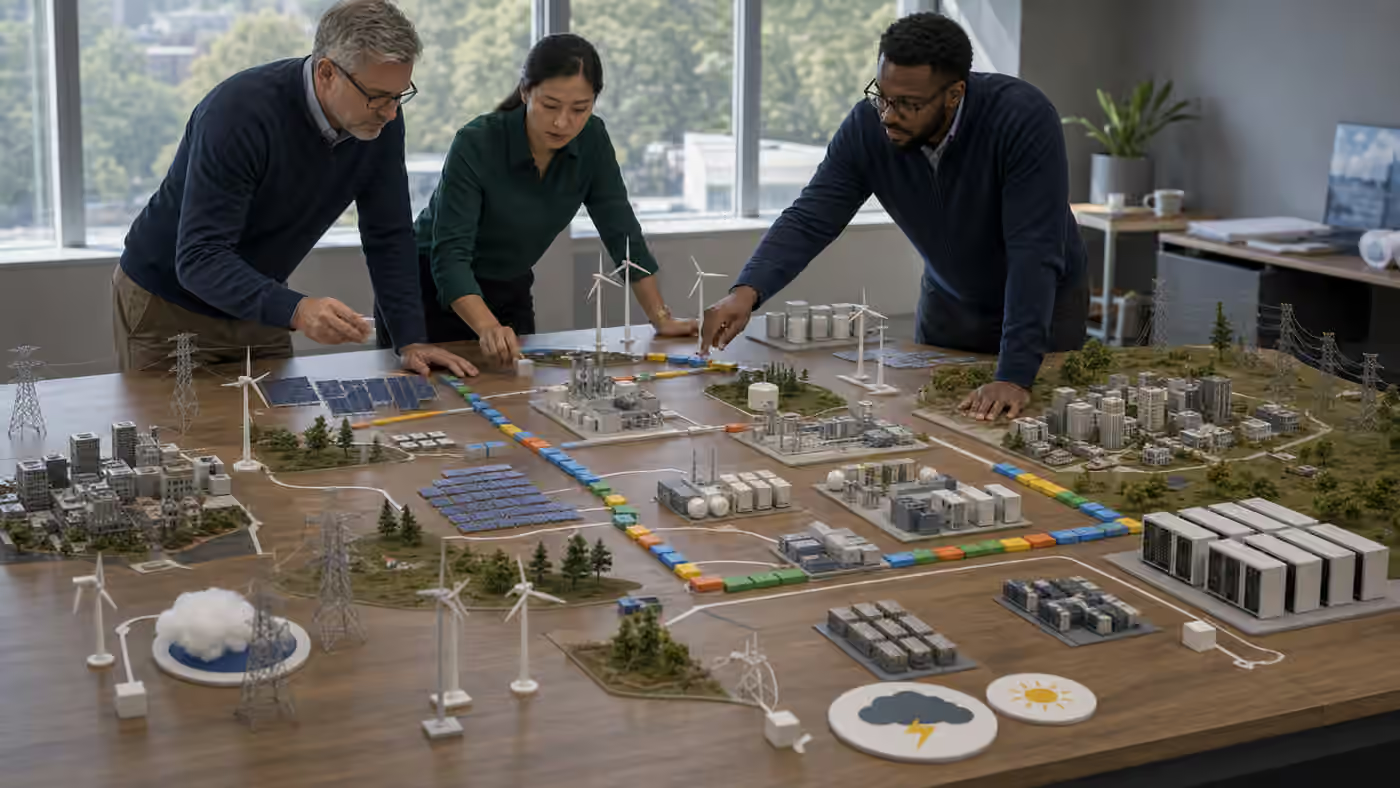
Co-location is most useful when resources have complementary needs. A solar plant and battery may share a substation, road network, communications path, security system, and maintenance access. A transmission corridor may also carry fiber, access roads, vegetation management, and future reconductoring space. A clean energy campus may combine solar, storage, flexible load, thermal systems, and a substation in one planned layout instead of scattering equipment across unrelated parcels.
The guide to hybrid renewable plants explains the electrical side of sharing an interconnection. Land use adds the site side. If the battery is placed where trucks cannot reach it, if stormwater runs toward the equipment yard, if the access road conflicts with farm operations, or if future expansion room is blocked by the first phase, the shared interconnection will not save the project from poor layout.
Co-location also has limits. Two uses can interfere. A battery yard may need separation, access, and emergency planning that does not fit neatly inside a solar array. A transmission corridor may have vegetation and height restrictions. A substation may need expansion room that should not be filled with short-term equipment. A site plan should not force sharing just to look efficient. It should share the pieces that genuinely work together.
Setbacks and access are design tools
Setbacks are often discussed as if they were only political compromises. They are also design tools. Space around equipment can reduce noise exposure, improve fire access, allow maintenance, protect drainage, preserve visibility at roads, and give neighbors a clearer boundary. Too little space can make an energy project feel imposed even when the technology itself is sound.
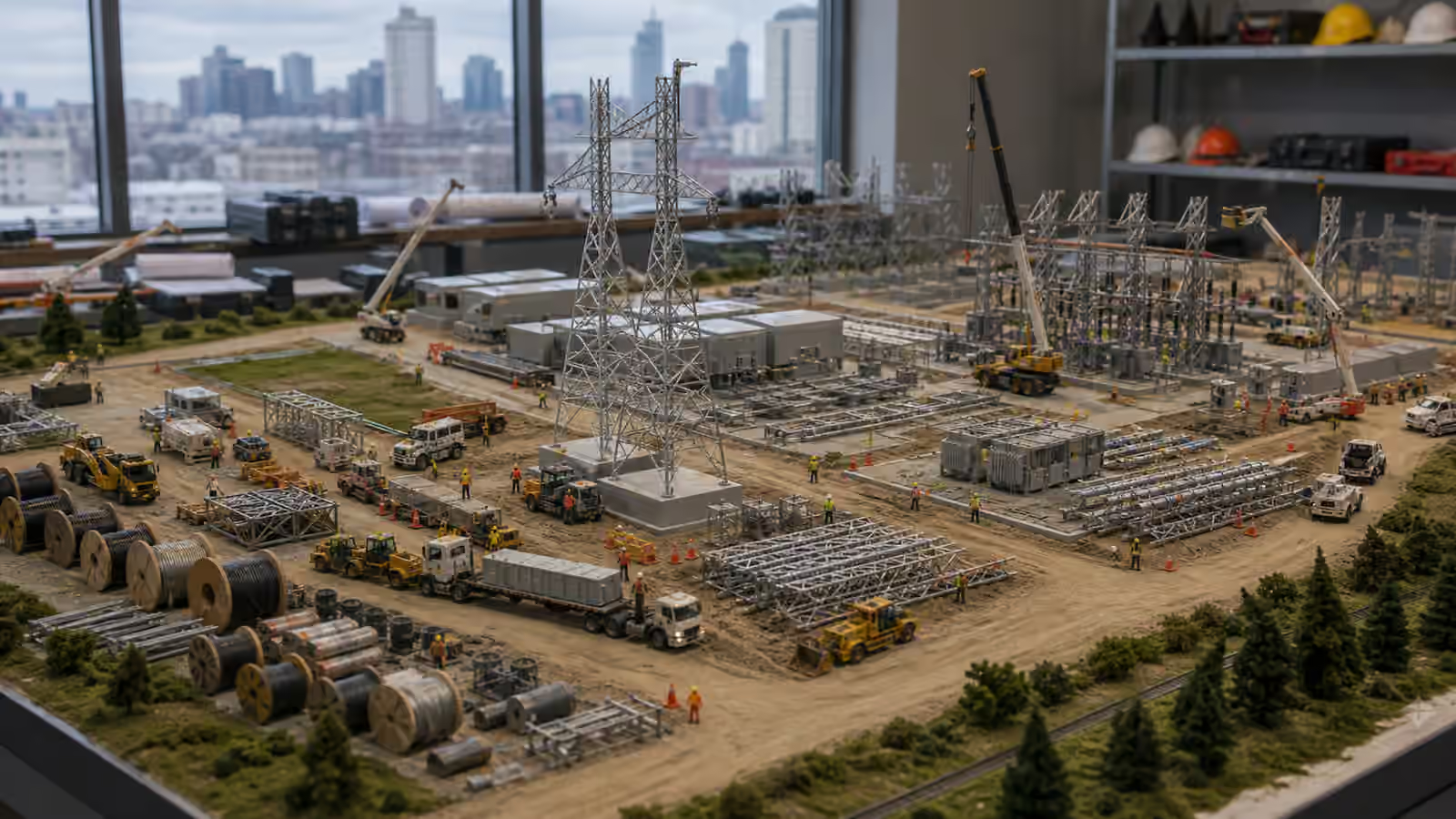
Access roads deserve the same attention. Construction access is different from maintenance access. Emergency access is different from ordinary inspection. A large transformer, battery container, crane, or replacement inverter may require turning radius, road strength, and staging room that a small pickup truck does not. The guide to transformers and grid hardware explains why heavy equipment is not summoned at software speed. It also is not moved through a site that was designed only for the ribbon cutting.
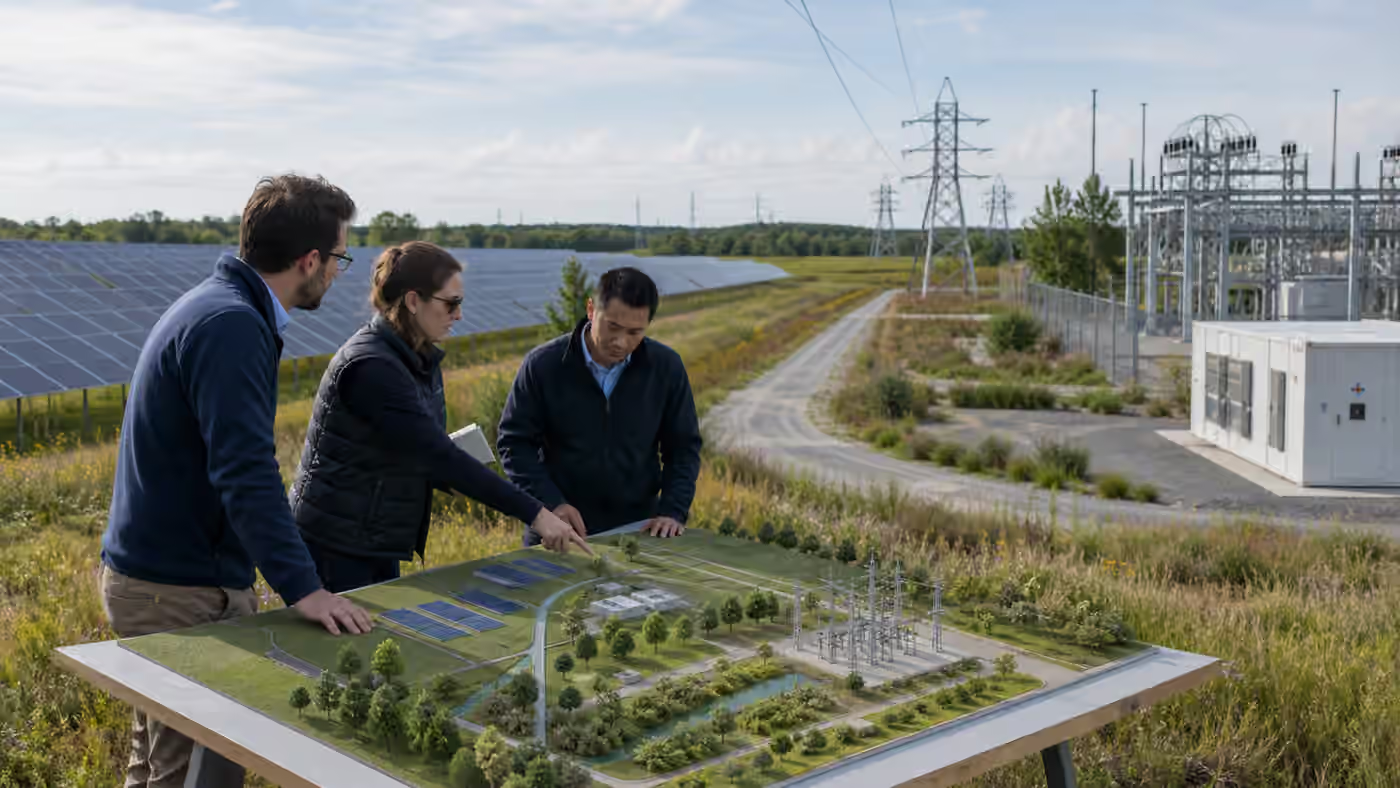
Drainage is another quiet test. Solar rows, pads, trenches, access roads, and compacted areas change how water moves. A project that ignores stormwater may create erosion, ponding, damaged roads, or neighbor complaints. Native planting strips, swales, careful grading, and preserved drainage paths can make a site more durable. Those features should be part of the design, not decorative apologies after the engineering is done.
Land has previous uses and future options
Energy projects often enter landscapes that already have work, memory, and expectations attached to them. Farmland, industrial land, former mines, rooftops, parking lots, rights-of-way, land near substations, and disturbed sites all bring different tradeoffs. A project on a previously disturbed parcel may avoid some conflicts but face cleanup or interconnection issues. A project on open land may be easier to build but more visible. A project on a rooftop may preserve land but be limited by structure, ownership, fire access, and maintenance.
The guide to utility-scale solar and grid integration explains that solar farms are active power plants, not passive fields. Their land plan should show the electrical equipment, vegetation, maintenance, security, drainage, and eventual repowering or decommissioning path. The same is true for wind repowering, storage, substations, and transmission corridors. A site should be readable across its life, not only during its first permit hearing.
Future options matter because the grid is changing. A substation may need another transformer later. A solar plant may add storage. A data center campus may add flexible load controls or waste heat reuse. A transmission corridor may need reconductoring. If the first project consumes every margin, the next public conversation becomes harder. Good land-use planning reserves space where future needs are likely instead of pretending the first buildout is the final shape of the system.
Community trust is spatial
People often experience energy infrastructure through place. They notice the fence, the road, the view, the sound, the construction traffic, the stormwater pond, the vegetation, the night lighting, and the maintenance vehicles. A project may have strong climate value and still create local friction if the site plan treats those details as minor.
Trust improves when the drawings are concrete. A community should be able to see where equipment sits, how far it is from homes or businesses, where trucks enter, how water moves, what vegetation is maintained, how emergency responders reach the site, and what happens at the end of the asset’s life. Broad promises about clean energy are not enough. The public path becomes more honest when the site plan shows the real equipment.
This does not mean every objection can be solved by a nicer layout. Some projects still involve hard tradeoffs. A region that needs transmission, substations, storage, and clean generation will have to choose places. But land-use discipline can reduce avoidable conflict and reveal the tradeoffs that remain.
Making the footprint work harder
The future grid will need more physical infrastructure, not less. The practical question is how much useful energy, reliability, flexibility, and resilience each footprint can support. Co-location helps when it shares interconnection capacity, reduces duplicate roads, concentrates maintenance, leaves expansion room, and makes public review clearer. It hurts when it crowds incompatible uses together or hides impacts under a tidy word.
Powering tomorrow will be easier if land is treated as a design constraint from the start. A good energy site is not just a blank area with equipment placed on top. It is a working landscape where electrical needs, civil engineering, operations, neighbors, water, access, and future options fit together well enough to last.