Hydrogen is often discussed as a fuel, but clean hydrogen begins as a load. An electrolyzer uses electricity to split water into hydrogen and oxygen. Before the hydrogen can help a steel mill, chemical plant, fuel cell, turbine, ship, or storage system, the electrolyzer has to be powered, connected, cooled, controlled, supplied with water, and integrated into an industrial site. The first grid question is not what the hydrogen might do later. It is where the electricity comes from and how the electrolyzer behaves when the grid is stressed.
That makes electrolyzers unusual in the future energy story. They can be large new electric loads, like data centers or factories. They can also be flexible loads, able to ramp production up or down if the industrial process and storage system allow it. In the best case, they absorb clean electricity when it is abundant, reduce output during tight hours, and produce a fuel that is useful where direct electrification is difficult. In the weaker case, they add constant demand to a constrained grid and then call the resulting fuel clean because of loose accounting.
The guide to clean fuels for the hardest grid hours looks at the fuel side of the question. Electrolyzers look at the front end. They ask what happens when a clean-fuel supply chain starts by asking the electric grid for a lot of power.
Power-to-fuel is still a power project
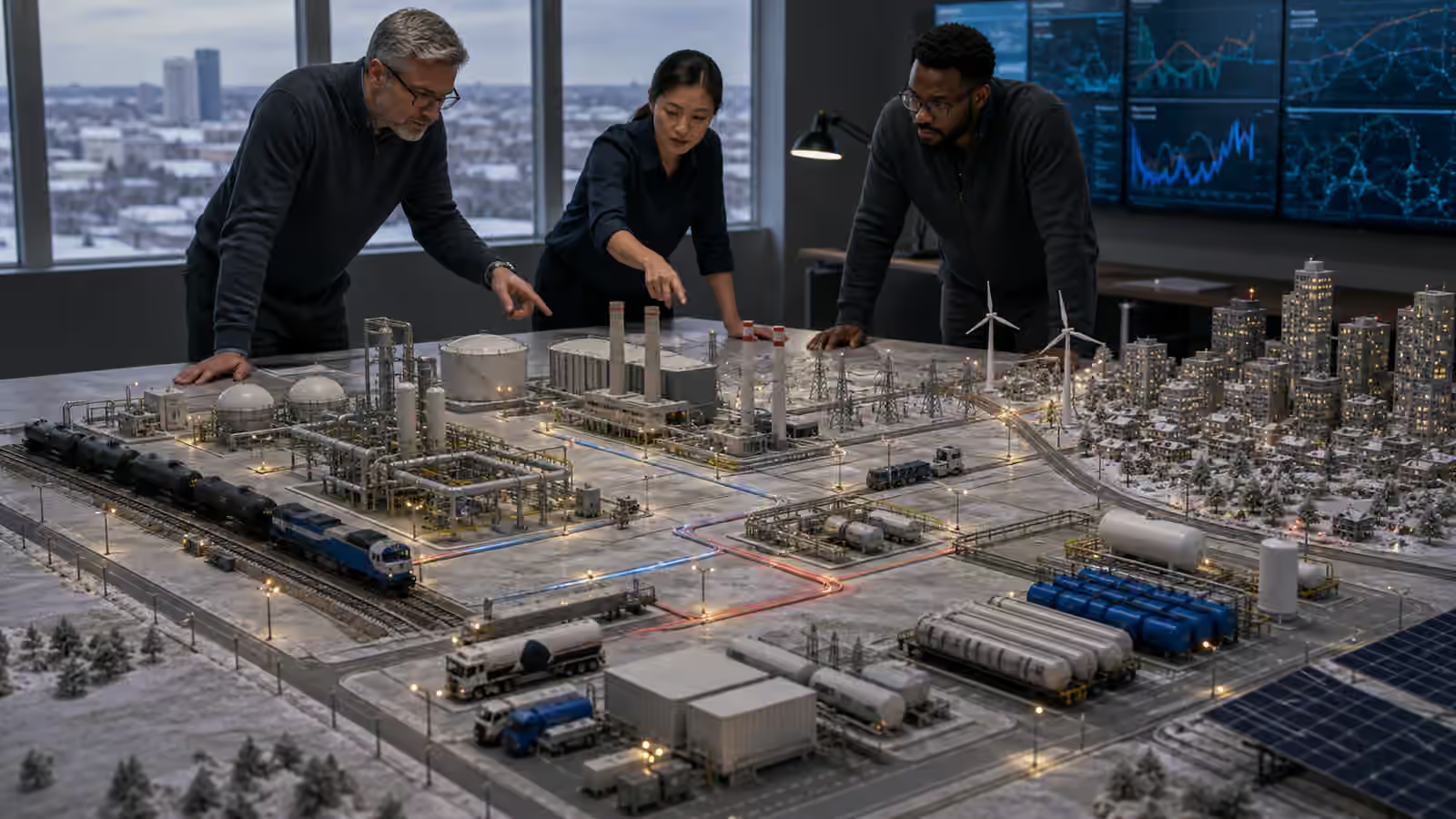
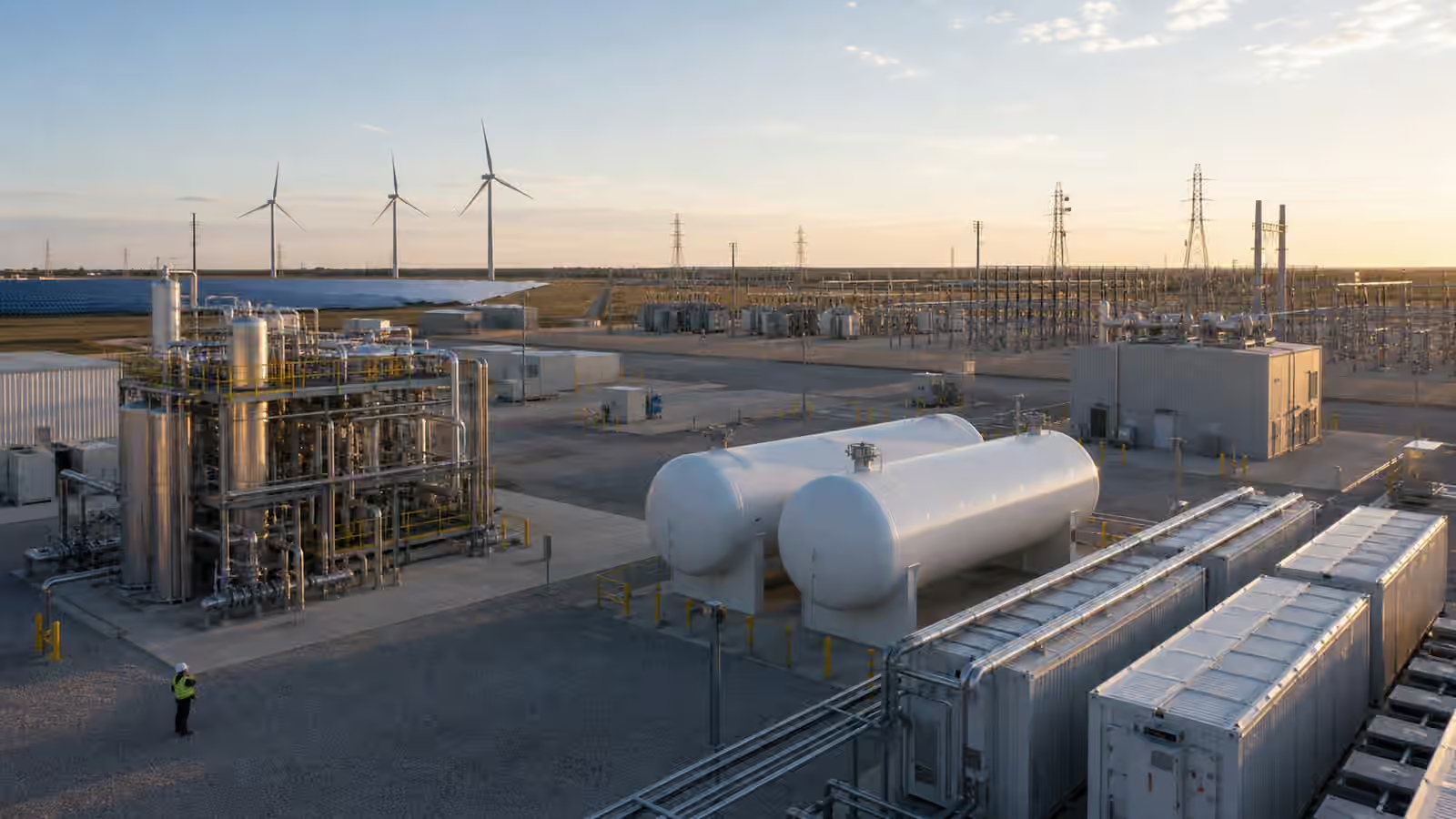
An electrolyzer site needs more than the electrolyzer stack. It may need power electronics, transformers, switchgear, water treatment, cooling, compression, storage tanks, safety systems, controls, gas handling, maintenance access, and transport connections. If the hydrogen is used on site, it has to fit the industrial process. If it leaves the site, it needs pipelines, trucks, ships, storage, or conversion into another carrier such as ammonia or synthetic fuel. Each step uses energy and equipment.
That infrastructure makes siting complicated. A good site may be near clean power, water, industrial hydrogen demand, pipelines, ports, storage caverns, or transmission capacity. Those advantages do not always sit in the same place. A windy region may not have the industrial customer. An industrial cluster may have a constrained grid. A port may have land and demand but limited transmission. A site with water may not have clean electricity available at the right hours.
This is why electrolyzers belong beside large load interconnection . A project can have an appealing climate story and still wait behind substation upgrades, transformer availability, protection studies, and cost allocation. The grid has to treat the electrolyzer as a real load before the fuel can become a real product.
Flexibility is the prize, but it is not automatic
Electrolyzers are often promoted as flexible because they can, in principle, adjust output. That flexibility could be valuable. If renewable generation is abundant and local demand is low, an electrolyzer can increase production and reduce curtailment. If the grid is short during a hot evening, the electrolyzer can reduce load and let electricity serve higher-priority demand. If the site has hydrogen storage, it may keep supplying customers even while the electrolyzer pauses.
The phrase “in principle” is doing work. Flexibility depends on equipment, contracts, storage, downstream demand, and economics. Some industrial customers need a steady hydrogen supply. Some electrolyzer designs and balance-of-plant systems prefer certain operating ranges. Compression and storage may limit how quickly the whole site can change output. A project financed around high utilization may resist curtailing production often. A market signal may be too weak or too late to matter.
The guide to demand response and flexible loads explains the broader lesson. A flexible load is not flexible because a slide says so. It is flexible when the process, controls, incentives, and customer obligations allow the load to move without breaking the service it exists to provide.
Clean power claims need hourly discipline
Electrolytic hydrogen is only as clean as the electricity and accounting behind it. If an electrolyzer runs during hours when the local grid is fossil-heavy, the resulting hydrogen may carry a larger emissions footprint than the label suggests. If it claims clean electricity from annual certificates while operating around the clock, the physical effect may be weak. If it causes a region to run more fossil generation during hard hours, the climate case becomes harder.
Hourly matching is therefore important. The guide to hourly clean power matching was written partly for large loads such as data centers, but the logic fits electrolyzers. A credible clean hydrogen project should ask when the electrolyzer runs, which clean resources support those hours, whether storage or firm clean power fills gaps, and whether the local grid can deliver the power without shifting emissions elsewhere.
This does not require every electrolyzer to run only when the sun shines or the wind blows. Some industrial uses may need steadier production. But then the clean power plan must become stronger, not vaguer. It may need a portfolio of wind, solar, storage, geothermal, nuclear, hydropower, clean fuels, or contractual structures that match the operating profile. The harder the claim, the more precise the procurement must be.
Water and heat are part of the plant
Electrolysis uses water, and industrial sites also use water for treatment, cooling, cleaning, or related processes depending on design. The water requirement is not always the largest regional water use, but it is not zero, and local context matters. A project in a water-stressed area faces a different question than one using reclaimed water near an industrial coast. Water treatment can add equipment, brine or waste streams, energy use, and permitting work.
Heat matters too. Electrolyzers and power electronics produce heat that must be managed. Some systems may be able to use waste heat, but that depends on temperature, distance, customer needs, and economics. Compression also consumes energy and creates heat. A hydrogen plant is therefore not a simple box turning electricity into fuel. It is an industrial energy system with electric, thermal, water, and gas-handling layers.
The guide to industrial electrification and process heat is a useful companion because many hydrogen use cases sit inside industrial processes. Steel, chemicals, refining, fertilizer, shipping fuels, and high-temperature heat each have different constraints. An electrolyzer that looks elegant from the grid side still has to serve the physical process that uses the hydrogen.
Storage changes the value
Hydrogen becomes more useful to the grid when production and use can be separated in time. If hydrogen can be stored safely and economically, the electrolyzer can run during cleaner or cheaper hours while customers draw from storage later. That is the logic behind using electrolyzers as flexible demand and hydrogen as a form of long-duration energy storage or industrial buffer.
Storage is not a free add-on. It needs tanks, caverns, pipelines, compression, monitoring, safety procedures, permitting, and customers that can use the stored fuel. The losses also matter. Turning electricity into hydrogen and then back into electricity is usually less efficient than using electricity directly or storing it in a battery for short durations. Hydrogen makes more sense where the fuel has a specific job that electricity alone does not easily perform, or where long-duration storage value outweighs the conversion losses.
This connects to seasonal energy storage . The grid may need tools that carry energy across long weather gaps or seasons. Hydrogen may have a role there, but only with real storage infrastructure and careful accounting. It should not be treated as a universal battery with a different name.
The best electrolyzer is a good grid citizen
A well-sited electrolyzer can help a future grid. It can absorb surplus clean power, reduce curtailment, support new renewable projects, provide flexible demand, and make fuel for hard-to-electrify uses. It can locate near industrial customers and reduce the need to move hydrogen long distances. It can help make clean power contracts more useful by adjusting production around hourly supply.
A poorly designed electrolyzer can do the opposite. It can add a large flat load to a constrained region, require expensive grid upgrades, run during dirty hours, strain water resources, and produce hydrogen whose clean claim depends on weak accounting. The technology is not enough to decide which version appears. Siting, interconnection, contracts, storage, operations, and honesty decide.
For planners and readers, the useful question is direct: does the electrolyzer behave like a flexible part of the power system, or just another large load with a green label attached? If it can answer that question with real operating plans, clean power timing, local grid studies, and a credible customer for the hydrogen, it deserves serious attention. If it cannot, the grid will notice long before the fuel reaches anyone’s pipeline or furnace.