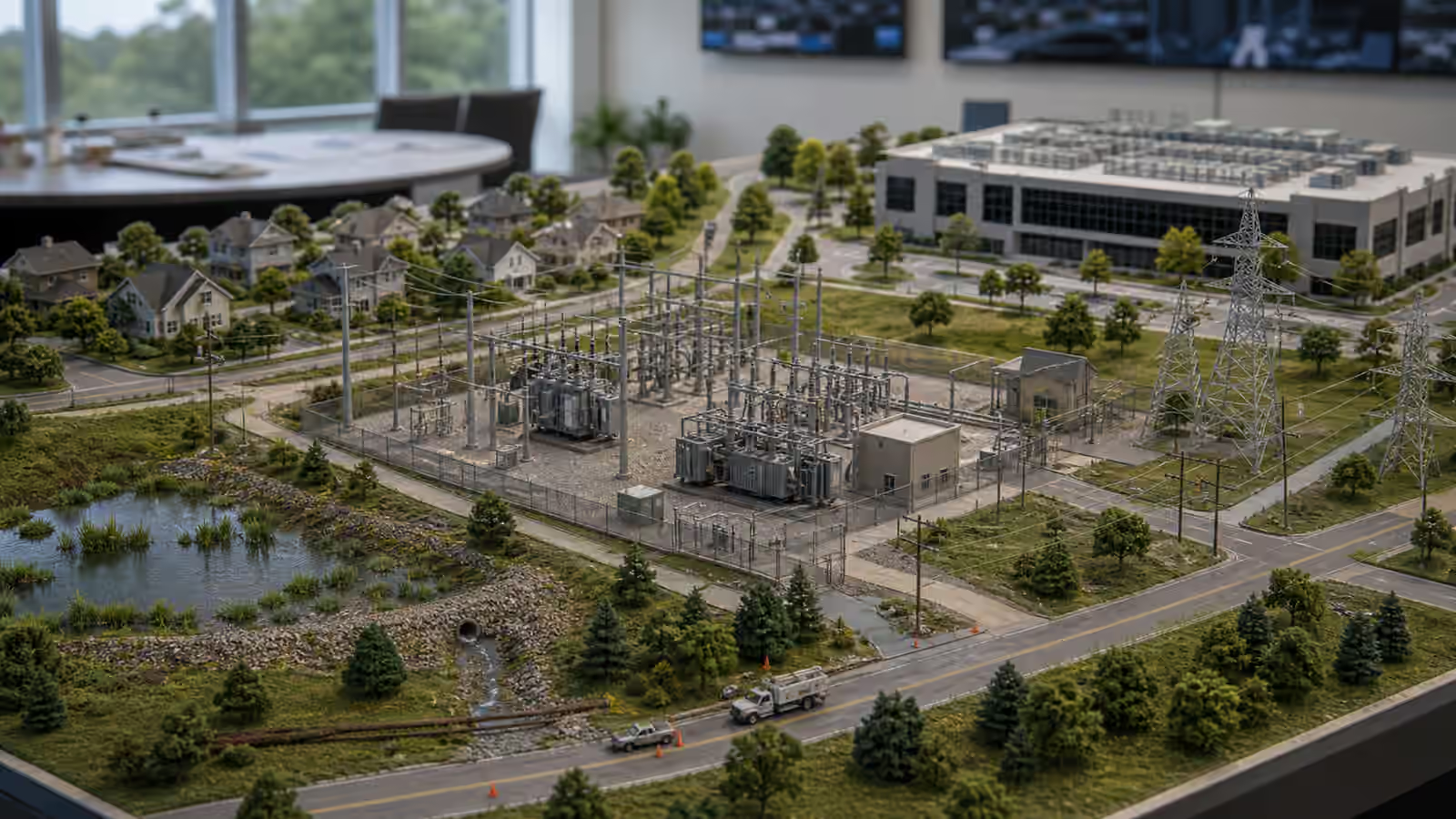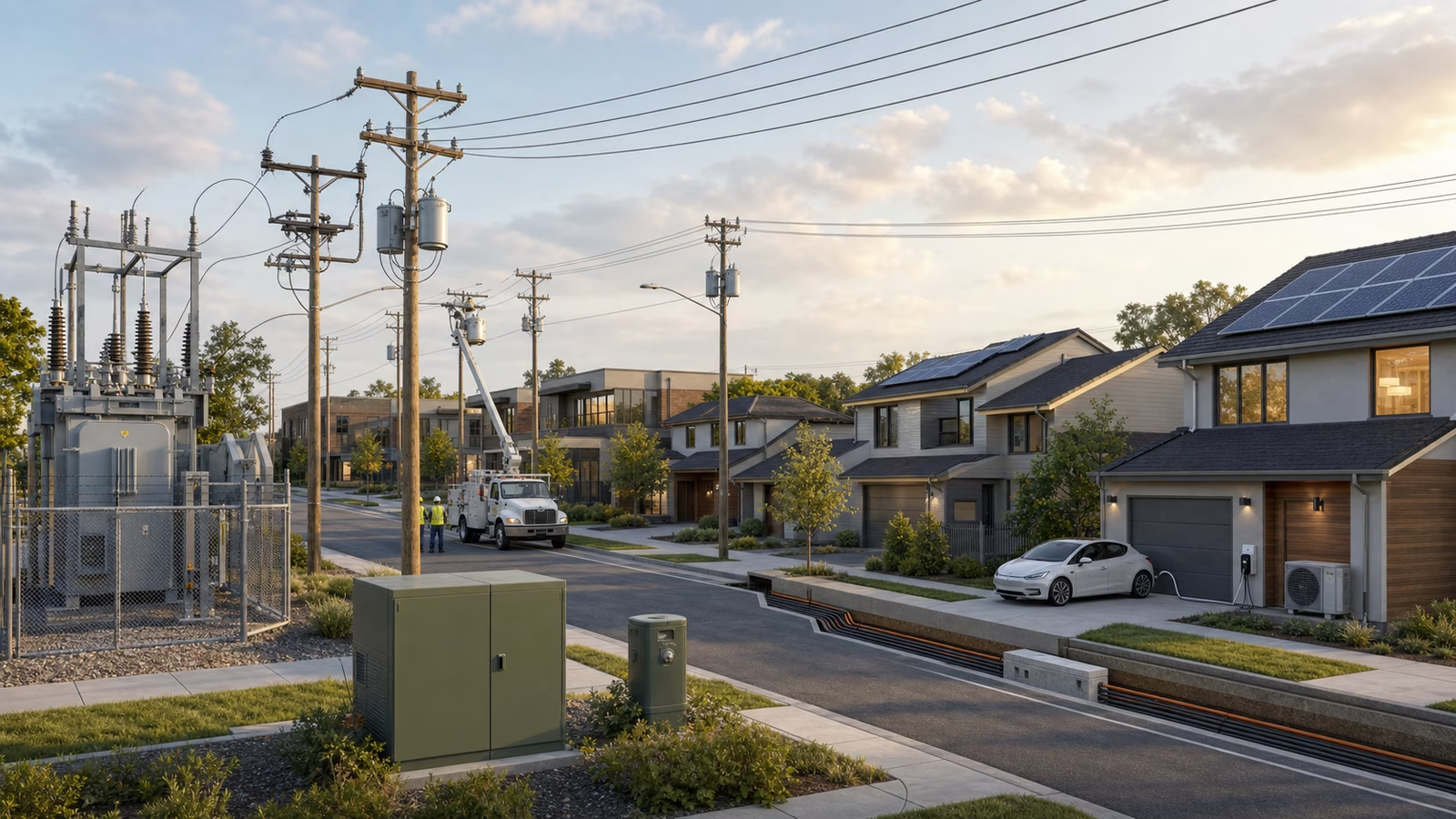
The future grid is often pictured as a map of big things: offshore wind zones, solar regions, nuclear plants, geothermal fields, storage hubs, data-center campuses, and long transmission corridors. That picture is useful, but it skips the last stretch of the journey. Electricity still has to pass through the local substations, feeders, transformers, switches, meters, and service lines that serve actual streets. If that neighborhood layer is weak, the clean power on the regional map can still arrive late.
The distribution grid is the part of the power system most people live beside. It is the utility pole at the corner, the green transformer cabinet near a sidewalk, the overhead wires behind a row of houses, the underground cables beneath a new subdivision, and the compact substation fenced near a shopping center. It is less dramatic than a high-voltage line crossing a mountain pass, but it is where new electric life becomes practical or frustrating. A home charger, heat pump, restaurant kitchen, grocery refrigeration system, school, apartment building, medical clinic, and small factory all depend on local equipment that was often planned around older assumptions.
The guidebook on the electric grid as a machine explains the broad balancing act. The guidebook on transmission bottlenecks explains the high-voltage highways. Distribution is the street network. A city can widen a highway and still create congestion if the neighborhood roads, intersections, and driveways cannot handle the traffic. Electricity has the same kind of last-mile problem.
What the distribution grid does
High-voltage transmission moves bulk power across distance. Distribution takes that power from a substation and delivers it at usable voltages to customers. A substation steps voltage down from the transmission or subtransmission system. Feeders carry power outward through neighborhoods and business districts. Laterals branch from feeders. Transformers reduce voltage again for homes and smaller buildings. Protection devices isolate faults so one damaged cable or fallen branch does not take down everything nearby.
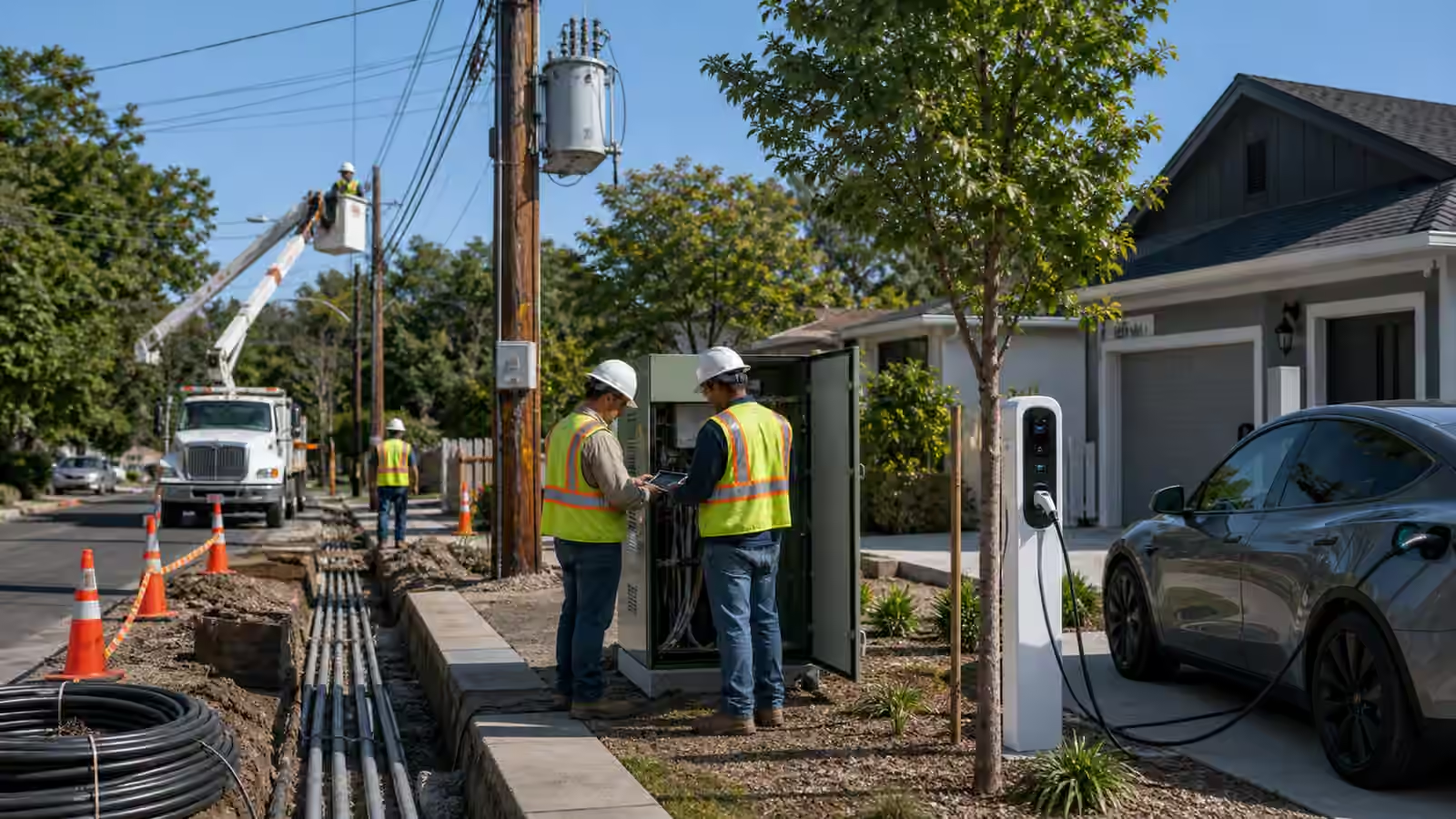
That simple description hides a lot of engineering. Wires have thermal limits. Transformers heat up when heavily loaded. Voltage must stay within acceptable ranges, not too high and not too low. Protection equipment has to know the difference between normal current, a temporary surge, and a dangerous fault. Crews need access to equipment. Underground cables may be protected from storms but harder to inspect and repair. Overhead lines may be easier to work on but more exposed to wind, trees, and vehicles.
Distribution planning used to be mostly one-way. Power flowed from larger plants through transmission, then through distribution, then into buildings. Utilities forecasted load growth, sized equipment, and upgraded circuits when customers added enough demand. That world still exists, but it is now mixed with rooftop solar, home batteries, EV charging, electric water heating, heat pumps, commercial solar canopies, backup generators, and building control systems. Power can flow in both directions at certain moments. A transformer that once only served evening household demand may now see midday export from solar and a new evening peak from charging.
The new load is local
Future electricity demand is not only a national total. It lands on specific circuits.
A few electric vehicles on a street may be easy to serve. A whole block charging after work can change the evening shape of demand. A single heat pump may be modest. A neighborhood switching from fossil heating to electric heating can change winter peaks. One small business adding equipment may not matter. A row of fast chargers, a dense apartment building, a supermarket refrigeration upgrade, or a school electrifying buses can require a serious local study. Even when the regional grid has enough energy, the nearest transformer or feeder may not have enough capacity at the right hour.
This is why distribution planning is becoming more visible. The question is not only how many megawatts a region can produce. It is where those megawatts need to arrive, through which substation, along which feeder, and through which transformer. The answer can vary block by block. Two neighborhoods in the same city may have very different spare capacity because of past development, equipment age, undergrounding choices, industrial history, solar adoption, tree cover, and local load patterns.
Data centers show the issue at industrial scale, as described in AI Data-Center Power Demand , but the same logic applies in miniature. Electricity systems are physical networks. A large new load does not connect to an average grid. It connects to a particular place.
Transformers are small until they are not
Transformers are easy to ignore because many of them are visually boring. A pole-mounted cylinder or a green metal box rarely looks like the future. Yet transformers are one of the most important limits in local electrification. They convert voltage to a level customers can use, and they have thermal ratings based on how much load they can handle without overheating or aging too quickly.
The practical problem is timing. A transformer may have enough capacity most of the year and still be stressed during a hot evening, a cold morning, or a local charging peak. Load is not evenly spread. A few houses with large simultaneous demand can matter more to a transformer than many houses using modest power at different times. Utilities can replace undersized units, but they need to know where upgrades are needed, procure equipment, schedule crews, and sometimes coordinate with customers or local authorities.
Transformers also reveal why flexible demand matters. If EV chargers can avoid the same peak hour, if water heaters can run earlier, if buildings can pre-cool before a strained evening, the same local equipment can serve more useful work. That does not remove the need for upgrades. It can make upgrades better targeted and reduce the amount of equipment built only for rare peaks. This is where Demand Response becomes a distribution tool, not only a regional grid tool.
Rooftop solar changes voltage and flow
Rooftop solar is local generation, which sounds like it should automatically help the local grid. Sometimes it does. Solar can reduce midday demand from a circuit, lower losses, and provide clean electricity close to customers. But high solar adoption can also create operational challenges if a feeder was designed for one-way flow.
On a sunny mild day, household demand may be low while solar output is high. Power can flow back through equipment in patterns it was not originally designed around. Voltage can rise near the end of a feeder. Protection settings may need review. A cloud can quickly change output across many systems. None of this means rooftop solar is bad. It means the distribution grid has to be planned as an active system, not a passive delivery network.
Smart inverters help because they can support voltage and respond to grid conditions. Batteries can absorb solar at noon and discharge later. Better forecasting and monitoring can show where circuits have hosting capacity and where they need upgrades. The local grid can handle much more distributed energy when operators can see it and control it with clear rules.
That is also the world where Virtual Power Plants become more credible. A fleet of batteries, thermostats, chargers, and solar inverters is only useful if it respects local constraints. A virtual power plant that helps the regional peak but overloads a neighborhood transformer is not really helping. Coordination has to work at both scales.
Visibility is part of capacity
One reason distribution upgrades feel slow is that many local grids were not built with detailed real-time visibility. A transmission control room may have rich monitoring across major lines and substations. A distribution circuit may have less instrumentation, especially at the edge. Utilities may know when a customer loses power, but not always the detailed loading, voltage, and equipment condition at every point in advance.
Modern distribution planning therefore includes sensors, smarter meters, feeder monitors, distribution management software, and better maps of assets. This digital layer does not replace copper, aluminum, steel, transformers, or crews. It helps utilities understand where the physical equipment is close to its limit. A utility that can see trouble early can upgrade a transformer before repeated overloads. It can identify where flexible load would be useful. It can approve safe interconnections faster because the circuit model is better.
Bad data is expensive. If a utility underestimates local capacity, it may delay customers and overbuild. If it overestimates capacity, it may create reliability problems. The future distribution grid needs both hardware and trustworthy information.
Why not just rebuild everything?
It is tempting to say that every local wire and transformer should simply be made larger. In some places, stronger equipment is exactly the right answer. Growing neighborhoods, electrified buildings, new chargers, and aging assets will require real construction. But rebuilding everything at once would be disruptive and wasteful. Distribution grids cover enormous territory, and many assets still have useful life.
The better goal is targeted modernization. Some circuits need reconductoring, new transformers, voltage regulators, capacitor banks, switches, or substation expansion. Some need undergrounding or stronger poles because local weather risk justifies it. Some need better vegetation management. Some need new feeder ties so power can be rerouted after a fault. Some need flexible load programs before a peak becomes expensive. Some need customer-side upgrades, such as panel work or managed charging, because the constraint is inside or near the building.
The right answer is local because the grid is local. A rural feeder with long distances has different needs from a dense urban network. A hot-climate suburb with heavy air conditioning has different peaks from a cold-climate town adding heat pumps. A commercial corridor with fast chargers differs from a residential street with rooftop solar. Distribution planning works best when it respects those details instead of pretending that electrification is one uniform load.
The quiet work that makes electrification real
Distribution upgrades rarely make grand headlines. A crew replacing a transformer, a planner updating a feeder model, a utility adding sensors, a substation expansion, a city coordinating charger sites, or a building manager agreeing to managed load all sound small compared with a new power plant. Yet these are the actions that turn energy ambition into working service.
For readers, the useful habit is to ask where new electricity demand touches the local network. A clean-energy plan should include generation and transmission, but also substations and feeders. A charging plan should ask which circuits can support it. A rooftop solar plan should ask how much export the feeder can host. A heat-pump program should ask how winter peaks change transformer loading. A data-center proposal should ask not only where energy is contracted, but where capacity is deliverable.
The future grid will need large resources, long lines, storage, flexible demand, and firm clean power. It will also need ordinary-looking equipment on ordinary streets. That neighborhood layer is not a footnote. It is the part of the system where electrification either becomes easy to live with or gets stuck in a queue of local constraints. The promise of powering tomorrow depends on making the last mile strong enough for the future arriving at the front door.