Distribution grids used to be treated as the quieter side of electricity. The transmission system had the control rooms, big generators, regional markets, and stability studies. The distribution system brought power from substations to neighborhoods and businesses. It was not simple, but it was more predictable. Power mostly moved one way. Utilities sized feeders and transformers for expected load, protected circuits from faults, restored service after storms, and replaced equipment as it aged.
That old picture is fading. A modern distribution circuit may include rooftop solar, home batteries, EV chargers, heat pumps, managed water heaters, commercial buildings, community solar, small battery projects, and sensitive customers who notice even brief interruptions. A feeder can be a load in the evening, a source of local generation at noon, and a complicated mixture during a cloudy afternoon. The devices at the edge of the grid are becoming active. Distribution automation and distributed energy resource management systems, often shortened to DERMS, are the coordination layer that tries to make that activity usable.
The guide to distribution grid upgrades explains the physical bottlenecks: substations, feeders, transformers, voltage, and construction work. This guide looks at the operating layer. More copper and steel will still be needed, but local software, sensors, settings, and switching can decide how much existing equipment can safely handle and how quickly operators understand what is happening.
The local grid needs eyes before it needs commands
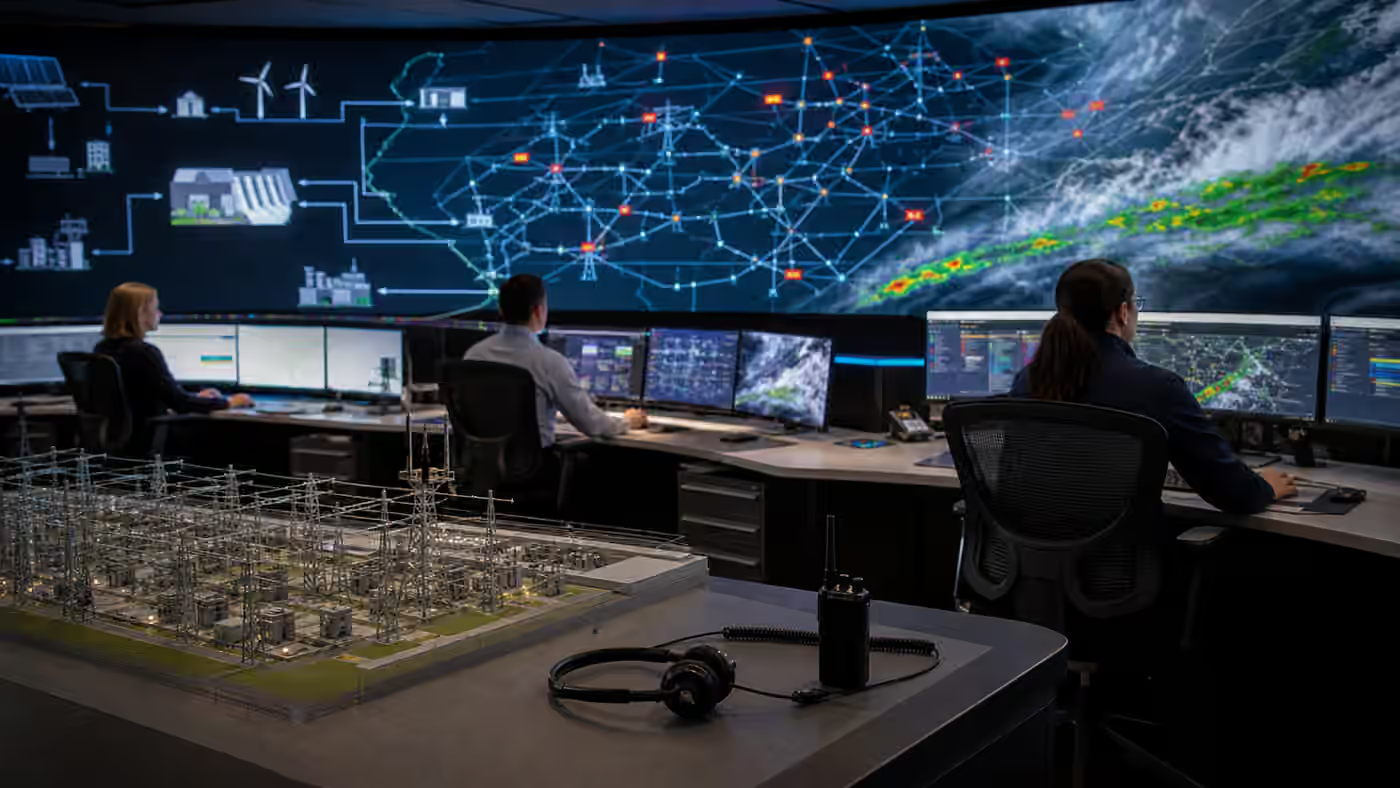
Automation starts with visibility. A control system cannot coordinate what it cannot see. Many distribution circuits were built with limited real-time measurement. Operators knew the substation well, estimated conditions farther down the feeder, and relied on customer calls or outage systems when trouble appeared. That approach worked better when power flowed from the substation outward and customer behavior was fairly predictable.
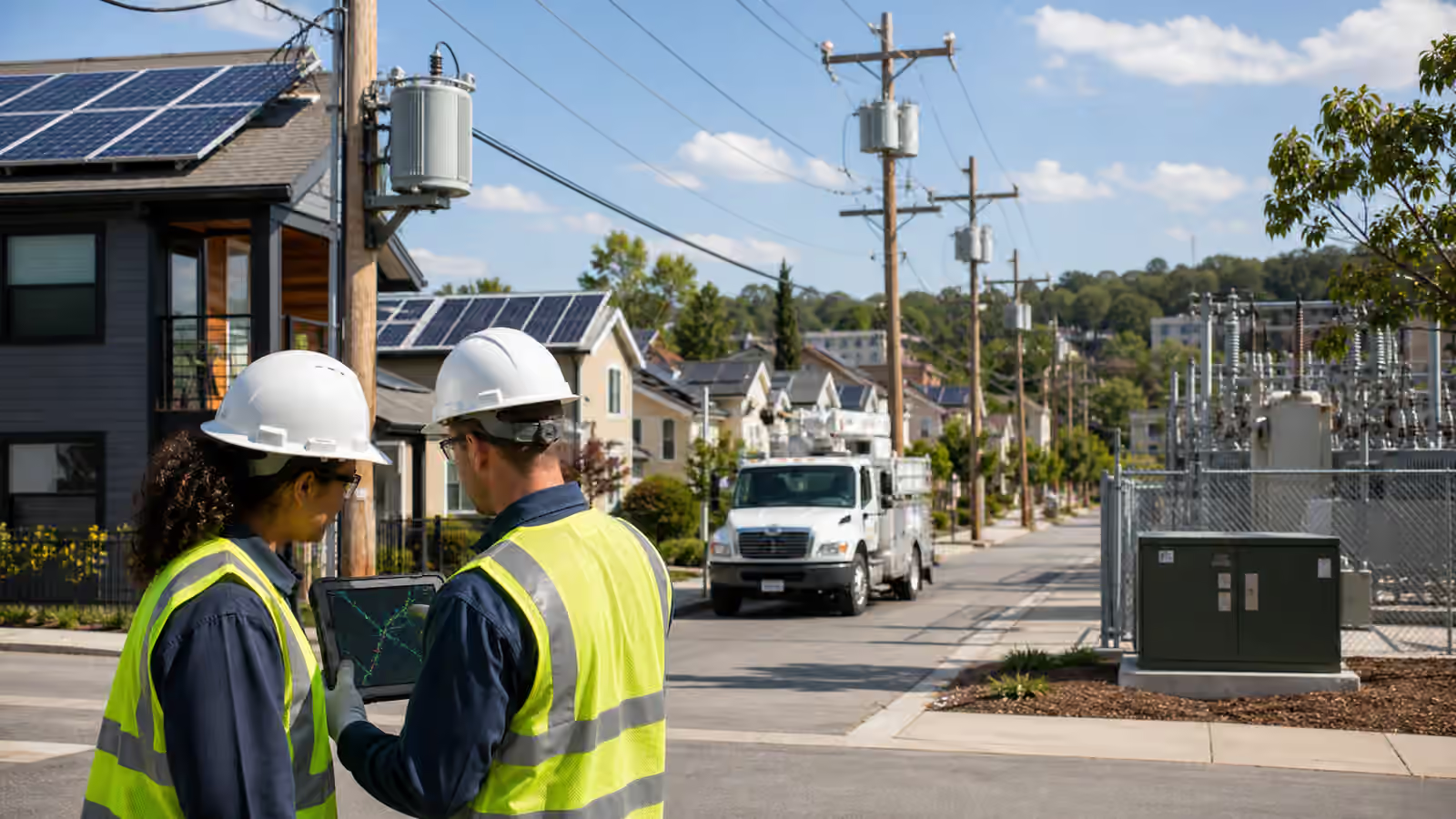
Distributed resources change the information problem. Rooftop solar can raise voltage at the end of a feeder. EV charging can create new evening peaks on a transformer that once served mostly lighting and appliances. A battery can charge or discharge depending on price, backup needs, or an aggregator’s instruction. A smart inverter can support voltage if configured well, or trip at the wrong moment if settings are poorly matched to the circuit. The distribution grid becomes a place where local measurements matter.
Sensors, advanced meters, feeder monitors, substation data, weather data, and inverter telemetry all help. The challenge is not merely collecting data. The data has to be timely, accurate, and useful to people and systems that make decisions. A flood of alarms can be worse than a small number of trustworthy signals. The guide to grid visibility and sensor telemetry covers that broader observation problem. DERMS brings it down to the local circuit, where a voltage issue may be tied to one feeder, one line section, or one cluster of devices.
Automation changes switching from a manual art to a managed process
Distribution automation often begins with switching. If a branch of a feeder faults, automated switches can isolate the damaged section and restore other customers by feeding them from a different path. This is sometimes described as self-healing, but that phrase can oversell the idea. The system is not magically repairing wires. It is using sensors, switches, protection settings, and logic to keep an outage from spreading farther than necessary.
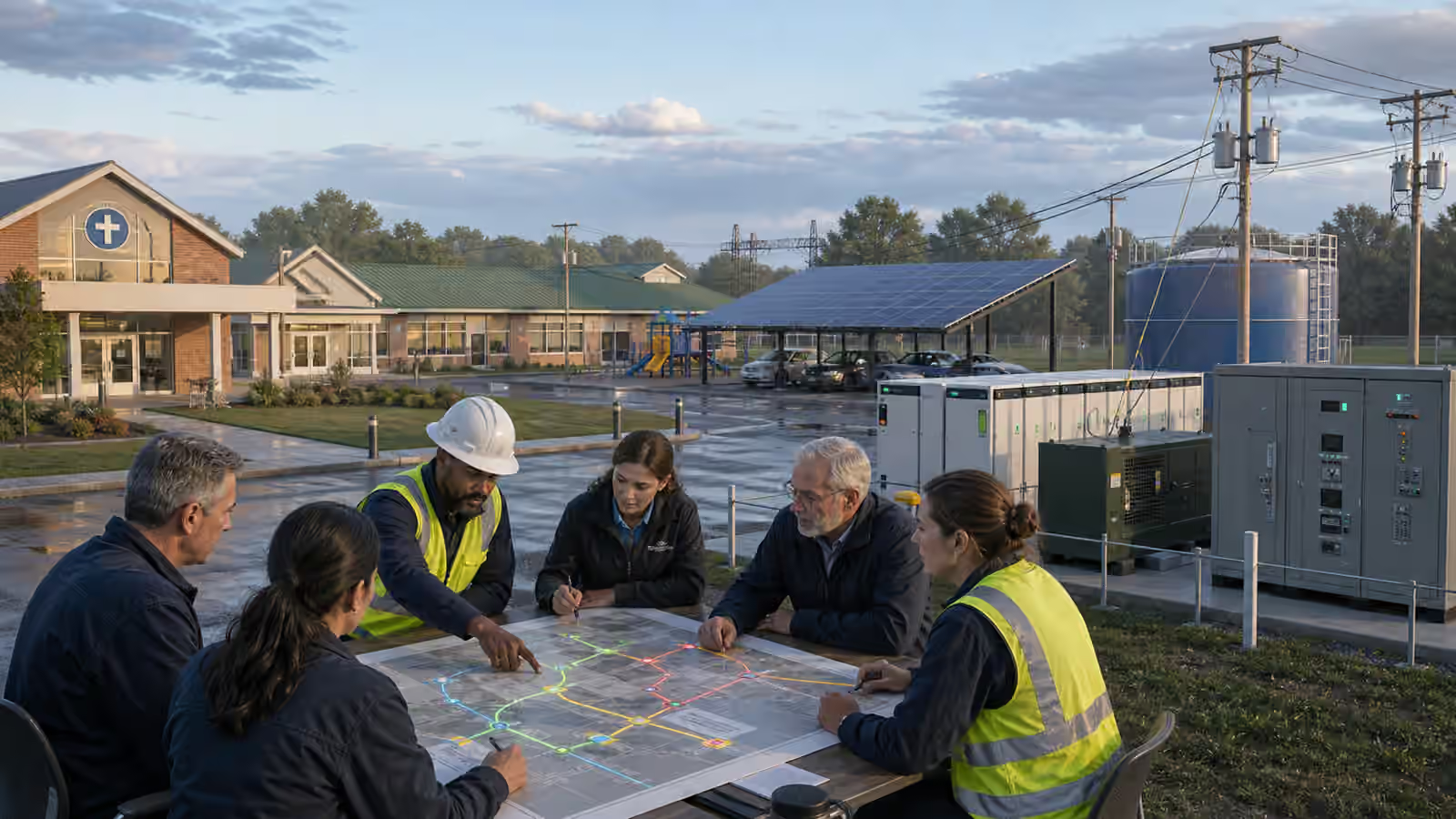
That matters because future electric loads raise the value of continuity. A grocery store may lose refrigerated inventory. A home with medical equipment may need reliable service. A charging depot may have vehicles waiting for the morning route. A water facility, school shelter, or communications site may depend on the same local wires. Faster switching does not eliminate storms or equipment failures, but it can reduce the number of customers affected and shorten the first response time.
Automation also has to respect protection. The guide to grid protection and relays explains why faults need to be isolated in a controlled way. Adding distributed generation can make that harder because fault current and power flow no longer behave exactly like they did on a one-way feeder. A DERMS or automation scheme cannot be a layer of clever commands sitting above old assumptions. It has to be coordinated with fuses, breakers, reclosers, inverter behavior, and utility operating rules.
DERMS is not one box
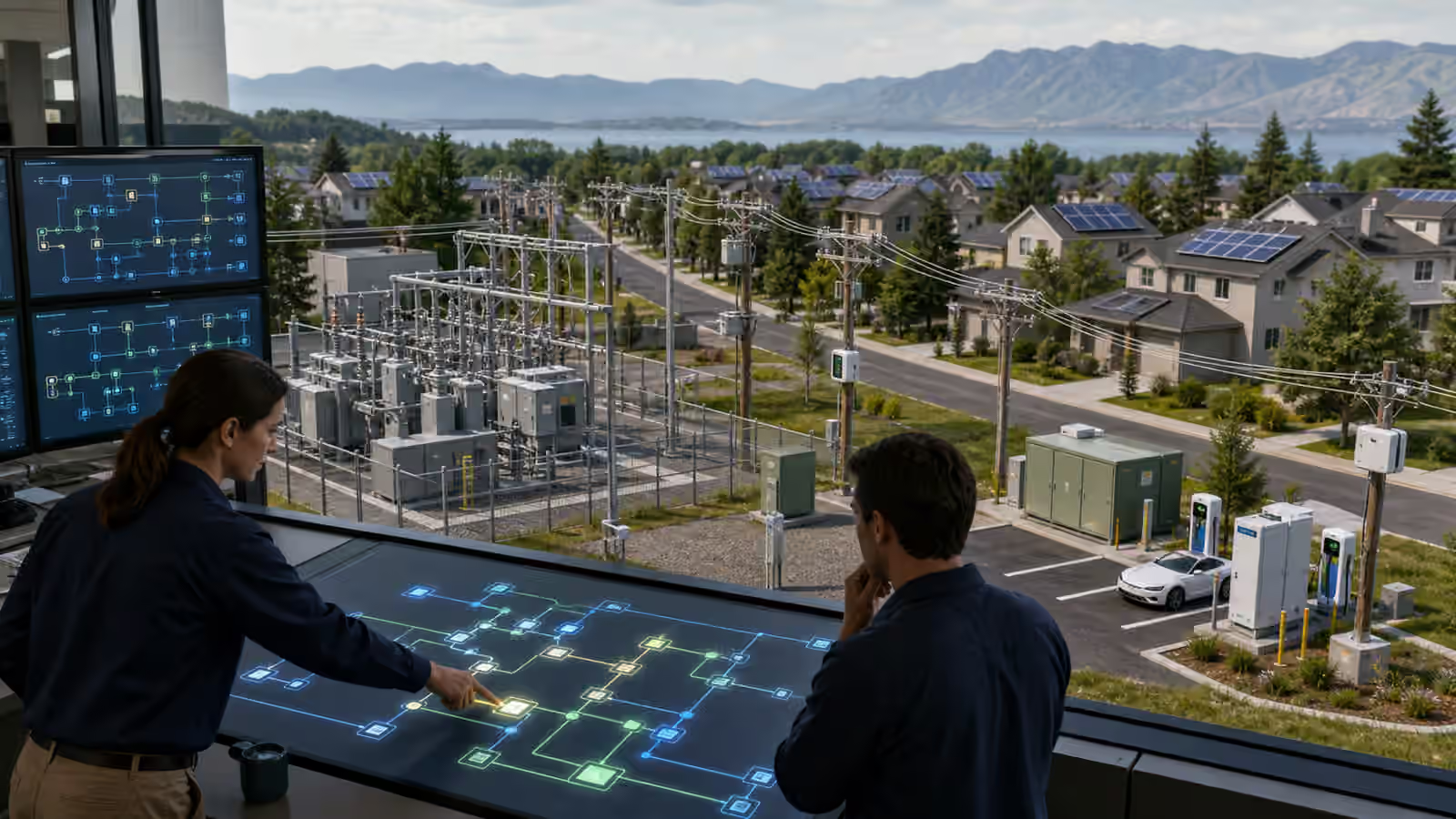
DERMS is sometimes sold as if it were a single dashboard that makes distributed energy resources behave. In practice, it is better understood as a set of functions. It may forecast local solar output, monitor feeder voltage, coordinate inverter settings, dispatch batteries, communicate with aggregators, limit exports during constraints, support planned outages, or help utilities manage flexible interconnections. The useful question is not whether a utility “has DERMS.” The useful question is which local grid problems the system can actually solve.
For example, a feeder with high rooftop solar may need voltage coordination during mild spring days when demand is low and solar output is high. A neighborhood with fast EV adoption may need managed charging or transformer monitoring. A commercial district may benefit from coordinating building loads during peaks. A rural feeder may need fault location and automated switching more than fine-grained battery dispatch. The technology should follow the constraint.
This is why DERMS sits near distributed solar hosting capacity and virtual power plants . Hosting capacity asks how much local generation a circuit can accept without creating problems. Virtual power plants ask whether many small devices can behave like a dependable grid resource. DERMS is part of the utility-side coordination that can turn those ideas from paperwork into operations.
Customers still matter
Local flexibility cannot be treated as an invisible resource owned by the utility. A thermostat belongs to a home. A battery may be there for backup. A charger serves a driver. A factory cares about production. A building manager worries about comfort, tenants, and equipment wear. If DERMS depends on customer devices, the agreements around those devices have to be understandable and trustworthy.
That does not mean every action needs a phone call. Automated programs can work well when the rules are clear. A water heater can shift modestly. A fleet charger can follow a schedule. A battery can reserve part of its capacity for backup while offering part to the grid. A smart inverter can provide voltage support under standard settings. The point is that technical control and customer purpose have to line up. Otherwise the resource will not be available when the grid expects it.
The guide to demand response and flexible loads makes the same point at a system level. Flexibility is not a slogan. It is a designed relationship among equipment, software, incentives, and trust.
The future local grid is both physical and digital
There is a temptation to set automation against hardware: if software is smarter, perhaps fewer upgrades are needed. That is the wrong framing. Automation can reveal unused capacity, reduce outage impacts, improve voltage management, and coordinate flexible resources. It can also show that a transformer is overloaded, a feeder is near its limit, or a substation needs investment sooner than expected. Better control does not abolish physics. It makes physics visible enough to manage.
The future distribution grid will need both. It will need heavier transformers where electrification is real. It will need line work where feeders are constrained. It will need switchgear, communications, cybersecurity, and field crews. It will also need DERMS, automation logic, sensor discipline, and operating practices that let local resources help rather than surprise the grid.
The quiet promise is practical. A neighborhood with solar, batteries, EV chargers, heat pumps, and flexible buildings can be a harder place to operate, or it can become a more capable part of the power system. The difference is coordination. Distribution automation and DERMS are not glamorous, but they are the tools that let the edge of the grid become part of the grid’s brain.