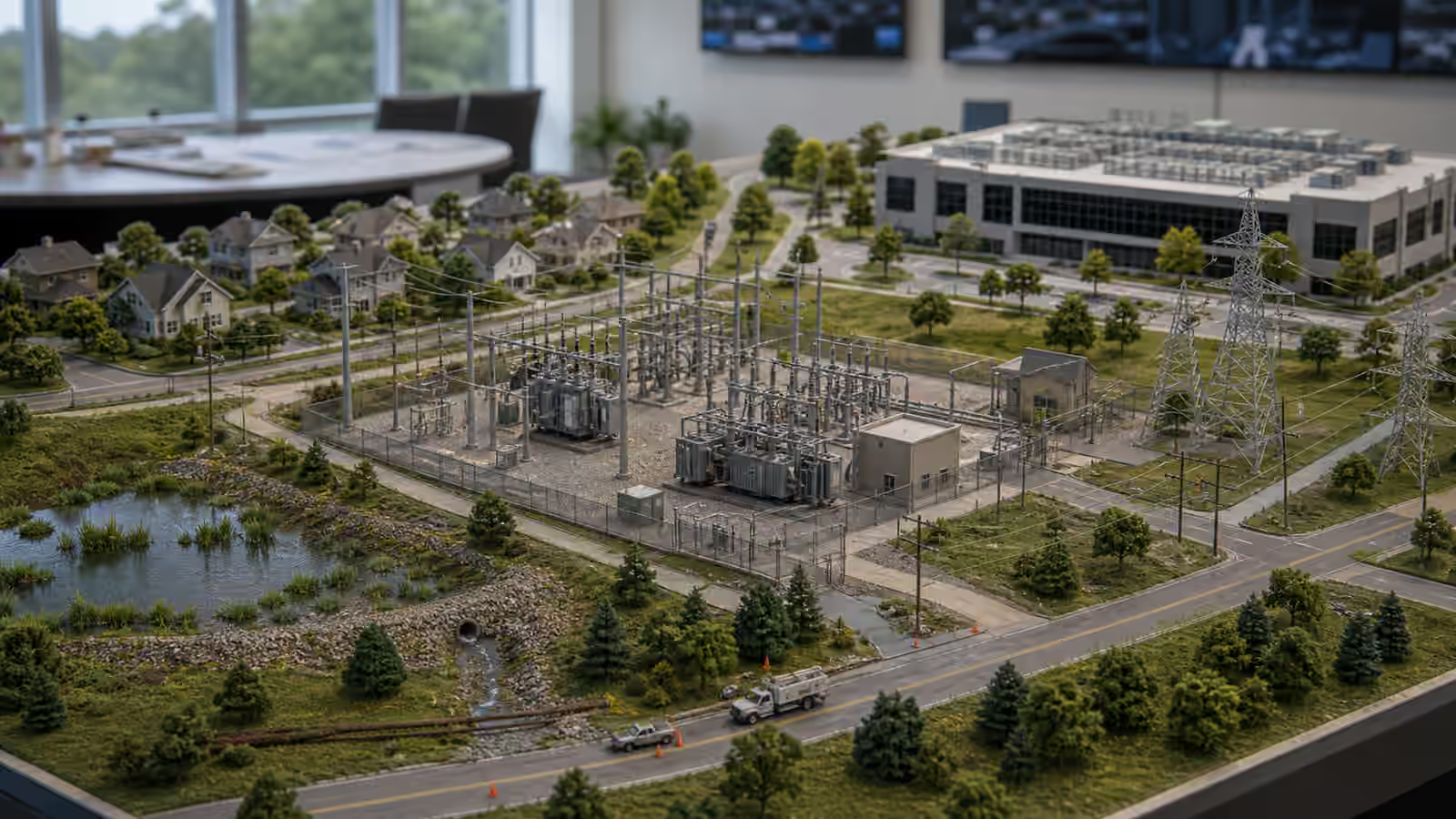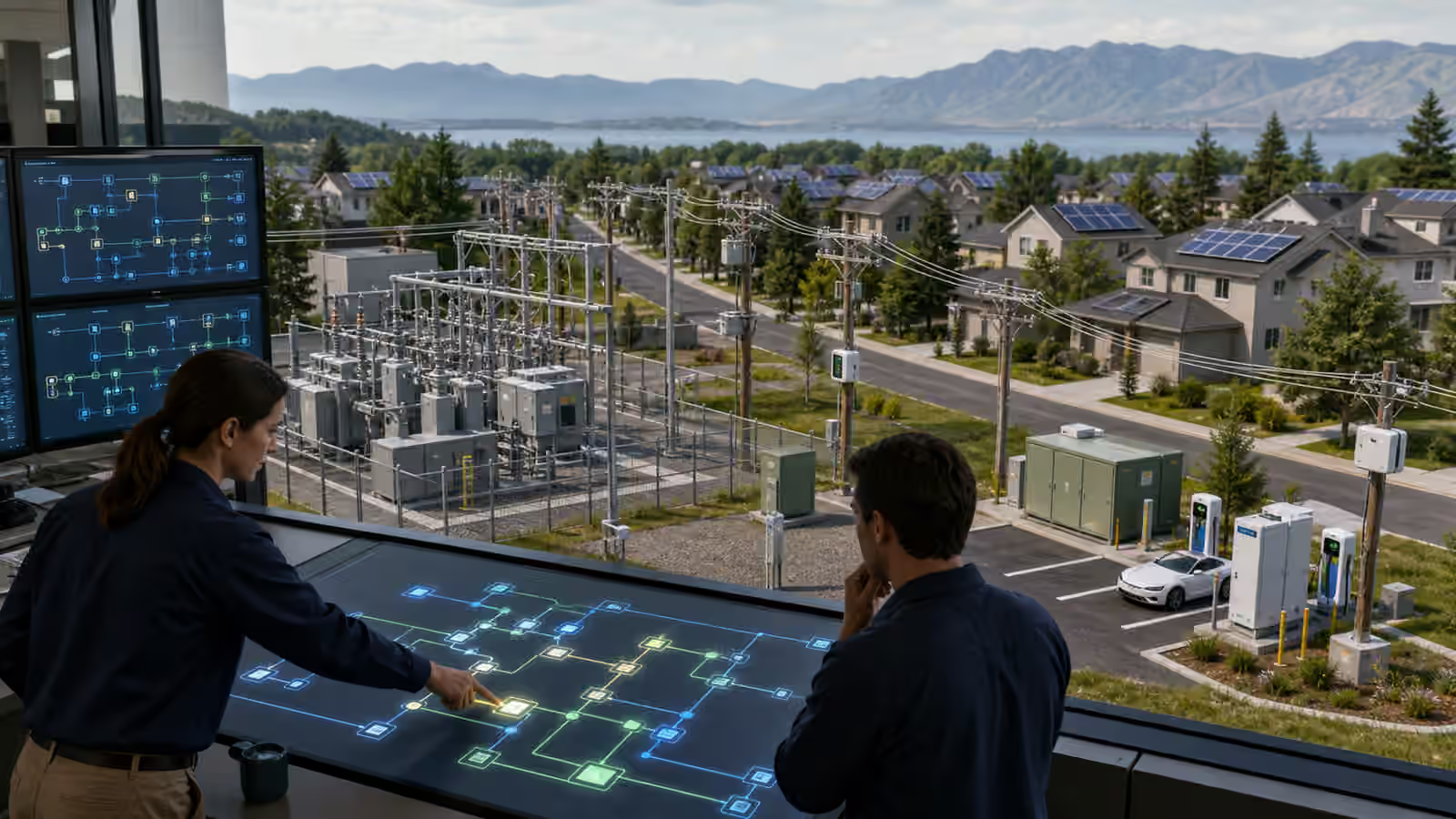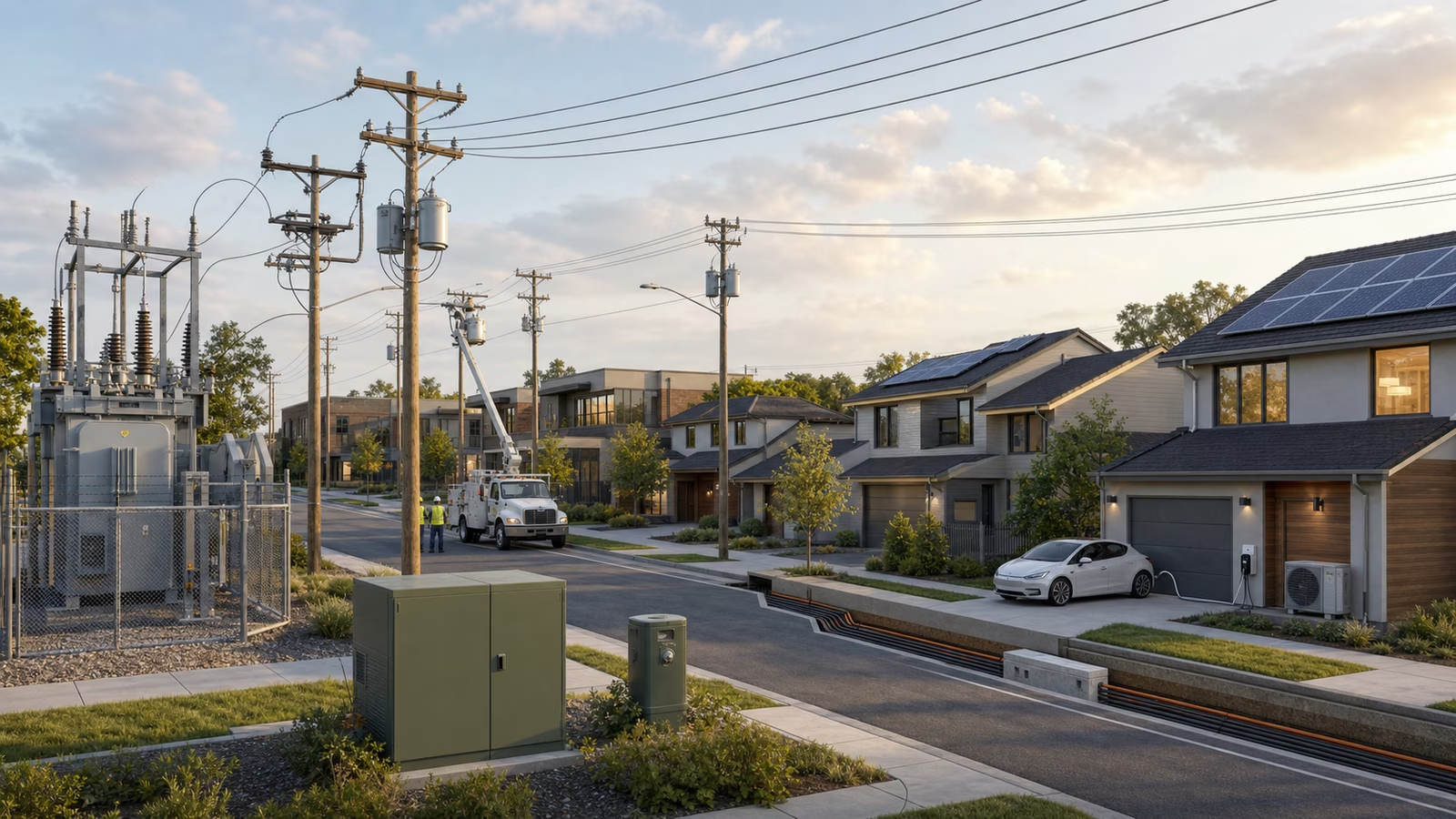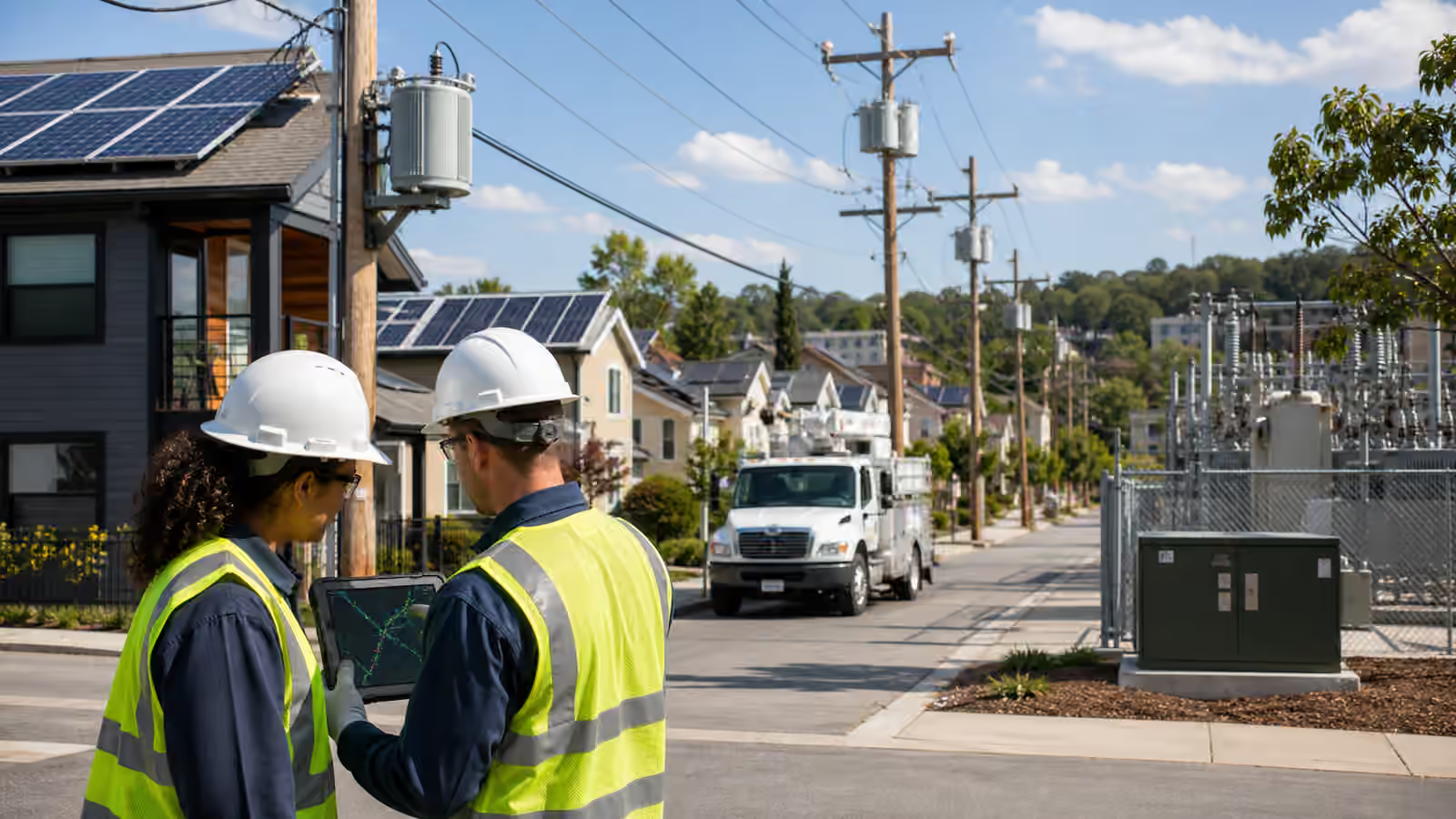
Rooftop solar looks local and simple from the street. Panels sit on a roof. An inverter connects them to a building. On a sunny afternoon, some of the power serves the home or business, and some may flow back toward the local wires. The grid sees a more complicated picture. Many small systems connected to the same feeder can change voltage, transformer loading, protection behavior, backfeed, and the amount of power that moves through equipment originally planned for one-way delivery.
Hosting capacity is the practical name for that local limit. It asks how much distributed generation a circuit can accept before upgrades, controls, operating changes, or new rules are needed. The answer is not the same everywhere. One feeder may accept many rooftop systems with little trouble. Another may hit a voltage constraint after fewer installations. A rural line, dense city network, commercial corridor, suburban neighborhood, and industrial park can all behave differently.
The guide to distribution grid upgrades explains why the neighborhood layer of the grid matters. Distributed solar hosting capacity is one of the clearest examples. Clean power does not only need panels. It needs local wires that can handle power moving in new patterns.
The distribution grid was not all built for two-way flow
Many distribution circuits were designed around a familiar pattern. Power came from a substation, moved along feeders, stepped down through transformers, and served customers. Loads varied through the day, but the basic direction was clear. Rooftop solar changes that assumption. At midday, a street with many solar systems may produce more than the local buildings consume. Power can move back toward the feeder, through equipment that still has to maintain voltage and protection coordination.
Two-way flow is not automatically bad. Distribution systems have always handled some complexity, and utilities can adapt. The issue is that equipment ratings, voltage regulators, capacitor banks, relays, fuses, transformers, and monitoring systems may need review. A transformer that was sized for evening household load may see different thermal cycling when solar exports rise. A voltage regulator may act differently when power flows reverse. A fuse that isolates a fault under one pattern may need coordination work under another.
Grid protection and relays explains why fault behavior matters. Distributed generation can change the current available during some events, and inverter controls may respond differently from older rotating machines. Engineers do not study these details to slow solar down for sport. They study them because the same local circuit has to remain safe for line workers, customers, and equipment.
Voltage is often the first visible constraint
Customers do not buy voltage support as a product, but they depend on it. Equipment expects electricity within a usable range. Too high, too low, too much flicker, or too much distortion can create problems. When many rooftop systems export at the same time, local voltage can rise, especially near the end of a feeder where impedance is higher. When clouds move quickly, output can change. When evening arrives, solar falls while household load may rise.
Power quality and voltage support covers the wider issue. For hosting capacity, voltage is a daily operating question. Utilities may adjust regulator settings, add monitoring, reconductor a line, split a feeder, replace transformers, install voltage control equipment, or use inverter functions that help manage reactive power. The right answer depends on the circuit.
Smart inverters can help, but they are not magic. They can ride through disturbances, provide voltage support within limits, respond to frequency settings, and communicate with control systems in some programs. Their usefulness depends on settings, standards, utility visibility, cybersecurity, customer agreements, and whether the local issue is one the inverter can actually solve. If a wire is overloaded, clever controls may reduce stress but cannot create unlimited capacity.
Hosting maps are useful, but they are not a guarantee
Some utilities publish hosting capacity maps that show where distributed solar or storage is easier to interconnect. These maps can help customers, installers, developers, and planners avoid blind applications. A green-looking feeder may suggest room. A constrained area may warn that upgrades or study delays are likely. The maps can also guide public investment by showing where local grid upgrades would open more clean-power opportunity.
The caution is that a map is a model, not a promise. Conditions change as new projects connect, loads grow, equipment is replaced, switching configurations change, or better data arrives. A circuit may have room for small residential systems but not a larger commercial system. A feeder may look open in aggregate while one lateral or transformer is already tight. An application still needs review because the exact point of interconnection matters.
This connects to grid visibility and sensor telemetry . Better feeder models, transformer monitoring, advanced meters, inverter telemetry, and outage data can make hosting analysis more accurate. Without visibility, utilities may use conservative assumptions, which can slow clean power. With poor visibility, they may approve connections that create local problems. The goal is not optimism. It is trustworthy awareness.
Storage changes the shape, not only the size
Pairing rooftop solar with batteries can make distributed generation easier or harder depending on how the system operates. A battery that charges from solar during midday and discharges during the evening can reduce exports and help local peaks. A battery that exports at the wrong time can add stress. A battery used only for backup may sit idle during the hours when the feeder needs help. The equipment is flexible, but the operating plan decides the grid value.
Virtual power plants explains how many small devices can be coordinated as a resource. Hosting capacity is one reason coordination matters. If a neighborhood battery fleet responds to local constraints, it may help defer upgrades or allow more solar. If each device follows a separate retail signal that ignores the feeder, the combined effect may surprise the utility.
Local tariffs and interconnection rules shape behavior. Export limits, time-varying rates, managed charging, inverter settings, and compensation for grid services can all influence whether distributed solar supports the system or merely shifts the problem. The challenge is to create rules that are understandable enough for customers and installers while precise enough for grid operations.
Equity and practicality belong in the same conversation
Hosting capacity can create fairness issues. Wealthier neighborhoods may adopt rooftop solar earlier and use available circuit capacity first. Renters, apartment residents, shaded homes, and lower-income customers may have less access. If later applicants face upgrade costs or export limits, the order of adoption matters. Community solar, shared storage, public buildings, and targeted distribution upgrades can help, but only if planning recognizes the issue.
There is also a practical workforce dimension. More distributed solar means more interconnection reviews, inspections, meter work, inverter settings, transformer replacements, and customer communication. Transformers and grid hardware explains why equipment is not summoned at software speed. A local clean-power plan has to include the crews, materials, standards, and schedules that make the plan real.
This is not an argument against rooftop solar. It is an argument for treating local solar as real infrastructure. Panels on many roofs can reduce daytime grid demand, support clean-energy goals, and give customers a stake in the power system. They can also create operational questions that need engineering, not denial.
Better hosting capacity makes solar more useful
A grid that understands hosting capacity can connect more distributed solar with less friction. It can tell installers where projects are likely to move quickly. It can identify circuits where smart inverter settings or small upgrades would help. It can decide when reconductoring, transformer replacement, feeder reconfiguration, or storage coordination is worth the cost. It can avoid treating every application as a surprise.
Distributed solar also has to fit the wider energy portfolio. Utility-scale solar and grid integration explains the large-project side of the same resource. Rooftop solar adds a different value because it sits close to load, uses existing surfaces, and can reduce losses or local demand in some hours. It also sits inside a distribution grid with its own limits.
For a reader, the useful question is not simply “Can this roof make power?” The sharper question is “Can the local circuit use or move that power safely at the hours it appears?” When the answer is yes, distributed solar can be a quiet part of a stronger grid. When the answer is not yet, hosting capacity shows where local wires, controls, storage, and planning have to catch up.