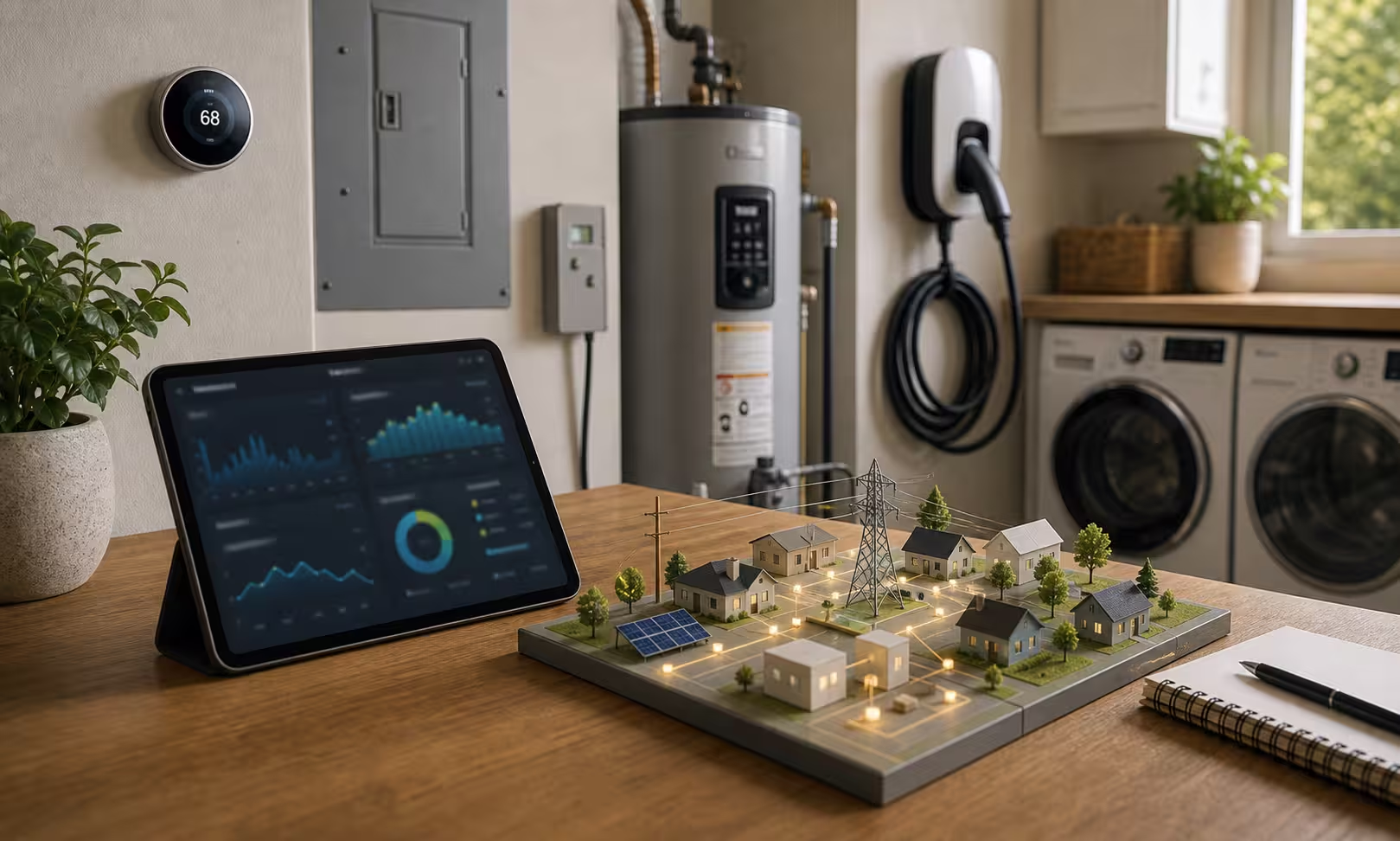
The cleanest power plant may be the one the grid never has to call.
That is the quiet idea behind demand response. Instead of meeting every peak in electricity demand by building more generation, burning more fuel, or overbuilding wires, the grid can sometimes ask flexible electricity users to shift, reduce, or delay demand. The lights stay on not because a new plant suddenly appears, but because millions of small timing decisions become slightly smarter.
This sounds abstract until you picture a hot evening. People come home, air conditioners run hard, ovens turn on, laundry starts, businesses are still operating, and the grid climbs toward its daily peak. At the same time, solar production may be fading. The system operator has to balance supply and demand in real time. Every extra megawatt must come from somewhere. Some of it comes from power plants. Some may come from batteries. Some may come through transmission from another region. Some can come from demand that waits.
Demand response is not about asking people to live worse lives for the grid. Done well, it is about finding the parts of electricity use where timing is flexible and using that flexibility before the system becomes strained.
Demand is not one thing
Electricity demand looks like one line on a chart, but underneath that line are many different kinds of need.

Some demand is immediate. A hospital operating room, a traffic signal, a data center process, a refrigerator, or a person using medical equipment cannot simply pause because prices are high. Some demand is comfort-sensitive. Air conditioning and heating can shift a little if buildings are pre-cooled or pre-heated, but people should not be made unsafe or miserable. Some demand is time-flexible. A water heater can heat earlier. An electric vehicle can charge later. A dishwasher can wait. A cold warehouse may be able to coast briefly within safe temperature limits. An industrial process may be able to schedule energy-intensive steps when power is cleaner or cheaper.
The art is knowing the difference.
A future grid with more wind, solar, batteries, electric vehicles, heat pumps, and data centers will need flexibility on both sides. Supply will vary with weather and equipment. Demand will grow and change shape. If every device demands power at the most stressful moment, the grid becomes more expensive than it needs to be. If flexible loads can move without harming the people or businesses behind them, the whole system breathes more easily.
The thermostat is only the beginning
Many people first meet demand response through a thermostat program. On peak days, a utility may adjust participating thermostats slightly to reduce air-conditioning load. The best programs give notice, preserve override rights, and keep comfort within agreed limits. The worst versions feel like a loss of control.
Thermostats matter because cooling and heating can be large loads, but the flexible load story is much bigger. Electric water heaters can act like small thermal batteries. They can heat water before a peak and then coast for a while. EV charging can often move overnight, pause during stress, or respond to cheaper hours, as long as the driver gets the needed range by morning. Home batteries can reduce household demand during peaks. Smart appliances can run when the grid is less strained, though the practical value depends on whether people actually want to use them that way.
Commercial and industrial sites can offer larger blocks of flexibility. Cold storage, water treatment, manufacturing, pumping, building ventilation, and some data workloads may have room to shift or modulate demand. These loads are not all simple. A factory cannot casually interrupt a process that ruins a batch. A grocery store cannot risk food safety. A data center cannot break service commitments. But where flexibility exists, it can be valuable.
The future grid will not be managed by one magical smart device. It will be managed by many agreements between real needs and real constraints.
Trust is the hidden infrastructure
Demand response depends on trust more than many energy technologies do.
A transmission line may be controversial to build, but once built, it does not need each household to make a daily judgment. Demand response reaches into homes and businesses. It asks people to let a utility, aggregator, device maker, or energy manager influence equipment they depend on. That can feel intimate. The thermostat is in the hallway. The EV is needed for work. The freezer protects food. The factory schedule protects payroll.
If programs are confusing, people will not trust them. If savings are tiny and inconvenience is noticeable, people will leave. If control feels one-sided, they will override or opt out. If data use is opaque, they will suspect the worst. If a program harms vulnerable customers during extreme heat or cold, it has failed morally even if it helped a chart.
Good demand response makes the bargain clear. What can be adjusted? When? How much? How often? Who can override? What is the reward? What data is collected? What happens during emergencies? What protections exist for health, disability, age, and household needs?
The grid may need flexibility, but flexibility cannot be extracted like a resource without consent.
Price signals are useful and incomplete
One way to encourage flexible demand is through price. Electricity can cost more during peak hours and less when supply is abundant. Time-of-use rates, critical peak pricing, and real-time pricing all try to make the cost of electricity more visible.
Prices can work well for some users. A household may charge an EV overnight because it is cheaper. A business may shift a process to lower-cost hours. A battery may charge when prices are low and discharge when prices are high.
But price signals are not a complete solution. People do not always have the time, equipment, money, landlord permission, or schedule flexibility to respond. A wealthy household with a smart thermostat, EV, home battery, and good insulation can adapt more easily than a renter in a poorly insulated apartment. A business with energy staff can optimize more easily than a small shop trying to survive the week.
This is why demand response has to be designed with equity in mind. A flexible grid should not become a system where those with better devices earn rewards while those with less flexibility pay more. Programs need protections, simple participation paths, and benefits that reach beyond early adopters.
Flexibility competes with construction
Demand response is not a replacement for generation, storage, transmission, or efficiency. The future grid will need all of those. But flexibility can reduce how much has to be built for rare peaks. That matters because grids are often sized for stressful hours that do not represent ordinary demand.
If a region can shave the highest peaks, it may avoid running expensive peaker plants as often. It may reduce congestion on local wires. It may delay some upgrades while better plans are made. It may integrate more renewable energy by shifting demand toward windy or sunny hours. It may make batteries go further because demand is smoother.
The value depends on reliability. A power plant that promises capacity has to show up. Demand response has to show up too. Grid operators need to know how much load will actually reduce, how quickly, for how long, and under what conditions. A flexible load that disappears on paper but not in reality can create trouble. Measurement and verification are not bureaucratic details. They are how flexibility becomes dependable.
The future is quieter than the slogan
The phrase “smart grid” often brings to mind glowing dashboards and automated homes. Real demand response will be quieter. The water heater warms at a better time. The EV charger waits until the peak passes. A building pre-cools before the hottest hour. A battery covers a short spike. A factory schedules a flexible process when power is cheaper. A neighborhood avoids stressing a transformer because several devices coordinated without drama.
When it works, nobody feels heroic. They simply get the service they needed while the grid avoids waste.
That is the promise worth pursuing. Not a future where people constantly think about electricity, but one where the flexible parts of life help protect the inflexible parts. Demand response asks a subtle question: before we build the next expensive solution, is there demand that can move?
Sometimes the answer is no. Sometimes power is needed now, and the grid must provide it. But sometimes the answer is yes, and the cleanest megawatt is the one quietly shifted out of the way.