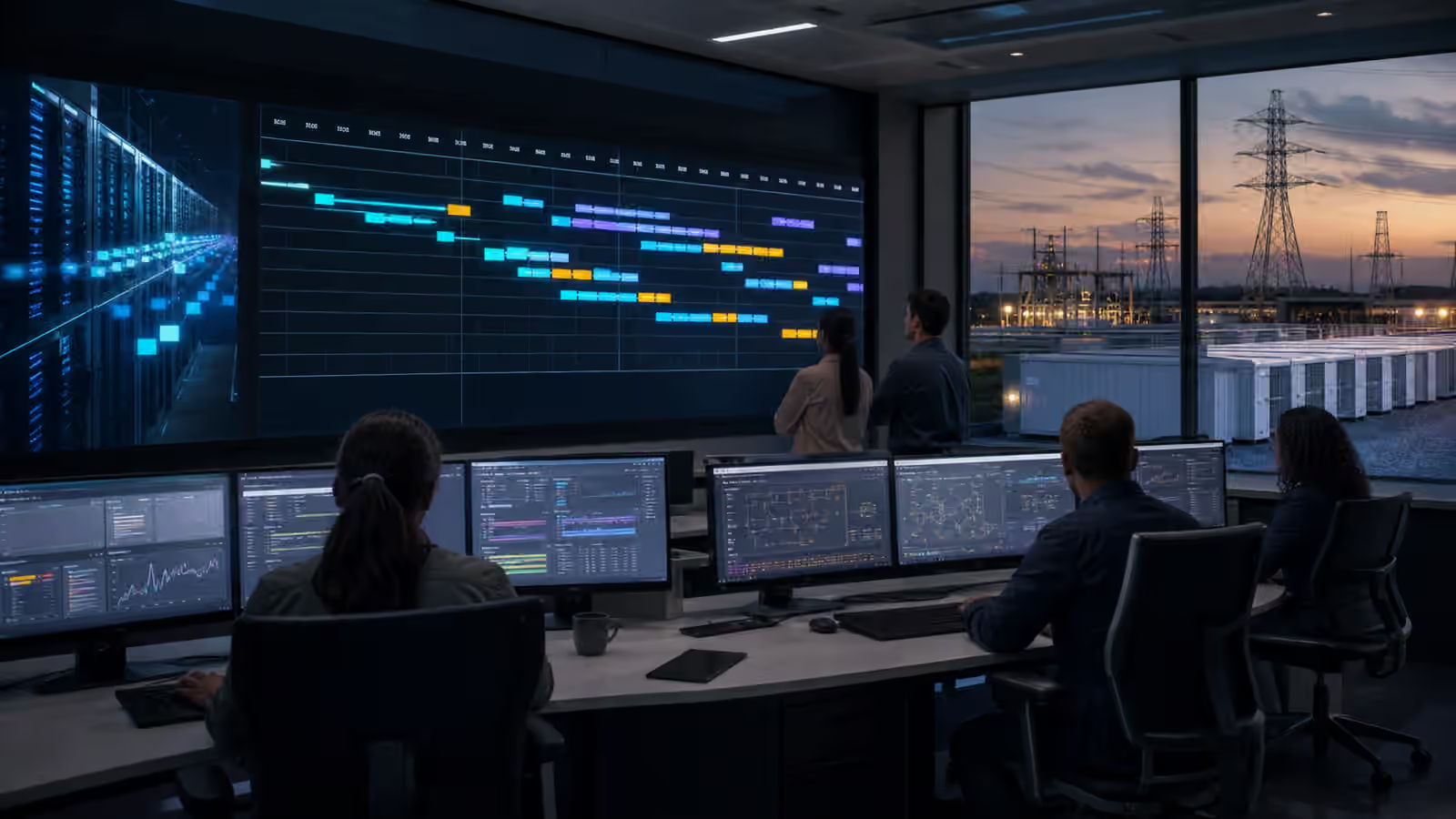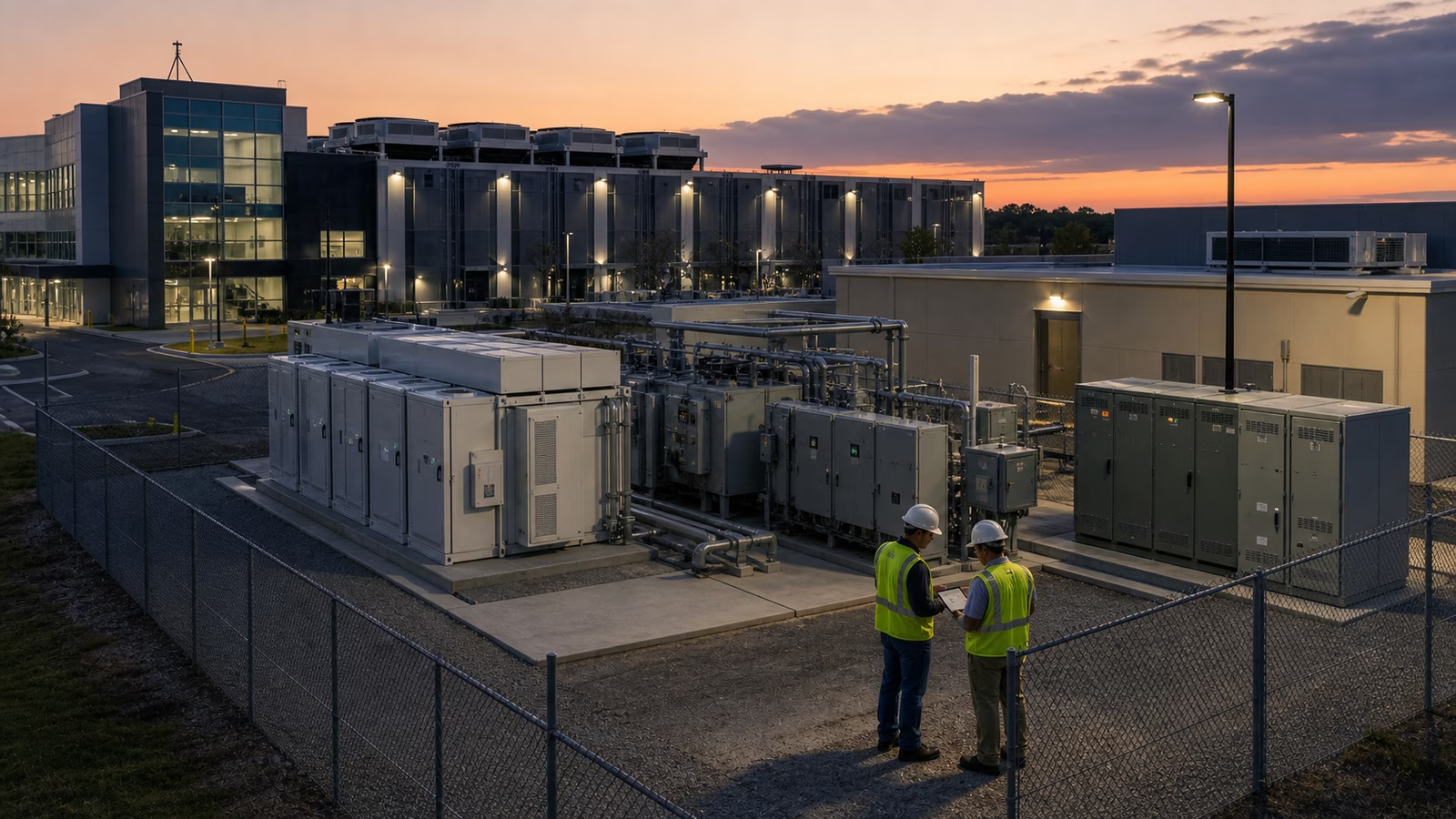
A data center is often described as if it plugs into the grid the way a laptop plugs into a wall. The image is convenient, but it hides the scale of the problem. A serious data center is not a desk appliance. It is a campus of electrical rooms, cooling systems, transformers, switchgear, backup equipment, control systems, contracts, alarms, and operating procedures built around one demand: the machines inside should not lose power.
That is why the local power system matters. The regional grid may be the largest machine in the story, but the last few hundred yards can decide whether a data center is reliable, buildable, affordable, and acceptable to the community around it. A data center microgrid is one way to think about that last stretch. It is not magic independence from the grid. It is a designed local electrical system that can coordinate grid power, batteries, backup generation, load controls, and sometimes on-site production behind the fence.
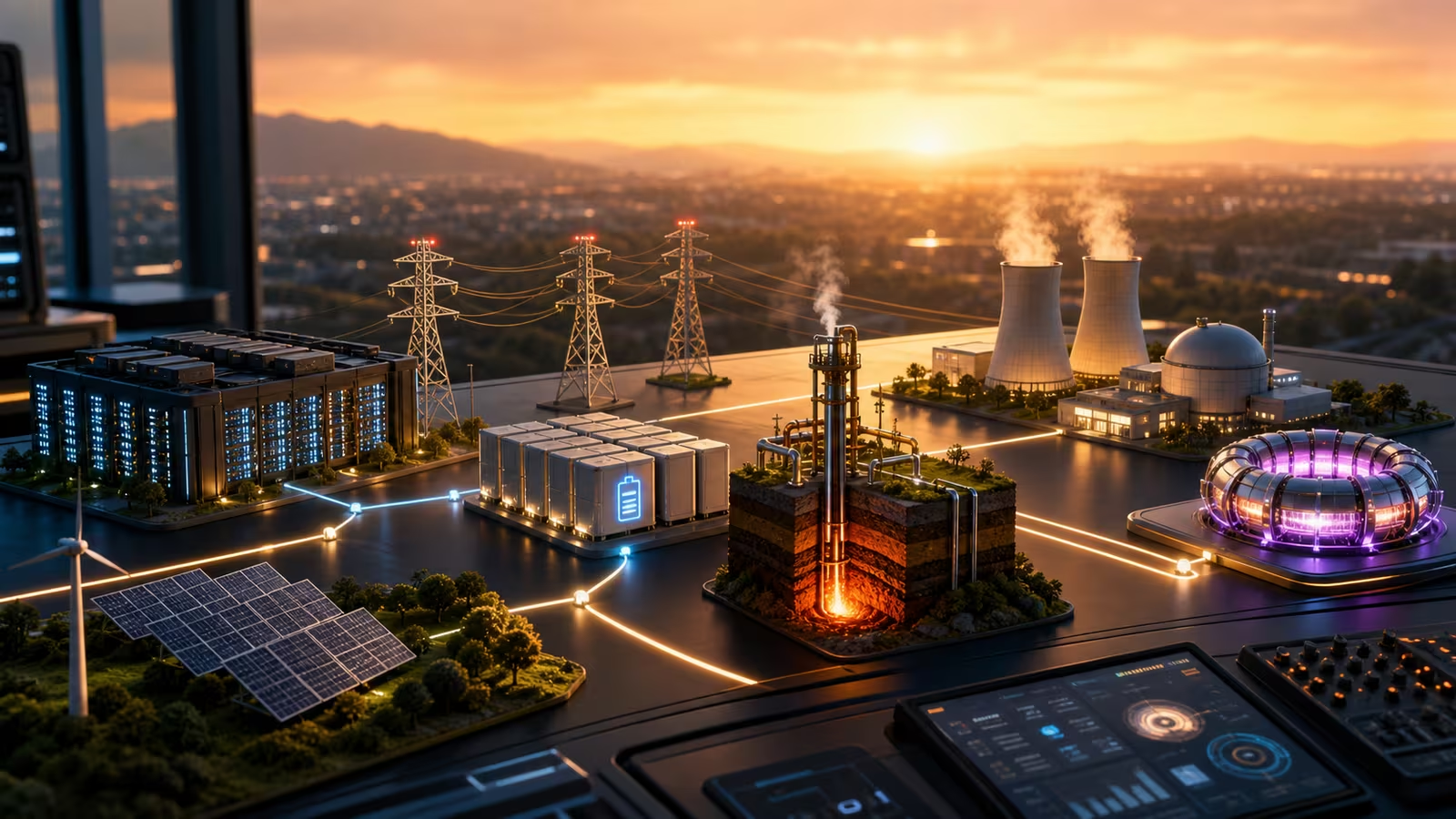
A microgrid is a local operating system
The word microgrid can sound like a tiny version of the whole electric grid. That is partly right, but the more useful idea is local coordination. A microgrid has sources of power, loads that use power, equipment that switches and protects circuits, controls that decide what happens under different conditions, and rules for when it stays connected to the wider grid or separates from it.
For a data center, the load is unusually demanding. Servers do not like interruptions. Cooling systems cannot simply stop because computation becomes heat immediately. Network equipment, security systems, fire systems, pumps, controls, and building systems all have their own priorities. The microgrid has to know which loads are critical, which loads can ramp, which loads can wait, and which loads should never be treated casually.
This is where the story connects to AI Data-Center Power Demand . Large computation is not only a question of how much electricity exists somewhere in the region. It is a question of how much firm capacity can reach the site, how quickly, under what constraints, and with what backup plan when the ordinary path is unavailable.
Backup power is not the same as a microgrid
Many data centers already have backup systems. Batteries or uninterruptible power supplies may ride through brief disturbances. Diesel or gas generators may start during an outage. Redundant feeds may bring power from more than one path. These are important, but they are not automatically a microgrid in the fuller sense.
Traditional backup often sits in a waiting posture. It is there for failure. A microgrid can be more active. It may manage batteries during peak periods, test islanding procedures, coordinate with utility signals, support demand response, smooth local power quality, and make more nuanced decisions about load and supply. The distinction matters because the equipment may look similar from the outside while the operating model is different.
This also changes how planners think about value. A generator that only runs during an outage is insurance. A battery that also reduces peak demand, supports fast transitions, and helps the site ride through grid events has a broader role. A control system that can move cooling loads slightly, shed noncritical loads, and preserve the most important equipment is not just a switch. It is part of the reliability architecture.
The grid is still in the room
The phrase behind the fence can mislead people into imagining that a data center microgrid has escaped the public grid. Most of the time, it has not. It still needs an interconnection. It still depends on transmission, substations, feeders, protection equipment, utility coordination, and power markets. It may still affect local capacity and reliability. It may still require upgrades that take years.
Interconnection Queues explains why new power projects can wait, study, revise, and wait again before they connect. Data centers face a related reality from the load side. A site may be attractive for land, fiber, water, tax, or climate reasons, but if the electrical path is constrained, the project becomes harder. A microgrid can help with resilience and flexibility, but it does not erase the need for a serious connection plan.
The more useful relationship is partnership, not escape. A well-designed data center power system can be a better grid citizen if it can reduce demand during stressed hours, ride through disturbances without tripping badly, use batteries intelligently, and avoid creating sudden problems for the local network. A badly designed one can do the opposite. It can concentrate demand, require expensive upgrades, and leave the utility with a sharp new obligation that is difficult to serve cleanly.
Batteries buy seconds, minutes, and options
Batteries are often discussed as if they have one job: store energy. In a data center microgrid, they can have several. They can bridge the gap between a grid disturbance and generator start. They can smooth short interruptions. They can manage brief peaks. They can give control systems time to make orderly decisions instead of forcing everything to happen instantly.
The time scale matters. A few seconds is enough to ride through one class of disturbance. Several minutes may allow backup generation to start and stabilize. Longer duration may help with local peaks or operational flexibility. None of these roles should be confused with powering a large campus indefinitely. The load is too large and the economics are too specific for casual promises.
This is the same lesson from Grid Batteries and Long-Duration Storage , brought down to one site. Storage is powerful because it moves energy through time, but the useful question is always how much energy, how much power, how long, how often, and for what purpose.
On-site generation has tradeoffs
Some microgrid plans include on-site generation. That might mean fuel cells, gas generation, solar, turbines, or other local sources depending on the site and its goals. The appeal is obvious. If the campus can produce some of its own power, it may reduce reliance on a constrained grid connection or improve resilience during outages.
The tradeoffs are just as real. On-site generation needs fuel, maintenance, permits, emissions controls where relevant, safety planning, noise management, land, and operating expertise. Solar can help, but a data center’s continuous load usually dwarfs what rooftop or nearby solar can provide on its own. Fuel-based systems may improve reliability while creating climate or air-quality concerns. A clean-sounding power source may still need backup, interconnection, and careful economics.
There is no universal answer. The right design depends on the load profile, local grid, climate goals, regulatory environment, available land, fuel supply, reliability target, and community concerns. The honest microgrid conversation is not “Can we put power on site?” It is “Which local power choices actually solve the problem without creating a worse one next door?”
Cooling makes power planning harder
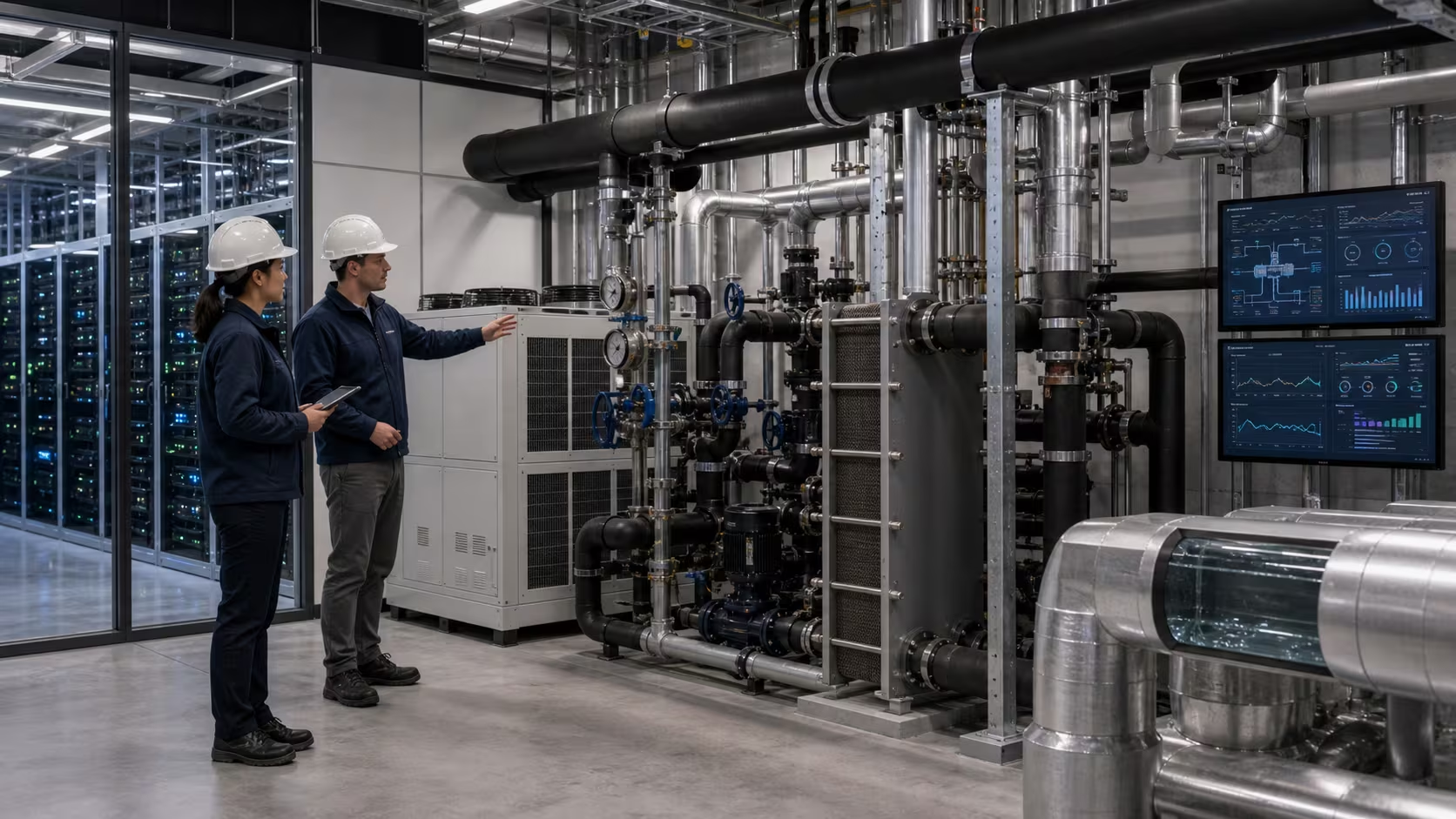
Data center microgrids cannot be planned by looking only at servers. Cooling is part of the electrical story because computation becomes heat, and heat has to leave the building. Pumps, fans, chillers, heat exchangers, liquid cooling systems, controls, and backup cooling modes all change the site’s power needs.
Data Center Cooling and Water explains why cooling is its own infrastructure problem. In a microgrid context, cooling also affects what can be shed or shifted. Some cooling loads may have thermal inertia, meaning a system can coast briefly without immediate harm. Other parts may be less forgiving. The control strategy has to understand the building as a physical system, not just a list of electrical circuits.
This is where operations become more important than diagrams. A microgrid that looks elegant in a planning slide still has to handle a hot day, a utility event, maintenance on one feeder, a failed sensor, a generator test, a battery issue, and a cooling system alarm without making the operators guess.
Reliability is a culture, not only equipment
The hardware is visible. The culture is what keeps it useful. Data center microgrids depend on testing, maintenance, logs, drills, spare parts, trained staff, clear authority, and conservative operating procedures. A battery container, generator, or switchgear lineup is only as good as the discipline around it.
That discipline includes knowing when not to use the system. A microgrid should not chase every market signal if doing so compromises readiness. It should not run backup equipment casually without considering wear, emissions, fuel, and maintenance. It should not promise grid support it cannot deliver reliably. The local power system has to serve the data center’s core reliability needs while interacting responsibly with the wider grid.
The future energy story will include more of these behind-the-fence systems. Data centers, factories, campuses, ports, hospitals, and neighborhoods will all look for more local resilience and flexibility. Some of that will help the grid. Some of it will expose new coordination problems. The difference will come from design choices that respect both sides of the fence.
A data center microgrid is therefore not a loophole in the energy transition. It is one of the places where the transition becomes concrete: equipment in gravel yards, control logic in cabinets, people on call, contracts with utilities, and a load that cannot be wished smaller after the building opens.