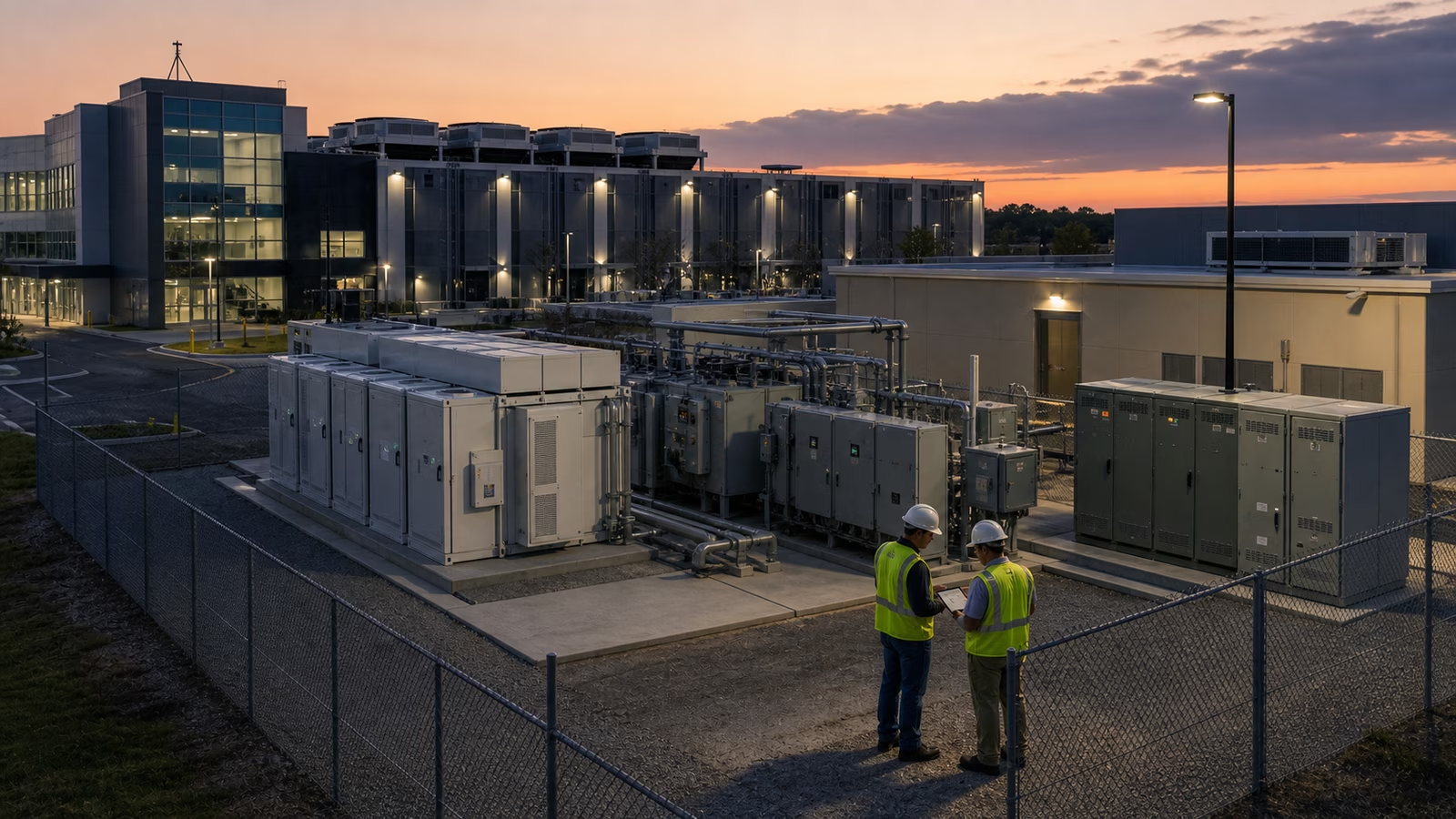
The AI power story is also a heat story. Every watt that enters a data center eventually has to go somewhere. Some of it becomes computation for a brief useful moment, but almost all of it ends as heat that must be removed from chips, racks, rooms, and buildings. If the heat is not moved away reliably, the machines slow down, fail, or shut off.
That makes cooling one of the least optional parts of the AI infrastructure buildout. People notice the electricity bill, the transmission line, the substation, and the generator. Cooling sits slightly behind that conversation, even though it shapes site design, water use, equipment choice, reliability, and the practical limits of dense computing. A data center is not only a warehouse full of servers. It is a heat-management machine.
The basic problem is simple. Modern chips can consume a lot of power in a small area. The more computation packed into a rack, the more heat must be removed from that rack. Older data centers could often rely on large volumes of cooled air moving through rooms. As racks become denser, air alone can become less comfortable as the only answer. Liquid cooling, heat exchangers, chilled water systems, evaporative cooling, outdoor air conditions, and heat reuse all enter the design conversation.
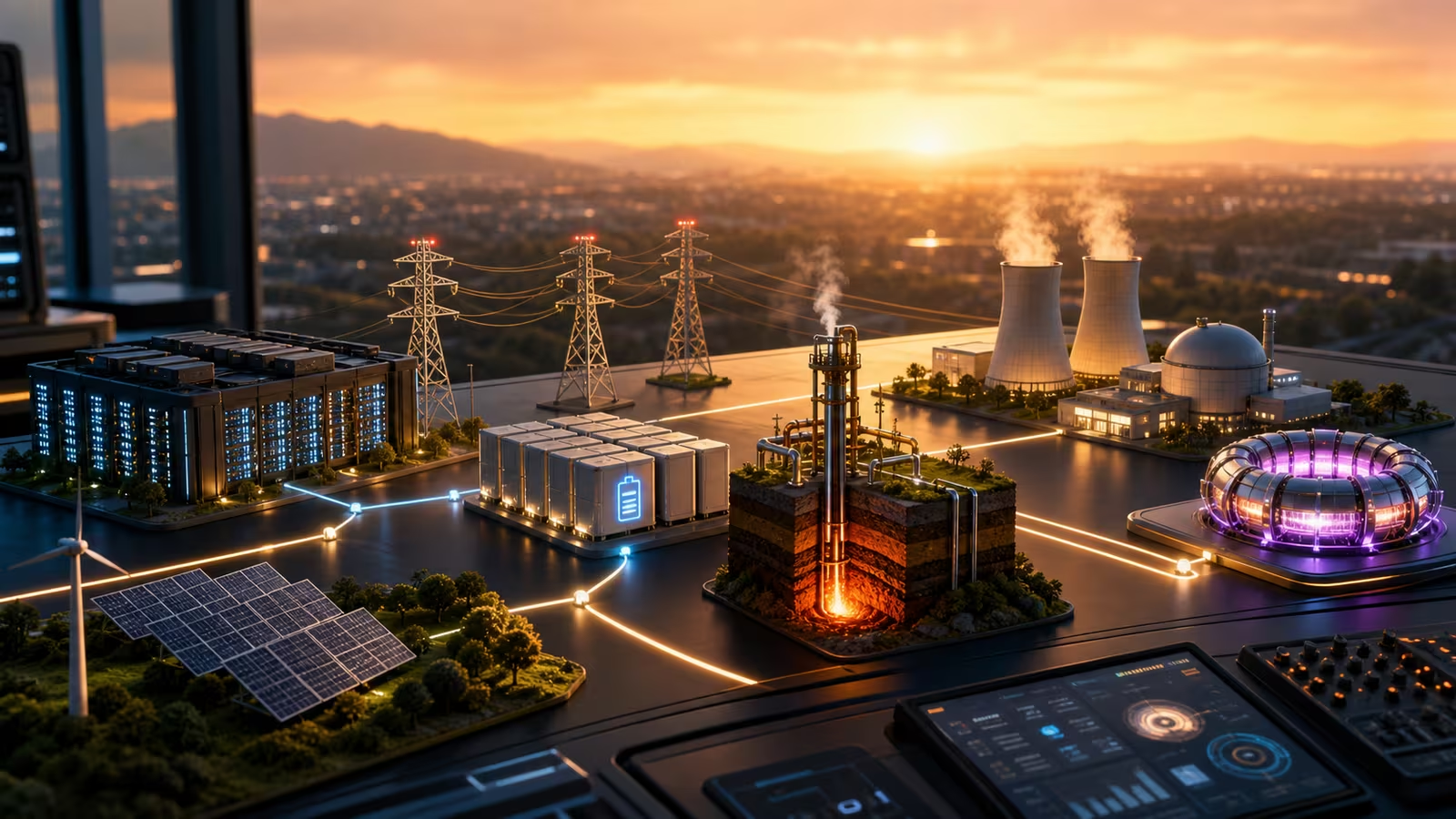
Cooling is part of the power demand
When people talk about data center electricity, they often focus on the servers. That is understandable. The servers are the visible reason the facility exists. But the facility also needs cooling, fans, pumps, power conversion, lighting, security, controls, and backup systems. Efficiency measures try to reduce the overhead so more of the electricity goes toward computation rather than support.
Cooling overhead depends on climate, building design, equipment density, operating temperature, cooling method, and how carefully the system is managed. A data center in a cool dry region has different options from one in a hot humid region. A facility with moderate rack density has different needs from one designed around very dense AI training hardware. A site that can use outside air for much of the year has a different cooling profile from one that needs mechanical cooling more often.
This is why the location of a data center is not only a real estate question. It is a power, water, climate, network, tax, labor, and permitting question all at once.
Air cooling is familiar but not limitless
Air cooling has served data centers for a long time. Cold air is delivered where equipment needs it, hot air is removed, and room design tries to prevent the two streams from mixing wastefully. Hot aisle and cold aisle layouts, containment systems, raised floors in some designs, fans, filters, and careful airflow management can all improve performance.
The advantage of air is familiarity. It is well understood, easy to observe, and compatible with a wide range of equipment. The limitation is heat density. Air does not carry heat as efficiently as liquid. As chips and racks become more power-dense, moving enough air can become difficult, noisy, energy-intensive, or physically awkward.
That does not mean air cooling disappears. Many facilities will keep using it, especially for less dense workloads. The future is likely mixed. Some rooms, racks, or components may need liquid cooling while others stay with air. The real design question is not which method sounds more advanced. It is which method removes heat reliably, efficiently, safely, and economically for the actual equipment in the actual place.
Liquid cooling moves the heat closer to the source
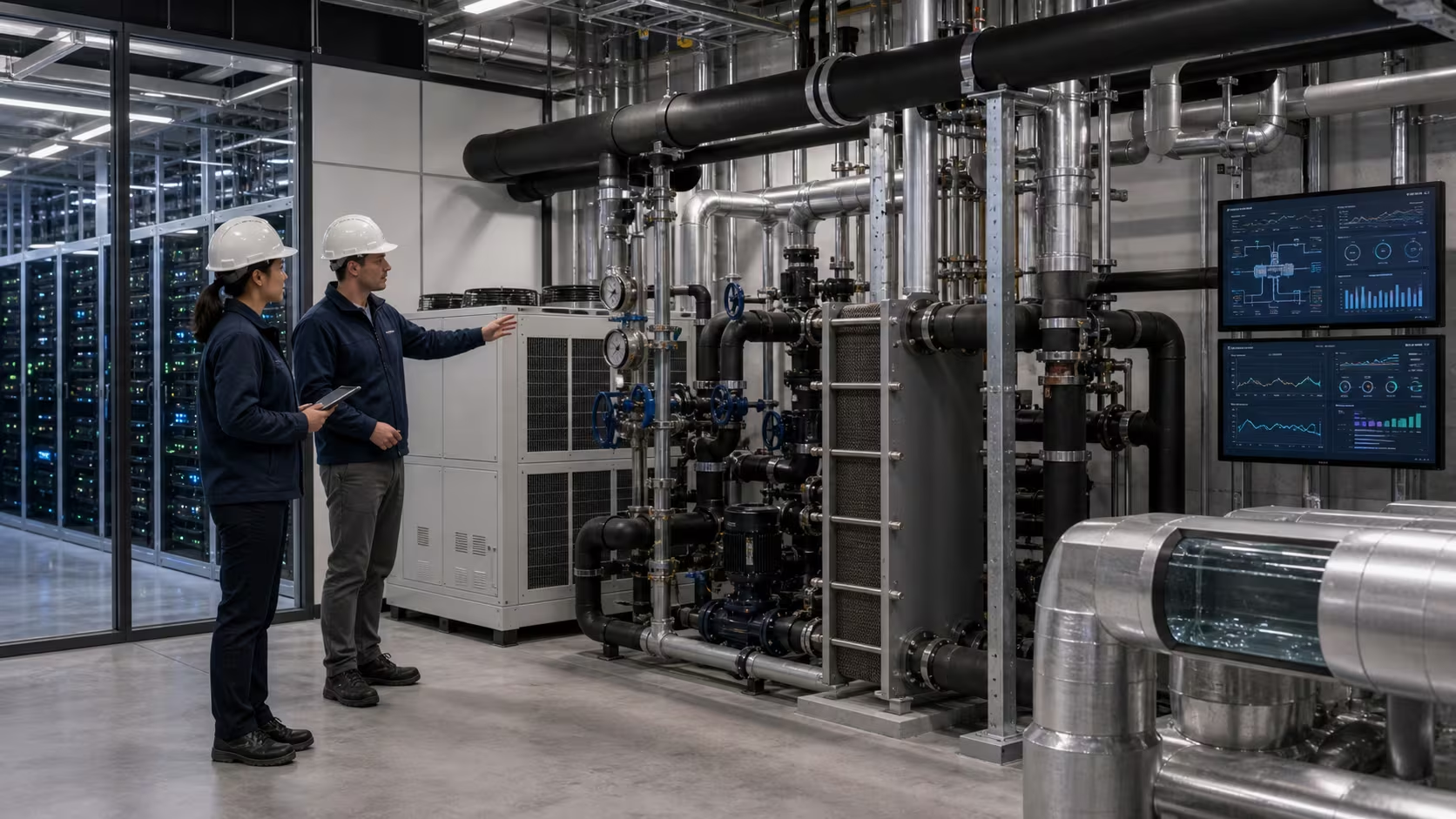
Liquid cooling is attractive because liquids can carry more heat than air. In some designs, coolant moves through cold plates attached near hot components. In others, immersion systems place equipment in special dielectric fluids. There are many variations, and each comes with tradeoffs around maintenance, materials, leaks, compatibility, supply chain, and operator skill.
The important shift is that heat is captured closer to where it is produced. That can make dense computing easier to manage. It can also create new infrastructure needs: pumps, manifolds, heat exchangers, leak detection, fluid handling, service procedures, and technicians who understand the system. A liquid-cooled facility is not just an air-cooled facility with a new accessory. It changes the operating culture.
Liquid cooling also affects how waste heat can be used. Heat captured in liquid may be easier to move to another process than low-grade warm air. That opens the door to heat reuse, though the practical value depends on temperature, distance, nearby demand, economics, and local planning.
Water use is local
Data center water use is a sensitive topic because water stress is local. A cooling method that makes sense in one region may be irresponsible or politically difficult in another. Evaporative cooling can save electricity in some conditions but consume water. Closed-loop systems may use less water but need more equipment or energy. Air-cooled chillers, water-cooled chillers, dry coolers, hybrid systems, and reuse strategies all shift burdens differently.
The honest question is not whether a data center uses water. It is how much, when, from what source, in what watershed, with what alternatives, and with what community impact. A gallon in a water-rich region is not the same social fact as a gallon in a drought-stressed area. A facility using reclaimed water has a different profile from one using potable water. A site that publishes clear water and energy metrics is easier to evaluate than one that hides behind vague sustainability language.
AI infrastructure will face more scrutiny here because the growth is visible and the benefits can feel unevenly distributed. Local communities may reasonably ask why their water, land, grid capacity, or quiet should support remote computation. Cooling design is part of that social contract.
Waste heat is useful only when someone can use it
Data centers produce a lot of heat, which naturally leads to the question of reuse. Could that heat warm buildings, greenhouses, district heating networks, industrial processes, or water systems? Sometimes yes. The idea is appealing because waste heat sounds like free value.
The practical answer depends on temperature and proximity. Low-temperature heat is harder to use than high-temperature heat. A nearby customer is better than a distant one. A district heating network changes the economics. A greenhouse next door is different from a neighborhood miles away. The data center’s heat supply must line up with someone else’s heat demand in time, temperature, reliability, and price.
Waste heat reuse should be encouraged where it makes sense, but it should not become a slogan that distracts from the main cooling problem. A facility still needs to reject heat safely when the heat customer is offline, demand is seasonal, or economics change. Reuse is a bonus when designed well. It is not a universal escape hatch.
Reliability is the real product
Cooling failures are not abstract. Hot equipment can throttle, trip, degrade, or fail. A data center operator cares about uptime, and cooling is central to uptime. That means redundancy, monitoring, maintenance, alarms, spare parts, trained staff, and clear procedures. A cooling plant may look like background infrastructure, but it is part of the computing product.
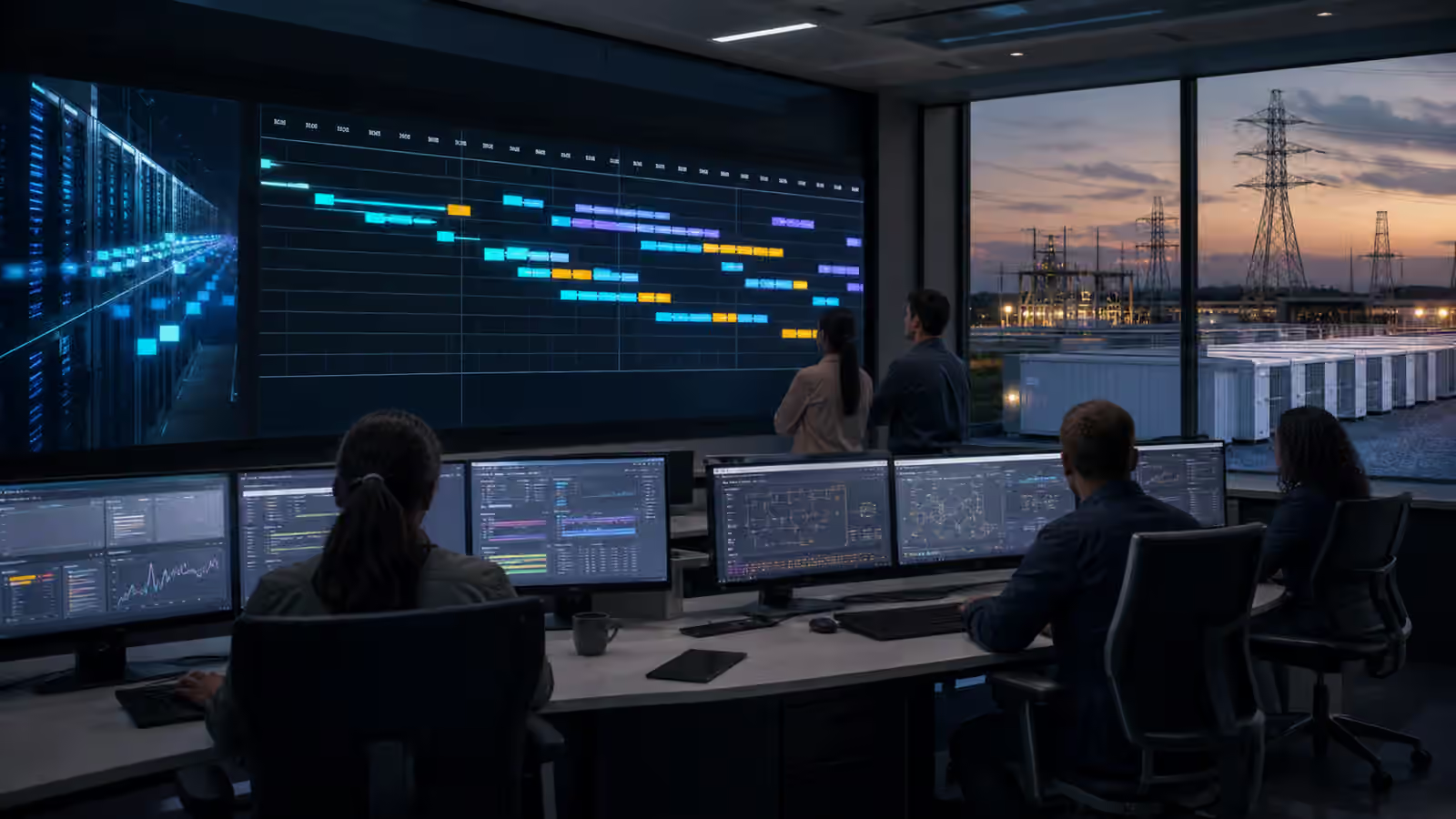
As AI workloads become more power-dense, reliability planning becomes more complicated. The facility has to manage fast-changing loads, dense racks, backup power, grid events, water constraints, and equipment maintenance without letting temperatures drift out of acceptable ranges. The cooling system is not a passive utility. It is an active operational system.
This connects back to AI Data-Center Power Demand . More electricity demand means more heat to remove. More heat to remove means more infrastructure, more siting constraints, and more community questions. The power story and cooling story are the same story seen from different sides of the server rack.
The better question is where the heat goes
Every energy system has leftovers. For a data center, the leftover is heat. The future of AI infrastructure will be judged partly by how honestly that heat is handled: how much energy cooling consumes, how much water it uses, how it affects local systems, whether heat can be reused, and whether facilities are sited with the surrounding community in mind.
Cooling is not glamorous, but it is a reality check. Computation may feel weightless when it appears as a response on a screen. The building that produced it is physical. It has pipes, pumps, fans, valves, chillers, heat exchangers, maintenance crews, water decisions, and a relationship with the grid outside.
The AI age will not be powered only by bigger models and bigger substations. It will also be cooled by engineering choices that decide whether the heat behind the intelligence is managed well or merely pushed somewhere else.