Future energy is usually pictured as finished equipment: solar farms, wind turbines, batteries, transmission towers, heat pumps, data centers, transformers, and electric vehicles. Those machines are easier to see than the material chain behind them. Before a battery becomes a grid asset, minerals have to be mined, processed, refined, transported, manufactured into cells, packed into modules, wired into containers, tested, shipped, installed, monitored, and eventually recycled or retired. Before a transmission upgrade carries more power, copper, aluminum, steel, insulation, transformers, breakers, and specialized components have to arrive at the right place in the right sequence.
That material story does not make future energy impossible. It makes it real. Electricity systems are built from physical things, and physical things depend on mines, factories, ports, rail lines, skilled labor, standards, spare parts, and long lead equipment. A plan that counts only megawatts can miss the bottleneck that decides whether the megawatts arrive.
The guide to transformers and grid hardware explains why heavy equipment can slow electrification. Critical minerals and supply chains widen the lens. They ask where the materials come from, how concentrated the processing steps are, and how planners can build faster without treating extraction, manufacturing, and disposal as someone else’s problem.
The bottleneck is not always the rarest mineral
The phrase critical minerals can make the issue sound like a treasure hunt for exotic materials. Some minerals are rare, hard to process, or concentrated in a few places. But bottlenecks can also come from common materials used at enormous scale. Copper is not exotic, yet electrification is copper hungry. Aluminum, steel, electrical steel, insulation materials, graphite, lithium, nickel, manganese, rare earth elements, silicon, and other inputs each have their own supply chain.
Criticality is about vulnerability as much as abundance. A material can become critical because processing is concentrated, because permitting a new mine takes time, because refining capacity is limited, because a component has few qualified suppliers, because transportation is fragile, or because demand grows faster than manufacturing capacity. A transformer shortage and a battery mineral shortage look different, but both can delay the same grid plan.
That is why supply-chain thinking belongs beside load forecasting . Forecasting demand tells planners how much electricity the future may need. Supply-chain planning asks whether the equipment and materials required to serve that demand can arrive on the same timeline.
Batteries make chemistry visible
Batteries are the most obvious place where materials enter the public conversation. Different battery chemistries use different combinations of lithium, iron, phosphate, nickel, manganese, cobalt, graphite, sodium, vanadium, zinc, or other inputs. The chemistry affects cost, performance, safety design, cycle life, supply risk, and recycling pathways. No chemistry is free from material questions. Even chemistries built around more abundant ingredients still need factories, quality control, electrolytes, separators, power electronics, containers, and grid interconnection equipment.
The guide to grid batteries and long-duration storage describes storage as a family of tools rather than one device. Supply chains reinforce that point. A lithium-ion battery, a flow battery, a thermal storage system, and pumped storage hydropower rely on different material chains. That diversity can help if planners avoid betting every future need on one input or one manufacturing route.
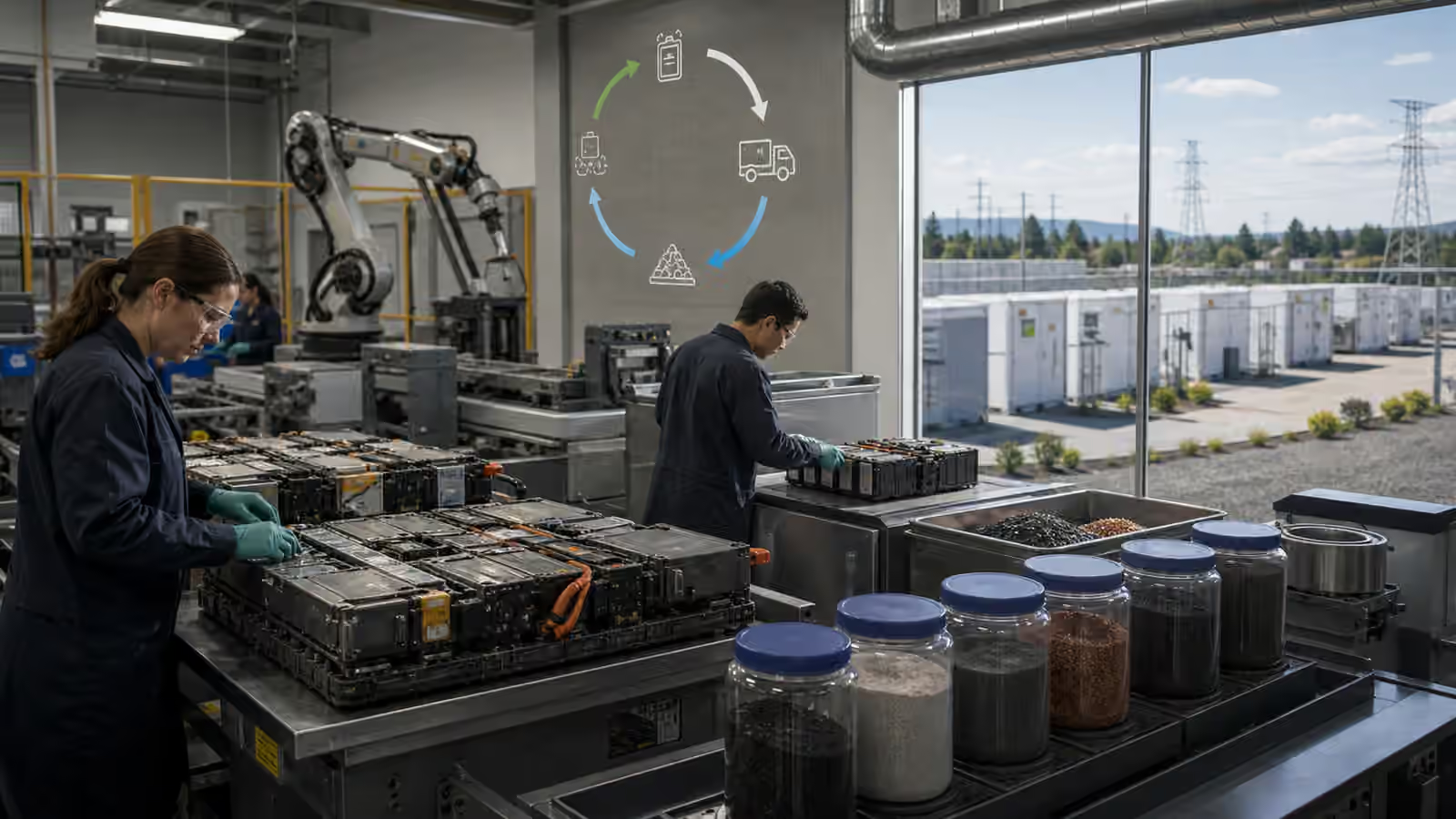
Recycling will matter, but it should not be used as a magic answer before enough old equipment exists to recycle. Early growth requires primary supply and manufacturing capacity. Over time, recycling can recover valuable materials, reduce waste, and create more regional resilience. The practical question is how to design products, collection systems, and markets so recycling becomes an industrial habit rather than an afterthought.
Wires and transformers have material lives too
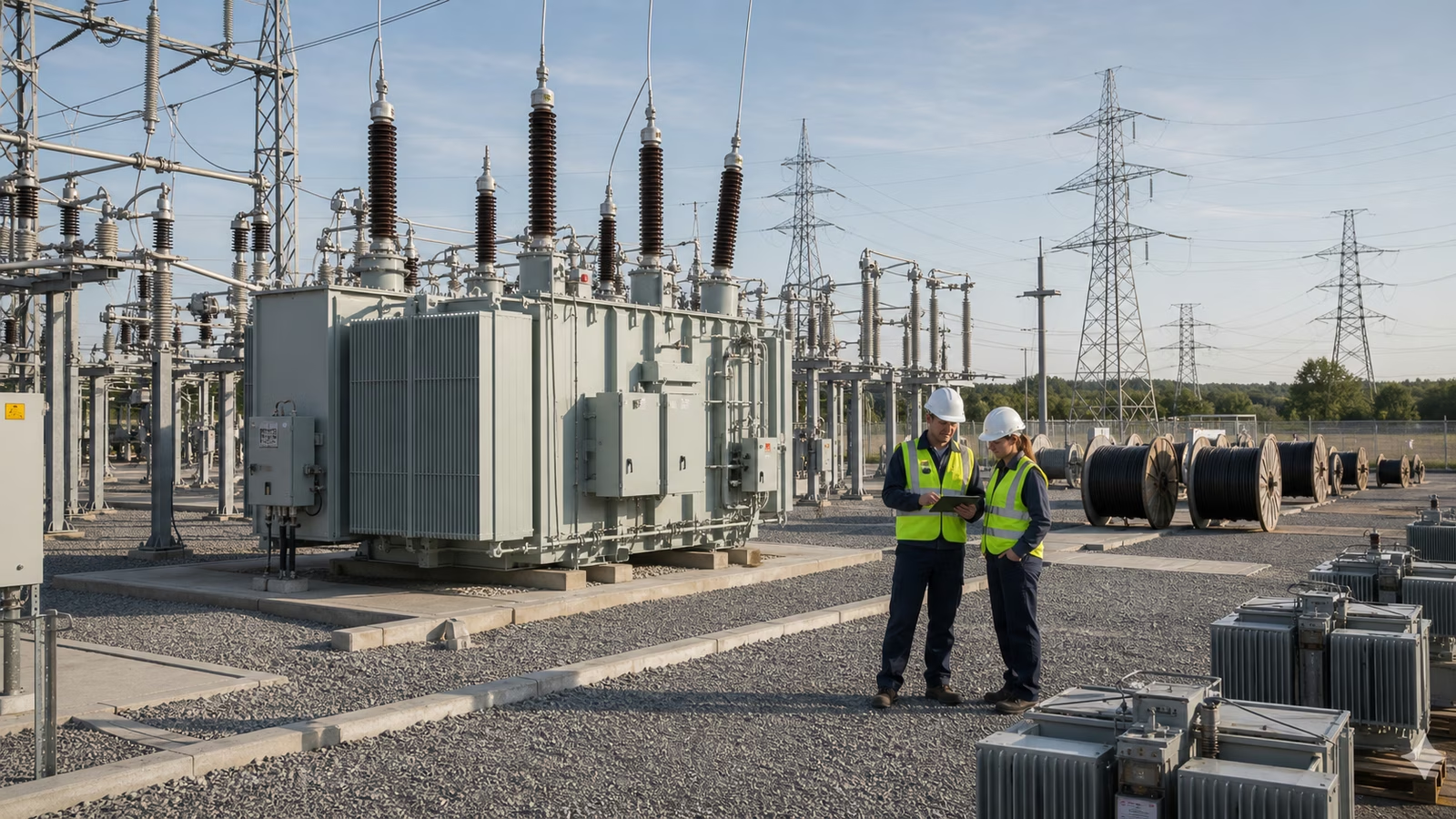
The grid itself is a material system. Transmission lines need conductors, towers, foundations, insulators, rights of way, and construction crews. Substations need transformers, breakers, buswork, protection systems, control buildings, and communications. Distribution upgrades need poles, cables, voltage regulators, service transformers, meters, and switchgear. These parts do not appear instantly when a planning model says they are needed.
Transformers are a useful example because they are both ordinary and specialized. A small distribution transformer and a large power transformer are not interchangeable widgets. Utilities need equipment that matches voltage, capacity, standards, protection schemes, site constraints, and delivery schedules. Manufacturing can involve specialized steel, copper, insulation, oil or other cooling systems, careful testing, and shipping logistics. If demand rises sharply, lead times can stretch even when the underlying materials are not rare in the simple sense.
This connects directly to distribution grid upgrades and large load interconnection . A neighborhood adding EV chargers and heat pumps needs local hardware. A data center campus asking for a major connection needs transformers, switchgear, and substation work. A clean energy project waiting in a queue may need network upgrades. The bottleneck can be the calendar of equipment, not the ambition of the project.
Clean technologies compete and cooperate for inputs
Solar farms, wind projects, batteries, EVs, heat pumps, electrolyzers, data centers, and transmission expansions can all be part of a cleaner energy system. They can also compete for some of the same materials, factories, ports, and skilled labor. This does not mean one technology must defeat the others. It means energy planning should notice shared constraints.
For example, more transmission can reduce curtailment and make renewable projects more useful. But transmission itself requires conductors, steel, transformers, and permitting capacity. More batteries can shift solar into evening peaks. But batteries require cell manufacturing, power electronics, and interconnection equipment. More electrified industry can reduce fossil fuel use at factories. But industrial electrification may require grid upgrades, thermal storage, and high-capacity electrical equipment.
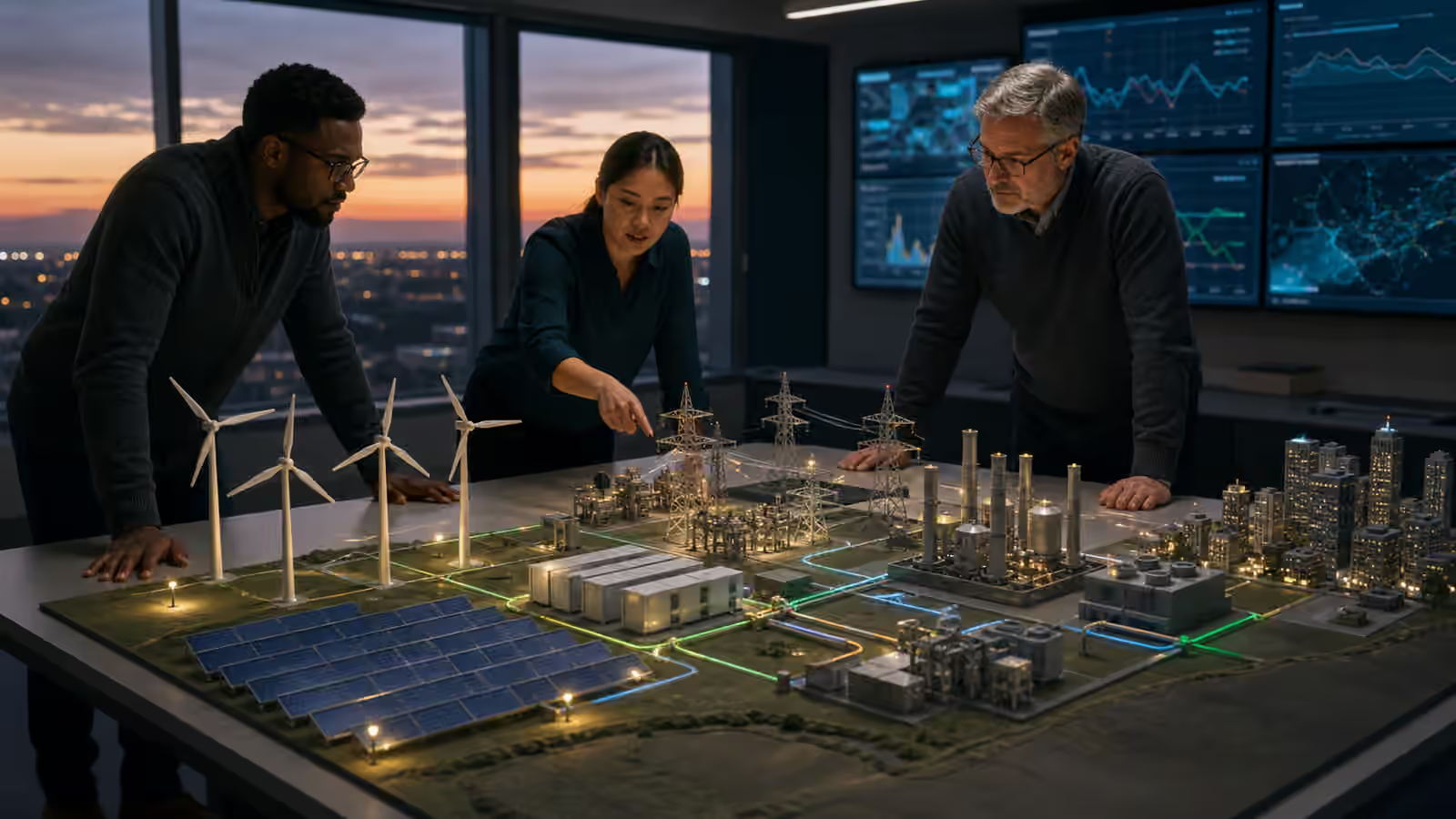
The guide to the future energy portfolio argues that future power is a portfolio problem. Supply chains make the same argument from the materials side. A portfolio can reduce dependence on one fuel or one technology, but only if it is also realistic about the materials and factories beneath the portfolio.
Mining, processing, and trust cannot be skipped
Material supply raises environmental and social questions. Mines affect land, water, communities, workers, and ecosystems. Processing facilities use energy and chemicals. Manufacturing plants need permits, labor, transport, and local trust. Recycling facilities have their own siting and safety needs. A clean energy plan that ignores those impacts will not feel clean to the people living near the supply chain.
The answer is not to pretend materials are unnecessary. It is to demand better practices, clearer standards, more transparent sourcing, safer work, cleaner processing, stronger recycling, and honest engagement with affected communities. Some projects should change. Some should not proceed in the form first proposed. Some may be essential but still need stricter conditions. The point is to bring the material chain into the same ethical frame as the power plant or grid project it supports.
Energy permitting and community trust applies here too. A mine, refinery, factory, recycling plant, transmission corridor, and battery site all need a public path. The future grid cannot be built only in spreadsheets, and it cannot be made legitimate by hiding its upstream footprint.
Substitution and efficiency are supply-chain tools
Not every supply-chain answer is more extraction. Engineers can reduce material intensity, substitute more available materials where performance allows, improve manufacturing yield, extend equipment life, standardize components, refurbish parts, and design for easier recycling. Grid planners can also reduce pressure by using demand flexibility and efficiency, so fewer emergency upgrades are needed at the same time.
The guide to energy efficiency and load shape is relevant because saved energy can also save materials. A better-cooled data center may need less electrical capacity. A building that reduces peak demand may delay a transformer upgrade. A well-timed EV charging program may reduce local hardware stress. Efficiency is not only about bills or emissions. It can reduce the amount of physical stuff the grid must build under deadline.
Critical minerals are therefore not a reason to abandon future energy. They are a reason to plan like adults. The grid needs clean generation, storage, wires, flexible demand, and firm capacity. It also needs copper, steel, lithium, graphite, transformers, factories, recycling, and trust. The more honestly those material dependencies are treated, the more likely the energy transition is to become a buildable system rather than a collection of elegant diagrams.