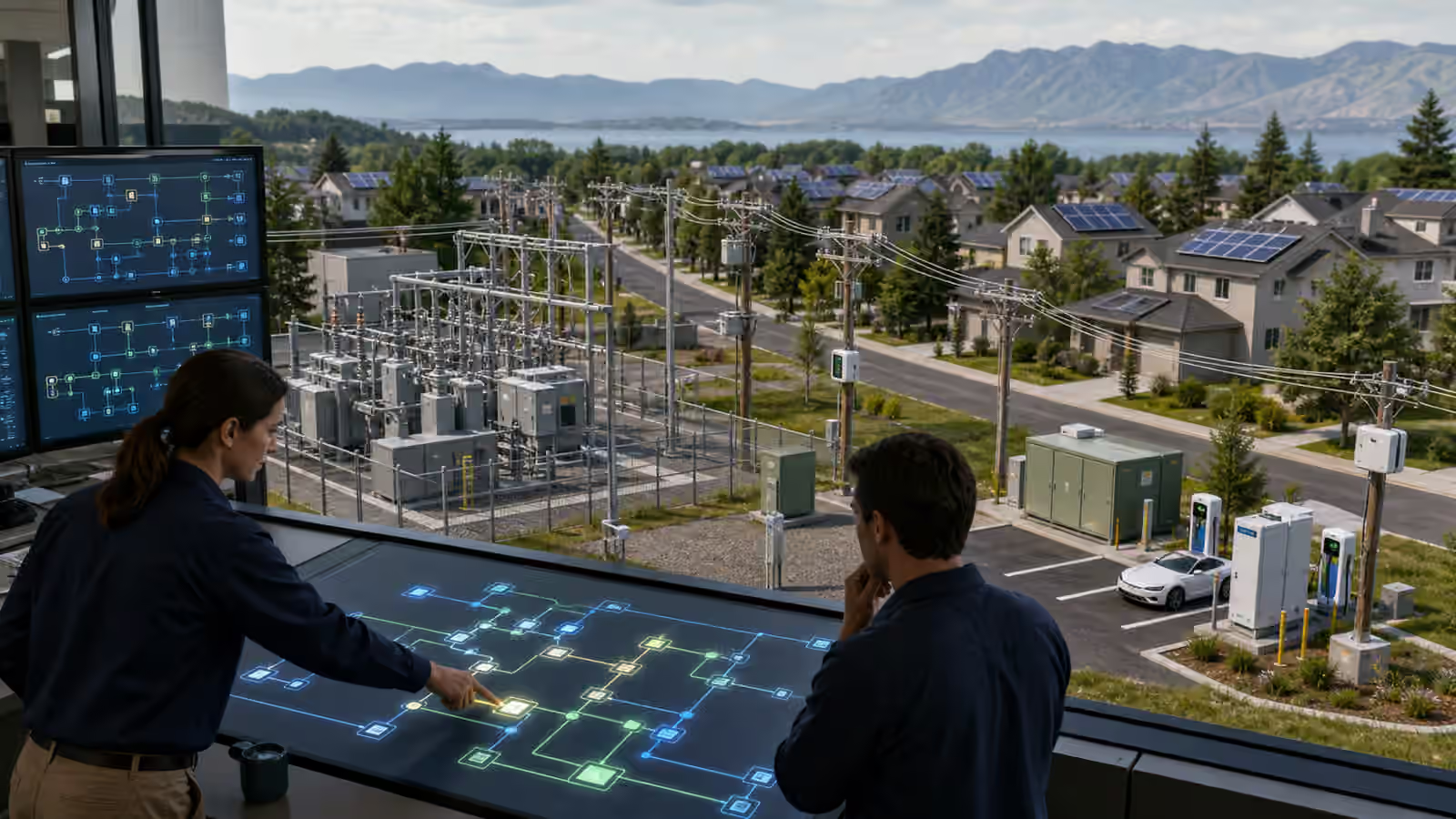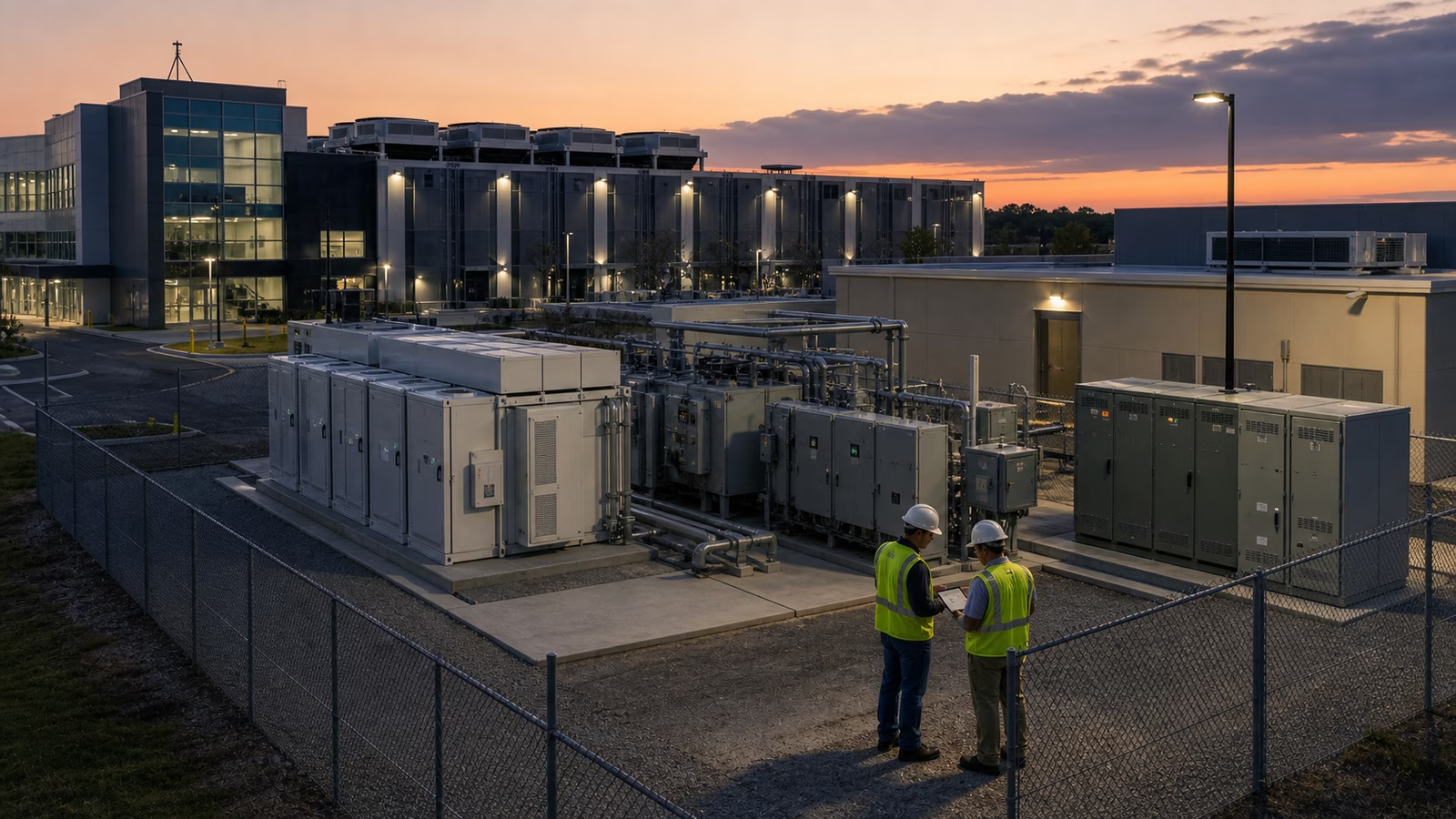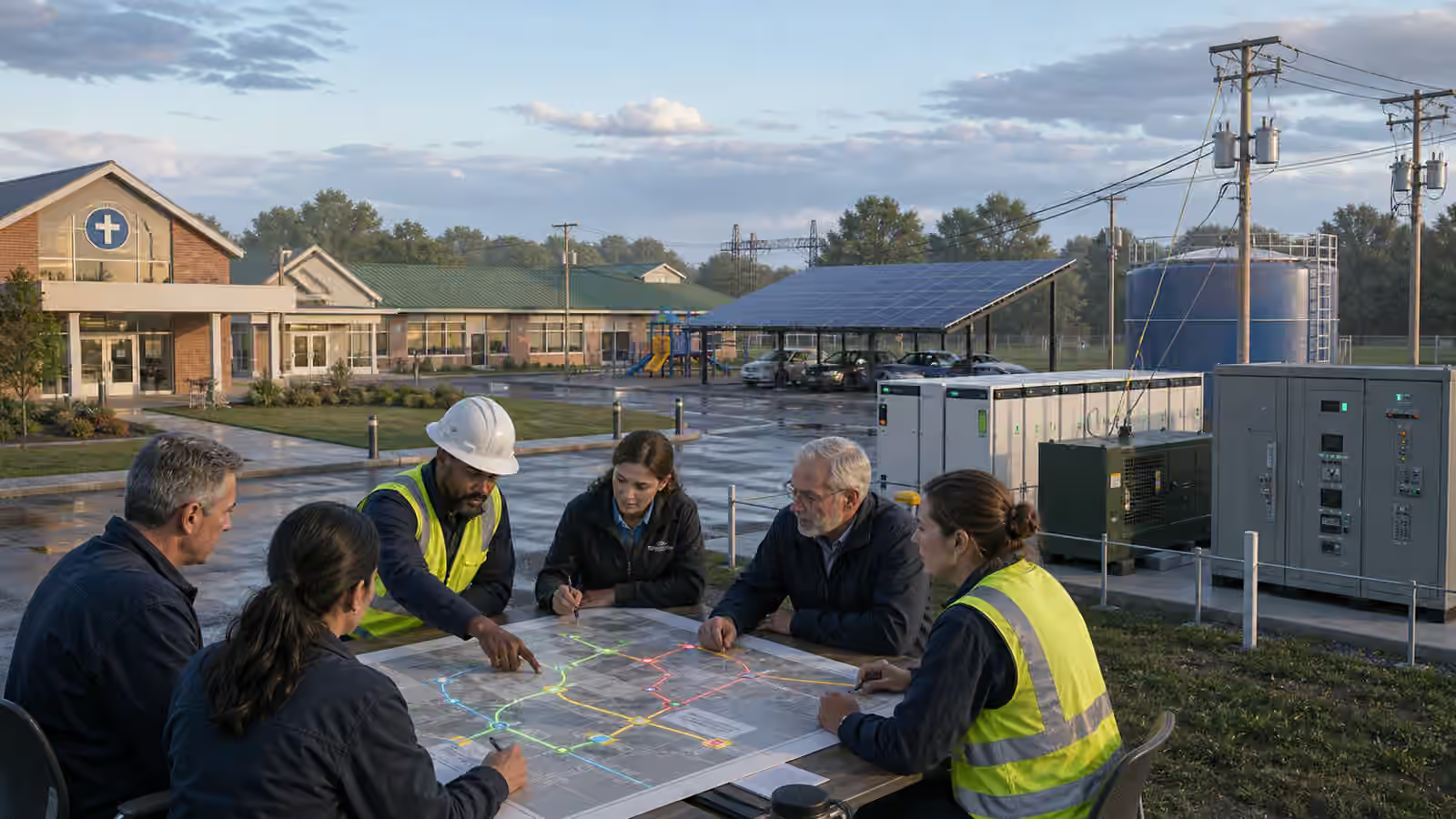
A microgrid sounds small, but the word can hide a hard question: which loads should keep running when the wider grid is in trouble, and who is responsible for making that happen? A campus, hospital, military base, data center, port, village, or group of public buildings can all be called a microgrid if they can coordinate local generation, storage, controls, and loads. Community microgrids focus the idea on public resilience. They are less about proving that a single owner can protect a private facility and more about keeping essential services available when the normal electric system is disrupted.
That makes them appealing and difficult at the same time. A community may want a clinic, cooling center, water pump, communications site, grocery store, school shelter, or emergency operations room to stay powered during an outage. Solar panels and batteries may seem like the obvious answer. Sometimes they are part of the answer. But a working microgrid also needs switchgear, protection, controls, fuel planning, maintenance, operating authority, financing, and a clear definition of critical load. It is not only a collection of devices. It is an operating plan.
The guide to data center microgrids looks behind the fence of large computing campuses. Community microgrids ask a different question. Instead of optimizing for one customer’s uptime, they ask how local energy infrastructure can support public needs without weakening the wider grid or creating a project that nobody can operate after the ribbon cutting.
Critical load is smaller than total load
The first honest step is deciding what must be powered. A school may need lights, refrigeration, communications, a few outlets, ventilation, and limited heating or cooling if it becomes a shelter. It may not need every classroom, gym light, kitchen appliance, and administrative office at normal levels. A clinic may need refrigeration, basic treatment rooms, communications, ventilation, and medical equipment, but the exact load depends on its role during an emergency. A water facility may have pumps that start hard and run in cycles. A communications tower may have a steady but modest load.
This distinction matters because microgrids are expensive when they are sized to carry everything. A project that tries to keep an entire neighborhood running normally through a long outage may need far more generation, storage, fuel, and controls than the community can afford or maintain. A project that focuses on well-defined critical loads can be more realistic. It can keep the essential service alive while the wider restoration effort proceeds.
Load discipline is not glamorous, but it is often the difference between a credible resilience project and a wish list. The guide to energy efficiency and load shape applies here. Better insulation, efficient HVAC, LED lighting, controls, and thermal planning can reduce the size of the power system needed for backup. The cheapest emergency kilowatt is often the one the facility no longer needs during the emergency.
Islanding is a protection problem
A microgrid becomes special when it can island, meaning it can disconnect from the wider grid and operate on its own for a time. Islanding has to be controlled carefully. During a normal outage, line workers need to know that a damaged circuit is not being energized from an unexpected local source. Protection devices must detect faults. Voltage and frequency have to stay within workable limits. When the main grid returns, the microgrid has to reconnect safely.
That is why community microgrids are utility coordination projects, not just facility projects. The point of common coupling, relays, breakers, inverter settings, control logic, and operating permissions all matter. A battery and solar array behind one meter may be manageable. A microgrid that crosses public rights of way or serves multiple buildings can involve utility franchise rules, tariffs, interconnection agreements, and emergency procedures. The legal details vary by place, but the operational principle is stable: islanding must be intentional, visible, and safe.
The guide to grid protection and relays explains the fault-isolation side of this challenge. A microgrid has to fail in a contained way. It should not make an outage more dangerous or more confusing for crews.
Solar and batteries need duration realism
Solar and batteries are attractive because they can provide local clean energy without routine fuel deliveries. During a sunny day, solar can serve load and recharge batteries. At night, batteries can carry critical equipment for a time. In a short outage, that can be very useful. In a long storm with heavy clouds, damaged communications, blocked roads, and high heating or cooling demand, the limits become visible.
Battery duration is not a moral flaw. It is a design parameter. A four-hour battery may be excellent for riding through a peak or short interruption. It may not carry a shelter through several days of bad weather. Solar production depends on season, weather, smoke, snow, panel condition, and daylight. A community microgrid may therefore include a generator, renewable fuel arrangement, fuel cell, or connection to a nearby firm resource. That choice brings its own emissions, noise, fuel storage, maintenance, and testing questions.
The better question is not whether a microgrid is perfectly clean in every hour. The better question is whether it improves resilience while aligning with the community’s energy goals and practical constraints. The guides to grid batteries and long-duration storage and clean fuels for the hardest grid hours explain why duration and fuel supply matter when electricity has to last beyond the easy hours.
A microgrid should help on normal days too
A resilience asset that sits idle can be hard to fund and maintain. Many successful microgrid concepts look for normal-day value as well as emergency value. A battery might reduce peak demand at a facility, participate in a demand response program, support local voltage, or provide backup for brief interruptions. Solar can reduce daytime grid purchases. Controls can improve building operations. A generator may be tested in a planned way rather than forgotten until the worst possible day.
This normal-day value has to be balanced against emergency readiness. A battery that earns money every afternoon may be empty when a storm knocks out the feeder unless it reserves state of charge. A generator that is rarely maintained may not start. A control system that depends on a cloud service may behave poorly if communications fail. The microgrid’s business model and operating rules must protect the reason it exists.
That is where community governance enters. Who decides when to island? Who pays for maintenance? Who can use the powered space during an outage? Who receives benefits during normal operation? How are noise, land use, safety, and access handled? These questions are not secondary. They decide whether the project is trusted.
Local resilience does not replace the wider grid
Community microgrids can become overhyped when they are described as an escape from the utility system. Most communities cannot and should not operate as isolated electrical islands most of the time. The wider grid provides diversity, scale, backup, markets, maintenance, and shared resources. A microgrid is a tool for specific conditions and critical loads, not a substitute for regional reliability.
The guide to grid weatherization and resilience makes the broader point. Resilience includes stronger infrastructure, vegetation management, spare equipment, field crews, emergency communication, restoration practice, and planning for hard conditions. Microgrids fit inside that larger work. They are most useful when they keep essential local functions alive while the main system is repaired.
The humble version of the idea is the strongest. Define the critical loads. Reduce waste first. Coordinate with the utility. Size solar, storage, and backup honestly. Test the controls. Maintain the equipment. Make the public access plan clear. Then a community microgrid becomes more than a hopeful diagram. It becomes one piece of local resilience that can work when people need it.