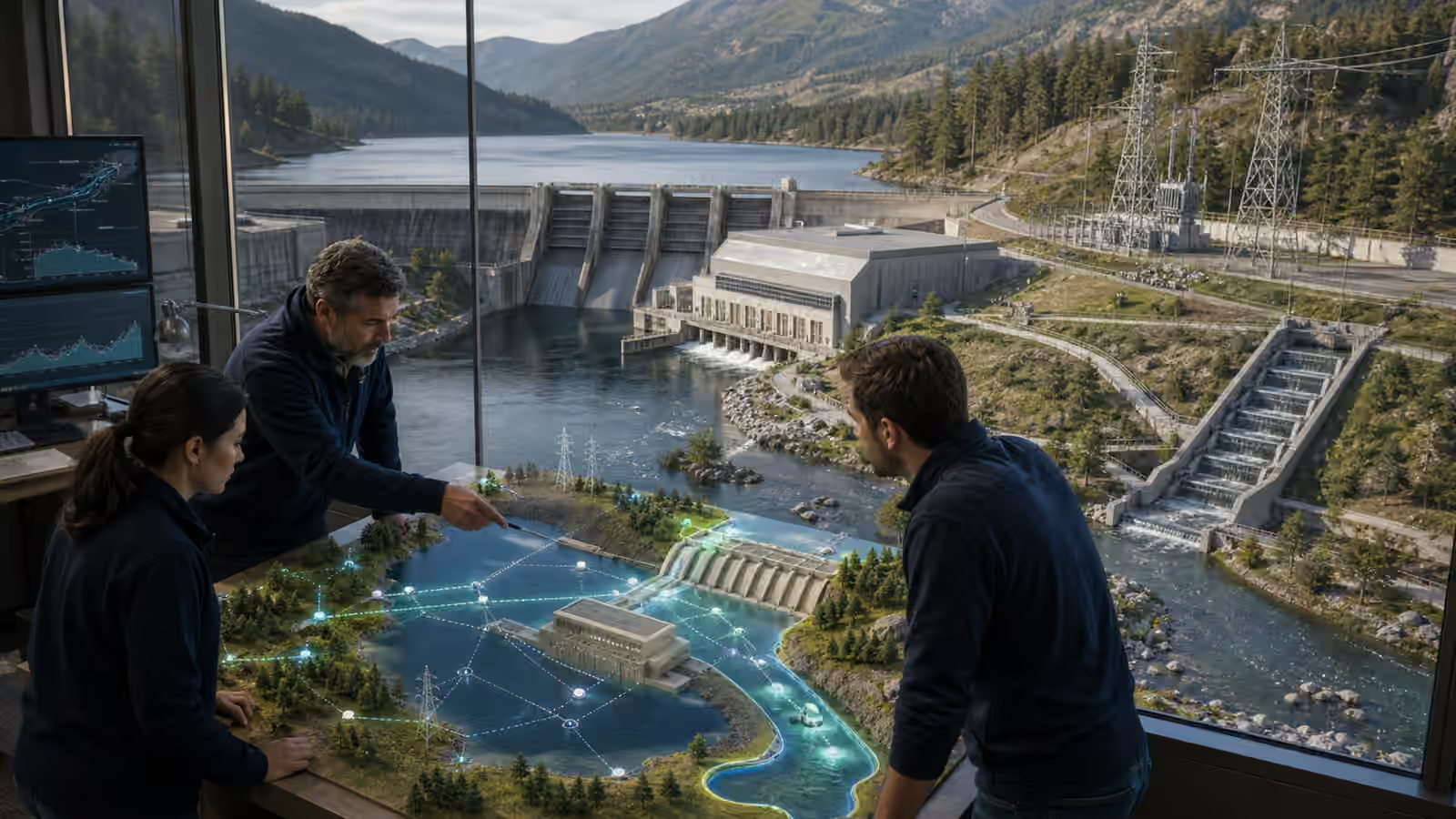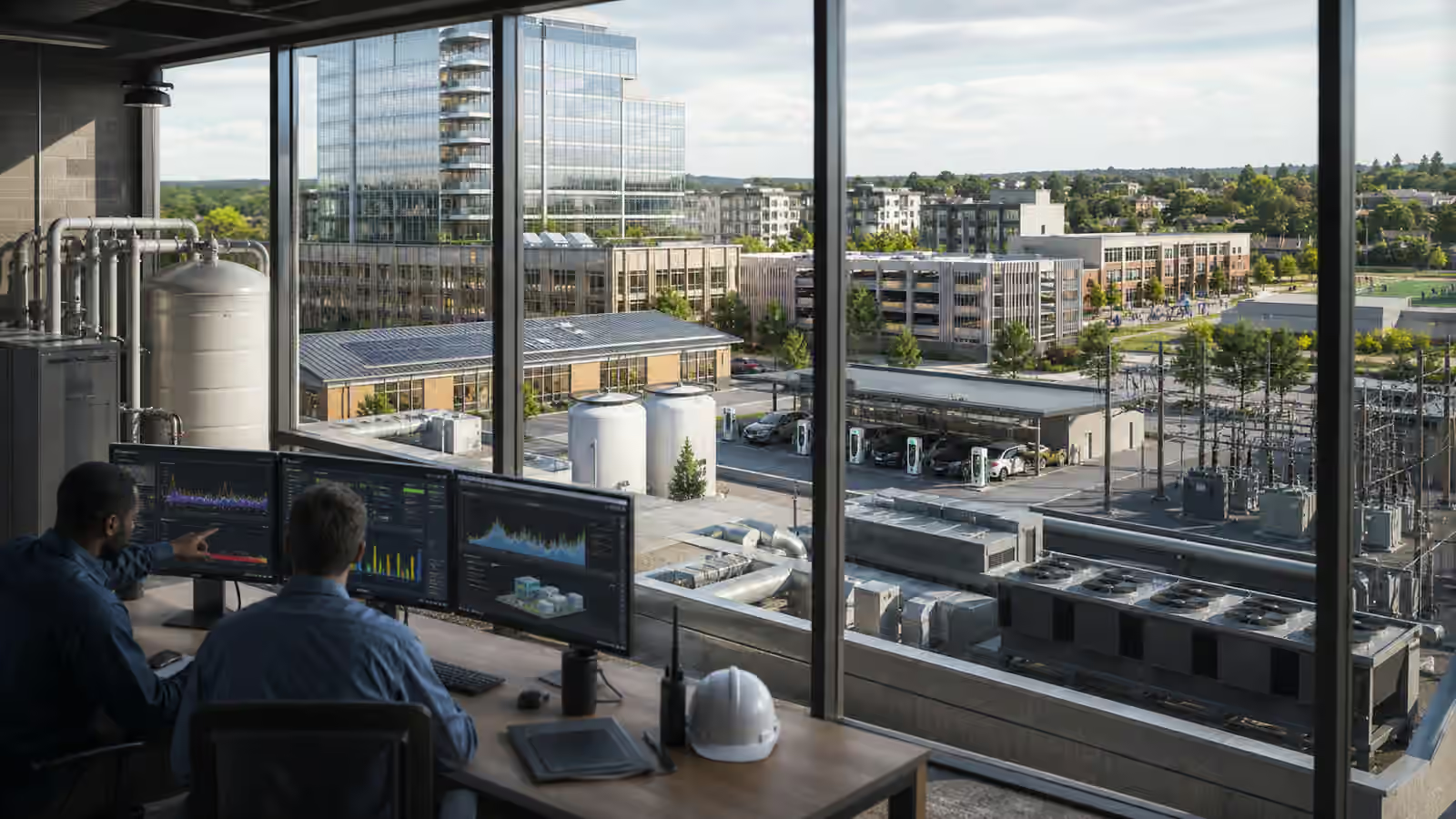
Commercial buildings are easy to miss in the future energy story because they do not look like one resource. A city may have offices, schools, grocery stores, hospitals, warehouses, hotels, laboratories, campuses, municipal buildings, theaters, and parking garages. Each has its own owner, tenants, schedules, equipment, comfort expectations, and maintenance habits. From the grid’s point of view, however, they add up to a large and flexible middle layer between homes and heavy industry.
The most important loads in many commercial buildings are not exotic. They are heating, cooling, ventilation, refrigeration, lighting, elevators, pumps, plug loads, kitchen equipment, data rooms, and increasingly EV charging. Some of those loads are rigid. A hospital operating room cannot be casually dimmed because the grid is stressed. A grocery store cannot let freezers drift beyond safe operating ranges. But many building loads have some thermal or timing flexibility if the systems are designed and operated well.
The guide to home electrification and grid flexibility explains how small household loads can add up. Commercial buildings are the next scale up. They are large enough to matter individually, numerous enough to matter collectively, and complicated enough that simple slogans about smart buildings often fail.
Buildings store heat even when they do not store electricity
A building has thermal mass. Walls, floors, furniture, air, water, and equipment warm and cool over time. That means a building can sometimes shift electric demand without immediately changing the service people feel. On a hot afternoon, a building might pre-cool slightly before a peak and reduce compressor operation during the most stressed hour. On a cold morning, it might warm up earlier if the grid is expected to be tight later. A chilled-water system or hot-water tank can make this more deliberate by storing temperature for later use.
This is not the same as saying comfort does not matter. Comfort is the product. A building that makes occupants miserable will not remain flexible for long. The skill is in using control windows, forecasts, and equipment capabilities to move load within acceptable bounds. A well-tuned building may shift demand subtly. A poorly tuned one may cycle equipment aggressively, create complaints, waste energy, or damage trust.
The guide to thermal energy storage covers the storage side in more depth. Commercial buildings bring the idea into everyday operations. A tank of chilled water, a carefully managed slab, or a building automation system can act like a small grid resource because the building’s useful service is temperature, not electricity itself.
Controls are only as good as the building beneath them
There is a common fantasy that software can make any building flexible. In reality, controls sit on top of mechanical systems, sensors, dampers, valves, compressors, boilers, heat pumps, lighting systems, meters, and human schedules. If sensors are wrong, valves stick, dampers leak, filters are clogged, or equipment is oversized, the control strategy will be fighting the building instead of coordinating it.
This is why commissioning and maintenance matter. A building that already wastes energy often has poor flexibility. It may peak because equipment starts at the same time. It may overcool some zones and undercool others. It may run ventilation after occupancy ends. It may have no clear separation between critical and adjustable loads. Before asking a building to serve the grid, it is worth asking whether the building is serving its own occupants efficiently.
The guide to energy efficiency and load shape makes this point broadly. Efficiency and flexibility are not enemies. Better envelopes, tuned controls, efficient fans, variable-speed equipment, and good maintenance can reduce total demand and make the remaining demand easier to shape.
Commercial EV charging changes the building’s grid role
Parking lots and garages are becoming energy assets. A workplace may add employee chargers. A retail center may host fast chargers. A hotel may offer overnight charging. A municipal building may charge fleet vehicles. A delivery warehouse may electrify vans. Each case changes the building’s load shape and may require service upgrades, transformers, switchgear, or local controls.
The charging load can also be flexible if the use case allows it. Employee vehicles parked for eight hours do not always need maximum power the moment they plug in. A hotel guest may only need a full battery by morning. A fleet may have strict departure times but still offer a managed charging window overnight. The building becomes a scheduler. It has to balance driver needs, panel capacity, utility rates, demand charges, and grid signals.
The guide to EV charging and grid planning covers the transportation side. Commercial buildings are where many charging decisions become practical. The question is not simply how many chargers can fit in the parking area. It is how charging interacts with HVAC peaks, building service limits, local transformers, and customer expectations.
Aggregation needs trust and verification
A single building may be useful. Many buildings coordinated together can become a meaningful flexible resource. An aggregator might combine offices, schools, stores, and campuses into a demand response portfolio. During a tight hour, each building makes a modest adjustment. The grid sees a larger reduction. Customers continue using the buildings with little disruption.
This is the same logic behind virtual power plants , but commercial buildings add measurement and responsibility challenges. Baselines have to be fair. A building should not be paid for reducing load that would have fallen anyway. Occupants should understand the comfort range. Facility teams should know when events are likely. Critical operations should be protected. Controls should fail gracefully. Payments should be large enough to justify participation but not encourage bad behavior.
Verification matters because grid operators need dependable resources. If a resource promises load reduction during a hard hour, it should show up. That requires metering, data quality, dispatch procedures, and sometimes penalties or performance rules. Flexibility becomes a grid product only when it can be observed and trusted.
The best buildings are legible
A flexible commercial building is not necessarily packed with futuristic equipment. It is legible. Operators know which loads are critical, which can move, and which are already efficient. The building automation system has accurate schedules. The facility team understands demand charges, utility programs, and comfort constraints. The owner knows why a battery, thermal tank, or controls upgrade is being installed. Tenants are not surprised by hidden sacrifices.
Legibility also helps utilities. A building that can describe its flexible load, backup systems, charging schedule, and peak behavior is easier to plan around than a black box. The guide to load forecasting explains why planners need better demand assumptions. Commercial building flexibility can improve those assumptions when it is real and measurable.
The grid does not need every building to become a miniature power plant. It needs buildings to waste less, peak more thoughtfully, charge vehicles intelligently, and offer flexibility where the service can tolerate it. That is quiet work, mostly performed by engineers, facility managers, controls contractors, owners, tenants, and utilities. It lacks the drama of a new power plant, but it can reduce the size of the problem the rest of the power system has to solve.