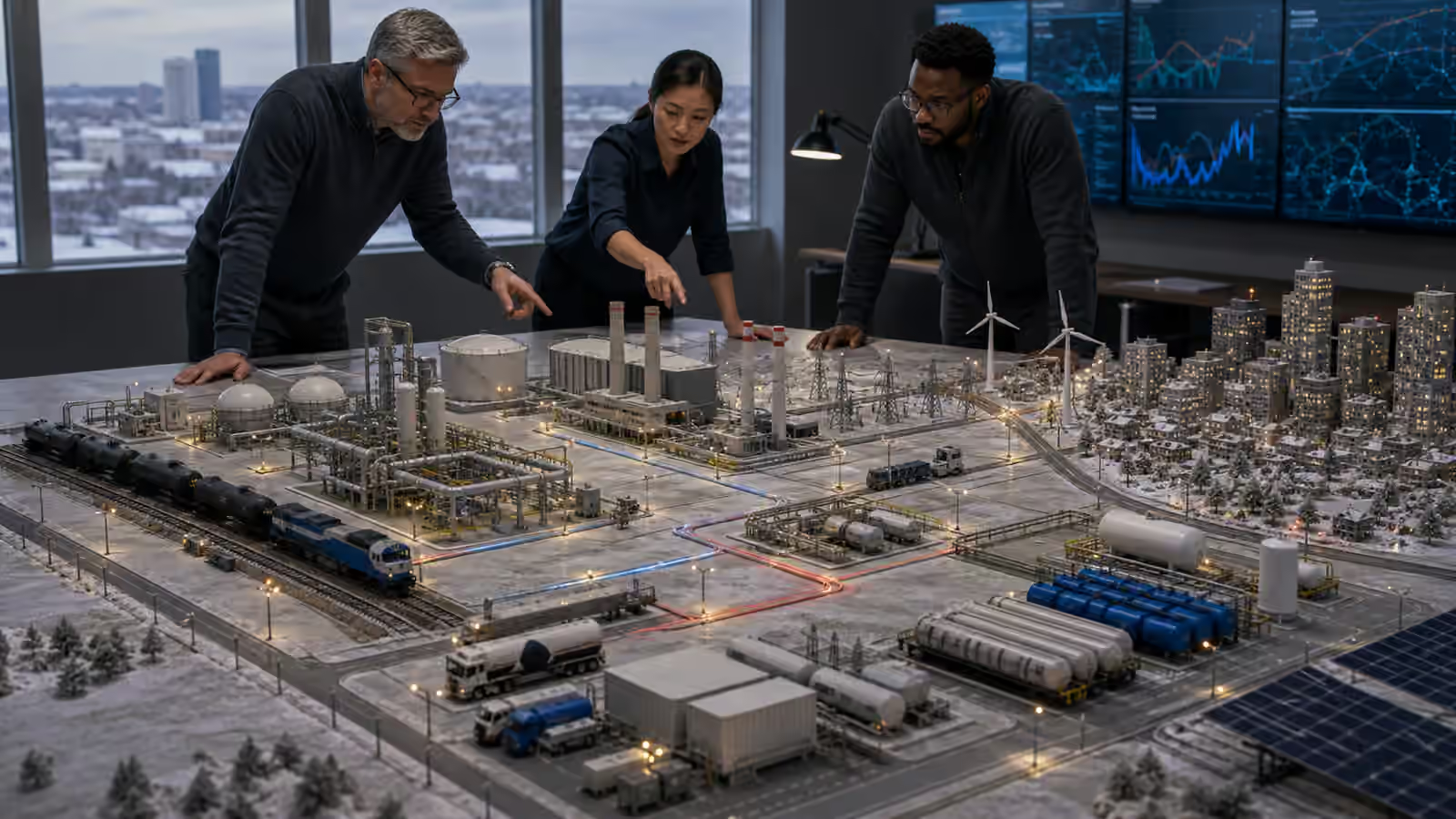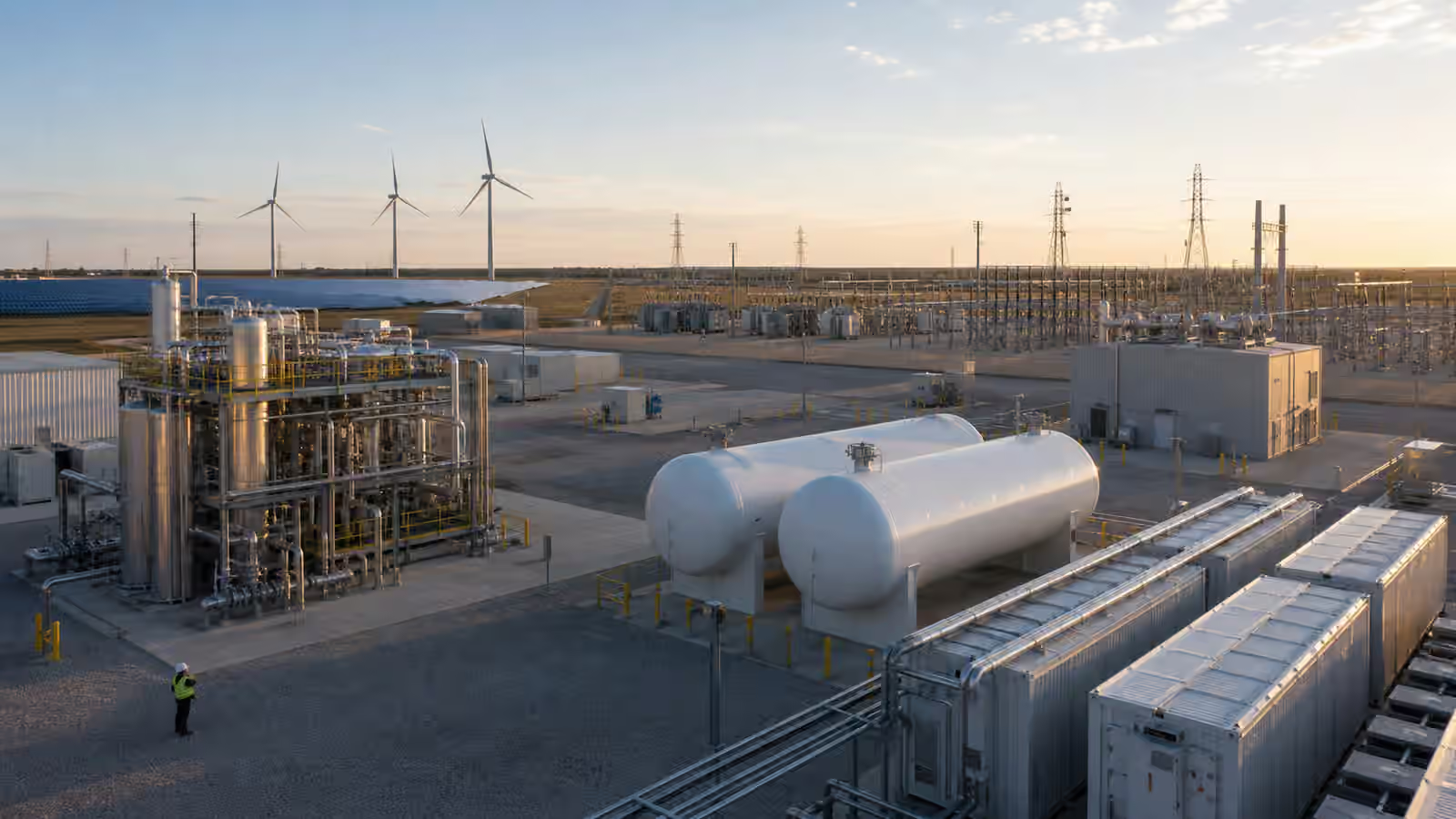
Clean fuels enter the future-energy conversation when electricity alone starts to look too narrow. A grid with a lot of solar, wind, batteries, transmission, and flexible demand can cover many hours well. It can still face periods when the weather is unfavorable, demand is high, equipment is unavailable, or a large load needs backup that lasts longer than ordinary batteries were designed to provide. In those moments, planners ask an old question in a new form: is there a fuel that can be made cleanly, stored for a long time, moved where needed, and converted back into useful power without turning into an emissions loophole?
The usual answer starts with hydrogen, but the real category is broader than one molecule. Clean fuels can include hydrogen made with low-emissions electricity, hydrogen made from fossil fuels only if the upstream emissions are credibly managed, ammonia or synthetic methane made from clean inputs, biogas in limited and carefully sourced cases, and other carriers that can store energy in chemical form. None of these should be treated as magic. A fuel is not clean because a project brochure says so. It is clean only if its full supply chain, production energy, leakage, conversion losses, and actual operating pattern support the claim.
That caution is important because clean fuels sit at the intersection of several real needs. They may help with resource adequacy during rare hard hours. They may provide backup for hospitals, ports, factories, and data center microgrids where outages are not acceptable. They may store surplus clean electricity across longer periods than many batteries. They may also serve industrial processes that need molecules, not only electrons. The promise is practical, but it is not simple.
Fuel Is Storage With a Supply Chain
A battery is charged, sits in place, and discharges electricity. A fuel system has more steps. Energy is used to make the fuel. The fuel is cleaned, compressed, liquefied, chemically converted, or otherwise prepared. It may need tanks, pipelines, trucks, ships, caverns, safety systems, meters, sensors, and trained operators. Later it is converted into electricity, heat, or feedstock value. Each step has cost, losses, equipment, and risk.
That extra complexity is why clean fuels should not be compared to batteries as if both were interchangeable boxes. Grid batteries and long-duration storage are excellent for fast response and many daily shifting jobs. Clean fuels may become more relevant when the storage duration stretches from hours into days, weeks, or seasonal needs, or when the desired output is high-temperature heat or a chemical input. The dividing line is not fixed. It depends on the grid, the load, the available storage sites, and how often the resource will run.
Fuel also has a different kind of readiness. A charged battery can be measured directly. A fuel system depends on inventory, delivery contracts, production plants, pressure, purity, and conversion equipment. A turbine that can burn a fuel is only useful if the fuel is there when the grid is tight. A fuel cell can be quiet and efficient in the right setting, but it still needs reliable fuel quality and maintenance. A cavern full of hydrogen may be valuable, but it requires geology, compressors, wells, monitoring, and operating discipline. Chemical storage moves some problems away from the power plant and into the supply chain.
Hydrogen Is Useful Because It Is Difficult
Hydrogen attracts attention because it can be made from electricity and water through electrolysis, stored as a chemical fuel, and later used in fuel cells, turbines, industrial processes, or synthetic-fuel production. It is also already used in industry, though much existing hydrogen is not low-emissions. For a future grid, the interesting version is hydrogen whose production and use reduce emissions compared with the alternative.
The difficulty begins with physics. Hydrogen is light, small, and demanding to store. It takes energy to compress or liquefy. It can leak through materials more easily than many other gases. It can affect metals under some conditions. It requires careful ventilation, detection, separation distances, and safety practices. These challenges are manageable in well-designed industrial systems, but they are not footnotes. They shape where projects fit and what they cost.
The production side matters just as much. Electrolyzers can turn electricity into hydrogen, but the source and timing of that electricity decide much of the climate value. If an electrolyzer runs on clean electricity that would otherwise be curtailed, it may turn a grid problem into stored fuel. If it runs during tight hours and causes fossil generation to increase elsewhere, the emissions story gets weaker. Curtailment is therefore linked to clean-fuel planning, but curtailment alone is not enough to run a large fuel industry. A fuel producer needs enough operating hours, infrastructure, and customers to justify the equipment.
This is why hydrogen can sound easy in a diagram and hard in a project plan. The diagram shows water, electricity, an electrolyzer, a tank, and a power plant. The project plan has interconnection studies, water treatment, compressor maintenance, safety reviews, offtake contracts, storage permits, power contracts, grid impacts, and a real question about who pays for equipment that may run only during certain hours.
Round-Trip Efficiency Is Not the Only Test
Turning electricity into hydrogen and then back into electricity loses a significant share of the original energy. That fact matters, but it does not end the conversation. Many useful energy systems are chosen because they solve a hard constraint, not because they are the most efficient path in ordinary hours. A hospital backup generator is not judged by whether it is cheaper than grid power on a mild afternoon. It is judged by whether it works during an outage. A long-duration storage system is judged by the value of having energy after several hard days, not only by its performance on a sunny noon.
The honest question is what problem the fuel solves. If the task is daily evening shifting, a short-duration battery may be better. If the task is stabilizing a weak grid in milliseconds, power electronics and batteries may be better. If the task is storing large amounts of energy for rare, extended shortages, a clean fuel may deserve consideration despite lower round-trip efficiency. If the task is industrial heat or feedstock, converting electricity into a molecule may be more useful than converting it back to electricity at all.
This connects to hourly clean power matching . A large customer that wants clean power every hour may need a portfolio that includes variable renewables, batteries, transmission, firm clean resources, demand flexibility, and perhaps clean fuels for the hardest gaps. The fuel should be counted honestly. If it is charged with clean electricity in one period and discharged in another, the accounting should show that. If the fuel is produced elsewhere, its emissions and delivery path should be visible. Chemical storage should clarify the claim, not hide it.
Backup Power Is a Test of Character
Backup power is one of the places where clean fuels can be tempting. Many critical facilities use fuel-based backup because liquid or gaseous fuel can sit on site and support long outages better than a small battery. Data centers, hospitals, water systems, airports, ports, and military sites all care about extended reliability. Replacing or reducing fossil backup is therefore a serious goal.
But backup has an awkward feature: it may run rarely. Rare operation can make emissions small in annual terms, but it can also make clean alternatives harder to justify because the equipment sits idle. A clean-fuel backup system has to maintain fuel quality, operators, spare parts, testing schedules, safety compliance, and conversion equipment even when no emergency appears. If the system is also used for grid services, it may earn more value, but that use can create wear, fuel consumption, and operational tradeoffs.
The practical question is not whether backup should be cleaner. It should. The question is which design is credible for the site. Batteries may cover short interruptions. Grid-forming inverters may improve stability. Load controls may shed noncritical demand. Clean fuels may extend runtime. Existing fuel systems may remain during transition periods. A responsible plan can combine these layers instead of pretending one technology erases every failure mode.
This is especially relevant to large computing campuses. The AI data-center power demand story is not only annual electricity use. It is also reliability, cooling, power density, local grid capacity, and public trust. If a data center claims clean backup, the claim should include where the fuel comes from, how much is stored, how often it is tested, what emissions occur during tests and emergencies, and whether the system helps or strains the surrounding grid.
Molecules May Be Better Saved for Hard Jobs
Clean fuels are likely to be scarce and valuable before they are abundant and cheap. That means they should be aimed at jobs where direct electrification is difficult, storage duration is unusually long, or chemical feedstocks are required. Using clean hydrogen casually for low-temperature building heat, for example, may make less sense than using heat pumps and thermal energy storage where those options work. Using clean fuel for a hard industrial process, maritime fuel, aviation-derived fuel, or long-duration grid backup may be more defensible.
This is not a universal rule because local conditions matter. Some regions may have excellent renewable resources, salt caverns, industrial hydrogen demand, ports, and pipelines. Others may have none of those. A clean-fuel plan that fits one place may be wasteful in another. Geography, existing industry, water availability, power supply, safety codes, geology, and customer demand all shape the answer.
The same point applies to industrial electrification . Many industrial loads can move toward electric boilers, heat pumps, induction, resistance heating, arc furnaces, or other electric systems. Some processes will still need molecules or very high-temperature heat in forms that direct electrification does not serve easily. Clean fuels should not be an excuse to avoid electrifying what can be electrified well. They should be reserved for the parts of the system where molecules really earn their place.
Infrastructure Decides the Scale
The difference between a pilot project and a grid resource is infrastructure. Small tanks and demonstration fuel cells can prove pieces of the system, but large-scale reliability needs production capacity, storage volume, delivery routes, conversion equipment, and operating rules. For hydrogen, underground storage in suitable caverns may be valuable where geology allows it. Pipelines may be useful in industrial clusters. Truck delivery may work for smaller or transitional uses but becomes awkward for very large energy volumes. Ammonia or other carriers may ease some transport problems while introducing toxicity, conversion, and handling issues of their own.
Infrastructure also brings community questions. Fuel sites require safety planning, emergency response, land, noise management, traffic planning, and trust. A community may hear clean fuel and imagine an invisible climate solution, but the actual project may include tanks, compressors, pipelines, truck movements, flares for safety cases, or industrial buildings. Energy permitting and community trust applies here as much as it does to transmission lines or substations. Projects move more smoothly when developers explain the real equipment, not only the climate label.
The grid connection can be just as important. Electrolyzers are large electric loads. If they run at the wrong times or connect in constrained places, they can worsen the very reliability problem they are supposed to help. If they run flexibly, absorb excess clean generation, and reduce demand during stress, they can support the system. The same machine can be helpful or harmful depending on location, controls, contracts, and dispatch rules.
The Honest Role for Clean Fuels
Clean fuels belong in the future-energy portfolio, but they should sit in the right chair. They are not a replacement for transmission, efficiency, renewables, batteries, demand response, geothermal, nuclear, hydro where available, or better grid planning. They are a way to store and move energy in chemical form when that form solves a problem that electricity alone does not solve easily.
The best clean-fuel projects will likely be specific rather than generic. A port may need fuel for vessels and backup power. An industrial cluster may use hydrogen for feedstock and share storage. A region with excellent wind, transmission constraints, and suitable caverns may turn some surplus electricity into long-duration reserves. A data center campus may use a layered design where batteries handle fast events and cleaner fuel extends backup. In each case, the value comes from matching the molecule to the job.
For readers, the useful habit is to separate the fuel name from the system claim. Ask how the fuel is made, where the energy comes from, how it is stored, how far it travels, what equipment converts it, when it runs, what emissions are counted, and what alternative it replaces. If those answers are concrete, clean fuels can be a serious tool for the hardest grid hours. If the answers are vague, the fuel may be carrying more hope than energy.