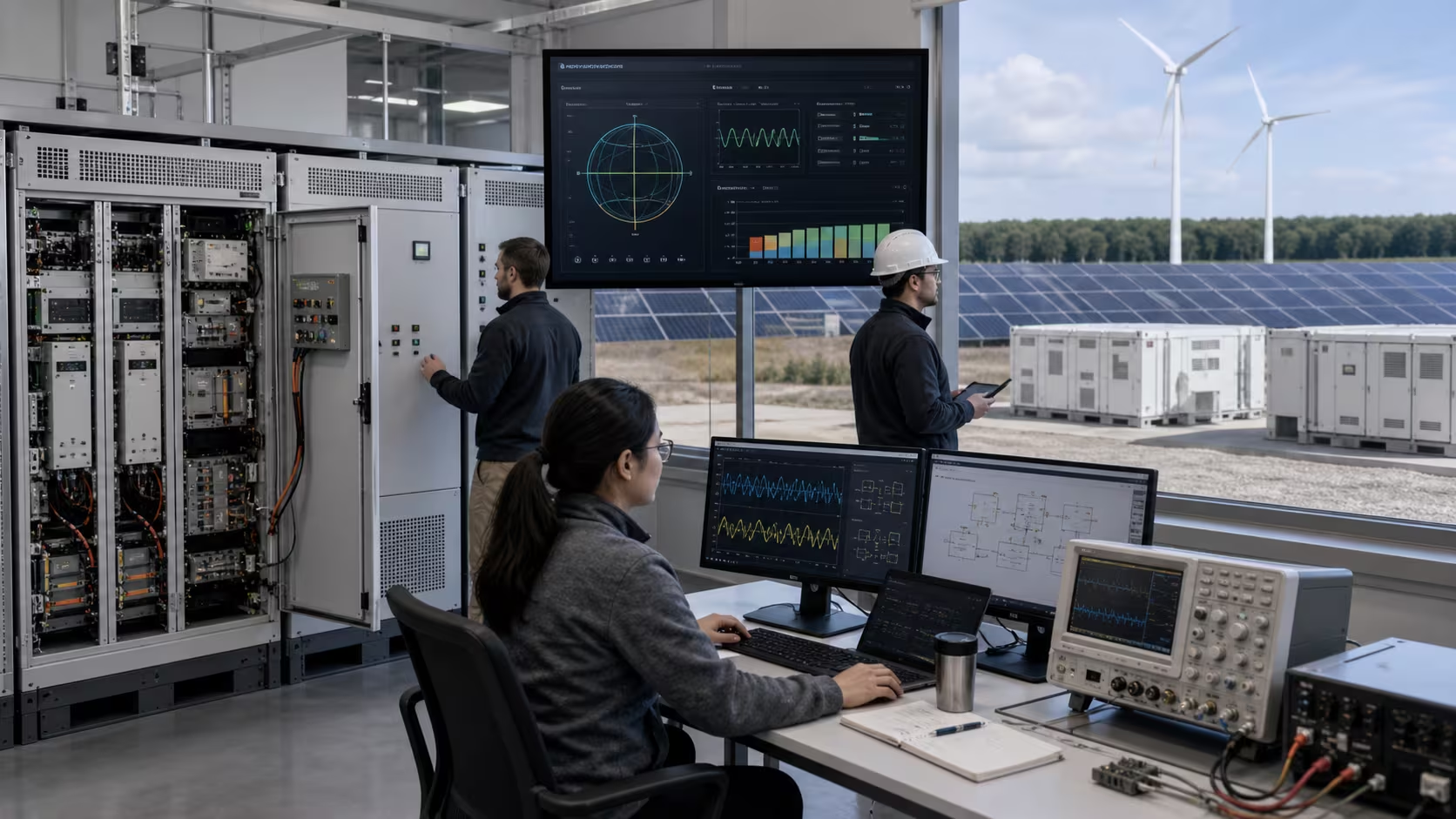
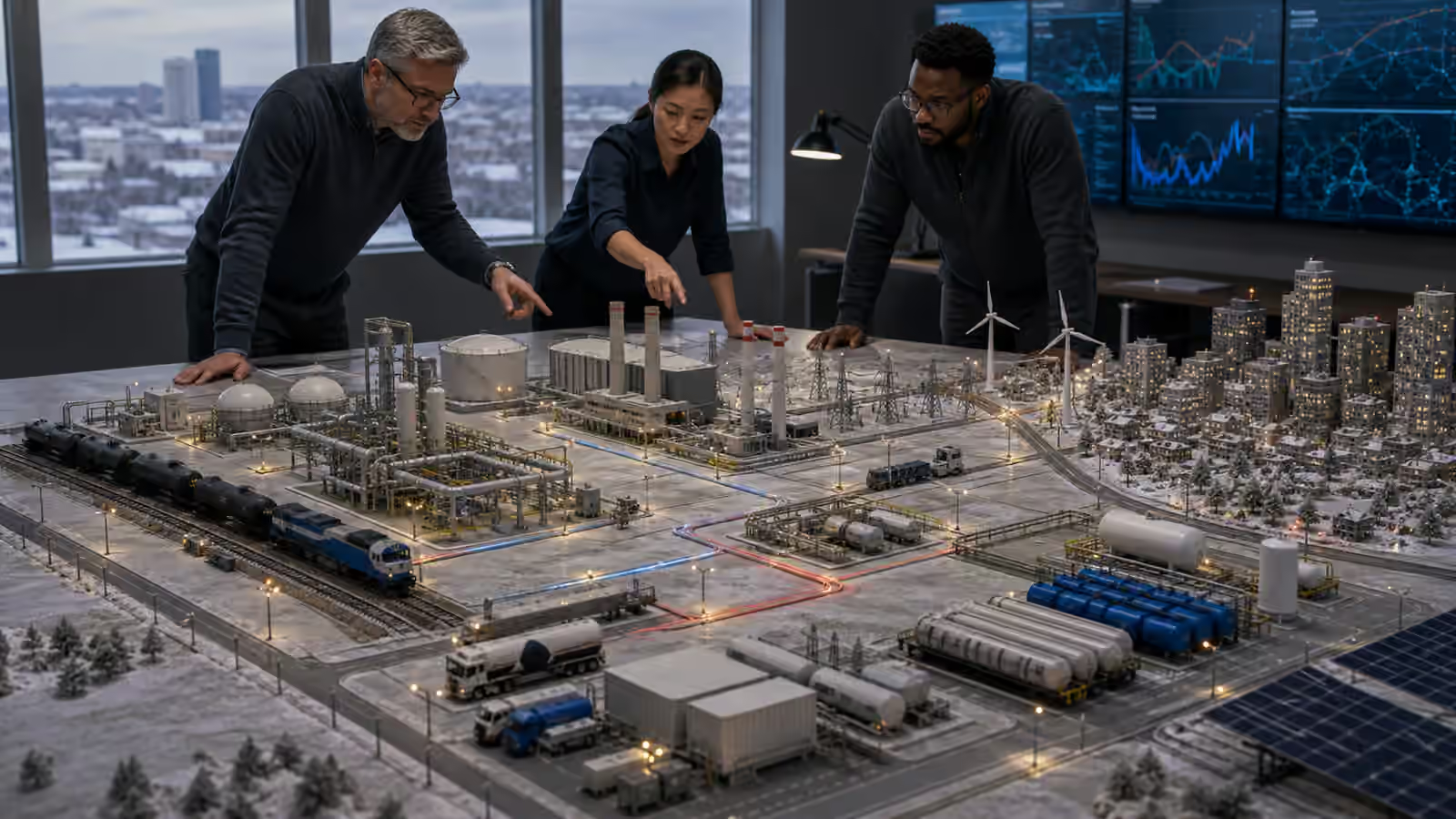
A grid battery can look simple from a distance: a neat row of metal cabinets on a gravel pad, a fence, a transformer, a control room, and a connection to the wires nearby. That tidy appearance is part of the appeal. Batteries can be built faster than many power plants, placed near congested grid points, and operated with precision. They can absorb electricity when it is plentiful and release it when the system needs help. They can also respond in fractions of a second, which makes them useful during disturbances that older equipment handles more slowly.
But a battery project is still a physical infrastructure project. It has chemistry, heat, protection systems, access roads, stormwater, noise, emergency plans, cybersecurity, maintenance crews, neighbors, and a local grid connection. Treating it as a quiet box that simply appears beside a substation is how trust gets lost. The better way to think about battery siting is practical: the project has to solve a real grid problem while being legible, maintainable, and credible to the people who live near it.
The guide to grid batteries and long-duration storage explains why batteries matter as tools for moving power through time. Siting and safety ask a different question. Once a battery is useful in theory, where should it go, how should it be arranged, and what should happen when something does not behave as planned?
A battery site starts with the grid problem
The strongest battery projects have a clear reason to exist. One project may reduce evening peaks on a local feeder. Another may store solar power that would otherwise be curtailed. Another may support a transmission-constrained area until a larger upgrade is built. Another may provide fast frequency response, reserves, or voltage support. These are not identical jobs, and they do not point to identical locations.
Location matters because electricity is local before it is abstract. A megawatt near a constrained substation can be more valuable than a megawatt on an easy part of the grid. A battery paired with a solar project may reduce curtailment at one node but do little for a different bottleneck. A battery near a data center campus may help with short disturbances, but it cannot erase a weak interconnection if the site needs much more firm capacity than the local system can deliver.
That is why battery siting belongs beside interconnection queues and transmission bottlenecks . The question is not only whether there is land. It is whether the land sits near a useful electrical point, whether the substation can accept the project, whether protection settings can be coordinated, whether local roads can handle construction and maintenance, and whether the project fits the community around it.
Safety is a design discipline
Battery safety is sometimes discussed in slogans. Supporters say modern systems are safe. Opponents point to fires and ask why anyone should accept the risk. Neither shortcut is enough. The useful conversation starts with the fact that energy storage concentrates energy in equipment, and concentrated energy needs disciplined design.
A battery site should be arranged so that one equipment problem does not easily become a site-wide problem. Spacing, container layout, access lanes, monitoring, ventilation, thermal management, fire detection, suppression strategy, drainage, emergency isolation, and clear shutdown procedures all matter. The chemistry, enclosure design, operating limits, and control software matter too. So do commissioning tests and maintenance habits after the ribbon cutting.
This does not mean every battery risk can be wished away by adding more equipment. It means the project should explain how it prevents, detects, contains, and responds to abnormal conditions. A credible plan says what is being monitored, which alarms matter, who receives them, how first responders are trained, where water or other response resources come from when relevant, how runoff is managed, how the site is accessed, and how damaged equipment is isolated. The answer should be specific enough that a fire chief, utility engineer, neighbor, and planner can all understand their own part of the story.
The same logic appears in grid protection and relays . Reliable infrastructure is not infrastructure that never fails. It is infrastructure designed so failures are recognized early, contained locally, and handled by people who have practiced the procedure.
Neighbors need concrete answers
Community trust is often treated as a communications problem, as if better language alone can settle every concern. Language helps only when it is attached to real design choices. People living near a battery site may ask about fire response, traffic, noise from cooling systems, visual screening, property boundaries, decommissioning, stormwater, night lighting, vegetation, and who gets called when something looks wrong. Those are ordinary infrastructure questions, not ignorance.
A project that answers them late will feel evasive even if the technical design is strong. A project that answers them early can still face opposition, but the conversation is different. The developer can show a site plan, explain why the battery belongs at that electrical location, describe setbacks and access lanes, identify emergency response coordination, and explain what the community will see after construction. It can also be honest about what the battery does not do. A two-hour or four-hour battery does not make a neighborhood independent from the grid. It provides specific services during specific windows.
The guide to energy permitting and community trust makes the broader point: faster infrastructure does not require dismissive infrastructure. Batteries are one of the technologies where speed is possible, but speed still depends on trust that survives contact with real site plans.
Operations matter after approval
The public approval process often focuses on whether a project should be built. The quieter question is how it will be operated for years. Batteries are active assets. They charge, discharge, cycle, heat, cool, update software, communicate with operators, and interact with market signals or utility dispatch instructions. A site that was safe on paper can become less credible if operations are sloppy.
Good operations include monitoring equipment health, respecting temperature and state-of-charge limits, maintaining fire and alarm systems, testing emergency procedures, controlling vegetation, documenting incidents, managing software access, and keeping local contacts current. They also include deciding when not to chase revenue. A battery that is paid for many grid services still has to preserve its ability to deliver the services it promised. If it is needed for reliability during hard hours, it should not arrive empty because a short-term signal looked attractive earlier.
This is where batteries connect to resource adequacy and ancillary services . A grid operator needs to know what a battery can deliver, how long it can deliver it, how quickly it can respond, and how its availability is measured. A community needs to know that the asset is not abandoned behind a fence once construction crews leave.
The better battery conversation
Battery storage deserves a central place in future power systems, but it should not be sold as frictionless infrastructure. Its value comes from being specific. It can solve congestion in one place, provide flexibility in another, support local reliability in another, and help renewable energy fit the daily shape of demand. Each use case has a different site, layout, interconnection, and operating plan.
The better conversation begins with the grid need, then follows the project into the field. Why here? Why this size? What happens during a fault, heat wave, flood, or equipment failure? Who maintains the site? What will neighbors see and hear? How are emergency responders prepared? What grid service is being delivered, and how will performance be verified?
Those questions do not weaken the case for batteries. They make the case more durable. A grid battery is not a magic box, and it does not need to be. It is a piece of infrastructure that can be designed carefully, explained honestly, and operated with discipline. That is what turns rows of containers into a trustworthy grid resource.