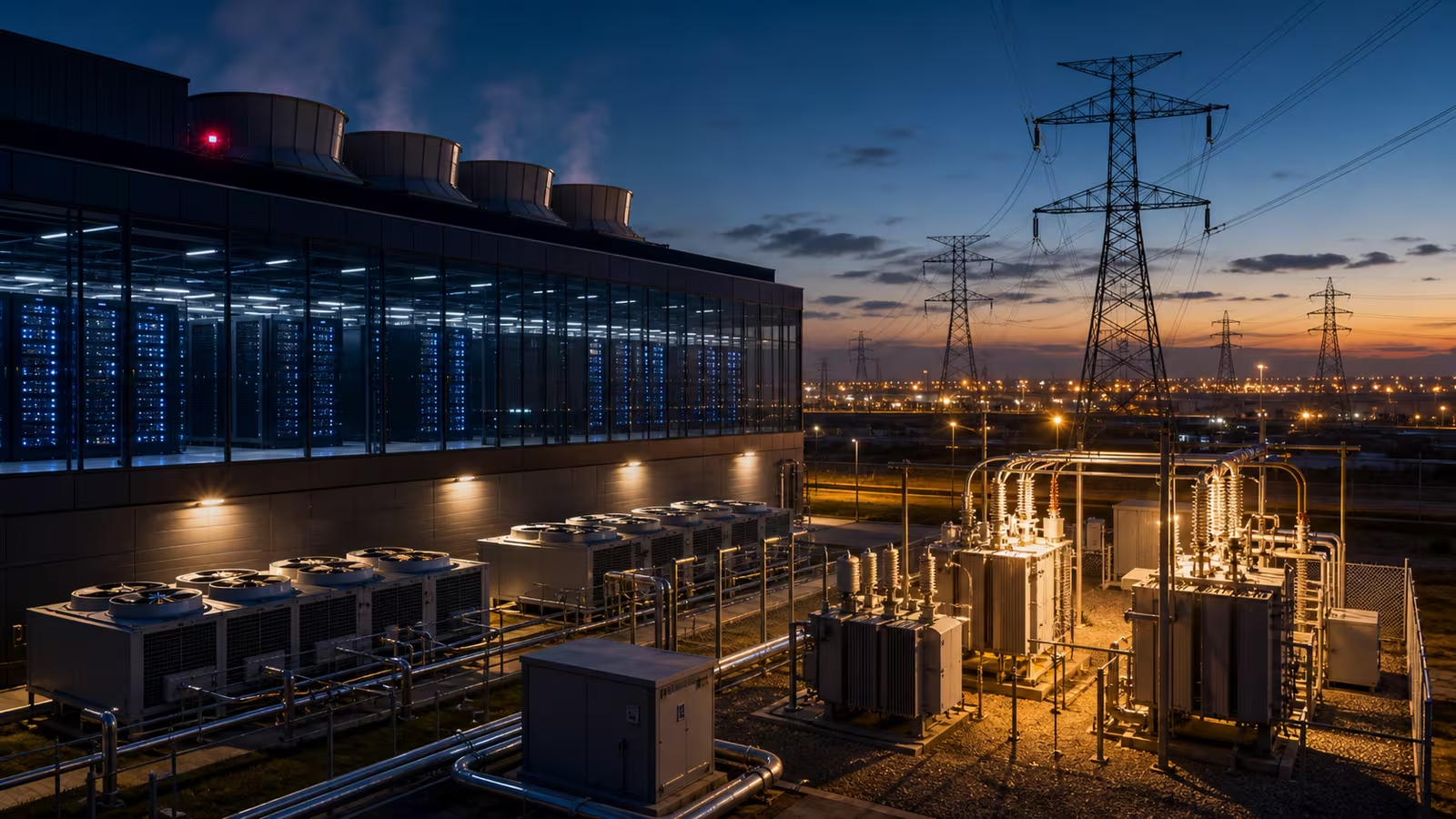
A data center is easy to misunderstand because the services feel weightless. You ask a model for help, open a search result, stream a video, store a photo, or run business software, and the work appears on a screen. The physical machine is somewhere else. That distance creates the illusion that digital demand is different from normal demand. It is not. A data center is a building that turns electricity into computation, heat, and useful digital service.
AI changes the conversation because some AI work is extremely power dense. Training a large model can involve many specialized chips running hard for long stretches. Serving millions of AI requests can require large fleets of accelerators, memory, networking gear, storage, and cooling. The chips are impressive, but they are not magic. Electricity enters. Heat leaves. The building, grid connection, and cooling system decide whether the operation can run reliably.
Why AI load feels different
Not all data-center demand is new, and not all AI work is the same. A small business application, a video platform, a cloud storage service, and a frontier model training cluster have different patterns. What makes AI notable is the combination of scale, density, and growth. A company may want to deploy a large campus quickly because compute capacity creates a business advantage. Utilities, however, build power systems on slower timelines. A substation, transmission upgrade, gas turbine, solar farm, nuclear unit, geothermal plant, or battery project cannot usually be ordered like office chairs.
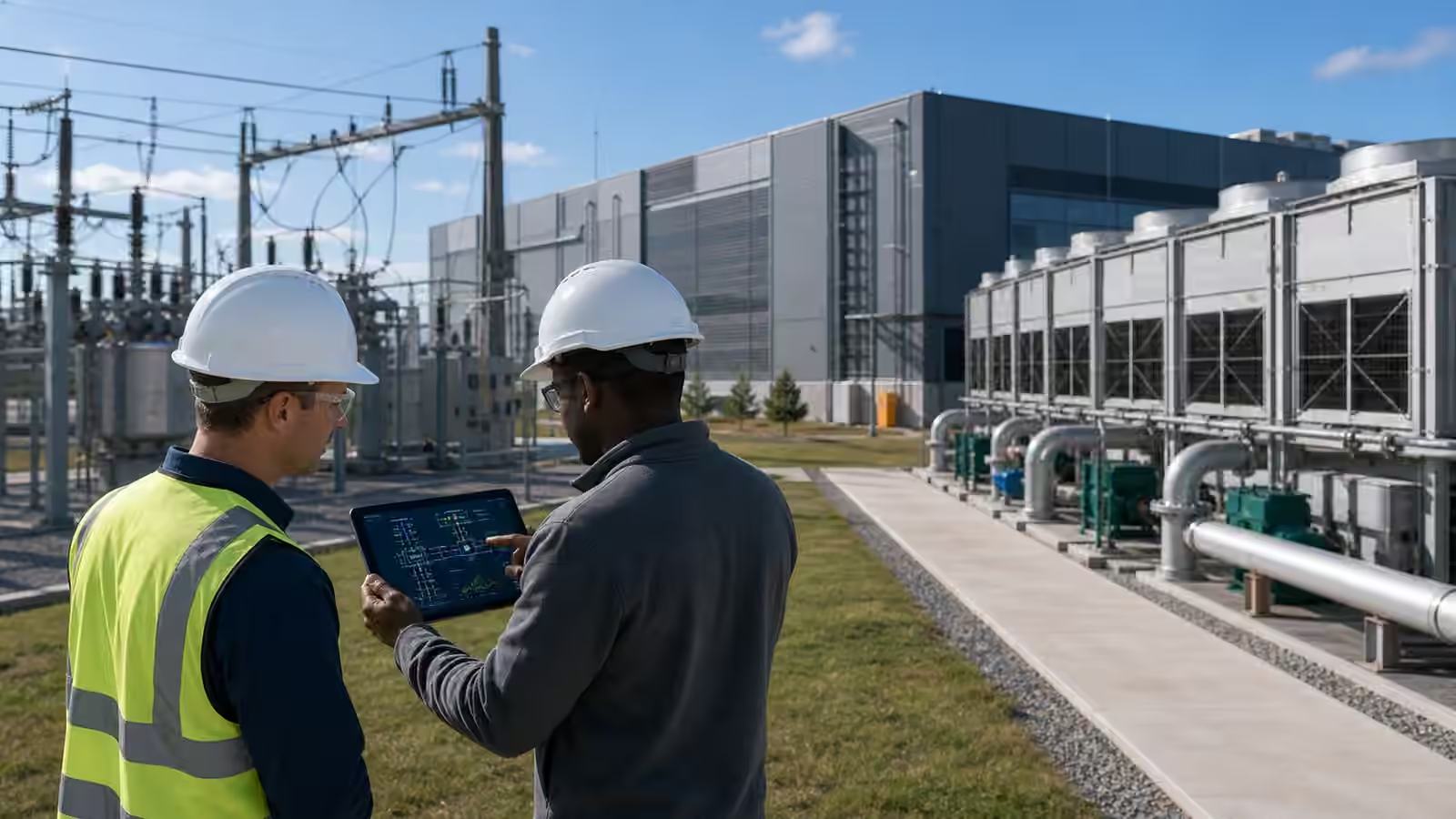
This timing mismatch is where tension begins. A data center developer may ask for hundreds of megawatts. The utility may see a load that affects regional planning. Neighbors may ask about water use, land, backup generators, noise, taxes, and whether residential bills will rise. Grid operators may ask whether the load can be flexible during stress. The data center may reply that customers expect uptime. Everyone is speaking from a real concern.
Servers are heaters with a job
A simple analogy helps: a server is a heater that performs calculations on the way to becoming heat. Almost all the electricity consumed by computing equipment eventually becomes heat inside the building. That heat must be removed so chips stay within safe operating temperatures. Cooling can be done with air, chilled water, evaporative systems, liquid cooling, or combinations. The more power-dense the chips become, the more important cooling design becomes.
This is why data-center energy demand is not only about chips. The building also needs fans, pumps, chillers, power conversion, lighting, security systems, networking, and backup. Engineers use measures such as power usage effectiveness to compare how much energy goes into computing versus overhead. A very efficient site wastes less energy on support systems, but it still needs a large amount of power if the computing load is large.
Liquid cooling is becoming more important for advanced AI hardware because it can move heat more effectively than air in dense racks. That may reduce some cooling overhead, but it does not eliminate the fundamental load. If the chips draw enormous power, the site still needs electricity and a way to reject heat.
Reliability is part of the load
Many data centers are designed for high uptime. That means redundant power feeds, backup generators, batteries, uninterruptible power supplies, and careful maintenance. The grid connection is not just a cord. It is a reliability plan. A site may need multiple substations or feeds. It may keep diesel generators for emergencies. It may contract for power in ways that support its own operations but complicate local energy politics.
The reliability question becomes sharper when AI demand grows in regions that already have grid constraints. If a data center expects always-on power, what happens during a heat wave? Can some workloads shift to a different time or place? Can training pause briefly while essential services remain online? Can the facility use on-site batteries to support the grid for short periods? These questions are not glamorous, but they can decide whether data centers become helpful grid partners or difficult new loads.
Some computing is time-sensitive. A video call, search request, hospital system, or financial service cannot wait for tomorrow’s wind. Other computing may be more flexible. Model training, batch processing, rendering, and some analytics may shift in time if the software and business model allow it. Treating all compute as equally urgent wastes an opportunity.
Location is strategy
Data centers do not locate randomly. They care about electricity prices, grid capacity, fiber connections, land, water, tax policy, climate, customers, latency, and permitting. A site with cheap land but weak transmission may be slow to connect. A site near a city may have great fiber but limited power. A cool climate may reduce cooling stress. A dry region may raise water concerns. A region with abundant renewable energy may still need firm power and wires.
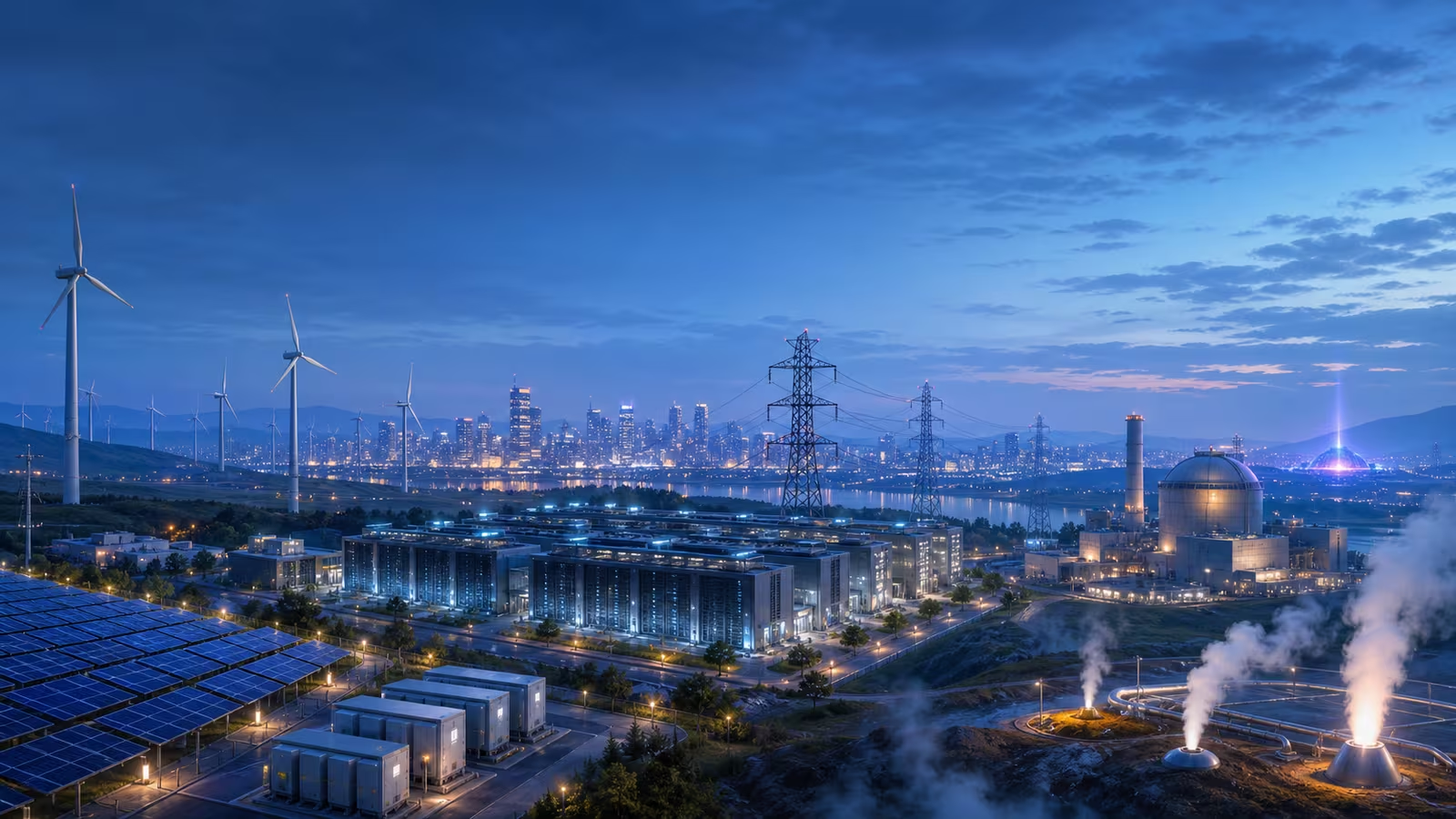
This is why some data-center companies are exploring direct power deals, on-site generation, advanced nuclear, geothermal, solar plus storage, or locations near existing industrial power infrastructure. None of these options is a free pass. A dedicated power plant still has fuel, land, permitting, emissions, cooling, or waste considerations. A renewable power purchase agreement may match annual energy use while still relying on the grid hour by hour. The details matter.
The clean-power challenge
Many large technology companies have climate goals. The hard part is moving from annual accounting to real-time decarbonization. Buying enough renewable energy certificates over a year is not the same as running a data center on clean electricity every hour. The grid may be clean at noon and dirtier at night. A data center may claim matching on paper while still drawing from a grid that uses fossil plants during peaks.
Hourly matching is harder but more meaningful. It asks whether clean supply is available when the load actually runs. That encourages storage, firm clean power, demand flexibility, and better regional planning. It also reveals why the future energy mix cannot be only one thing. Solar helps. Wind helps. Batteries help. Transmission helps. Firm clean sources help. Efficiency helps. The data center becomes a test of whether all those pieces can work together.
Why this matters
AI data-center power demand matters because it turns digital growth into visible infrastructure choices. If electricity planning is weak, new load can raise costs, slow clean-energy goals, or create local opposition. If planning is strong, data centers can become anchor customers for better grids, cleaner power, and smarter demand management.
For readers, the practical habit is to translate cloud claims into physical questions. How much power does the site need? When does it need it? Is the load flexible? What generation serves it? What grid upgrades are required? How is cooling handled? Who pays for the wires? What happens during extreme weather? Those questions make the cloud real, and real is where good decisions begin.