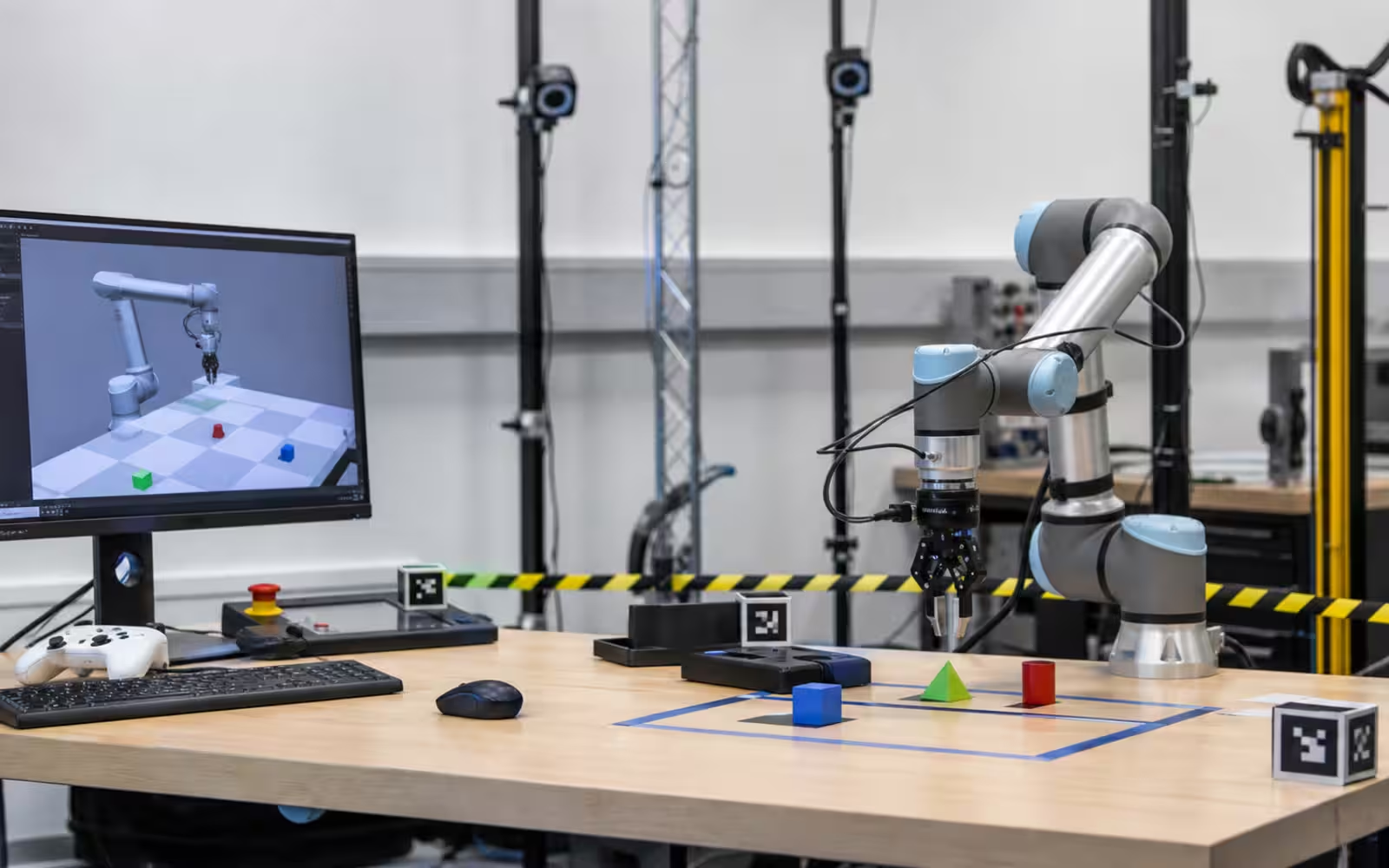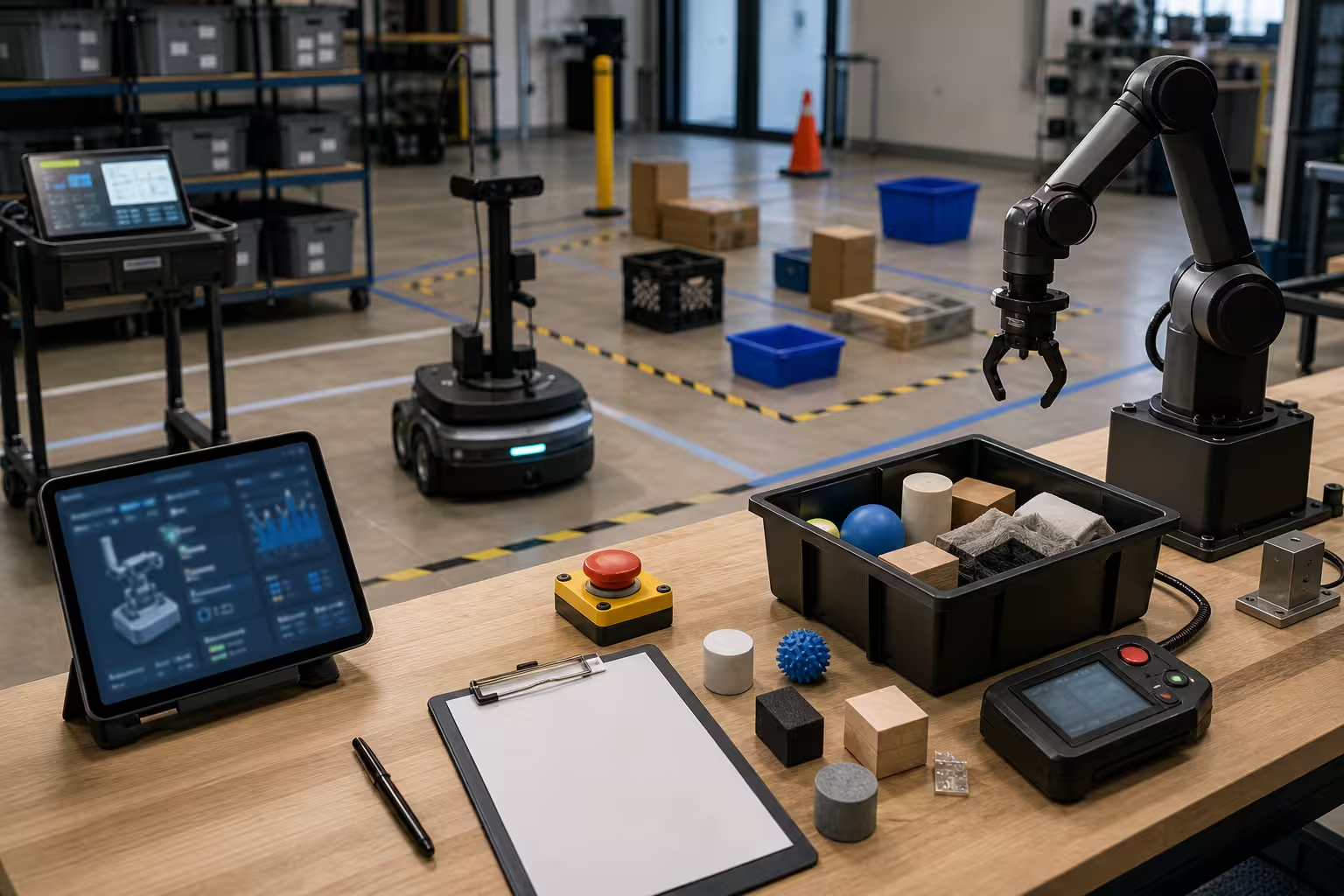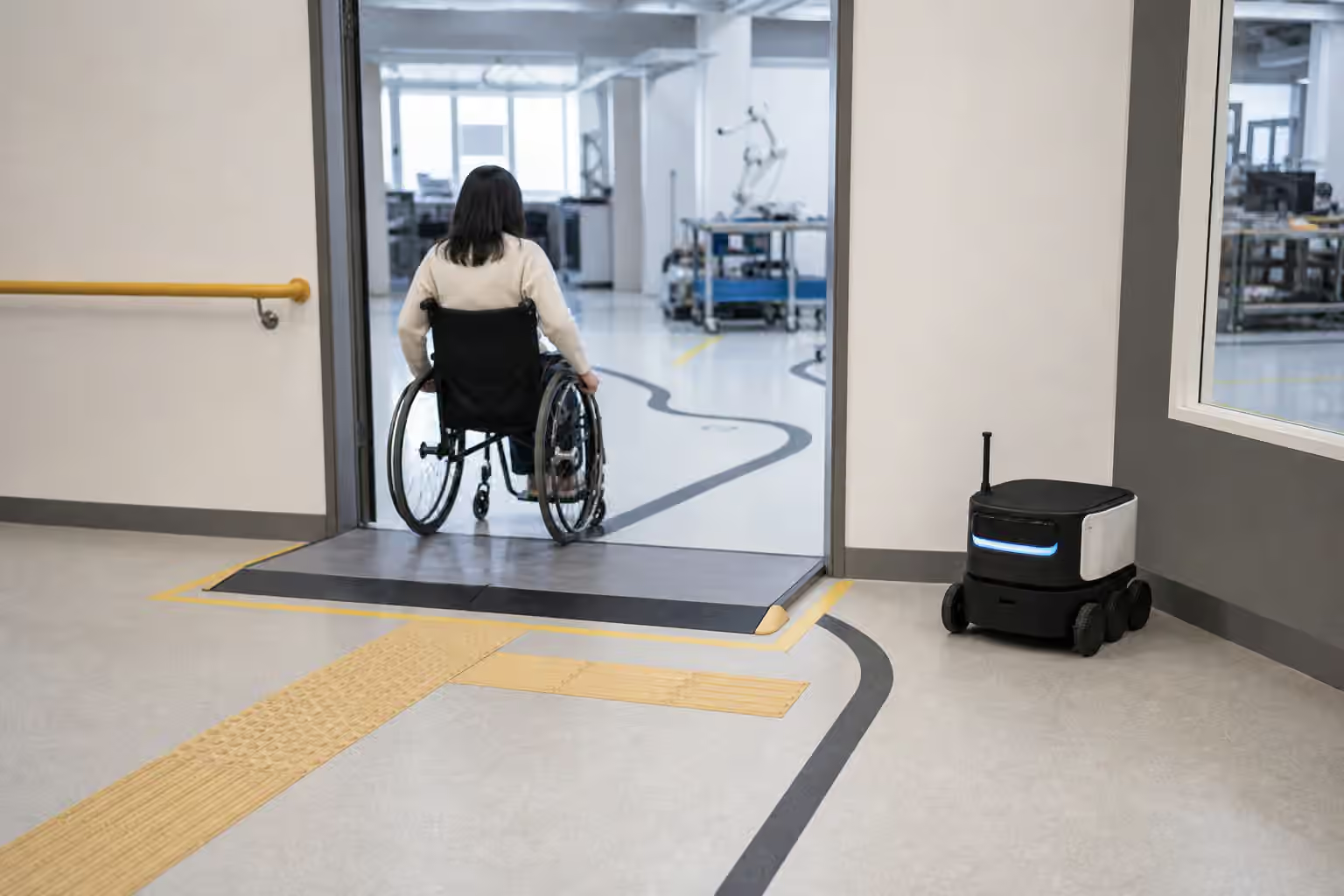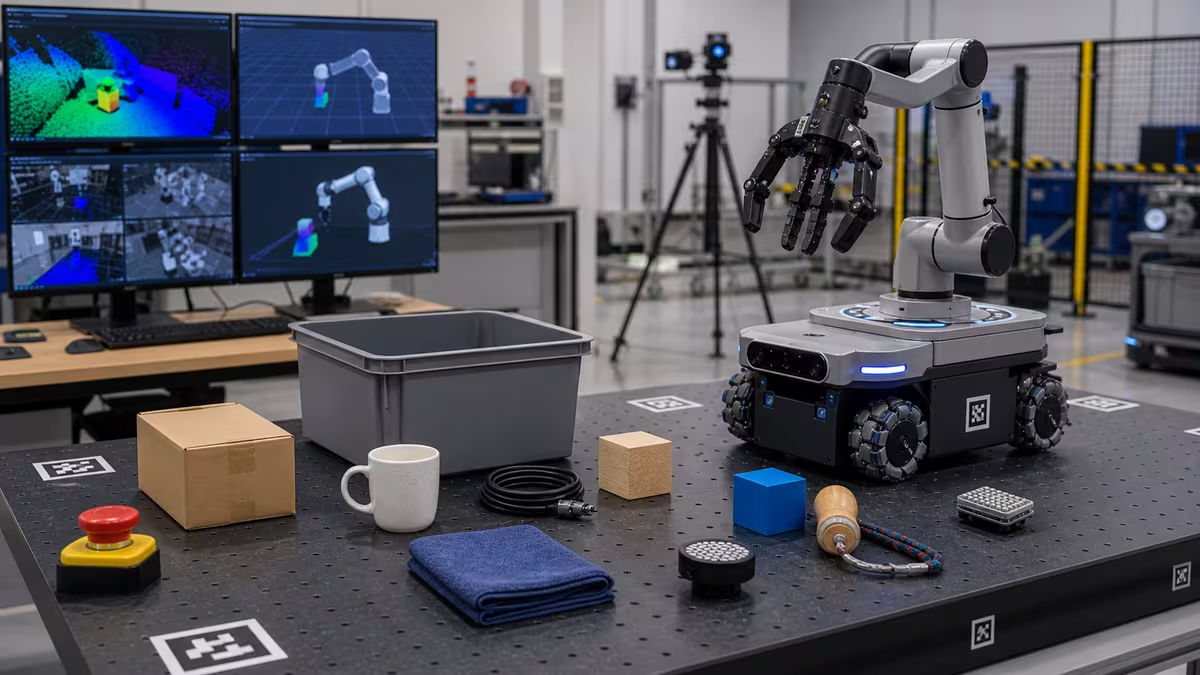
The most useful robotics question is not “Can a robot do this once?”
It is “Can this robot do this task repeatedly, in this environment, with these objects, around these people, at this cost, with a safe failure mode?”
That question turns a flashy demo into an engineering problem. It also makes modern robots easier to understand. Many robots are already useful. Fewer are general. Very few can walk into an ordinary home, infer what you meant, handle all the objects, recover from surprises, and do it safely without careful setup.
The capability envelope
Every robot has a capability envelope: the set of tasks, objects, environments, speeds, payloads, lighting conditions, floors, failure cases, and human interactions it can handle.
A warehouse AMR may have a wide envelope for moving totes through mapped aisles. It may have a narrow envelope for picking loose, deformable objects out of a cluttered bin. A robot vacuum may be reliable on hard floors and low rugs, but weak around cables, wet messes, pet accidents, and unusual thresholds. A humanoid may be impressive on a staged manipulation task and still be far from safe unsupervised household labor.
When you read a robotics claim, ask what envelope the claim actually covers.
| Claim | Better question |
|---|---|
| “The robot can pick objects.” | Which objects, from which surfaces, with what failure rate? |
| “The robot is autonomous.” | Autonomous for navigation, task planning, manipulation, recovery, or all of them? |
| “The robot works in homes.” | Which homes, which floor plans, which clutter level, which privacy model? |
| “The robot is safe around people.” | Under which standard, risk assessment, speed, payload, and stopping distance? |
What robots are good at now
Modern robots are strongest when the world is engineered around the work.
Moving through known spaces
Autonomous mobile robots can move materials through warehouses, hospitals, factories, and campuses when the environment is mapped, workflows are clear, and people know how to share space with the machines. Navigation is not trivial, but it is a much more mature problem than open-ended household manipulation.
Repeating precise motions
Industrial arms are excellent at repeatable motion: welding, painting, palletizing, machine tending, inspection, dispensing, and assembly steps where fixtures, parts, and safety boundaries are controlled.
Inspecting and measuring
Robots can carry cameras, lidar, thermal sensors, microphones, gas sensors, or other instruments through spaces that are boring, remote, dangerous, or repetitive. Inspection is often easier than manipulation because the robot can observe without changing the world much.
Cleaning constrained surfaces
Vacuum robots, floor scrubbers, pool cleaners, and lawn robots work because the task can be framed around a surface. They still face edge cases, but they do not need to understand your whole life to be useful.
Moving goods through repeatable workflows
Warehouses are the clearest near-term success zone. Robots can move shelves, totes, carts, pallets, or bins; arms can depalletize, sort, or pack specific categories; vision systems can scan labels and verify inventory. The work is still hard, but the environment can be measured, redesigned, and supervised.
Where robots still struggle
Robots struggle when the world is open-ended, deformable, crowded, or socially ambiguous.
General-purpose manipulation
Picking up a mug is easy compared with folding laundry, untangling cords, opening every style of packaging, loading a dishwasher full of mixed objects, or finding a dropped pill under furniture. Human hands are not just grippers. They are sensors, force controllers, tool users, and problem solvers attached to a body with years of experience.
Messy homes
Homes are hard because they are not standardized work cells. They contain pets, children, stairs, clutter, fragile objects, private spaces, changing furniture, unusual lighting, mirrors, cords, thresholds, and people who do not want to maintain a robot like factory equipment.
Long-horizon autonomy
Many robots can do a short task under supervision. Long-horizon autonomy means the robot can continue through interruptions, recover from errors, recognize uncertainty, ask for help at the right moment, and avoid making the situation worse. That is much harder than executing a single motion plan.
Social judgment
Humans constantly infer intent: who is in the way, whether to wait, whether a person noticed us, whether an object is valuable, and whether a request is safe. Robots can model pieces of this, but social competence is not solved by adding a face or voice.
The deployment ladder
Think of robotics maturity as a ladder.
- Teleoperated: a person controls most actions.
- Assisted: the robot stabilizes, avoids some obstacles, or executes simple commands.
- Scripted autonomy: the robot follows known routines in a prepared environment.
- Supervised autonomy: the robot acts, but a person handles exceptions or approvals.
- Bounded autonomy: the robot can complete a defined job across normal variation.
- Open-ended autonomy: the robot can handle broad new tasks in changing environments.
Most useful robots live between steps 3 and 5. That is not a failure. It is where real work happens.
How to evaluate a robot demo
Watch for the missing denominator.
If a video shows one successful pick, ask how many attempts failed. If it shows a tidy room, ask how it handles clutter. If it shows a humanoid walking, ask about battery life, falls, emergency stops, maintenance, cost, and what work legs add compared with wheels. If it shows an AI model giving high-level commands, ask how perception, control, and safety are verified.
Good demos reveal constraints. Weak demos hide them.
The practical buyer checklist
Before buying or piloting any robot, write this down:
- The exact task, not the dream category
- The environment the robot must work in
- The objects it must handle
- The acceptable failure rate
- The fallback when it gets stuck
- Who maintains it
- Who is responsible for safety
- What data it records
- What happens when network access fails
- How you will measure success
Useful references
- International Federation of Robotics, World Robotics 2025 press release
- NIST mobile robotics systems and standard test methods
- OSHA Technical Manual, Industrial Robots and Robot System Safety
Next steps
Read Humanoid Robots if you want to understand the general-purpose robot promise. Read Robot Hands and Dexterous Manipulation if you want the hard part behind “just pick it up.” Read Robot Safety before treating any physical AI system as only a software problem.