A robot deployment does not become real when the robot arrives. It becomes real when the people around it know what the machine is trying to do, how it behaves when confused, when to help, when to wait, and how to report the small problems that would otherwise become folklore.
Training is often treated as a final handoff, something that happens after mapping, charging, safety review, and workflow design. That order is too late. People are part of the robot’s operating environment from the beginning. They move carts, place totes, open doors, block docks, wave robots through, step around them, rescue them, ignore them, and explain them to new workers. If those habits are left to chance, the robot inherits a hidden human interface whether the team designed one or not.
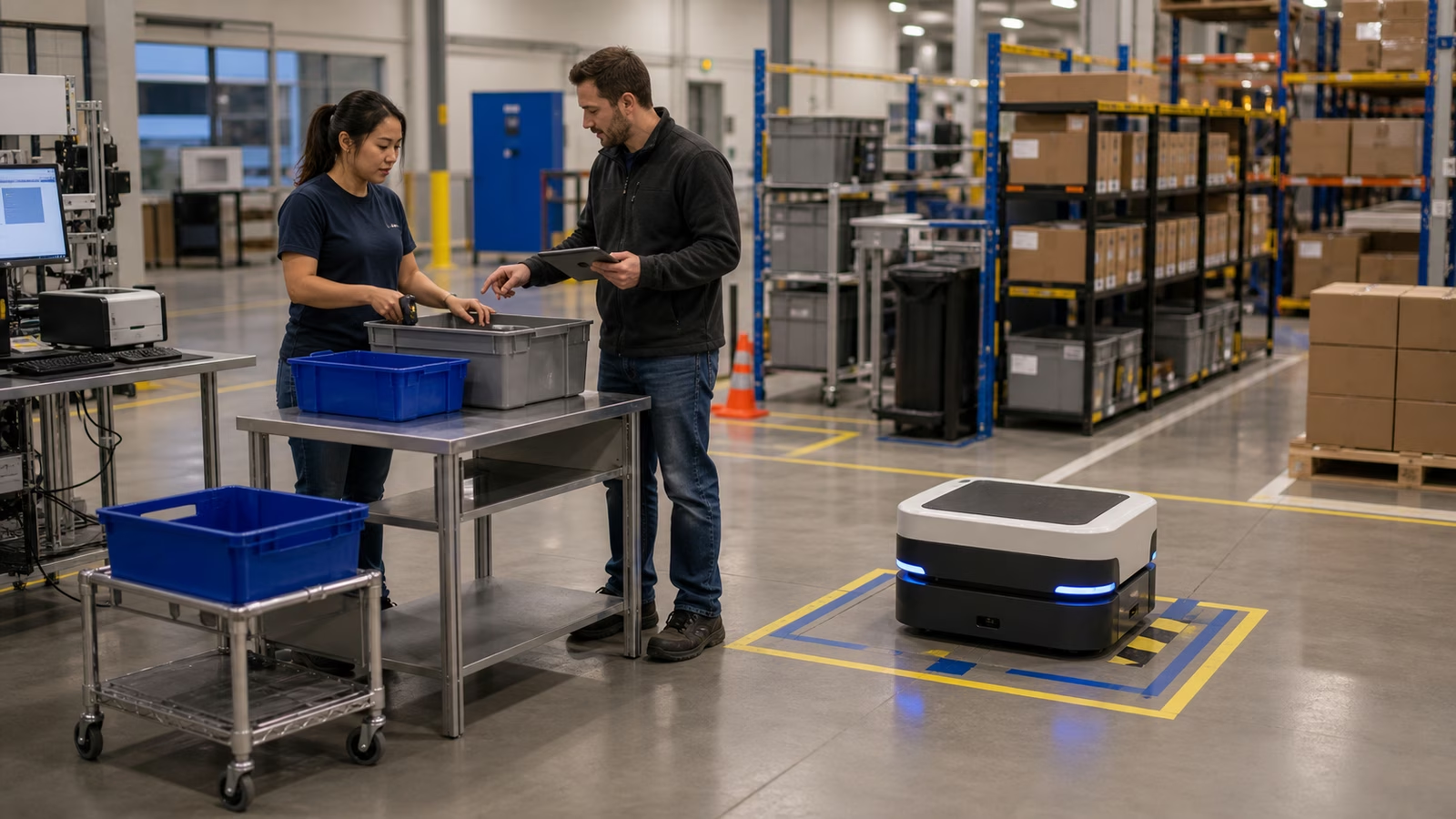
Robot Handoffs and Human Workflows covers the exact moments where robot work meets human work. Training gives those moments a common language. It helps workers understand the machine without needing to become robotics engineers, and it helps the robot program learn from people without turning every exception into blame.
The Robot Needs A Social Shape
People make quick judgments about moving machines. A robot that slows before a corner feels different from one that rolls into view abruptly. A robot that signals a blocked route clearly feels different from one that waits in silence. A robot that stops at a known handoff point feels different from one that appears wherever the planner found space. Those impressions affect trust before anyone reads a manual.
Training should make the robot’s social shape visible. Workers should know its normal route, how much clearance it needs, what its lights and sounds mean, how it yields, what it cannot see well, where it may pause, and what behavior is unusual enough to report. This is not about anthropomorphizing the machine. It is about making the machine predictable in a place where people are already busy.
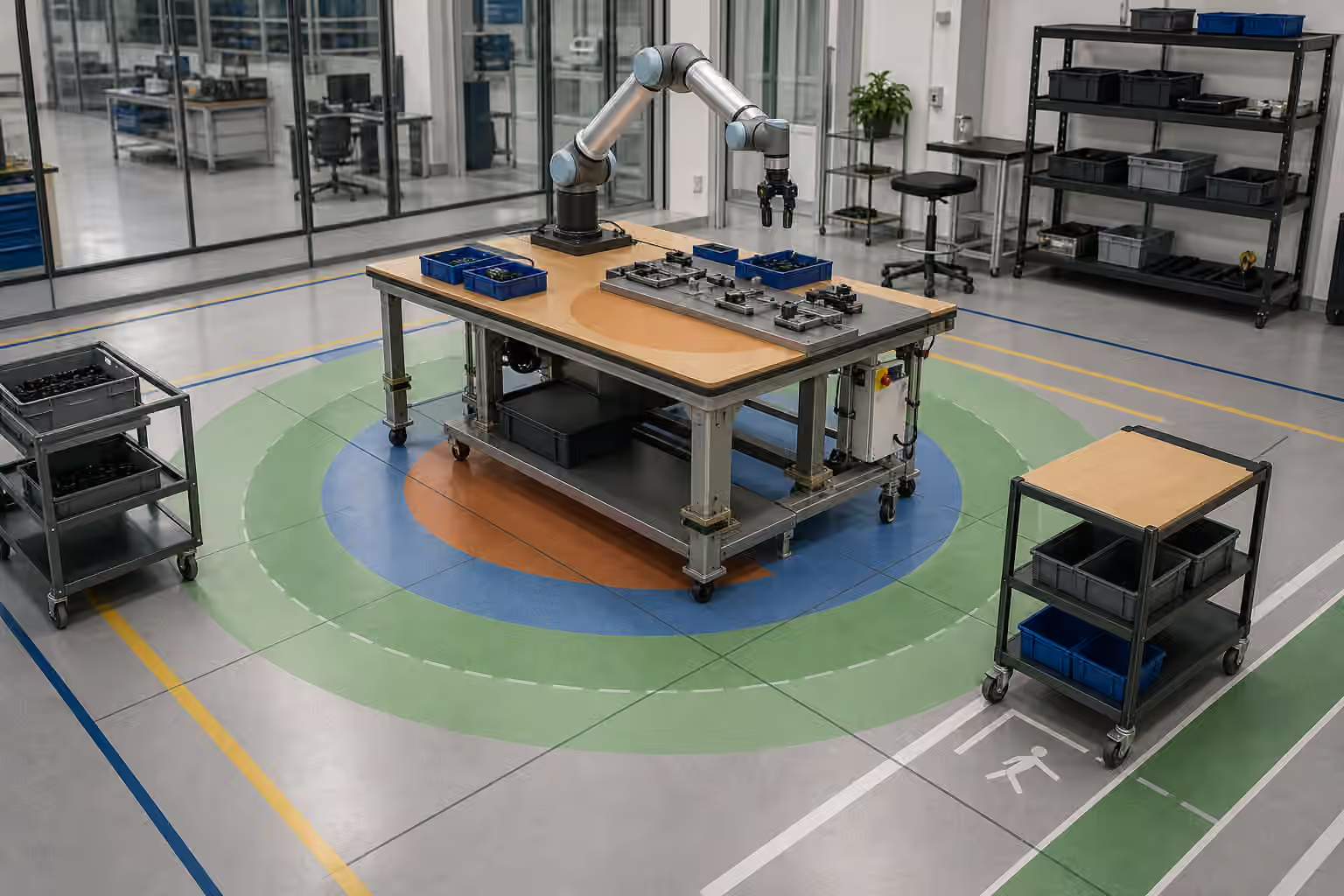
Robot Traffic and Shared Spaces explains route design and right-of-way. Floor etiquette is the human half of that design. If a robot is expected to wait at a crossing, people need to know what waiting looks like. If workers are expected not to step into a narrow robot lane, the reason should be visible in the layout and repeated in training. If a robot has blind spots, the training should show them with real examples rather than vague warnings.
Good Training Uses The Real Workflow
The weakest robot training happens in a conference room with generic slides and a few polished phrases. The strongest training happens near the work, with the actual routes, objects, docks, handoff points, carts, and exceptions people will see during a shift.
A worker who loads totes needs to know what a good tote presentation looks like, what happens when the tote is crooked, how the robot confirms the load, and who owns the next step if the robot rejects it. A forklift operator needs to know where robot routes cross vehicle routes, how the robot behaves near occlusion, and why blocking a dock creates downstream congestion. A technician needs to know which covers may be opened, which sensors can be cleaned, and when a service issue should stop the robot rather than start another retry.
The training should show the ordinary mistakes because ordinary mistakes are what the site will produce. Someone will park a cart in the wrong place. Someone will place a tote slightly outside the fixture. Someone will walk through a route because that was always the shortcut. Someone will hear an alert and not know whether it matters. Demonstrating these cases calmly makes the robot less mysterious when they happen later.
Intervention Habits Decide The Real Autonomy
A robot can appear autonomous while depending on constant human rescue. That rescue may be informal: nudging an object, moving a cart, restarting a job, pressing an override, pushing the robot aside, or telling a coworker to avoid a certain lane. If these actions are not trained and recorded, the deployment’s autonomy claim becomes inflated.
Training should define intervention habits. It should explain which problems workers can resolve locally, which require an operator interface, which require maintenance, and which should be left alone because manual rescue would hide a useful signal. A person clearing an obvious temporary obstacle may be helpful. A person repeatedly fixing the same bad object presentation may be teaching the team nothing unless the pattern is reported.
This connects directly to Robot Observability and Field Logs . Human actions belong in the record. If workers are told to help but the help is invisible, the robot’s metrics lose their denominator. If workers are told never to help, the floor may become frustrated by preventable delays. The better path is to make intervention visible, limited, and learnable.
Trust Grows From Honest Limits
Workers do not need inflated promises. They need honest limits. A mobile robot may not understand why an aisle is blocked, but it can stop safely and request a route clear. A manipulator may not know that a torn carton should be handled differently, but it can reject a weak grasp. A home robot may not know whether an object is trash, but it can ask before acting. The same principle applies on the floor: trust grows when the robot’s limits are known and its refusals make sense.
Training should avoid magic language. It should not say the robot “sees everything” if glare, glass, occlusion, or low objects are weak points. It should not say the robot “will learn” from every mistake if the learning process depends on logs, review, and controlled updates. It should not imply that a safety sensor makes poor route behavior acceptable. The robot becomes easier to work with when people understand the actual bargain.
What Robots Can Actually Do is useful here because it frames capability as task-bound rather than theatrical. Floor training should do the same. The question is not whether the robot is smart. The question is what it is allowed to do here, what it does when the work falls outside that boundary, and how people should respond.
New Workers Need A Living Explanation
Robot deployments last longer than the first training session. Workers change shifts, new hires arrive, supervisors rotate, seasonal staff appear, and visitors pass through. The site needs a living explanation that does not depend on one enthusiastic launch week.
That explanation can live in many forms: practical demonstrations, floor markings, short operator prompts, supervisor habits, maintenance routines, incident reviews, and the way experienced workers talk about the robot. The important point is consistency. If the official training says one thing and the floor culture teaches another, the floor culture wins.
This is why robot training should be refreshed after commissioning. Robot Commissioning and Ramp-Up describes the first week as part of the product. During that week, the team learns which explanations worked, which alerts were confusing, which routes caused friction, and where people invented workarounds. Training should change in response. A deployment that never updates its human guidance is assuming that the first story was perfect.
Etiquette Works Both Ways
Floor etiquette is not only a list of rules for people. The robot also has to behave in ways that respect the human environment. It should not block essential tools, wait in awkward places, cut through social gathering points, surprise people at blind corners, or create noise and light patterns that make the shift more irritating than necessary. A robot that technically follows its route can still be a bad coworker if the route was designed without attention to the people nearby.
The best etiquette is physical and visible. Routes make sense. Docks are not treated as spare floor space. Handoff points face the right direction. Operators can see why the robot stopped. Workers have enough room to pass without squeezing. The robot’s signals are distinct but not theatrical. The site does not ask people to memorize behavior that the layout contradicts.
Robot Operator Interfaces matters because the interface is often where etiquette becomes action. If a worker can see that the robot is waiting for a blocked path, they can decide whether to clear it or leave it to the workflow. If the interface only shows a vague error, people invent explanations. Training and interface design should reinforce each other, not compete.
Incident Stories Should Become Better Training
Every robot deployment produces stories. The robot stopped at the same corner again. Someone blocked the charger with a pallet jack. A route worked until a seasonal display appeared. A worker learned that waving at the robot does nothing. A supervisor found that moving a handoff point reduced complaints. These stories are operational data in conversational form.
Good teams collect the useful stories and turn them into training, layout changes, task refinements, or software requests. They do not let stories harden into jokes that hide repeated friction. A harmless story may reveal a confusing signal. An annoying story may reveal a bad route. A near miss may reveal that people did not understand the robot’s stop distance or blind spot. The training program should have a way to absorb these lessons.
That does not mean every anecdote should become a rule. Some events are one-off. Some are caused by temporary site changes. Some are misunderstandings that disappear after a clearer explanation. The point is to keep the feedback loop open. A robot floor that cannot update its etiquette is no longer learning from the people who share the space.
Training Is Part Of The Deployment Surface
Robots do not enter empty rooms. They enter workplaces, homes, labs, warehouses, hospitals, schools, stores, and facilities where people already have habits. Some habits help the robot. Some make the robot’s task harder. Some exist because an older system failed and people adapted around it. Training is how the deployment team makes those habits visible and negotiates new ones.
The strongest training is plain, local, and repeated. It explains what the robot does here, how it behaves when uncertain, what people should do around it, when to intervene, how to report friction, and why the rules exist. It respects workers as experts in the site, not obstacles to automation. It also respects the robot’s limits, because pretending the machine is more capable than it is only transfers confusion to the floor.
A useful robot deployment is not quiet because nobody has questions. It is quiet because the normal questions have answers. The route makes sense. The handoff is clear. The alert means something. The worker knows when to help. The log preserves the help. The next shift starts with better habits than the last one. That is not separate from autonomy. It is one of the ways autonomy becomes livable.