A robot goal is usually too large to execute directly.
“Bring the tote to packing” is not one action. It includes finding the tote, confirming the right tote, navigating to it, aligning with the pickup point, checking whether the path is clear, lifting or carrying within limits, choosing a route, avoiding people, arriving at the destination, placing the tote where the next person expects it, and reporting that the job is complete. “Clear the table” is even less direct. The robot has to decide what counts as table clutter, where each object can go, which objects are safe to touch, which order avoids collisions, and what to do when an object is heavier, softer, slippery, or more fragile than expected.
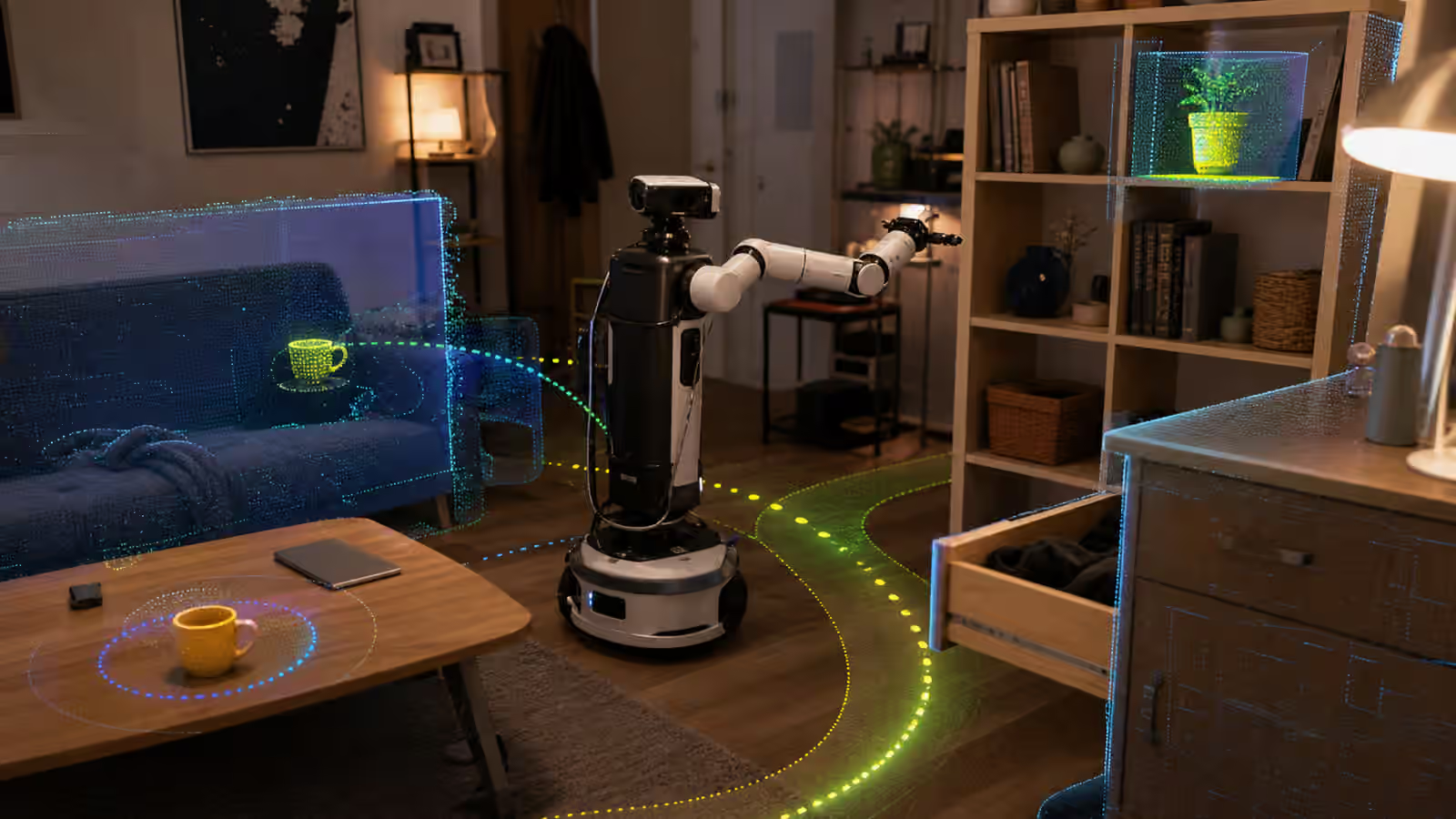
Task planning is the layer that turns a goal into steps the robot can attempt. A world model is the robot’s working belief about the scene, the objects, the robot body, the rules, and the task state. Together they form the bridge between Robot Autonomy and real work. The autonomy stack can sense, localize, plan motion, control joints, and recover. Task planning decides what those capabilities are being asked to accomplish, in what order, under which constraints.
The difference matters because physical action is expensive compared with words. A language command can be vague. A robot motion cannot. The robot eventually has to move a wheel, joint, gripper, lift, or tool through a specific path in a world that may not match the instruction.
The World Model Is A Working Memory
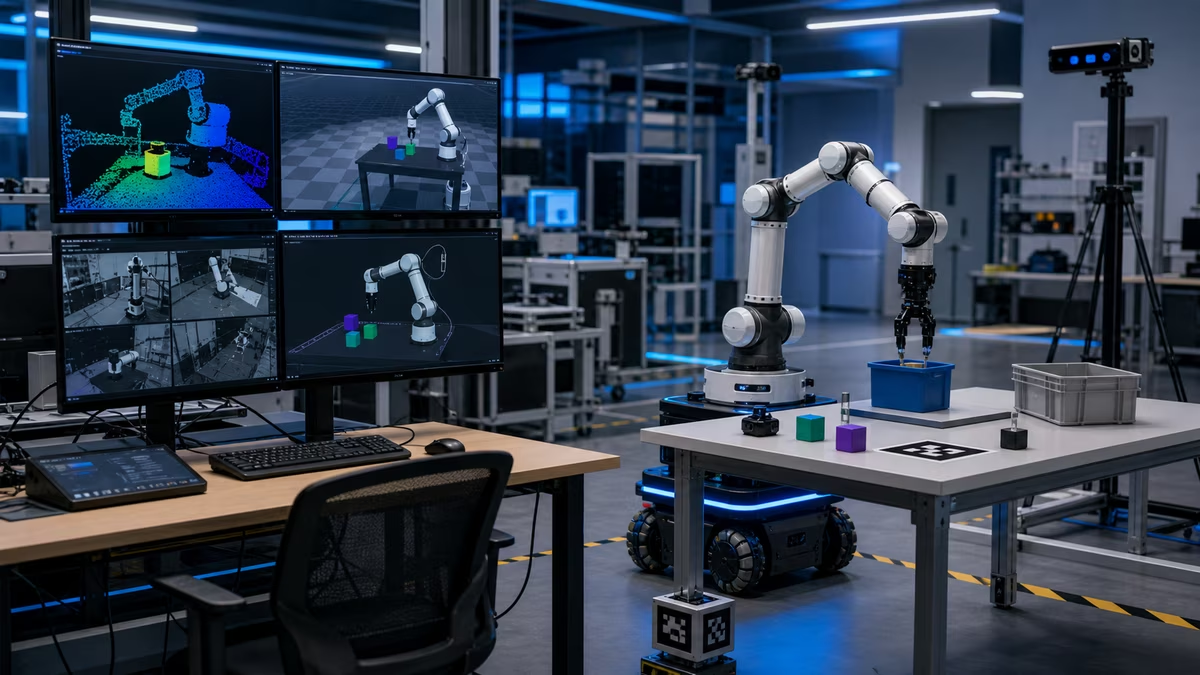
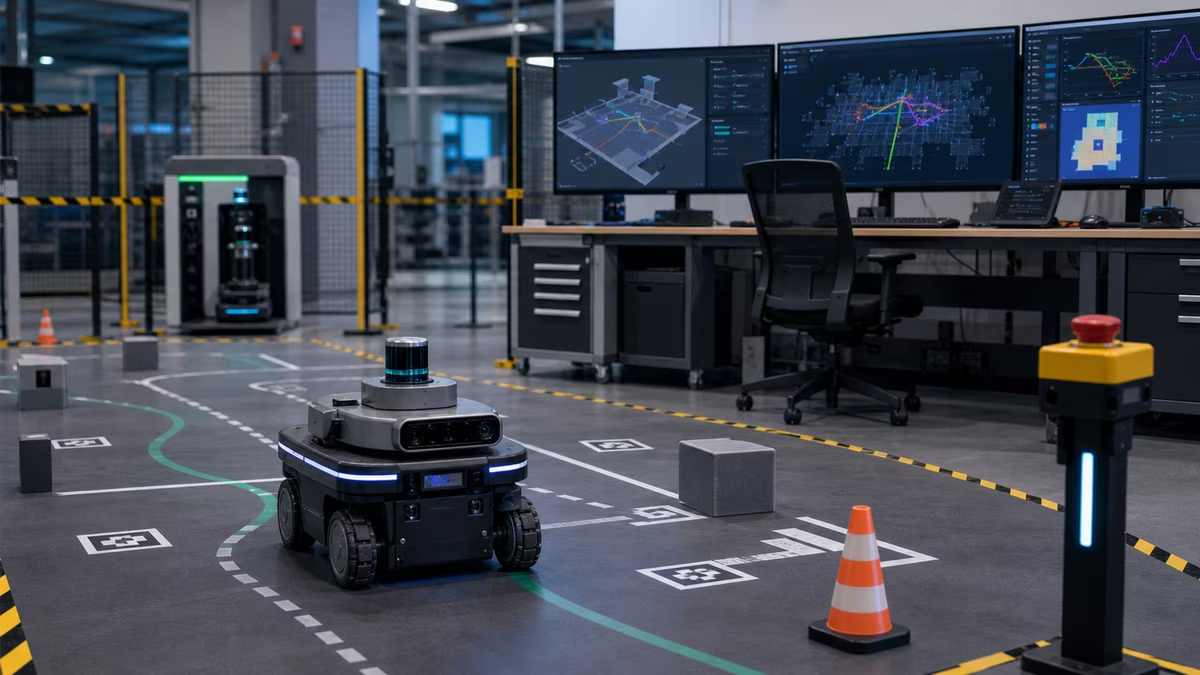
A world model does not need to be a perfect digital twin. It needs to hold the facts that matter for the task. For a warehouse robot, that may include routes, docks, restricted zones, load state, station availability, robot pose, and known obstacles. For a manipulation robot, it may include object poses, support surfaces, grasp affordances, tool state, collision boundaries, fixtures, bins, and whether a container is open or closed. For a home robot, it may include rooms, furniture, private areas, ordinary object locations, people nearby, and tasks the user has allowed.
The model is working memory because it changes as the robot acts. An object that was on the table may now be in the gripper. A drawer that was closed may now be open. A path that was clear may now be blocked. A battery that was sufficient may now require charging before the next job. If the robot does not update these facts, it can plan against a world that no longer exists.
Robot Perception supplies observations, and Robot Sensor Fusion and Uncertainty explains why those observations should carry confidence. The world model should preserve that uncertainty. It should distinguish known, likely, unknown, and unsafe-to-assume. A planner that treats every guessed object pose as certain will eventually make an avoidable physical mistake.
Steps Need Preconditions
Robotic tasks fail when steps are attempted before the world is ready for them. Picking requires an object pose, reachable geometry, a suitable end-effector, and enough confidence that the object is safe to grasp. Driving through a corridor requires a route, localization, clearance, and a destination that can accept the robot. Placing an object requires free space, orientation tolerance, and a way to confirm release.
Preconditions make this explicit. They tell the planner what must be true before an action is allowed. They also reveal missing information. If the robot needs to know whether a bin is empty before dropping a part, the task plan should include a way to observe the bin. If the robot needs permission before entering a room, that permission is not a user interface detail; it is part of the plan.
Robot Task Design and Acceptance Tests focuses on defining tasks so success can be judged. Planning uses that definition during execution. A clear start state, end state, and failure boundary give the planner a structure to work within. Without them, the robot may complete a sequence of motions while missing the human meaning of the task.
The same logic applies to safety. A step that is mechanically possible may be disallowed because a person is nearby, the payload is unstable, the object is prohibited, or the robot’s confidence is too low. Planning should not be a thin wrapper around motion. It should be where task goals meet operational boundaries.
Language Adds Ambiguity
Natural language is attractive because people already use it to describe work. It is also ambiguous. “Move that over there” depends on context. “Clean up this area” depends on judgment. “Bring me the red one” depends on perception, memory, and the possibility that several red objects exist. Language can help a robot receive goals, but it should not bypass grounding.
Grounding means connecting words to the world model. The robot needs to know which object “that” refers to, which location “there” means, what actions are allowed, and whether the requested task conflicts with safety, privacy, access, or capability limits. A language model may propose a plausible plan, but the robot still needs to check the plan against sensors, maps, tools, task rules, and physical constraints.
Embodied AI explains why models that meet the world need more than fluent prediction. Task planning is where that issue becomes practical. A robot may understand the sentence well enough to sound helpful and still lack the physical evidence needed to act. The right response may be to ask a clarifying question, request approval, move to a better viewpoint, or refuse the task.
This is especially important around risky objects and private spaces. A home robot should not infer permission to enter every room or handle every object. A workplace robot should not treat a vague command as authority to change a production flow. The world model should include boundaries that language cannot override casually.
Recovery Is Part Of The Plan
A task plan that assumes every step succeeds is a script, not autonomy. Real robots need recovery branches. The object is not where expected. The route is blocked. The grasp slips. The dock is occupied. The user walks away. The map confidence drops. A required tool is missing. The robot must decide whether to retry, observe again, choose another method, ask for help, pause safely, or abandon the task.
Robot Failure Recovery covers the operational side of those moments. Planning should include them before the first failure. The planner should know which failures are routine and which require human review. A blocked route may allow a reroute. A failed grasp of a harmless object may allow another attempt. Unexpected contact near a person may require a stop and review. Not all failures are equal, and a good plan does not treat them as generic errors.
Recovery also depends on state history. If the robot has already tried three grasps, a fourth identical attempt is not intelligence. If it has rerouted twice and still cannot reach the destination, the right next action may be to report the blockage. If a perception system is uncertain because an object is occluded, the plan may need a viewpoint change rather than repeated classification. World models are useful because they let the robot remember what has been tried and why it did not work.
Plans Need Physical Cost
A planner that ignores cost may produce steps that are valid but annoying, slow, risky, or wasteful. The robot might choose a long route through a busy area, pick objects in an order that creates collisions, drain its battery before reaching a dock, or ask for human help too often. Physical work has costs in time, energy, wear, attention, safety margin, and trust.
Robot Charging and Energy Management shows one kind of cost. Battery state changes what plans are sensible. Robot Payload and Load Handling shows another. A task that is easy with an empty tote may be poor with an unstable load. Robot End-Effectors and Tooling adds still another constraint. A suction tool, parallel gripper, hook, or lift changes what actions are available.
Human attention is a cost too. A robot that asks for confirmation before every minor action may be safe but unusable. A robot that never asks may create larger mistakes. Planning should place human review where it matters: ambiguous references, risky actions, low confidence, unexpected contact, access boundaries, and recovery decisions that change the workflow.
The Practical Test Is State Honesty
To judge a task planner, watch the robot when the world changes. Does it know what it believes and what it only guessed? Does it update object state after acting? Does it check preconditions before motion? Does it ask for clarification when language is ambiguous? Does it respect safety and access boundaries even when a command sounds simple? Does it choose recovery paths based on the actual failure rather than repeating the same attempt?
The best task planning is often quiet. The robot appears careful rather than clever. It moves only after grounding a goal, checks the world as it changes, and keeps enough state to avoid pretending a failed step succeeded. It may ask a question that seems modest, or pause to observe from another angle, or decline a command that is underspecified. Those behaviors are not signs of weak autonomy. They are signs that the robot understands the gap between a goal and a safe physical action.
Physical AI will keep gaining better models, sensors, hands, and mobility. The planning problem will remain because goals will still arrive in human terms and actions will still happen in physical space. A useful robot needs a world model humble enough to admit uncertainty and a task planner disciplined enough to turn that uncertainty into careful steps.