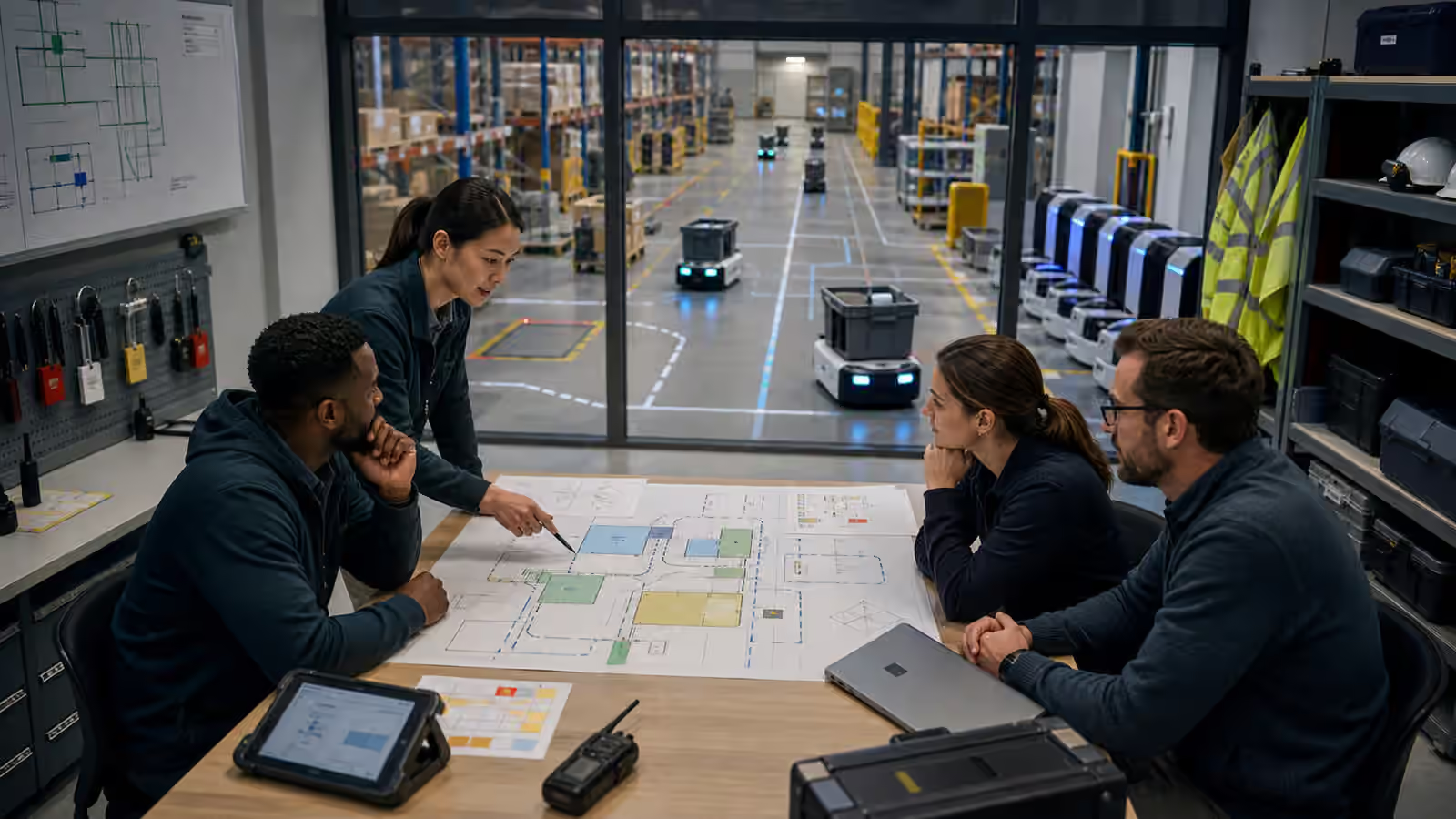
A useful robot rarely works alone. It may look independent while it drives down an aisle, lifts a tote, scans a shelf, or presents a part, but the real job usually begins somewhere else. A warehouse system creates a move request. A work order names a station. A human operator approves a route change. A maintenance record marks a robot unavailable. A scanner confirms that the object is the one the task expected. The robot’s autonomy matters, but autonomy becomes work only when it connects to the systems that already run the place.
This guide sits between Robot Compute and Connectivity and Robot Task Design and Acceptance Tests . Compute explains where decisions run. Task design explains what the robot is allowed to do. Systems integration explains how the robot receives the right work, proves what happened, and hands state back to the rest of the operation without creating a hidden second workflow.
The Robot Needs A Source Of Work
Many demos begin with a human pressing a button. That is fine for a test, but it is not how most deployed work begins. A robot in daily use needs a source of jobs that matches the surrounding operation. The job may come from a warehouse management system, a manufacturing execution system, a building service queue, a lab scheduler, a hospital transport board, or a simpler local tool maintained by the site. The source does not have to be elaborate. It does have to be authoritative enough that people know which work belongs to the robot and which work does not.
The shape of that job matters. “Move a tote” is not enough if the robot needs to know which tote, where it begins, where it should go, whether it is urgent, what route constraints apply, and what evidence counts as completion. A job that is too vague pushes interpretation into the robot at the worst possible moment. A job that is too rigid may fail whenever ordinary work changes. Good integration gives the robot enough structure to act while leaving room for the operating system, the operator, or the task policy to express real priorities.
This is why Robot Fleet Management is partly an integration problem. Dispatch is not merely choosing the nearest machine. It is deciding which work should be assigned, which robot is eligible, which route is safe, which dock or station will be free, and which human team expects the result. A fleet manager that does not understand the work queue becomes a traffic controller without a reason for the traffic.
Identifiers Become Physical
Robots move through the world, but operations move through identifiers. A bin has a label. A shelf has a location. A tote belongs to an order. A part has a lot number. A cart has a destination. A map has a version. A robot has a name, state, and maintenance history. Integration is where those identifiers meet the physical scene.
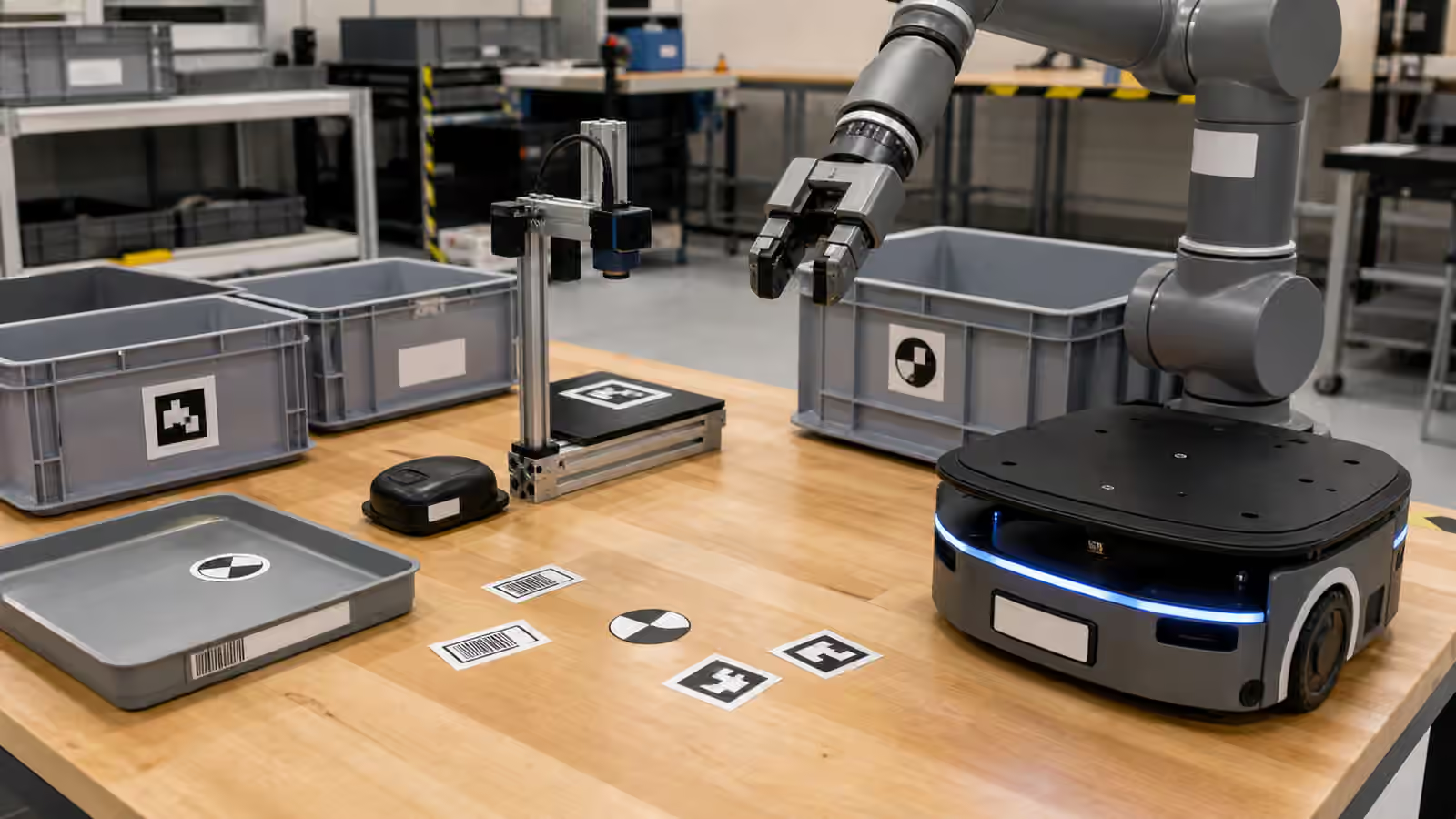
The meeting is not automatic. A camera may see a gray tote, but the operation cares which gray tote it is. A robot may arrive at a station, but the system needs to know whether it arrived at the correct side, with the correct payload, at the correct time. A scanner may read a code, but the robot still needs to know whether that code belongs to the object it is about to move or to a nearby shelf. The difference between seeing and knowing is often an integration boundary.
Reliable deployments usually reduce ambiguity before the robot touches the job. Totes are presented in known positions. Labels are placed where sensors can see them. Stations have stable names. Workcell fixtures support repeatable identification. Maps and route names are governed. Robot Workcell and Fixture Design explains the physical side of that discipline. Systems integration carries it into data, where an object in the robot’s gripper should correspond to the object the operation believes is moving.
State Should Travel With The Job
A robot job changes state many times. It is requested, accepted, started, paused, retried, completed, rejected, or escalated. The robot may know those states internally, but the rest of the operation needs an honest view as well. If a tote is delayed because a route is blocked, the receiving station should not simply see silence. If a robot has accepted a task but is waiting for a charged battery, the scheduling system should not assume the work is already underway. If a human clears an exception, that event should not disappear into a private note.
State design is not glamorous, but it prevents duplicate work and misplaced blame. Without shared state, a person may send another worker to move a tote the robot is already carrying. A supervisor may think the robot failed when the source system never sent a valid job. A support team may diagnose a navigation problem when the real issue was a missing scan. The robot becomes one more actor in a shared process, and shared processes need shared state.
Robot Observability and Field Logs is useful here because logs give the team a memory after something goes wrong. Integration adds a live contract: what state is reported, when it changes, who can see it, and how conflicts are resolved. A field log can explain yesterday’s failure. A good integration can keep today’s failure from spreading through the workflow.
Exception Paths Need Owners
The happy path is the easiest part to connect. A job arrives, the robot performs it, and the completion event returns to the system. Real deployments spend much more time on exceptions. The item is missing. The route is blocked. The station is full. The scanner cannot confirm the object. A human took the tote manually. A door is closed. The robot is in a degraded state. The upstream system cancels a job after the robot has already begun.
An exception path should have an owner, not only an error code. The owner may be a local operator, a remote support person, a supervisor, a maintenance technician, or an automated policy. The important point is that the robot should not create a mystery. If it stops with a tote, people nearby need to know whether they should leave it alone, unload it, call support, move an obstacle, or wait for a route update. Robot Failure Recovery covers the machine behavior after trouble appears. Integration decides how that trouble becomes visible to the rest of the operation.
Exception ownership also protects the robot from becoming a shadow workflow. If every blocked job is solved by someone texting the one engineer who understands the dashboard, the integration is not finished. If workers keep a side spreadsheet because the official system cannot represent robot states, the robot has created administrative work. The best integrations make exceptions boring enough that ordinary staff can handle ordinary cases with clear authority.
Integration Shapes Safety
Safety is often discussed in terms of sensors, speeds, stops, and standards. Those matter, but integration also shapes safety because information changes what the robot is allowed to do. A robot may be safe to enter a zone during one shift and unsafe during another. It may be allowed to carry an empty cart but not a loaded cart through the same route. It may require local approval before entering a shared area. It may need to pause when a fire door, elevator, loading dock, or production cell changes state.
Robot Safety gives the broad risk frame. Systems integration gives safety usable context. The robot should not depend on rumors about whether a route is open or whether a station is occupied. If the building, production line, or site process has relevant state, the robot’s task policy should receive it in a disciplined way. That does not mean every safety decision should be delegated to a remote system. Protective stops and immediate motion limits still belong close to the hardware. It means the broader operating envelope should not be blind to the systems that know what work is happening.
Security enters the same conversation. If external systems can create robot jobs, change maps, open remote sessions, or mark safety states, then access control becomes physical control. Robot Security and Access Control explains why permissions, logs, and temporary authority matter. Integration expands the attack surface and the responsibility surface at the same time.
APIs Are Only The Beginning
It is tempting to treat integration as an API inventory. Can the robot receive a job? Can it send status? Can it expose battery state? Can it accept a cancellation? Those questions are useful, but an API alone does not prove that the workflow works. The meanings behind the calls matter more than the calls themselves.
For example, a cancellation looks simple until the robot is already carrying a load. Should it return the item, continue to the nearest safe station, ask a human, or hold position? A priority field looks simple until every upstream system marks its jobs urgent. A completion event looks simple until the downstream process requires a scan, a photo, a weight check, or a human confirmation before it trusts the result. Integration work turns these semantic questions into behavior.
Versioning matters too. A robot, fleet manager, site dashboard, and operations system may not update on the same schedule. A field added to a job message should not strand older robots. A robot software update should not silently change what a completion event means. Robot Software Updates and Change Control belongs in this discussion because a connected robot is part of a larger release surface. The more systems it touches, the more a change needs evidence before it spreads.
Testing Should Include The Other Systems
Acceptance testing should not end with the robot moving correctly. The test should include the job source, dispatch logic, station state, scanner or sensor confirmations, human exception handling, dashboard visibility, network degradation, cancellation behavior, and completion records. A robot that moves perfectly but leaves the upstream system confused has not completed the deployment task.
The most useful tests resemble a day of work rather than a single choreographed run. A job arrives while the robot is charging. A station fills up. A tote label is damaged. A route is blocked. A human moves an item manually. A network segment becomes weak. A support person starts and ends a remote session. The team watches not only whether the robot survives each case, but whether the surrounding systems still agree about what happened.
This connects directly to Robot Task Design and Acceptance Tests . The task boundary should name the systems that participate in the task. If the task is “move this item from inbound to packing,” then the test should prove that inbound released the item, the robot carried the correct item, packing received it, and the records match. Motion is necessary evidence, but it is not the whole proof.
Good Integration Makes The Robot Less Special
Early robot deployments often receive special treatment. A pilot has extra attention, extra engineering support, and extra patience from the people nearby. That special treatment can hide weak integration. Someone manually creates jobs. Someone watches the dashboard. Someone reconciles mismatched records. Someone explains every exception. The robot appears to work because people are quietly acting as middleware.
A mature integration makes the robot less special in the right way. It becomes another resource in the operation, with known responsibilities, visible state, clear exception paths, governed access, and evidence that downstream systems can trust. People still matter. Operators, support teams, and supervisors remain part of the system. The difference is that they are not forced to guess what the robot believes or rebuild the workflow around its blind spots.
Physical AI earns trust when the machine’s behavior and the operation’s records tell the same story. The robot should not merely move through space. It should move work through a system without losing identity, state, safety context, or accountability. When that happens, integration stops being a hidden technical chore and becomes part of the robot’s practical intelligence.