A robot that moves silently through a shared space still communicates. The question is whether people can understand what it is saying.
People read motion quickly. A small slowdown before a crossing can mean yielding. A turn toward a dock can mean the robot is leaving the workflow. A pause in the middle of an aisle can mean waiting, faulted, confused, charging, or asking for help. If the robot gives no clear signal, people fill the gap with guesses. Some guesses are harmless. Others teach workers to step around the machine, rescue it unnecessarily, or ignore a state that needs attention.
Robot Worker Training and Floor Etiquette explains how people learn to share space with robots. Status signals and floor cues are the robot-side half of that learning. The machine should not depend on people memorizing hidden behavior. Its ordinary states should be legible at the moment they matter.
Intent Is Not Personality
Robot signaling often drifts toward personality: faces, voices, animations, cheerful sounds, or theatrical gestures. Those can have a place, but deployment usually needs a plainer goal. People need to know whether the robot will move, stop, yield, wait, request help, enter a dock, carry a load, or require a trained operator. That is intent in the operational sense.
A mobile robot does not need to seem alive to be understandable. A clear speed change, consistent status light, predictable pull-off behavior, and well-placed floor cue may communicate more reliably than a friendly voice. A manipulator in a workcell may need visible mode states, guarded motion cues, and a clear difference between ready, active, paused, and faulted. The best signal is the one that helps people choose the right action without a lecture.
Robot Operator Interfaces can expose details, but not everyone nearby will have an interface. Floor-level signaling should work for ordinary passersby, trained workers, and responders who arrive after something has already stopped.
Ambiguous Waiting Creates Bad Habits
Waiting is one of the most common robot states and one of the easiest to misunderstand. A robot may wait because a route is blocked, a handoff station is full, a job is not ready, a safety zone is occupied, the battery is low, a remote operator is being requested, or the system is intentionally holding position. To a person walking by, all of those can look like “the robot is stuck.”
If the signal is unclear, people often intervene. They move a cart, press a button, restart a job, tow the robot, or tell a supervisor that the machine is unreliable. Sometimes that helps. Sometimes it hides the real pattern. A blocked route that workers clear every hour may never appear as a site design problem if the robot’s waiting state does not make the reason visible.
Robot Observability and Field Logs preserves the record after the fact. Status cues help in the moment. The two should agree. If the light says normal waiting but the log says faulted localization, trust will erode. If the interface says the robot is waiting for a handoff but the floor signal looks like a general error, people will learn the wrong response.
Motion Is A Signal Too
Lights and sounds matter, but motion is often the strongest signal. A robot that slows early near people feels different from one that brakes abruptly. A robot that approaches a handoff point squarely feels different from one that stops at an odd angle. A robot that backs away from a blocked route before asking for help communicates a different state from one that keeps inching forward.
This means signal design cannot be separated from planning and control. The robot’s path, speed profile, stop distance, and wait location all tell people what kind of machine they are dealing with. A status light cannot compensate for motion that feels surprising. A pleasant chime cannot make an awkward stop in a doorway into good floor behavior.
Robot Shared-Space Traffic is relevant because traffic patterns create meaning over time. People learn where robots usually pass, where they wait, and how they yield. When the robot’s motion signals match the site’s traffic design, people need fewer special rules.
Sounds Should Be Useful, Not Constant
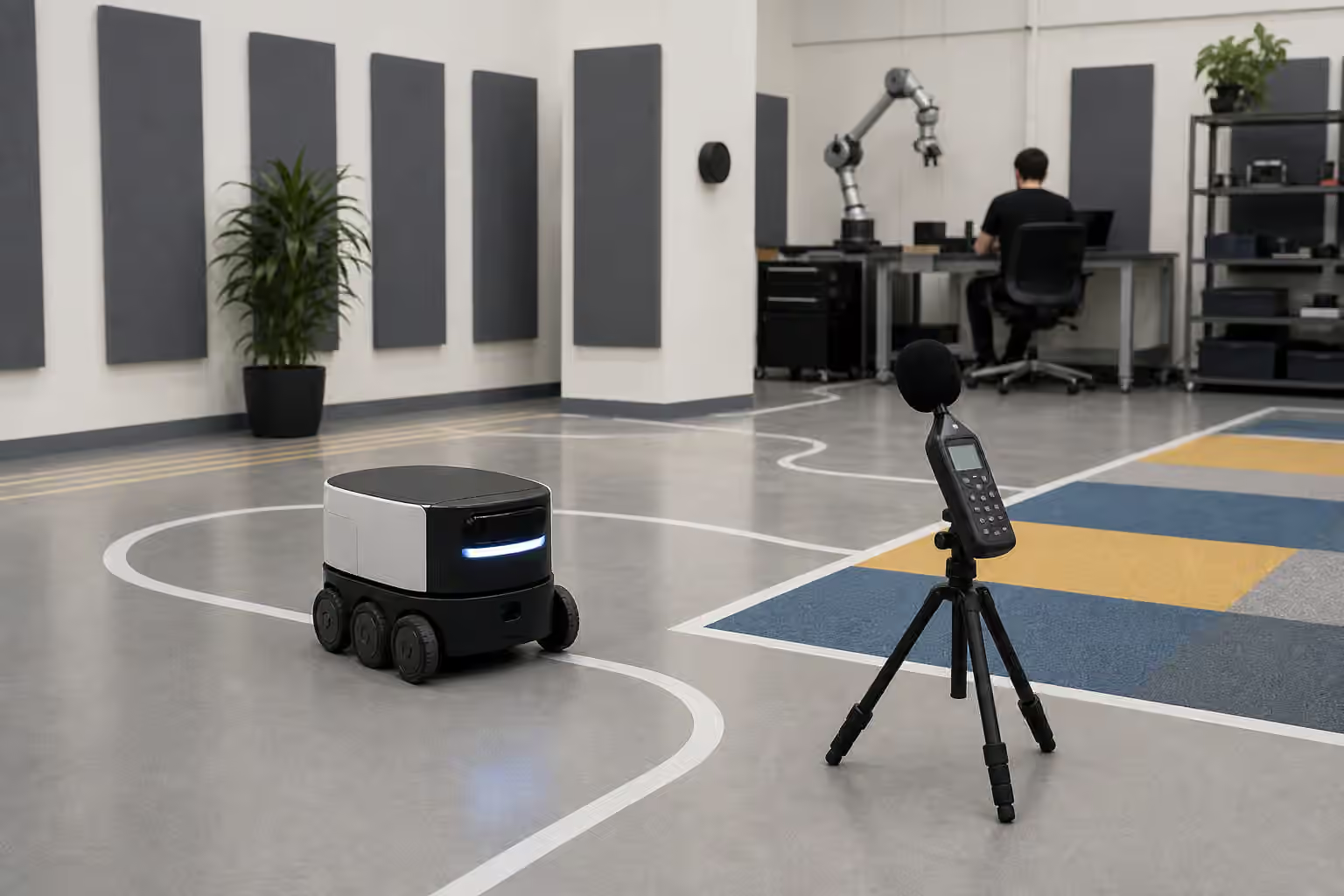
Sound can help when people are not looking at the robot. A quiet alert before motion, a distinct fault tone, or an approach sound in a blind corner can reduce surprise. But constant beeping quickly becomes noise. People tune it out, work around it, or resent the robot even when the machine is doing useful work.
The sound should match the risk and the environment. A hospital hallway, warehouse aisle, hotel corridor, kitchen, lab, and home all have different acoustic expectations. A signal that is acceptable near forklifts may be disruptive in a care setting. A voice prompt that works in a quiet lab may be useless on a busy floor. A tone that sounds urgent for every minor wait will teach people that urgency means nothing.
Sound design should also consider accessibility and privacy. Some people may not hear certain tones. Some environments already have alarms with established meanings. A robot voice announcing details about a task may reveal information that should stay local. Robot Privacy and Data Governance applies even to signals when the signal carries task or location meaning.
Floor Cues Should Match Behavior
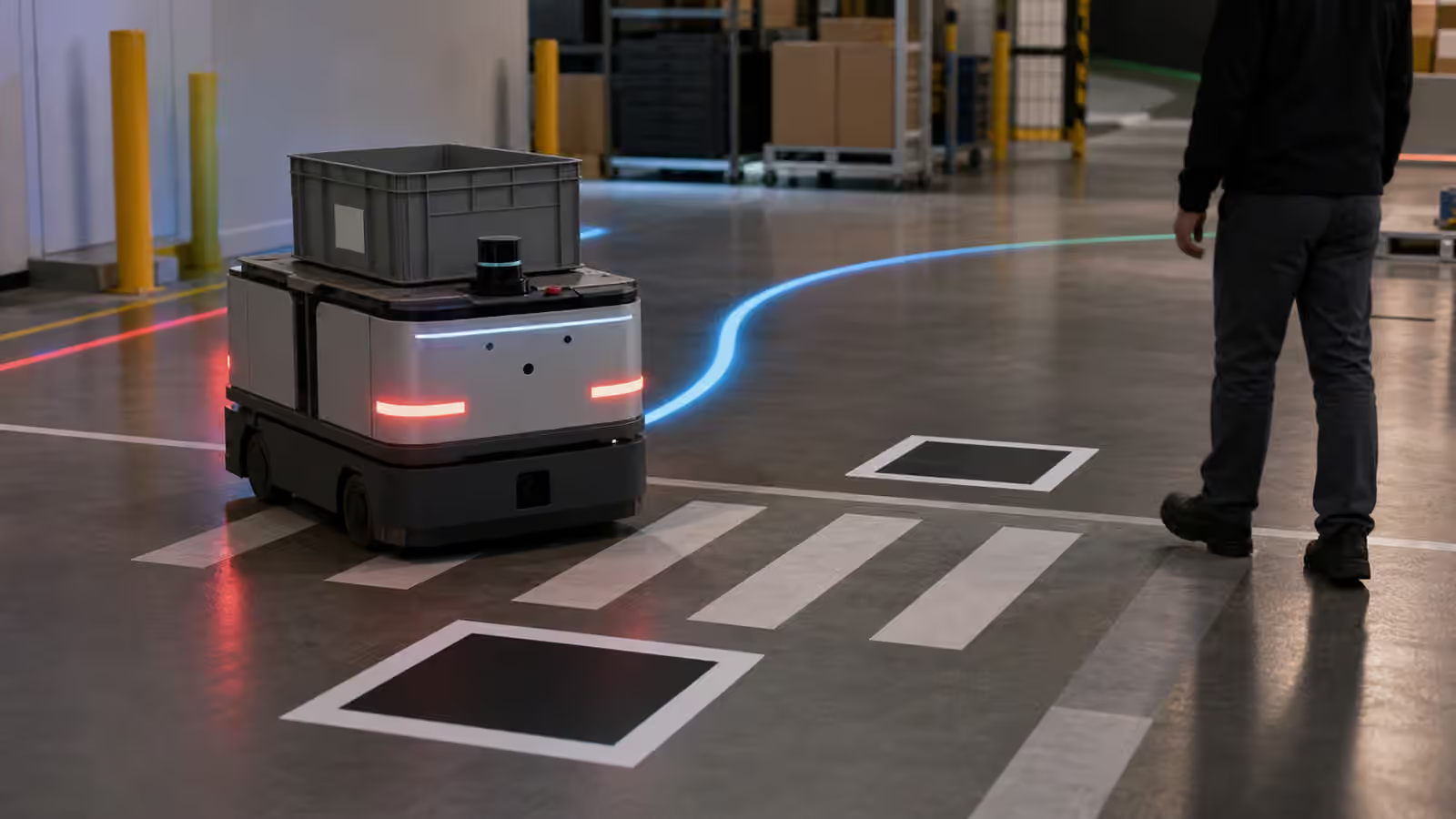
Floor cues can be physical, projected, or implied by layout. A marked dock zone says the robot belongs there. A crossing zone says people and robots interact at a known point. A pull-off space says a waiting robot should not block the route. A projected path can help people see intended motion, but only if it is accurate, visible, and not distracting.
The cue must match behavior. If the floor marks a waiting area and the robot often stops outside it, the mark becomes decorative. If a projected route changes too late, people may stop trusting it. If a dock zone is used for storage, the site has taught everyone that the robot’s needs are optional. Floor cues are promises. They should be small enough to keep.
Robot Site Readiness and Robot Handoffs and Human Workflows both become more concrete through cues. A handoff point is easier to use when the robot arrives in the same orientation, people stand in a sensible place, and the completed state is visible without guesswork.
Signals Need Failure States
Many signaling systems are designed for normal operation and become confusing during trouble. The robot is paused, but not faulted. Faulted, but safe. Safe, but waiting for trained recovery. Waiting for remote support, but still holding a load. Low on battery, but able to clear the aisle. These distinctions matter because they tell people whether to leave the robot alone, clear a route, call an operator, or prepare for maintenance.
Robot Failure Recovery explains the recovery process. Signals should make recovery states visible without inviting unsafe improvisation. A local worker may be allowed to remove an obvious obstruction, but not reach into a moving workcell. A technician may be allowed to reset a protective stop after inspection, but not bypass it casually. The signal should guide people toward the right authority.
This is especially important during repeated small faults. If every issue looks the same, the floor cannot learn. A blocked route, dirty sensor, failed handoff, low battery, and lost map should not all collapse into a single red light unless the interface or local process immediately clarifies the next step.
Legibility Builds Trust Slowly
People trust robots by watching them behave consistently over many ordinary moments. The robot slows where it should. It waits where it should. It asks for help clearly. It does not over-alarm. It does not hide its limits. Its cues match its motion and its logs. This kind of trust is not dramatic, but it is durable.
Good status signaling respects attention. It tells people what they need at the point of decision and leaves deeper detail for operators, supervisors, support teams, and logs. It avoids teaching people to treat every stop as failure or every sound as emergency. It makes the robot’s intent legible without asking the robot to become a character.
The strongest signal design is usually modest. A clear light, a predictable wait state, a sensible route, a quiet but meaningful sound, and a floor layout that agrees with the robot can do more than a complex interface that no one checks. Physical AI shares space with people before it impresses them. It should be understandable there.