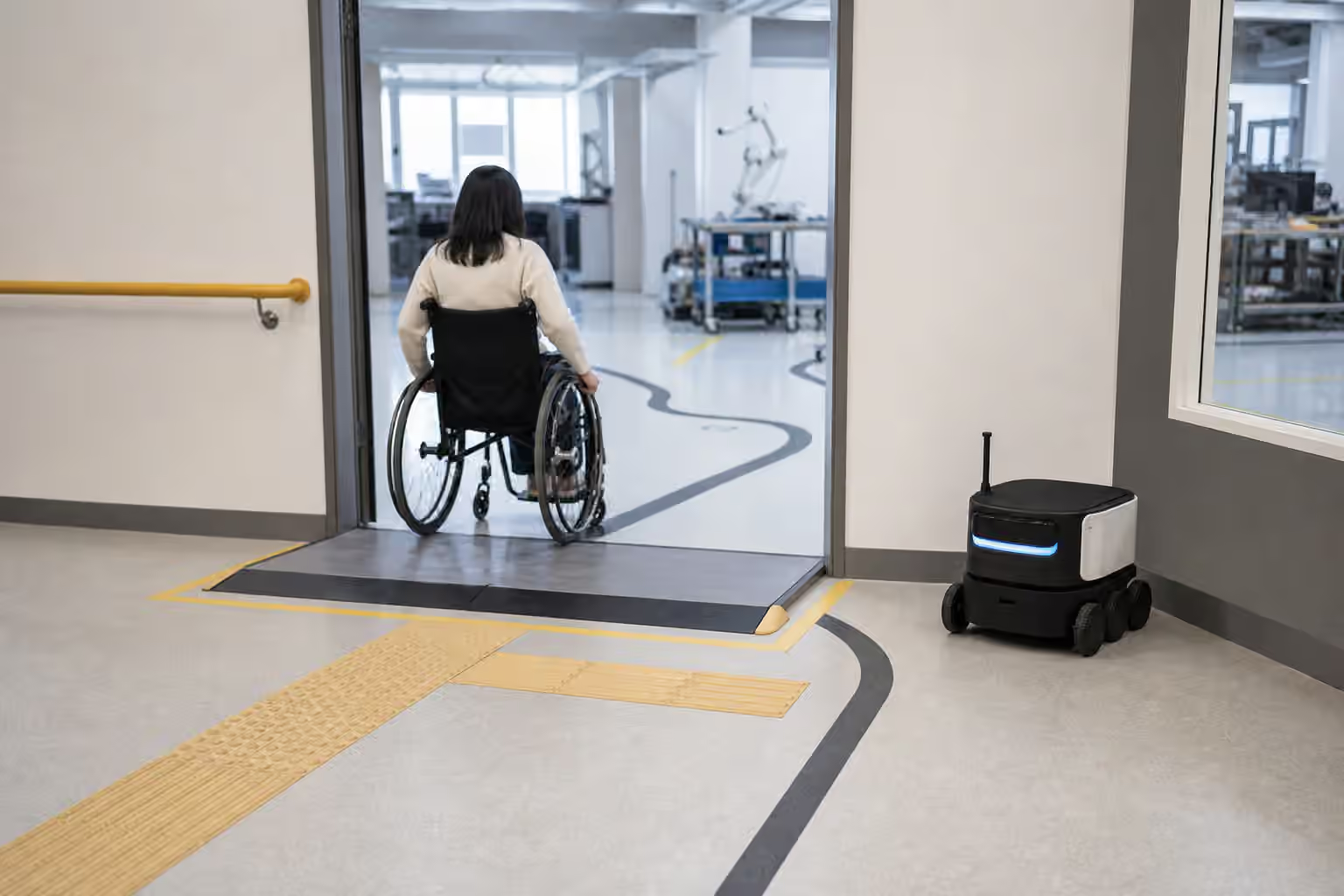
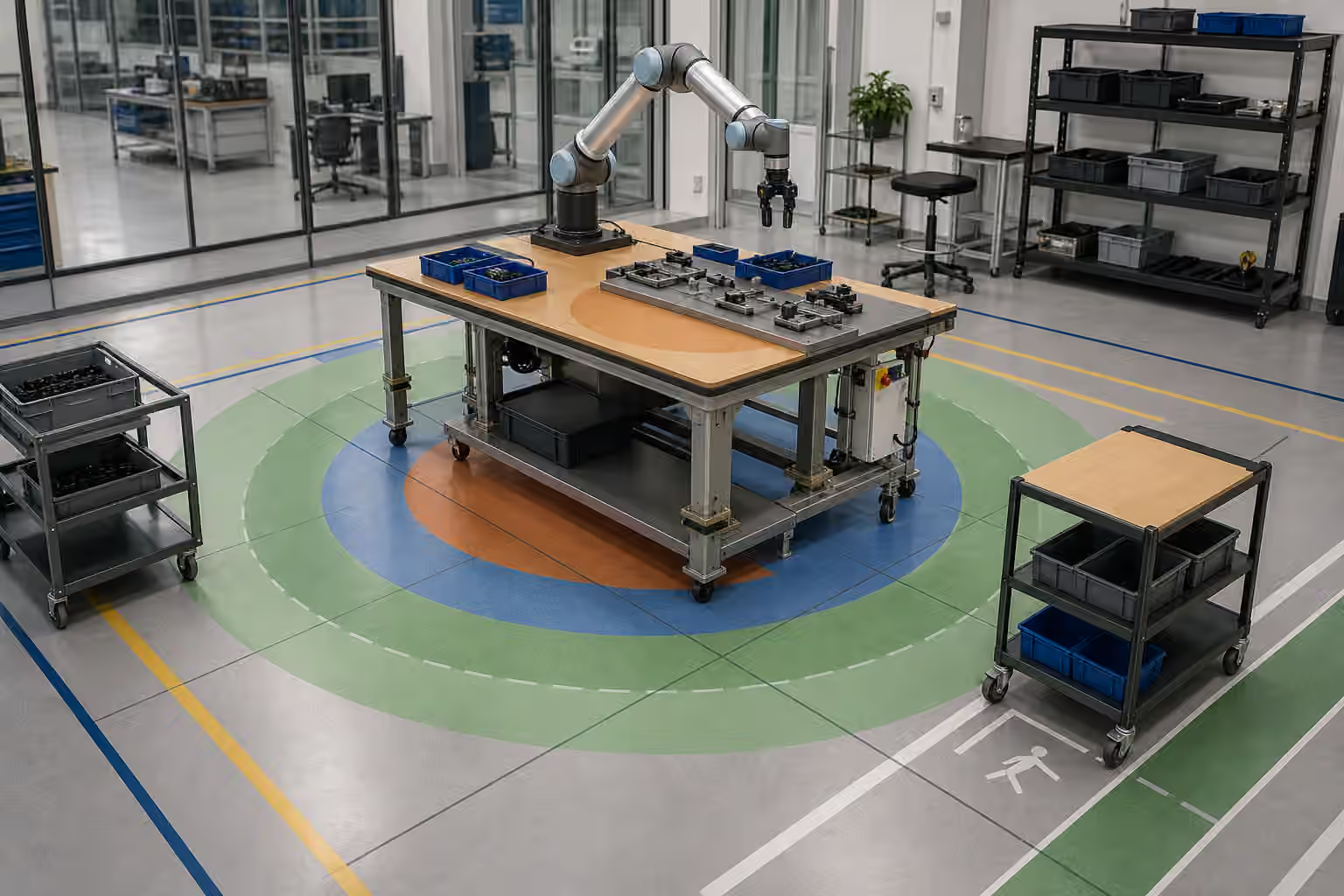
A mobile robot is not only a machine on a route. It is a new participant in traffic.
That traffic may be a warehouse aisle, hospital corridor, factory walkway, lab test lane, hotel back room, retail stock area, or loading zone. People walk through it while thinking about other work. Carts stop in it. Pallets drift into it. Doors open across it. Cleaners, visitors, contractors, and shift workers use it differently. The robot enters this social and physical flow with sensors, maps, speed limits, and rules, but the space was rarely designed with robots in mind.
Robot traffic design is the work of making that shared movement legible. It decides where robots prefer to travel, where people should expect them, how crossings behave, what happens when a path is blocked, how fast robots move near people, and how the system communicates intention before confusion becomes irritation. It belongs beside Robot Site Readiness because the building is part of the deployment, and beside Robot Safety because traffic is where ordinary convenience and hazard control meet.
The goal is not to make people serve the robot. The goal is to create shared expectations. A robot that moves predictably is easier to live with. A route that makes sense to workers is easier to keep clear. A crossing that feels fair is less likely to invite risky shortcuts. Physical AI becomes practical when the space around the robot helps people understand what will happen next.
Routes Are Promises
A robot route is a promise about where the robot will usually be. If that promise is vague, people cannot build habits around it. If it changes silently, trust erodes. If it ignores the real work of the building, workers will treat it as an obstacle rather than infrastructure.
Good route design starts by watching the site before drawing paths. Where do people naturally walk? Where do carts wait? Where do forklifts, pallet jacks, bins, and cleaning equipment appear? Which areas are congested only during shift change? Which aisle looks open on a map but narrows every afternoon? The map should reflect these habits rather than pretend they are exceptions.
Robot Mapping and Localization explains how robots keep their place. Traffic design asks a different question: once the robot knows where it is, should it be there? A technically valid route may still be poor if it cuts through a human gathering point, blocks a workstation, crosses a doorway at an awkward angle, or makes workers look over their shoulders all day.
The best routes are visible in practice. They may use floor markings, lane discipline, consistent dock placement, predictable waiting zones, and operator training. The markings do not make the robot safe by themselves, but they make expectations easier to share. People should not need a fleet dashboard to know that a robot commonly travels through a particular corridor.
Crossings Need Etiquette
Crossings are where traffic design becomes human. A person approaching a robot path wants to know whether to continue, pause, step aside, or wait for the machine to pass. The robot needs to know whether a person is crossing, lingering, working nearby, or simply visible in the sensor field. Both sides benefit from simple etiquette.
That etiquette can be built with speed, stopping distance, lighting, sound, route geometry, and clear waiting behavior. A robot that creeps unpredictably may be as frustrating as one that moves too fast. A robot that stops politely but blocks the exact doorway everyone needs may still feel poorly designed. A robot that waves through people in one location and insists on priority in another must make the difference obvious through the site layout and its own behavior.
Right-of-way should be conservative and consistent. People should not have to negotiate with a robot as if it were an assertive driver. In many shared spaces, the robot should yield early enough that humans do not feel pressured to hurry. In other controlled workflows, a marked robot lane may have priority because stopping the robot would create larger congestion. The important point is that the rule is known, trained, and visible in behavior.
Robot Handoffs and Human Workflows is relevant because many crossings are really handoffs in disguise. A delivery robot arriving at a station, a cart tugger entering a pickup lane, or an AMR approaching a workstation is not merely passing through. It is asking people to coordinate timing, space, and attention.
Speed Is A Social Signal
Speed is not only a safety parameter. It tells people how much urgency and authority the robot seems to claim. A robot moving quickly through an empty back aisle may feel efficient. The same speed near a doorway can feel pushy or unsafe. A robot that slows near blind corners, intersections, congested zones, and active workstations communicates caution before anyone reads a warning label.
Speed planning should account for perception limits as well as human comfort. Shiny floors, glass walls, narrow aisles, hanging materials, and mixed lighting can degrade sensing. Robot Sensor Fusion and Uncertainty explains why confidence should change behavior. In shared traffic, lower confidence should usually mean more conservative motion, wider margins, and earlier stops.
The robot should also avoid unnecessary hesitation. Overly timid robots can create their own problems. People may step around them, block them with carts, or learn that the robot can be ignored because it will always yield even when the route is clear. The balance is not bravado. It is predictable confidence within clear boundaries.
This is why traffic tuning should happen in the actual site. A speed that feels fine during a quiet pilot may be wrong during peak congestion. A sound that helps in a lab may become annoying across a shift. A light pattern that seems clear to engineers may be missed under bright warehouse lighting. Shared-space behavior has to be tested with the people, noise, pace, and clutter of daily work.
Blocked Paths Are Normal
A blocked path should not be treated as a rare failure. It is a normal part of shared space. Someone leaves a cart in the lane, a pallet is staged temporarily, a door is propped open, a group gathers near a workstation, or another robot stops ahead. The deployment should expect those events and decide what the robot does before they happen.
The robot may wait, reroute, request help, return to a staging area, or pause the task. Each choice has consequences. Waiting in place can block others. Rerouting can send the robot through a less familiar area. Asking for help can interrupt workers. Returning to staging may delay the workflow. The best choice depends on task urgency, site layout, safety, and whether the blockage is common enough to redesign around.
Robot Failure Recovery covers what happens after a robot gets stuck. Traffic design tries to prevent routine blockages from becoming failures. It creates pull-off zones, waiting behavior, alternate routes, escalation rules, and visible signals so a blocked path becomes an ordinary event rather than a small crisis.
Logs matter here. A path blocked once may be noise. A path blocked every afternoon is a site truth. Robot Observability and Field Logs can turn those repeated interruptions into evidence for route changes, storage discipline, staffing adjustments, or dock relocation. Traffic improves when the building’s patterns are treated as data.
Fleet Traffic Is Different
One robot can often be managed with local common sense. Several robots need coordination. They can queue at docks, meet in narrow aisles, compete for crossings, block each other during recovery, or create congestion that did not exist in the pilot. Fleet-level traffic is not merely more of the same. It changes the shape of the problem.
Robot Fleet Management covers dispatch, charging, maps, utilization, and maintenance. Traffic is one of the places where fleet decisions become visible to workers. A dispatch policy that optimizes robot travel time may still frustrate people if it sends several robots through a busy human area at once. A charging schedule may look efficient until low-battery robots queue across a walkway. A route edit may help one task while creating a recurring conflict elsewhere.
Fleet traffic needs rules for spacing, priority, intersection control, recovery zones, and degraded operation. It also needs a human-facing explanation. Workers do not need to know every dispatch algorithm, but they should understand why robots gather in certain places, how to report congestion, and who can change a route that has become a problem.
Trust Lives In Repetition
People learn robot traffic through repetition. They notice whether the robot slows at the same corner, yields in the same way, keeps out of workstations, avoids surprise movements, and recovers without blocking the day. Trust is not built by a launch announcement. It is built by a week of predictable encounters that do not require people to guess.
This is why small irritations matter. A robot that pauses in a doorway, chirps too often, waits in the wrong place, or reroutes through a busy area may not be dangerous, but it can become disliked. Once people see the robot as inconsiderate infrastructure, they may stop helping it succeed. They may block its routes, ignore alerts, or work around it in ways that make the deployment worse.
Good traffic design respects workers as experts in the space. They know where congestion appears, where visibility is poor, which routes are unofficial but essential, and which markings people actually follow. Their feedback should shape the route map, the crossing rules, and the exception process.
A shared-space robot succeeds when people no longer have to study it. They can glance, understand, and continue their work. The robot moves with enough caution to be trusted and enough clarity to be useful. That is not a glamorous form of intelligence, but it is one of the forms that makes physical AI last beyond the first demonstration.