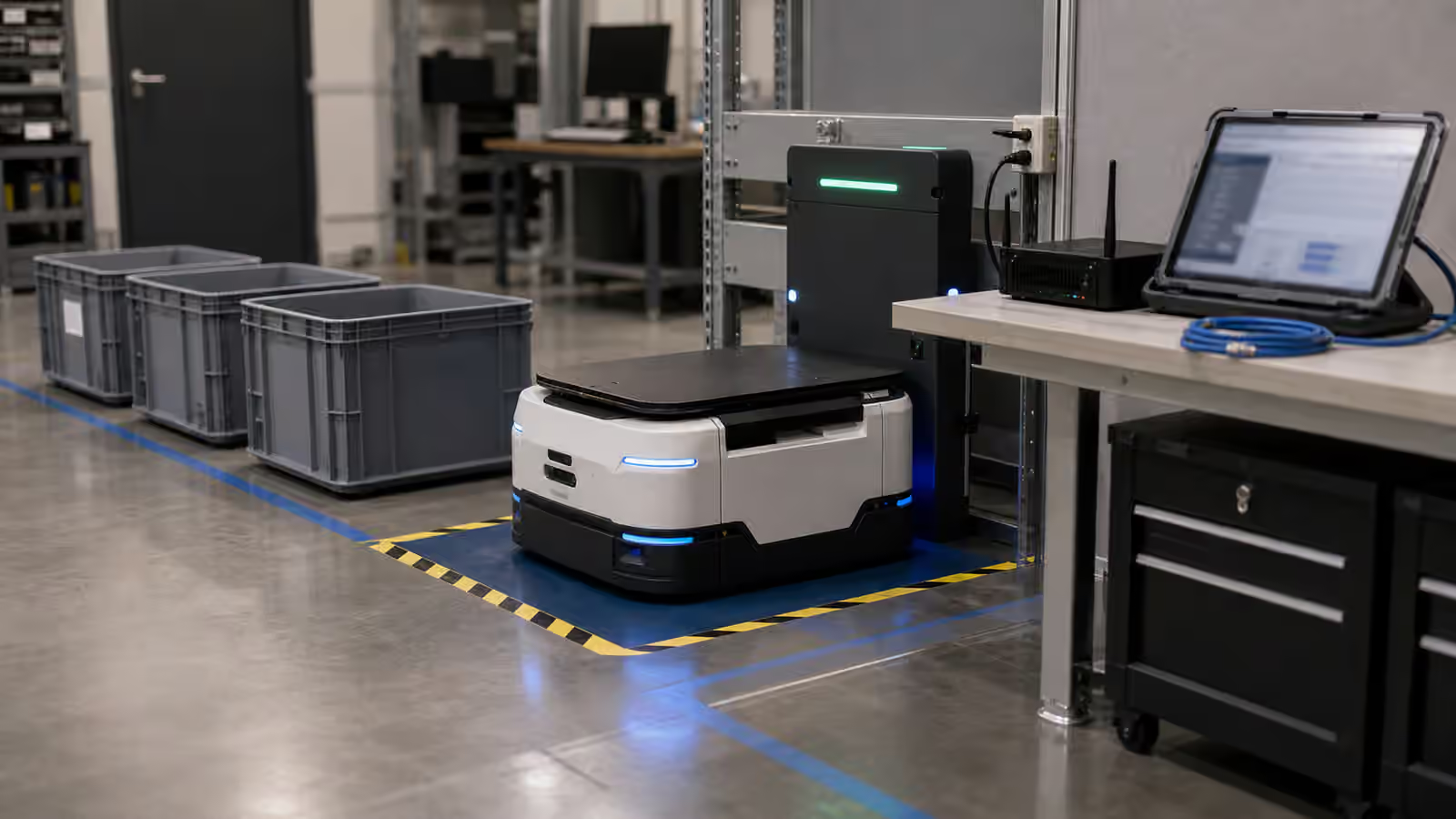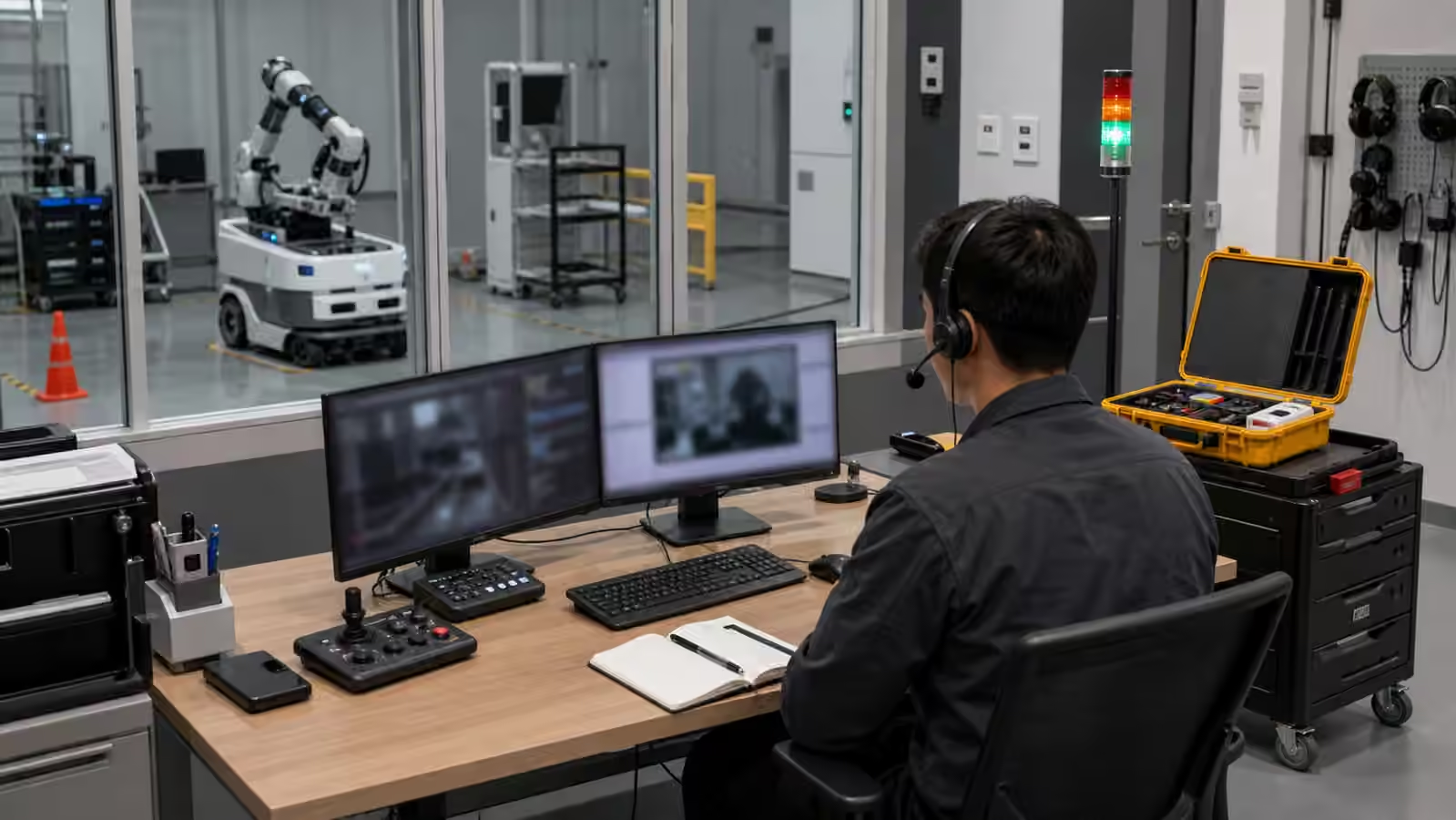
A robot that asks for help is not automatically a failed robot.
The more important question is what kind of help it asks for, who receives the request, what evidence travels with it, how the site keeps working while the request is handled, and whether the same request appears again tomorrow. Remote support can make physical AI practical by turning a hard exception into a controlled recovery. It can also hide weak autonomy, confuse responsibility, expose sensitive data, and turn every deployment into a help desk if the support model is vague.
Remote support sits between Robot Teleoperation and Robot Observability and Field Logs . Teleoperation explains the human still in the loop. Observability explains the record of what happened. Support and escalation explain the operating system around those moments: who takes the case, what they are allowed to do, how they return control, and how the organization learns from the interruption.
Assistance Needs A Shape
Many robotics teams talk about remote help as if it were one feature. In practice, assistance has levels. A robot may need a local worker to clear an object. It may need a supervisor to approve a retry. It may need a remote operator to drive out of a corner. It may need a support engineer to inspect logs. It may need a vendor to patch a map, replace a part, or investigate a software regression. Those are different events with different permissions and different costs.
The first design task is to name the help being requested. A vague “robot needs assistance” alert makes people hunt for context. A better request says the robot is blocked at a known route, uncertain about an object identity, unable to dock, waiting for a handoff, reporting a sensor fault, or entering a safe stop. The request does not need to be verbose. It needs to tell the receiver what kind of action is possible.
This is where Robot Operator Interfaces becomes operational. The local interface should distinguish between help that a floor worker can safely provide and help that belongs to trained support. If every event looks the same, workers either ignore the robot or improvise. If the robot explains the class of problem, escalation can begin in the right direction.
Remote Help Should Preserve Local Safety
Remote support does not remove the robot from the physical world. A person on a screen may see a camera view, a map, a task state, or a diagnostic panel, but the robot is still near people, shelves, doors, carts, pets, fixtures, or inventory. The support system must respect local safety limits even when the remote operator is skilled and rushed.
A good escalation design keeps safety authority local to the robot and site. Speed limits, protective stops, exclusion zones, emergency stops, and approved operating modes should not depend on a remote person’s optimism. If a robot enters remote assistance, the site should know that mode is active. Lights, sounds, interface states, or other signals can make the change legible. Robot Safety is not suspended because support has joined the session.
This matters especially when remote help happens under pressure. A blocked route may delay a line. A failed dock may threaten uptime. A stuck gripper may hold a valuable part. The support operator may be tempted to do the fastest thing. The system should make the safe thing the available thing.
The Event Bundle Is The First Escalation
Before a person takes control, the robot should gather the event. The useful support bundle is not a random dump of every sensor stream. It is a structured record of the task, time, location, mode, software version, map version, recent commands, health signals, failure state, recovery attempts, and the limited sensor evidence needed to understand the case.
This bundle helps support avoid the ritual of asking the site what happened when the robot already knows part of the answer. It also protects the site from overcollection. A blocked route may need a cropped obstacle view and map pose, not a long video of the surrounding workplace. A docking fault may need battery state, dock identifier, contact attempts, pose error, and sensor health, not unrelated camera footage. The right evidence should be easy to send because the system was designed before the incident.
Robot Privacy and Data Governance belongs in this discussion. Support workflows often create the strongest temptation to keep everything, because hard cases are easier with more evidence. A responsible system defines what can be captured, who can see it, how long it is retained, and how it is connected to a site or person. Privacy boundaries are not paperwork after support. They are part of support quality.
Escalation Is A Queue, Not A Heroic Moment
Remote support becomes difficult when several robots need help at once. A single pilot may survive on heroic attention from a small team. A fleet cannot. Escalation needs queueing, priority, ownership, response expectations, and a way to tell the site what is happening while the robot waits.
The priority of a support case should reflect risk and operational impact. A safety stop near people is not the same as a low-priority inspection retry. A robot blocking an emergency path is not the same as a robot parked at a dock after finishing a task. A repeated map fault may deserve engineering attention even if each individual event looks minor. Robot Fleet Management becomes more honest when assistance load is visible alongside utilization and cycle time.
The queue should also preserve ownership. If a case moves from local operator to remote support to engineering, the handoff should carry the event bundle and the current decision. Otherwise the site repeats itself, support repeats checks, and the robot spends more time waiting than recovering. Escalation without continuity is delay dressed as process.
Support Should Not Erase The Autonomy Claim
Assistance can make a robot useful, but it should be counted. If a robot completes a task only after a remote operator drives it through the hard part, the task is not fully autonomous in the practical sense. That may still be acceptable. A supervised system can be valuable. The problem begins when support labor is hidden from performance claims.
Robot Demo Evaluation asks for the missing denominator behind robotics clips. Remote support is one of those denominators. How many tasks required help? What kind of help? How long did it take? Did the help require special vendor expertise or ordinary site action? Did the same exception repeat? Did the robot recover automatically next time, or did the support team become the real autonomy layer?
The support record should feed task metrics. A completed job after local clearance, remote driving, or engineering intervention should not be recorded the same way as a job completed without assistance. The distinction does not shame the system. It tells the truth needed to improve it.
Local Workers Need Clear Boundaries
Remote support can unintentionally put local workers in awkward positions. A robot may ask a person to move an obstacle, reposition a tote, reset a fault, or approve a retry. If the worker does not know whether that action is safe, authorized, or part of their job, the deployment creates friction. If the remote operator speaks through the robot or interface without local context, the worker may feel managed by a distant system they do not trust.
Good support design respects the local workflow. It makes simple requests plain, keeps risky actions behind training and authorization, and gives workers a way to decline or escalate. It avoids turning every robot exception into unpaid diagnostic labor for nearby people. Robot Worker Training and Floor Etiquette helps because support requests are part of floor etiquette. A robot that asks clearly and waits safely is easier to live with than one that demands attention without context.
Boundaries also matter for vendors and customers. Who may restart the robot? Who may update a map? Who may view a camera feed? Who may change a task definition? Who accepts risk when a remote session returns the robot to service? These questions should be answered before a support case begins.
Repeated Support Is A Product Signal
The best remote support teams do more than rescue robots. They notice patterns. The same route blocks every afternoon. The same dock fails after cleaning. The same object presentation causes uncertain picks. The same software version increases localization faults. The same site team pauses the robot because the handoff signal is confusing. These patterns are product evidence.
Robot Failure Recovery explains what happens after the robot gets stuck. Remote support should close the loop by asking whether the stuck condition is becoming normal. A rescue that repeats without a design change is not really a rescue. It is an operating cost.
Support data can guide better fixtures, map changes, training, maintenance, task boundaries, and software updates. It can also reveal that a deployment is outside its Robot Operational Design Domain . If support is constantly compensating for floor conditions, object variation, network gaps, or untrained workflows, the honest answer may be to narrow the task rather than expand the help desk.
A Good Escalation Ends Cleanly
The end of a support session deserves as much design as the beginning. The robot should return to a known mode, not drift from remote control into autonomy with ambiguous state. The site should know whether the task resumed, failed, deferred, or needs local action. The support record should note what was done, what evidence was used, what risk remained, and whether follow-up is needed.
Clean closure prevents ghost problems. A robot that was manually moved may need localization confirmation. A gripper that was cleared may need a tool check. A map edit may need limited validation before the route reopens. A privacy-sensitive support session may need retention rules applied. The support event is not over merely because the robot starts moving again.
Remote support is most valuable when it is honest. It acknowledges that physical AI will meet exceptions, builds a disciplined path for assistance, protects the site while help is happening, and converts repeated rescues into design work. The goal is not to pretend the robot never needs a person. The goal is to make help legible enough that it improves the robot instead of quietly becoming the product.