A fleet robot does not only need to know where to go. It needs to know what should move next.
That decision sounds administrative until the floor gets busy. Two robots want the same narrow lane. One is low on battery. One is carrying urgent material. One is empty but blocks a handoff point. A dock is free now but may be needed soon. A worker is waiting at a station. A route is temporarily blocked. A late task looks important, but sending the nearest robot would create a traffic knot. Dispatch is where autonomy becomes operations.
Robot Fleet Management covers the broad work of many robots: maps, charging, utilization, maintenance, and supervision. Queueing and dispatch priorities are the smaller but constant decisions inside that work. They decide which job waits, which robot moves, which route is chosen, which dock is used, and when doing nothing for a minute is better than sending a robot into congestion.
A Queue Is A Policy
Queues are easy to underestimate because they look like lists. The oldest job goes first. The nearest robot gets it. The highest priority task jumps ahead. The lowest battery robot charges. These rules are simple enough to explain, but each one creates behavior. A first-in, first-out queue may be fair but slow urgent work. A nearest-robot rule may drain batteries unevenly. A strict priority rule may starve ordinary tasks. A charge-first rule may protect uptime while leaving people waiting.
The queue is therefore a policy, not a neutral data structure. It expresses what the site values when work conflicts. Does shipping urgency matter more than distance? Does human waiting time matter more than robot utilization? Should a robot finish a low-value task if abandoning it would block a station? Should an empty robot yield to a loaded robot? Should maintenance tasks reserve time even when production is busy?
These choices should be made deliberately. If they are left to a vendor default or an implicit script, the fleet may appear irrational to the people around it. A worker may see a robot drive past a waiting station because the system optimized distance. A manager may see high utilization while urgent handoffs miss their window. Dispatch logic becomes part of trust because people infer intent from movement.
Priority Needs Context
Priority is not a single number handed down from a planning system. It changes with time, location, payload, battery, site state, and downstream work. A task that is low priority at noon may become urgent near a cutoff. A robot carrying a tote may deserve a clearer path than an empty robot. A task near a blocked route may be better delayed than forced. A job that feeds a human station may matter more when the worker is idle than when the station is backed up.
Robot Systems Integration matters because dispatch priorities often come from outside the robot platform. Warehouse, lab, hospital, retail, or facility systems may know orders, batches, samples, rooms, inventory, or schedules. The robot system must translate that context into physical movement without pretending the external priority is the whole story. A task can be important and still unsafe or inefficient to execute at a particular moment.
Good dispatch therefore combines business priority with physical readiness. Is the route open? Is the destination ready? Is the source station loaded? Is the robot allowed in that zone? Is there enough battery? Will the task create a conflict with a higher-risk movement? The best next job is not always the next job in the upstream queue.
Waiting States Should Be Designed
Robots spend more time waiting than demo videos suggest. They wait for jobs, docks, doors, elevators, human handoffs, route clearance, remote help, software updates, maintenance windows, and other robots. A waiting robot can be harmless, helpful, or deeply annoying depending on where and how it waits.
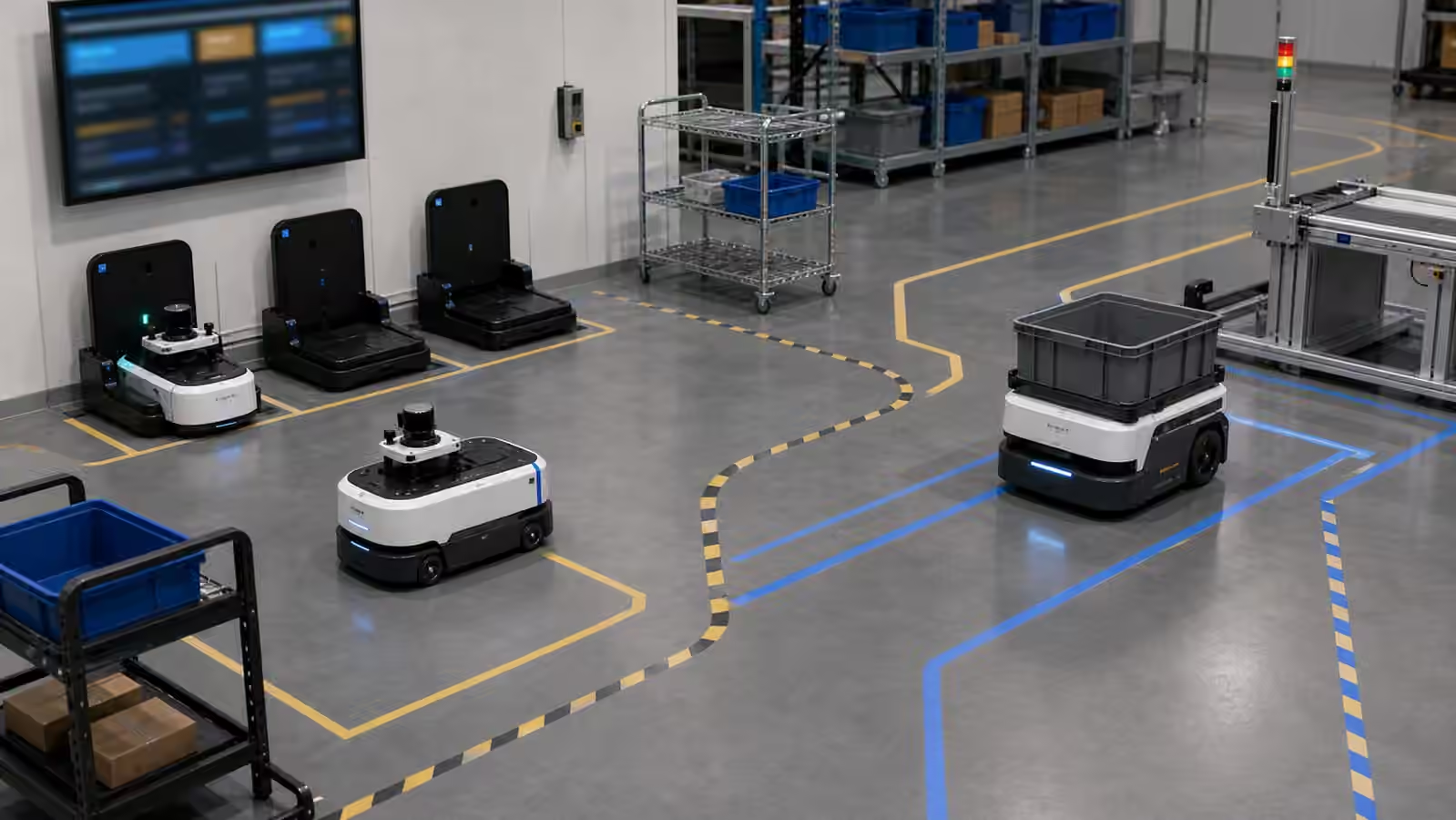
A good dispatch system treats waiting as a physical state. The robot should not park in a doorway, block a handoff station, hide behind a blind corner, crowd a charger, or sit where workers naturally stage carts. It should have legal waiting zones, safe orientations, predictable signals, and a plan for moving if the wait becomes too long. Robot Shared Space Traffic belongs here because queues create traffic even when robots are stationary.
Waiting also changes perception and battery. A robot parked with sensors facing a busy aisle may produce constant obstacle events. A robot waiting far from its next likely job may waste time later. A robot waiting with low battery may become a stranded robot. Dispatch should understand that idle is not the same as absent.
Charging Competes With Work
Charging is one of the hardest dispatch priorities because it is both background maintenance and mission-critical work. A robot that charges too early may reduce available capacity. A robot that charges too late may abandon a task or block a route. A dock used by one robot may prevent another from recovering before peak demand. A charging route may cross the same lanes needed for urgent work.
Robot Charging and Energy Management explains the battery layer. Dispatch turns that layer into daily choices. Should the system opportunistically charge during quiet periods? Should it reserve docks before a rush? Should it assign shorter tasks to a low-battery robot near a charger? Should it hold a robot back from a long route even if it is closest?
Battery priority should also account for aging and variability. Two robots with the same percentage may not have the same useful work left. A heavy payload, cold area, long route, or old pack can change the energy cost. Dispatch that treats battery as a simple number may make poor choices as the fleet matures.
Handoffs Are Queue Boundaries
Many robot tasks end or begin with a person. A tote arrives at a station. A worker loads a cart. A technician approves a sample move. A nurse or lab operator confirms a destination. A facilities worker clears a route. These handoffs create queues that are not fully inside the robot system.
Robot Handoffs and Human Workflows explains why timing matters. Dispatch should not flood a human station with arrivals just because robots are available. It should not send a robot to wait for a worker who is not ready if that wait blocks another path. It should not assume that a completed robot trip equals completed work when the human unload or verification step is still pending.
The best dispatch policies respect both robot and human cadence. A steady flow may beat bursts. A slightly longer robot route may reduce human interruption. A delayed dispatch may keep a handoff point clear. These are operational decisions, not mere path planning details.
Starvation Can Hide Behind Efficiency
A dispatch system can look efficient while starving certain jobs, zones, or robots. High-priority tasks may constantly jump ahead of routine replenishment. Robots near a busy area may get all the work while others sit idle. A route that is slightly longer may never be chosen even though it would distribute traffic. A maintenance move may be delayed until a small issue becomes a failure.
Starvation matters because robots do not work in an isolated scheduler. A delayed low-priority task may create a later emergency. A robot that never gets assigned may sit unused while its battery ages. A zone that is always served last may lose trust in the automation. Operators may create manual workarounds that make the queue less accurate.
Observability should reveal this pattern. Robot Observability and Field Logs should let the team see wait times, skipped jobs, reassignment loops, route conflicts, blocked docks, and repeated manual overrides. Without those records, dispatch complaints become anecdotes. With them, the site can see whether the policy is creating predictable pain.
Dispatch Must Handle Bad Information
Queues depend on information, and information is often wrong or late. A job may be marked ready before the tote is loaded. A destination may be full. A route may be blocked by a cart that is not in the system. A robot may report available while a sensor fault is developing. A dock may be reserved but physically blocked. Dispatch needs failure behavior, not just optimization.
This is where Robot Failure Recovery meets fleet policy. If a robot arrives and the station is not ready, does it wait, retry later, choose a nearby holding zone, alert a person, or return the task to the queue? If a route is blocked, does the system reroute one robot or reshape assignments for several? If a robot becomes unhealthy, does its job transfer cleanly? A queue that cannot absorb bad information turns ordinary site friction into cascading delay.
The policy should also avoid overreacting. A single temporary obstacle should not cause a fleet-wide reshuffle if a short wait would solve it. A repeated obstacle at the same place should not be treated as temporary forever. Dispatch needs memory as well as reaction.
Movement Is A Shared Resource
Robot dispatch often begins as a scheduling problem and becomes a shared-space problem. Routes, docks, handoff stations, elevators, doors, narrow aisles, and charging zones are resources. Sending one robot through them affects everyone else. The fleet system should understand that movement consumes space, attention, and trust.
Good dispatch makes those costs visible. It may choose a less direct route to avoid a crowded lane. It may delay an empty robot so a loaded one can pass. It may spread tasks across docks. It may leave a human station clear during shift change. It may park a robot farther away because the closer waiting spot is socially expensive. These choices can look inefficient on a route map and still be better for the operation.
The useful robot fleet is not the one with the most motion. It is the one that moves the right work at the right time without turning the building into a puzzle for everyone else. Queueing and dispatch priorities are where that judgment becomes code, settings, operating practice, and review. The robots may drive themselves, but the policy decides what their movement means.