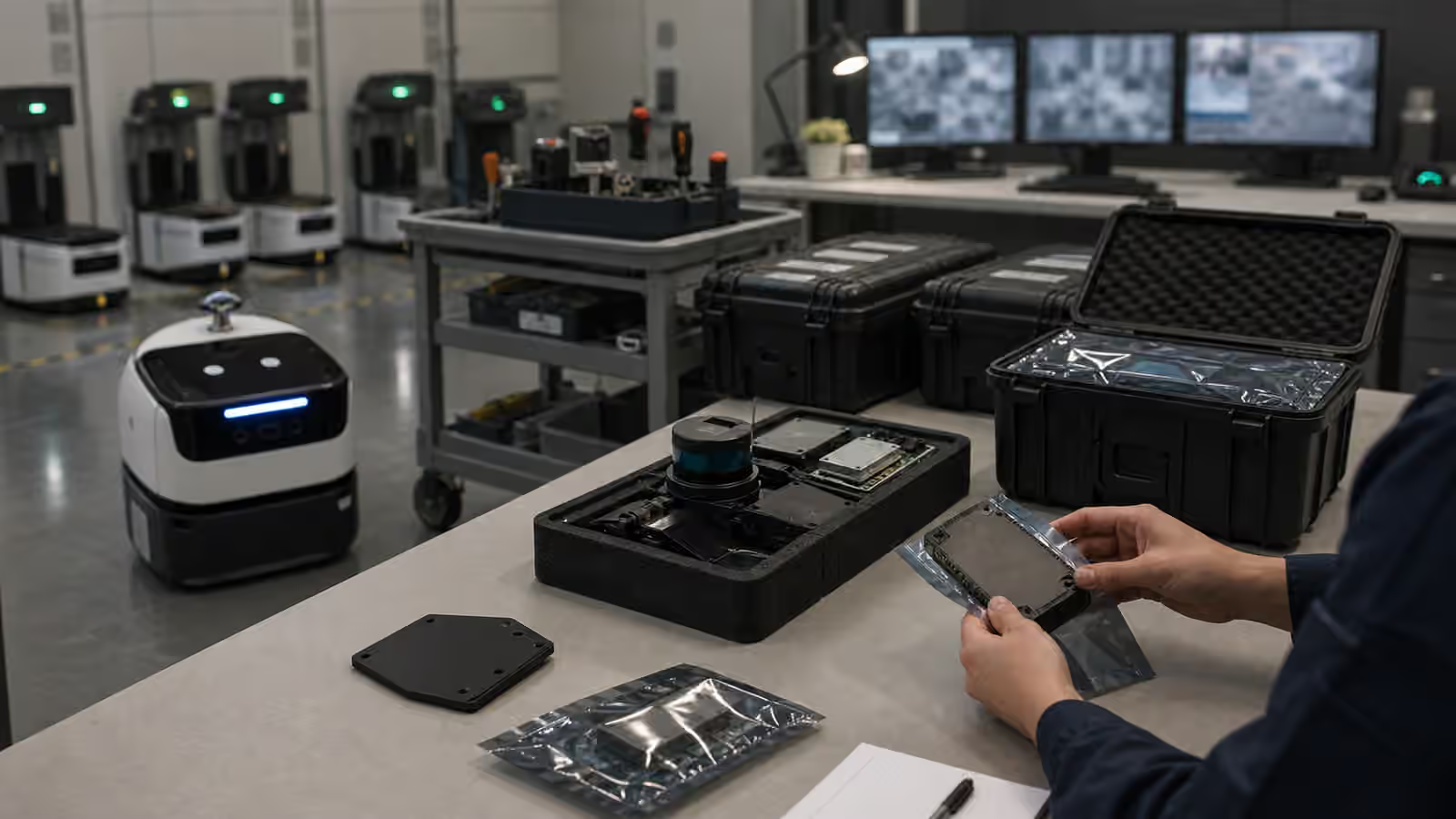
A robot can remember more than people expect.
It may carry cameras, microphones, depth sensors, lidar, Wi-Fi radios, maps, task logs, operator actions, route histories, object labels, intervention clips, and software health records. Some of that memory is essential. Without it, the robot cannot localize, recover, improve, support operators, or explain why it stopped. Some of it is sensitive because the robot moves through spaces where people live, work, store inventory, handle patients, receive visitors, or reveal habits without thinking about the machine as a witness.
Privacy in physical AI is not only a legal review at the end of procurement. It is an engineering and operations discipline. The team has to decide what the robot collects, what it processes locally, what it stores, what it transmits, who can inspect it, how long it remains available, and what happens when the robot changes owner, site, task, or software version. Robot Data Collection explains why physical experience is valuable for learning. Data governance asks how that value is handled without turning every workplace or home into an unbounded training source.
The Sensor Record Is Not Neutral
A camera frame can show the obstacle that stopped a robot, but it can also show a person’s face, a badge, a whiteboard, a medication label, a package address, a family photo, a production process, or the layout of a restricted room. A map can help the robot navigate, but it can also reveal entrances, storage locations, security doors, and daily movement patterns. A support log can help engineers diagnose a fault, but it can also show who intervened, when a shift was understaffed, and how often a site was rescued by manual work.
Treating this record as harmless telemetry is a mistake. A robot’s data is bound to physical context. It is not just a number in a database. It is evidence about a place and the people around it. That does not mean a team should avoid collecting anything. It means collection needs a reason, and the reason should be visible in the design.
The clearest privacy conversations begin with purpose. The robot may need real-time sensor data to avoid obstacles. It may need a short event bundle to support a blocked-route incident. It may need aggregated charging history to plan maintenance. It may need anonymized failure examples to improve perception. Those purposes are different. They do not all require the same retention, access, resolution, or export path.
Minimize Without Blinding The Robot
Data minimization is sometimes described as collecting less. In robotics, the better phrase is collecting no more than the task, safety case, and support model can justify. A robot that cannot see enough to stop safely is not privacy preserving in any meaningful sense. A robot that stores continuous video from every ordinary route because it might be useful later is not disciplined either.
The practical question is what level of memory serves the work. Many systems can process rich sensor streams locally while storing only events, health summaries, cropped obstacle views, or short diagnostic windows around exceptions. A remote support team may need the robot’s current pose, task state, and a limited camera view, not a permanent archive of the entire facility. A maintenance team may need sensor obstruction rates and docking retries, not identifiable footage of every person who walked by the dock.
This is where Robot Observability and Field Logs and privacy meet. Observability should make incidents understandable. It should not become an excuse to save everything forever. The best designs keep enough evidence to learn from real events while making ordinary life less exposed.
Maps Deserve Their Own Rules
Robot maps are easy to underestimate because they look technical. In practice, maps can be among the most sensitive assets a robot holds. They may encode room shapes, aisle widths, door locations, restricted zones, charging points, storage areas, traffic patterns, or the difference between public and private spaces. In a home, a map can describe bedrooms, children’s rooms, bathrooms, and the everyday geometry of private life. In a warehouse or lab, it can describe operational layout.
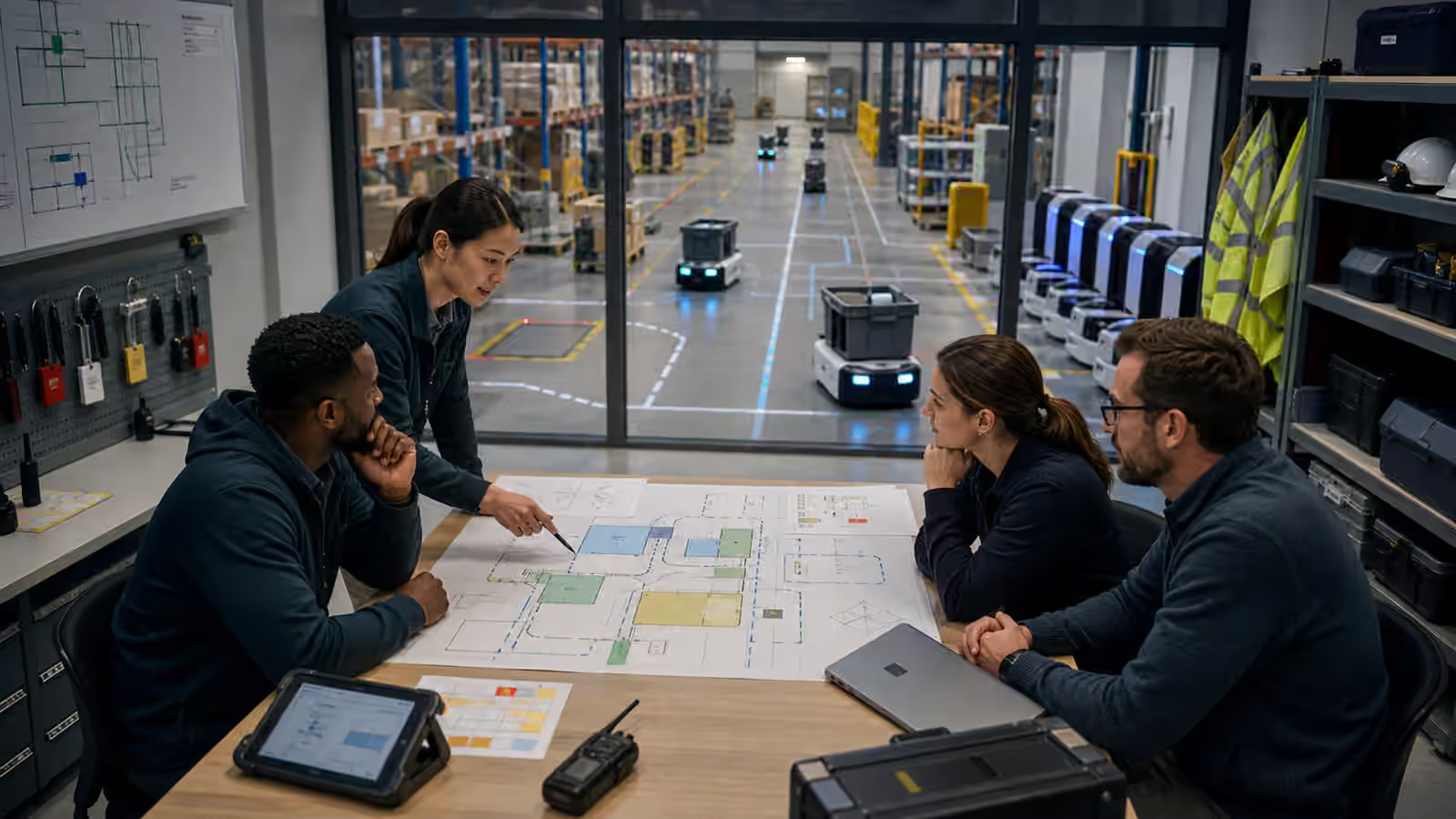
Map governance should be explicit. The team should know where maps are stored, whether they leave the site, which support roles can inspect them, how old maps are retired, and how site-specific zones are protected. A vendor may need enough map access to debug localization, but that access should be scoped and logged. A fleet manager may need to edit route permissions, but not export raw site maps casually. A developer may need synthetic or redacted examples rather than a customer’s actual facility layout.
Robot Mapping and Localization focuses on how robots keep their place. Governance adds a different question: who is allowed to know the place as well as the robot does?
Remote Support Is A Privacy Boundary
Remote support often decides whether a robot deployment is practical. When a robot stops, the support team may need to inspect logs, look through a sensor feed, request a restart, guide an operator, pull a diagnostic bundle, or connect a specialist to the system. That can be reasonable, but it should never be vague.
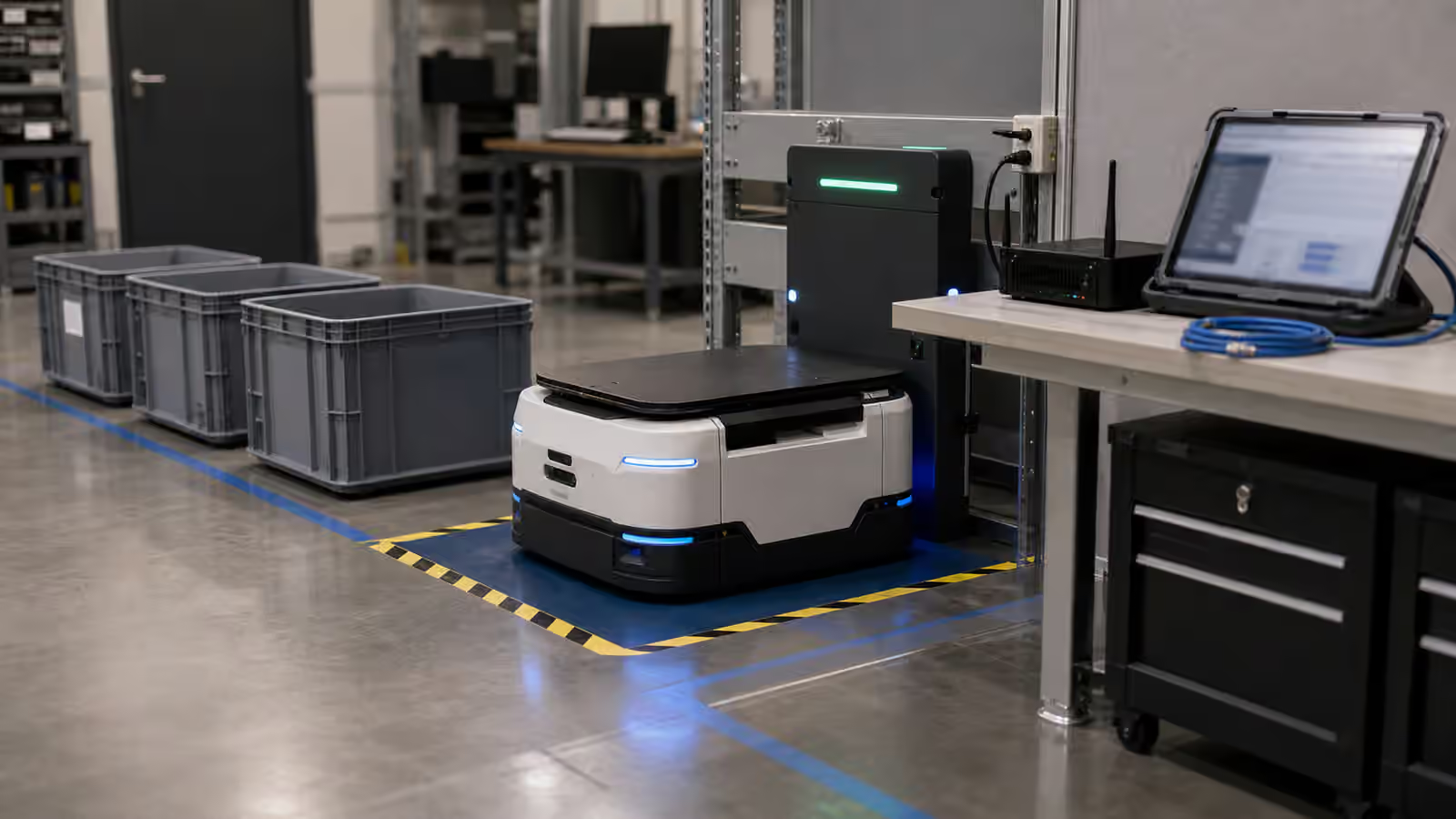
A site should know when remote access is possible, who can initiate it, whether approval is required, what the support person can see, what actions they can take, whether the session is recorded, and how the session appears to local operators. A robot that allows quiet remote viewing can damage trust even if no one misuses it. A robot that makes remote support visible, scoped, and auditable is easier for people to accept.
Robot Security and Access Control gives the broader protection model. Privacy governance makes the remote support boundary concrete. Access is not only about keeping attackers out. It is about making ordinary authorized access narrow enough that people do not feel tricked by the machine.
Retention Changes Behavior
Retention is not a storage setting buried in the backend. It changes how a robot is perceived. A short diagnostic buffer says the system is paying attention to exceptions. A long raw archive says the system is remembering ordinary presence. A training pipeline that keeps failure examples indefinitely may be valuable, but only if sensitive details are handled in a way the site can defend.
Long retention can also create engineering laziness. If everything is kept, teams may delay deciding which signals matter. The archive grows, but the operating model remains unclear. A more careful design distinguishes routine telemetry, safety-critical event records, support session artifacts, model-improvement datasets, maintenance histories, and customer-owned exports. Each class can have a different retention period, review process, and deletion path.
Deletion matters because robots move. A robot may be redeployed, refurbished, sold, returned, or decommissioned. Robot Lifecycle and Decommissioning is incomplete without data removal. A machine leaving a site should not carry the site’s maps, logs, credentials, or private records into the next deployment because nobody treated data as part of the physical asset.
Consent Is Not A Sign On The Wall
In public or shared environments, people may see a sign that a robot is operating. That helps, but it is not enough to make the governance problem disappear. Many people cannot meaningfully negotiate with a robot in a hallway, lobby, hospital, warehouse, or home they are visiting. They may not know what the robot records or how to avoid it. The burden should stay with the deployer and operator to make collection proportionate and understandable.
Good design reduces the number of moments where individual consent has to carry the whole system. Privacy zones, no-record areas, local processing, visible recording states, restricted support modes, short buffers, and clear operator controls can all reduce exposure. A home robot may need stricter assumptions than a controlled industrial workcell because guests, children, caregivers, and family routines are part of the environment. A workplace robot may need careful attention to employee monitoring, not because every log is surveillance, but because operational data can become surveillance if used without boundaries.
The point is not to make every robot silent and blind. It is to make the robot’s memory fit the relationship people have with the space.
Training Data Needs A Gate
Physical AI teams often want field data to improve models. That desire is understandable. Real robots encounter lighting, clutter, damaged packaging, odd floor surfaces, and human behavior that lab datasets miss. But field data should not flow automatically into training just because it exists.
A training gate asks whether the data was collected for that purpose, whether sensitive details can be removed, whether site identifiers remain, whether labels expose private information, whether the data includes people who did not expect model training, and whether the model can be evaluated without carrying private context forward. It also asks whether synthetic, staged, or redacted data could answer the same engineering question.
Robot Dataset Curation and Annotation covers the quality side of datasets. Privacy governance adds custody. Who approves a dataset for model work? What is excluded? What is transformed? What is logged? What is destroyed? A dataset without custody can become a liability even when it helps a model.
Governance Should Be Usable
Privacy rules fail when they are too abstract for operators and too disconnected from engineering for developers. A useful governance model shows up in the robot’s ordinary workflow. Operators can see when a support session is active. Site managers can review access history. Engineers can request diagnostic bundles with a reason. Data classes have names people understand. Map exports are deliberate. Retention rules are automatic enough that nobody has to remember them manually every Friday afternoon.
The governance model should also admit uncertainty. New tasks may require new sensor use. A software update may change what is logged. A new site may have different privacy expectations. A failure investigation may require deeper records than routine operation. Those cases should have review paths rather than informal exceptions.
Physical AI becomes easier to trust when the robot’s memory has shape. The machine can sense what it needs to work, explain enough to be supported, and learn from real events without treating every room as raw material. That balance is not solved by a single setting. It is built through purpose, minimization, map rules, remote support boundaries, retention, lifecycle cleanup, and training gates that stay connected to the robot people actually live or work around.