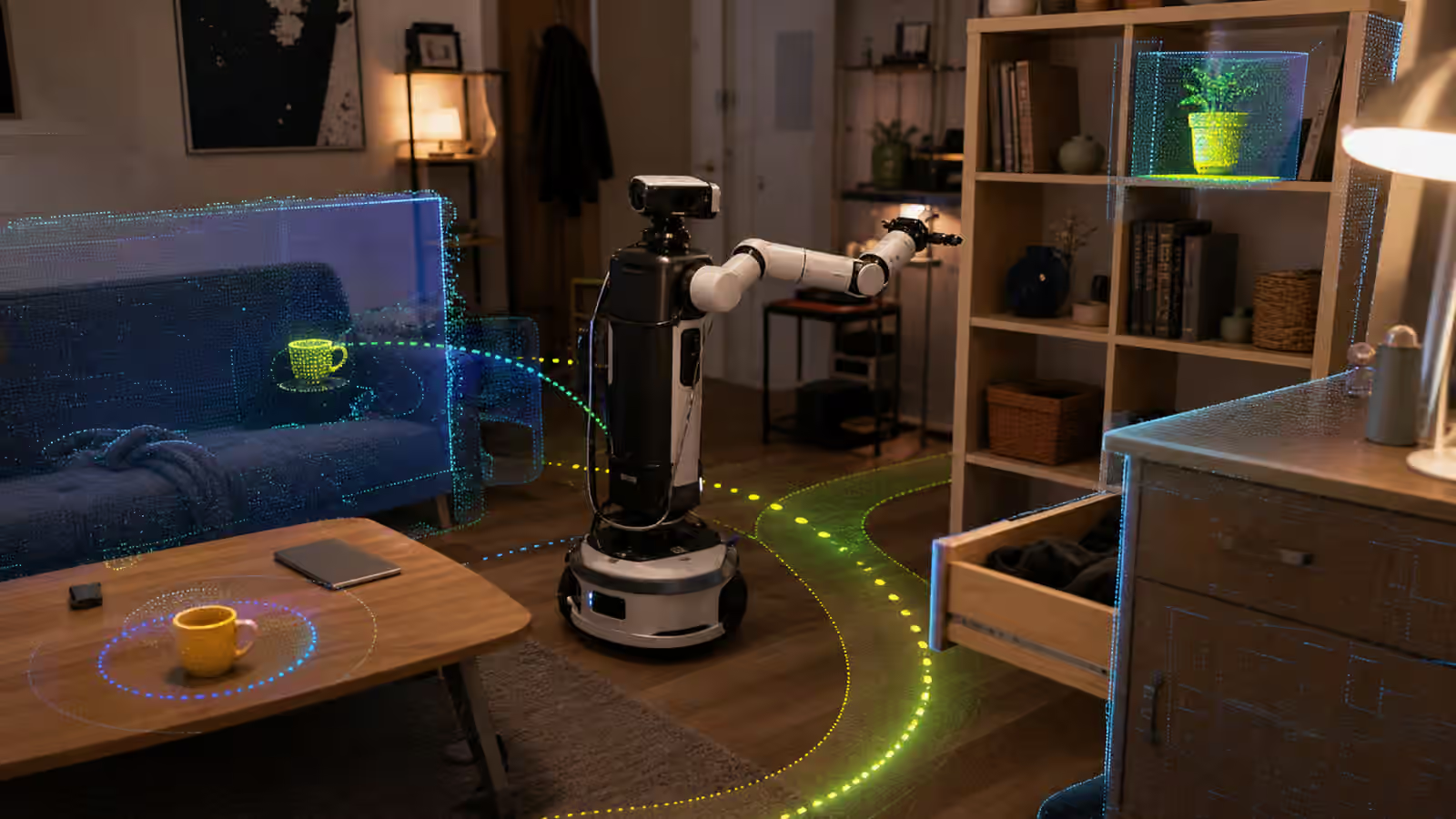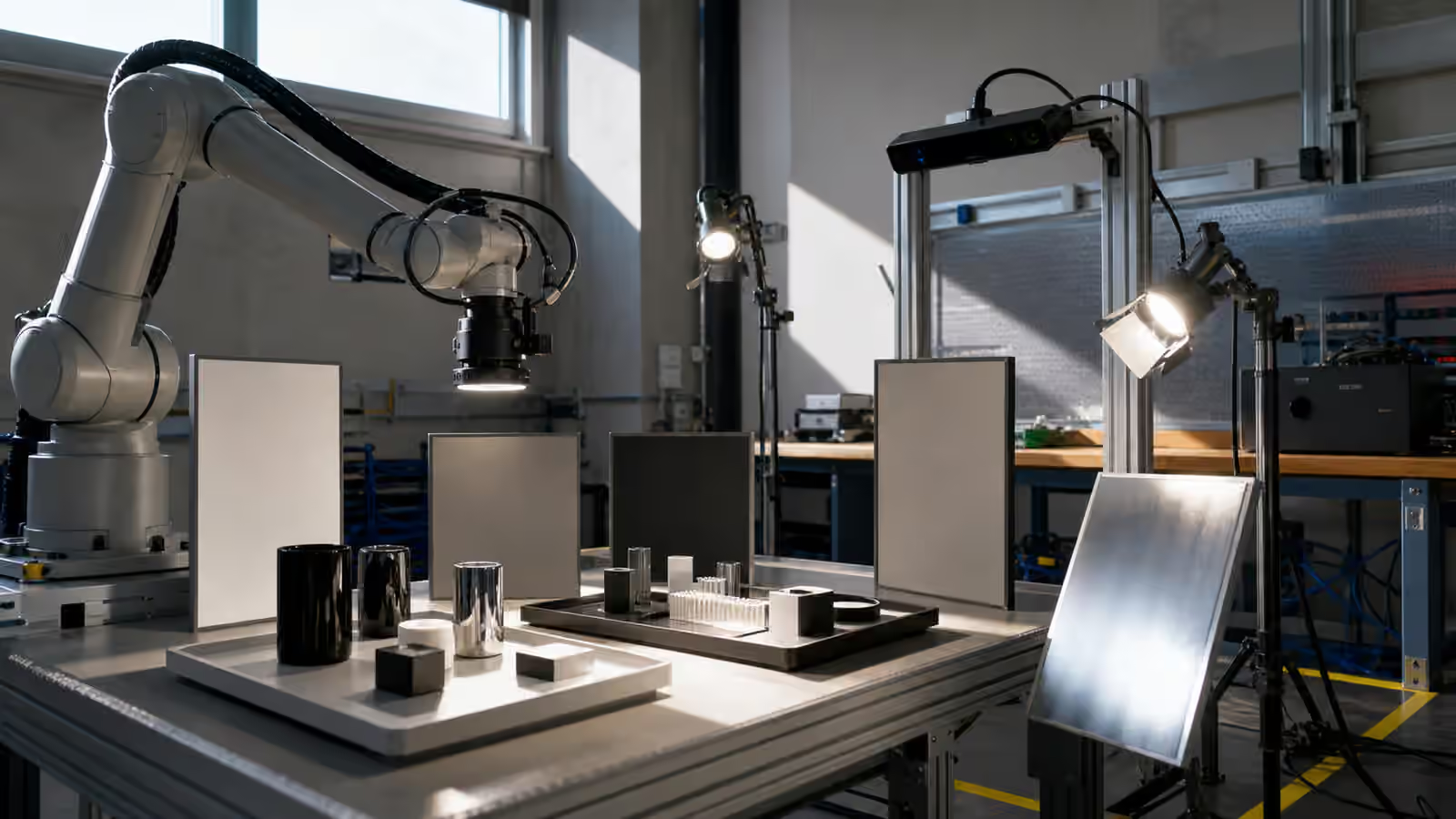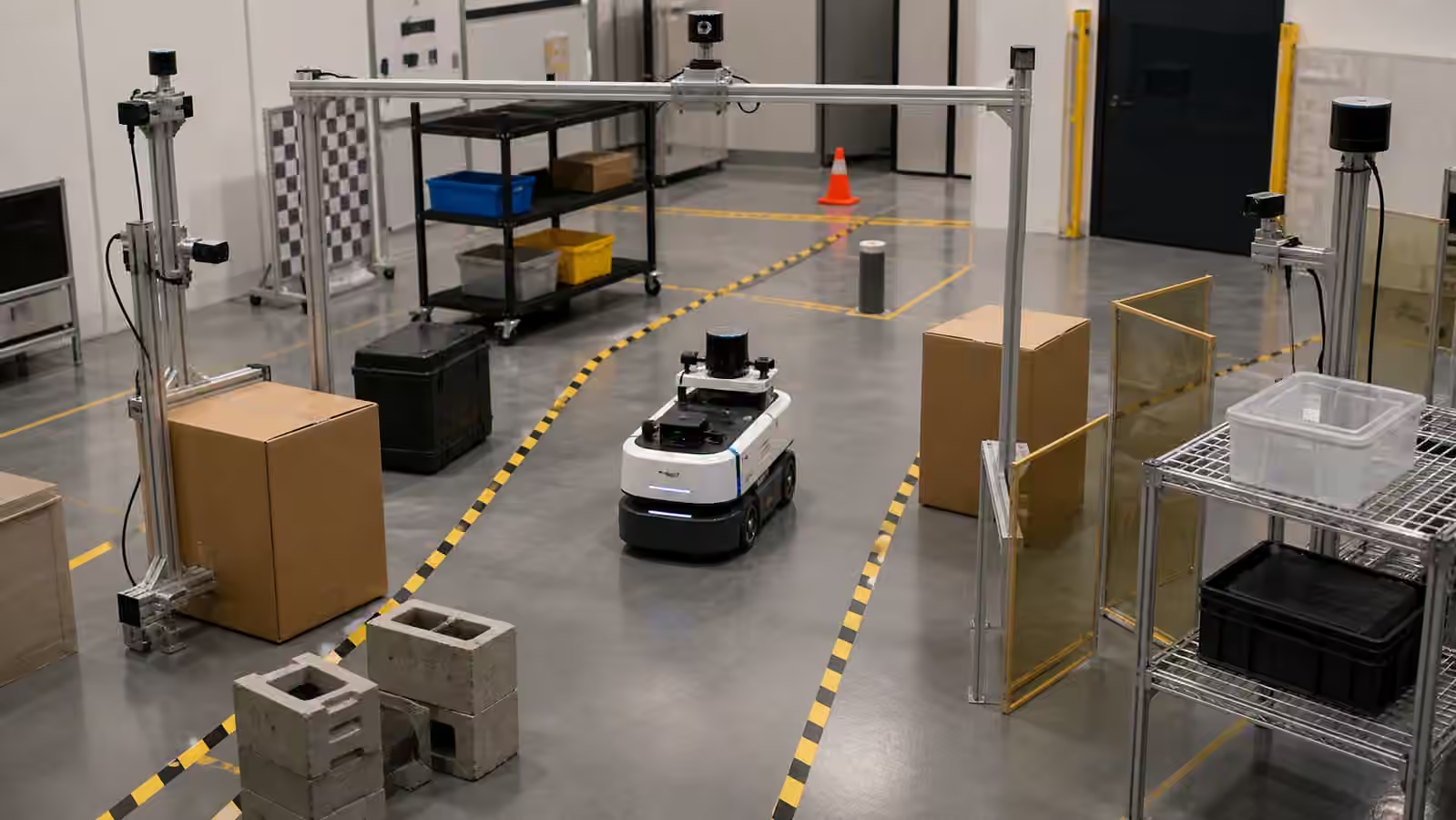
A tidy robotics demo can make perception look solved. The robot rolls forward, finds the object, avoids the obstacle, reaches the table, and completes the task. The floor is clean. The lighting is even. The objects are placed where the system expects them. The camera sees the scene from a forgiving angle. Nothing moves unless the script says it will.
Then the robot enters an ordinary home and the world stops being polite.
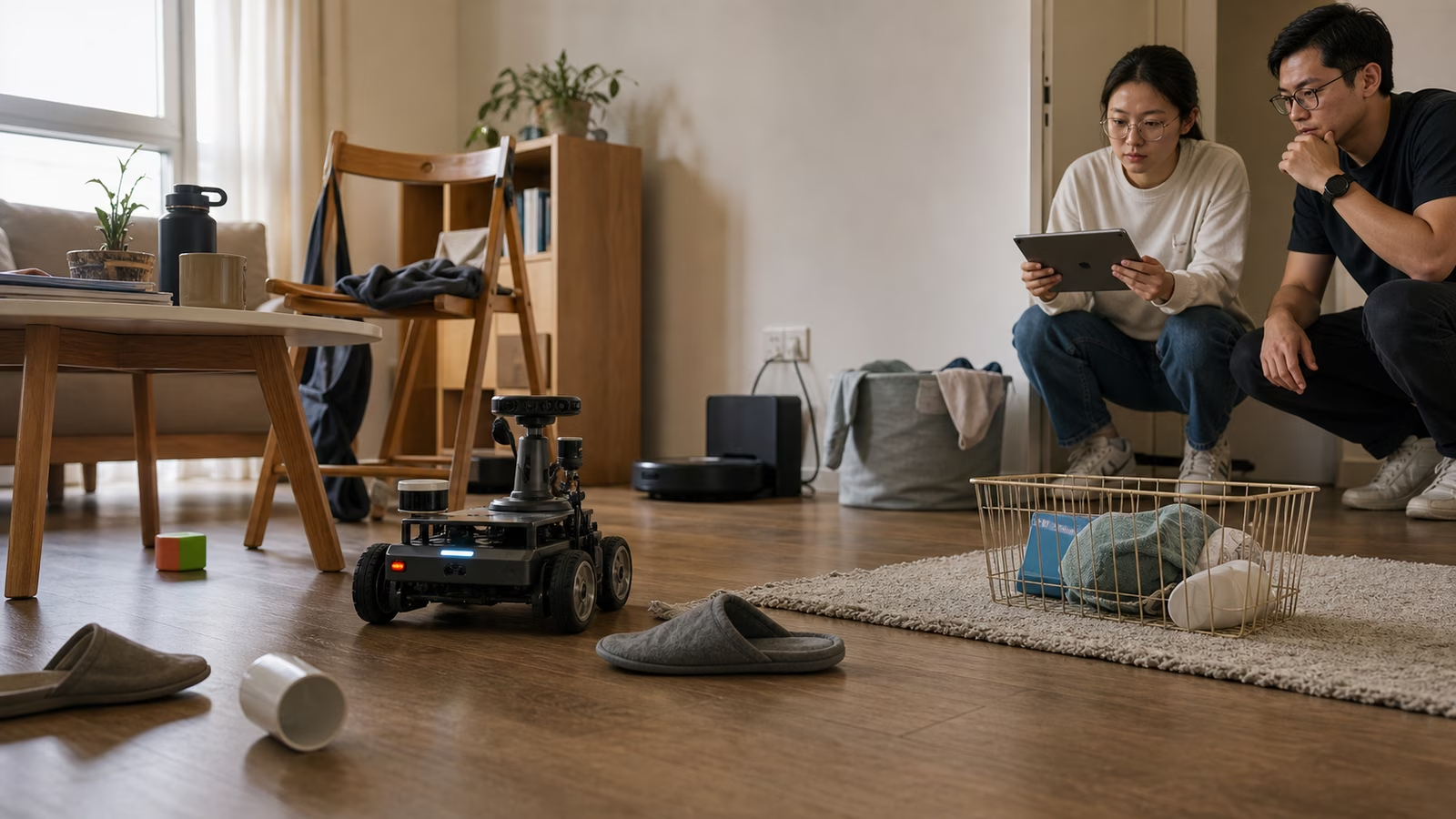
A living room is not a warehouse with softer furniture. It is a shifting collection of chair legs, rugs, cables, slippers, toys, laundry baskets, pets, reflections, thresholds, glass tables, dark corners, sunlight, people walking through, and objects that were not there yesterday. The robot does not perceive “a home” as a person does. It receives sensor data and tries to build enough understanding to act without becoming dangerous, useless, or annoying.
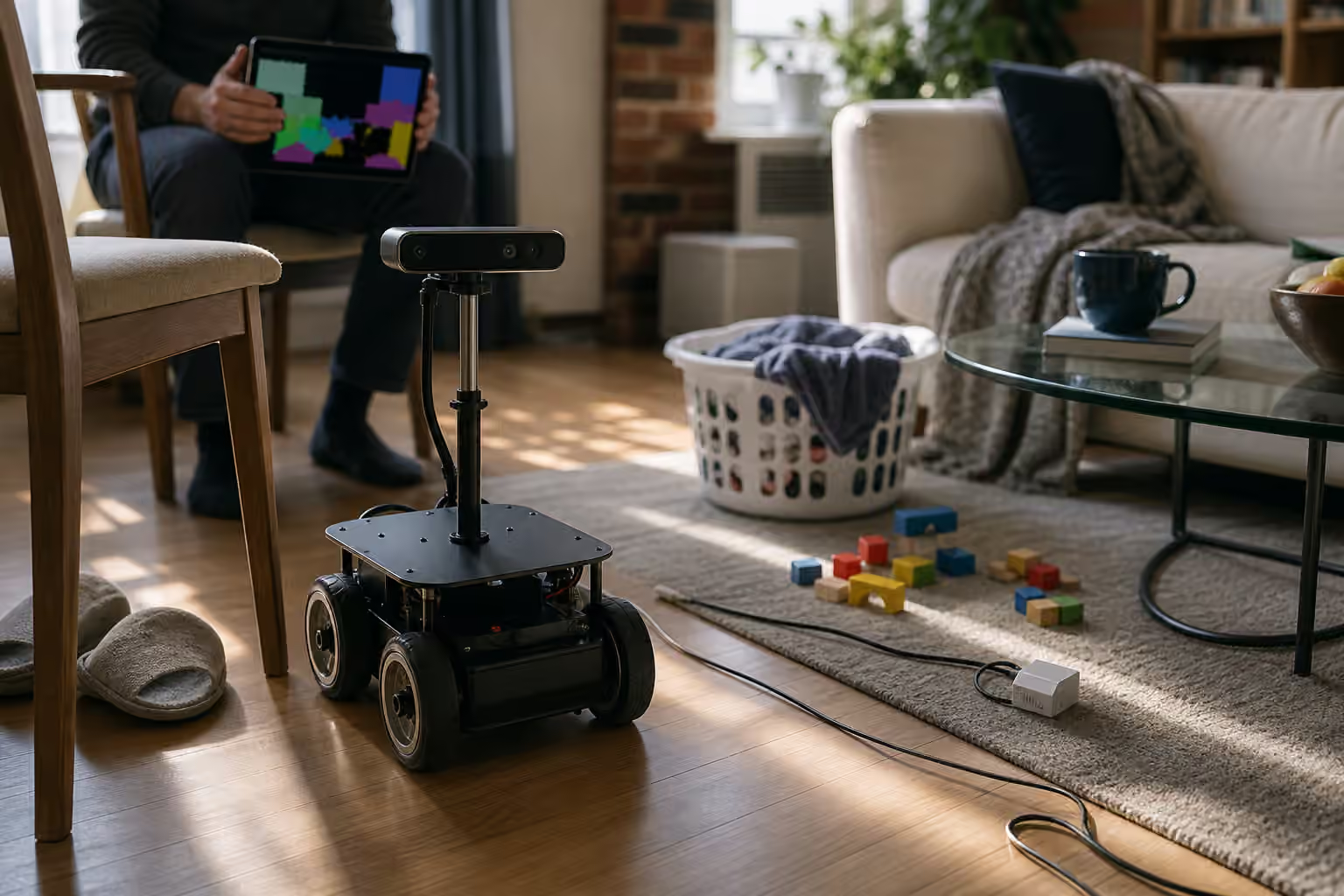
That gap between the human scene and the robot scene is where home robotics gets hard.
The room keeps changing
Robots like consistency. Homes are inconsistent by design. A chair moves because someone ate dinner. A rug edge curls. A child leaves blocks near the hallway. A package sits by the door. A blanket slides from the couch. A pet bowl appears in the kitchen. The same route from dock to bedroom may be clear in the morning and blocked at night.
For a person, these changes are almost invisible. We step over the slipper, nudge the door, remember that the laundry basket is temporary, and notice that the stack of books is too unstable to bump. A robot has to detect, classify, localize, and decide. It may not need the human name for every object, but it needs enough scene understanding to avoid trouble.
Robot Perception covers the broad sensor problem: cameras, depth sensors, lidar, radar, tactile sensing, sensor fusion, and uncertainty. A messy home turns that general problem into daily friction. The robot is not trying to win a benchmark image. It is trying to move through a room that keeps rewriting itself.
Occlusion is ordinary
Occlusion means one thing blocks the view of another. In a home, occlusion is everywhere. A table leg hides a cable. A blanket hides the edge of a stair. A chair blocks the view of a pet. A laundry basket hides a shoe. A shiny appliance reflects the room and creates visual confusion. A dark hallway hides what the robot will encounter next.
Humans are good at guessing through occlusion because we know how rooms work. If a couch disappears behind a table, we understand that the couch continues. If a person steps behind a doorway, we expect them to come out somewhere. Robots can learn patterns, but they still need caution when the hidden part matters.
This is one reason home robots often move slowly and conservatively. Speed magnifies uncertainty. If the robot cannot see around the chair, it should not behave as if the hidden floor is empty. A cautious pause may look unimpressive in a demo, but in a real home it may be the difference between a useful machine and a machine that repeatedly knocks into ordinary life.
Lighting changes the job
Home lighting is hostile to neat perception. Morning sun floods one side of the room. Evening lamps create pools of warm light and shadow. Televisions flicker. Windows glare. Mirrors and glossy surfaces create false signals. Nighttime navigation may need infrared or other sensing, but those systems have their own limits.
A person can look at a backlit chair and still know it is a chair. A vision system may see a silhouette, blown highlights, low contrast, or noise. The problem becomes harder when the robot has to identify small objects on the floor, read the edge of a rug, or distinguish a cable from a shadow.
This does not mean home robots cannot work. It means robust perception has to expect bad lighting as the normal case, not an edge case. Testing only in showroom conditions teaches the wrong lesson. The home at 2 p.m. and the same home at 10 p.m. are different perception environments.
Object names are less important than object consequences
People often imagine a home robot naming everything it sees: sock, mug, shoe, book, toy, charger, chair. Names can help, especially for manipulation or user commands. But for navigation and safety, consequences often matter more than labels.
A low soft object may be safe to brush lightly or may be a sleeping pet. A thin dark line may be a shadow or a cable that can tangle a wheel. A shiny puddle may be water or a reflection. A pile of laundry may be harmless to a person and impossible for a small robot to cross. A closed door may be a barrier, a privacy boundary, or both.
The robot needs an action-oriented understanding of the scene. Can it drive there? Should it slow down? Is the object movable? Is it fragile? Is it likely to change? Does contact create risk? Should the robot ask for help? This is why perception cannot be separated from planning and safety. Seeing is only useful when it supports a better action.
Home Robots makes the same point from the product side. A useful home robot is usually narrow because the home is broad. The narrower the task, the easier it is to define what the robot must perceive and what it can ignore.
Maps are helpful and incomplete
Many home robots build maps. A map lets the robot remember rooms, docks, walls, paths, and sometimes zones. Maps are useful because they turn repeated navigation into a more stable problem. But a home map is not the home. It is a simplified memory of a place that keeps changing.
The map may say the hallway is clear. The robot still has to notice the suitcase. The map may say there is a doorway. The robot still has to tell whether the door is open. The map may show a room boundary. The robot still has to respect the user’s privacy choices and avoid entering where it should not go.
A good home robot treats the map as a guide, not a guarantee. It uses live perception to check reality. It updates cautiously. It does not assume that yesterday’s clear path makes today’s path safe.
This is also where fleet lessons only partially transfer. Robot Fleet Management explains how maps, charging, dispatch, and utilization matter when many robots operate in structured settings. Homes borrow some of those ideas, but the environment is less governed. There is no facilities team keeping the route clean.
Privacy is part of perception
Home perception has a privacy burden that warehouse perception usually does not. Cameras, microphones, maps, object recognition, and activity patterns can reveal intimate details. A robot that sees well may also collect more than users are comfortable sharing.
The design question is not only how much the robot can perceive. It is how much it should perceive, where processing happens, what leaves the device, how long data is kept, what the user can delete, and whether the robot can do its job with less sensitive sensing. Sometimes a lower-resolution signal, local processing, or a narrower task is the better product decision.
This is not a side issue. A home robot that cannot earn trust will be turned off, covered, docked in a closet, or never bought. Perception quality includes social permission. The machine has to fit the household’s sense of boundaries, not only its floor plan.
Honest perception admits uncertainty
The best home robots will not be the ones that pretend every scene is clear. They will be the ones that handle uncertainty gracefully. They slow down when the view is poor. They route around clutter when possible. They ask for help before forcing a bad guess. They stop near stairs, pets, cables, and unknown soft objects. They explain enough that users understand what went wrong without needing to become robotics engineers.
This kind of behavior may look less magical than a flashy demo, but it is closer to a real product. A robot that occasionally asks for help can be useful. A robot that charges confidently into uncertainty becomes furniture with liability attached.
Robot Demo Evaluation is a useful lens here. When you see a home robot demo, ask what the room looked like before the camera started. Ask how many attempts failed. Ask whether clutter was staged or naturally messy. Ask what happens with low light, pets, mirrors, cables, thresholds, and moved furniture. Ask whether the system can recover when the scene stops matching the script.
The ordinary room is the test. Not the lab bench, not the edited clip, not the carefully cleared path. The home with socks under the chair and sunlight across the floor is where perception becomes product truth.
Home robots will improve as sensors, models, maps, compute, data collection, and design discipline improve. But the challenge will remain physical and human. A robot must see enough to act, know enough to hesitate, and respect enough to belong in a room where people actually live.