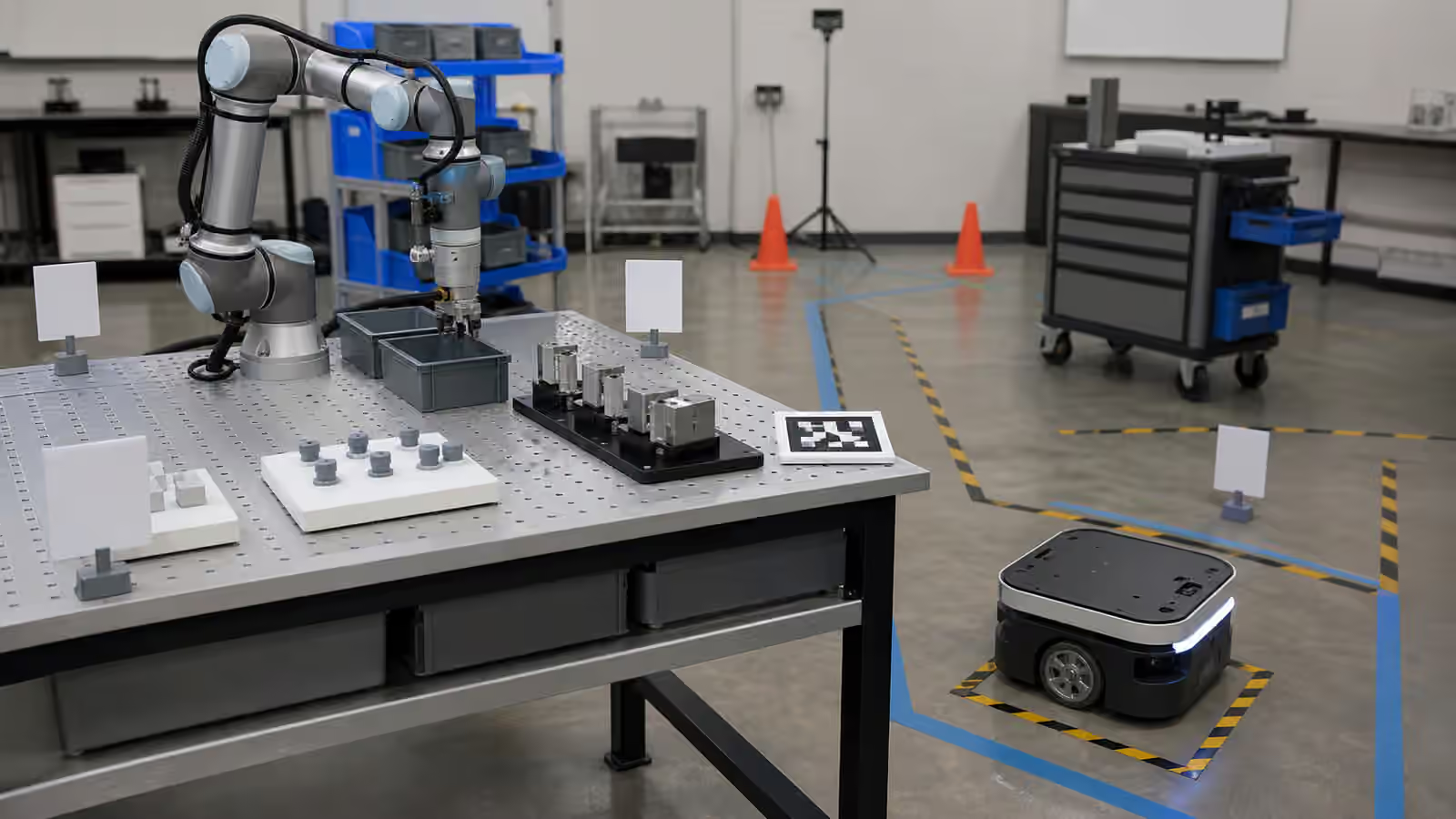
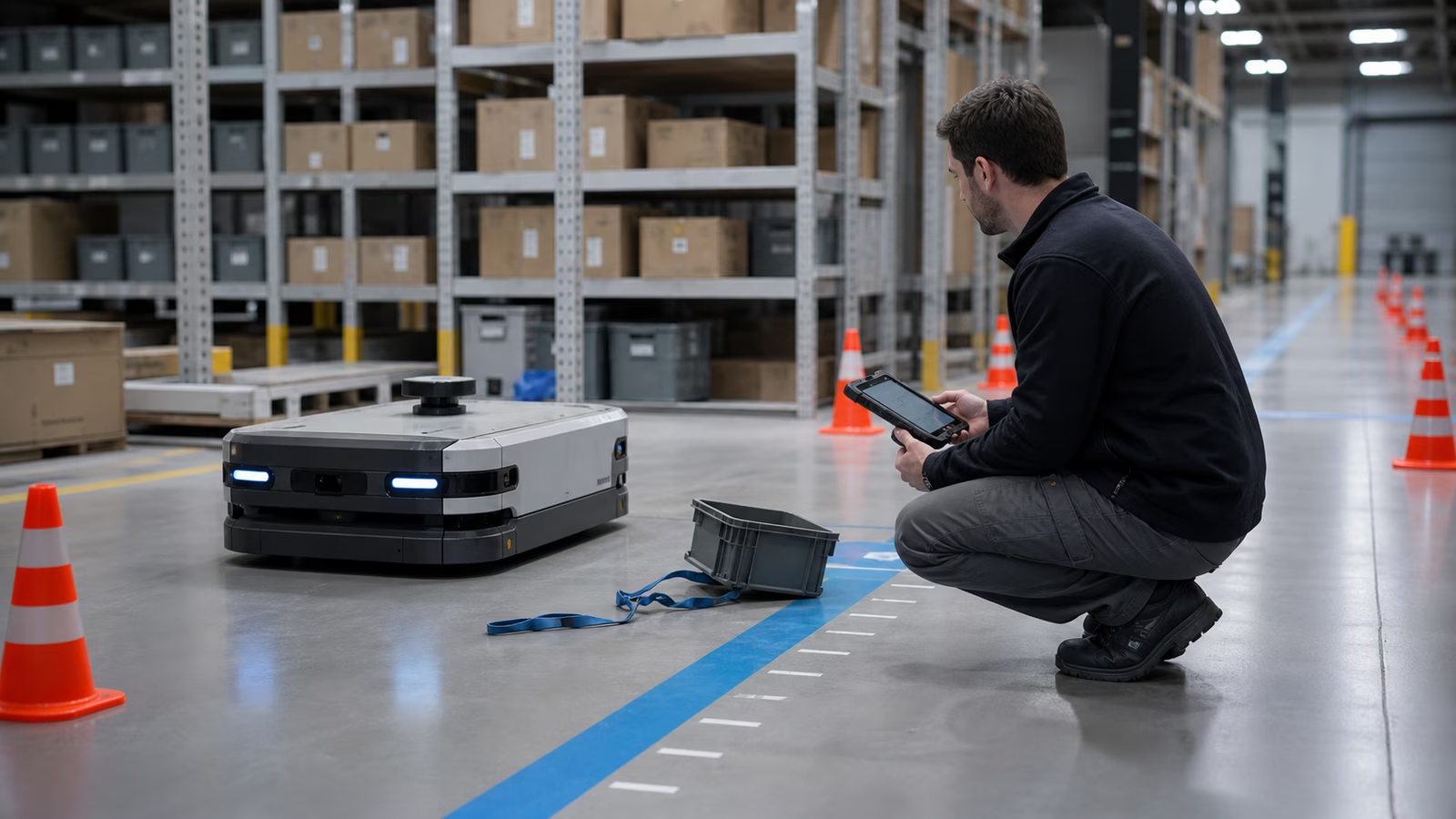
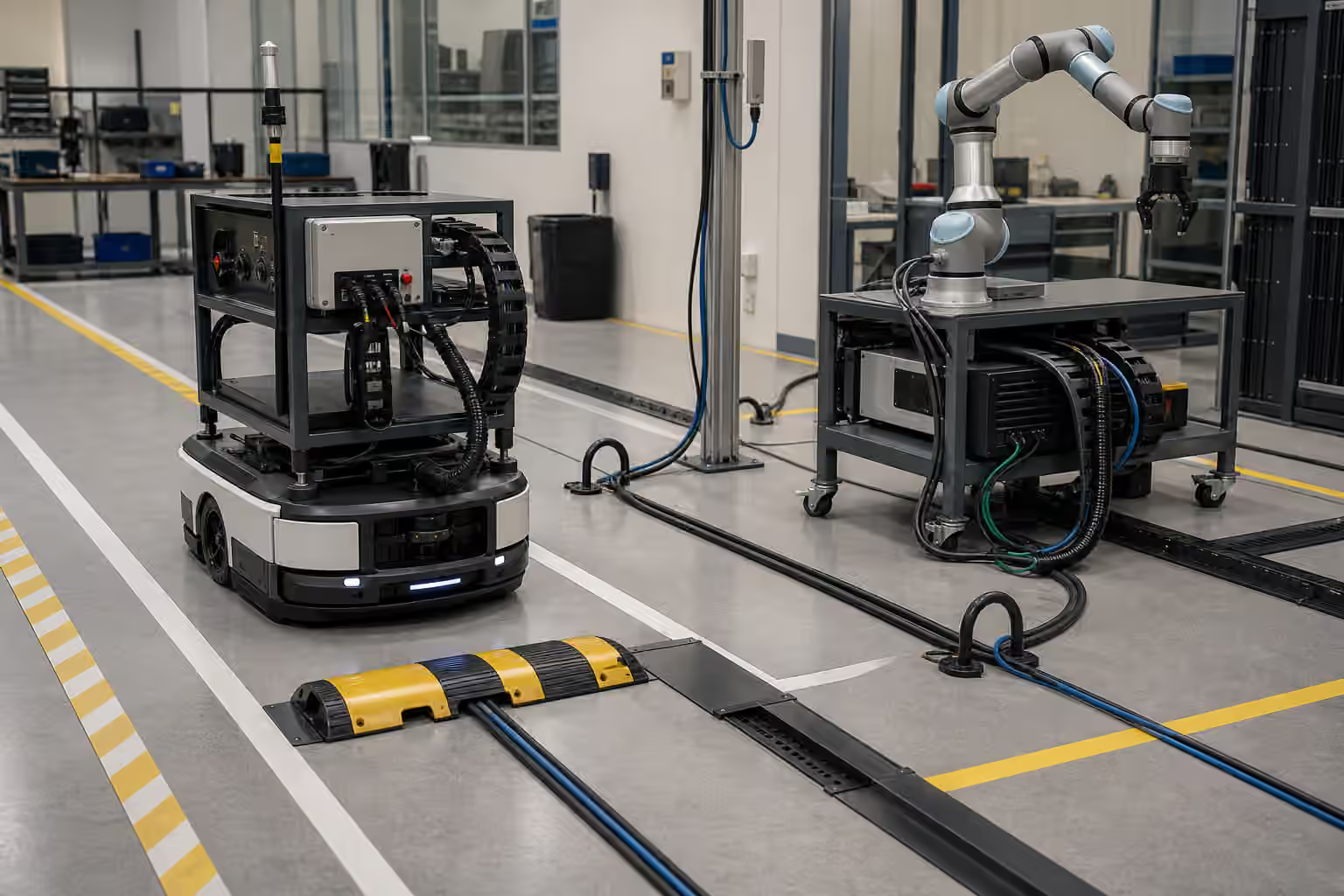
A useful robot does not need to work everywhere. It needs to know where its promises stop.
That boundary is easy to ignore when a demo works. A mobile robot moves through a clean aisle. A robot arm picks from a prepared tray. A home robot avoids the obvious obstacle. A humanoid carries a tote across a staged room. The moment can be real and still leave out the question that matters most for deployment: under which conditions is the robot actually allowed to act?
An operational design domain is the supported operating envelope of a robot. It describes the tasks, spaces, objects, people, speeds, payloads, lighting, floors, connectivity, supervision, and fallback states for which the system has been designed and validated. The term is often associated with automated vehicles, but the idea belongs throughout physical AI. A robot that can move, sense, grip, carry, clean, inspect, or intervene in a shared place needs a domain that is more precise than enthusiasm.
What Robots Can Actually Do introduces the capability envelope. This guide narrows that idea into an operating contract. The robot is not judged by every imaginable future task. It is judged by the domain it claims today, the evidence behind that claim, and the behavior it shows when the world crosses the edge.
A Boundary Is Not A Disclaimer
The weak version of a boundary is a warning label. It says the robot is intended for certain conditions, then leaves the hard decisions to users and operators. The stronger version is built into the deployment. It changes route choices, speed limits, access permissions, task acceptance, alerts, and recovery behavior. It is not only something written in a manual. It is part of how the robot decides whether to proceed.
This matters because broad claims create broad disappointment. “Works in warehouses” is too large to guide an engineering review. A warehouse may have polished floors, wet loading bays, tight mezzanines, mixed pedestrian traffic, forklifts, barcode stations, unstable pallets, and changing seasonal layouts. “Moves sealed totes between receiving and packing on mapped indoor routes, at defined speeds, with trained local responders and a clear dock area” is less dramatic, but it is the kind of statement a robot can be tested against.
The same principle applies to manipulation. “Can pick household objects” hides the difference between mugs on open counters, crumpled towels, cables, knives, glassware, toys under furniture, and objects near pets. A useful home robot may begin with a small domain: approved rooms, known object classes, safe surfaces, daylight or controlled lighting, no wet messes, and a refusal path for uncertainty. The narrower statement is not an admission that the robot is worthless. It is how a physical system becomes trustworthy enough to improve.
The Domain Has More Than One Edge
An operational design domain is not a single line on a floor map. It has several edges, and each edge can fail in a different way.
The environment edge covers the physical place. Floors, ramps, thresholds, dust, glare, doorways, weather exposure, vibration, temperature, cleaning routines, radio coverage, and dock placement all matter. Robot Environmental Robustness explains why the building can stretch or break a robot’s promise. The domain should name which environmental variation is expected and which variation requires a stop, reroute, service check, or redesign.
The task edge covers what the robot is asked to do. A robot may be validated for moving one class of tote but not loose items. It may inspect a shelf but not restock it. It may fetch an object from a known counter but not search private rooms. Robot Task Design and Acceptance Tests is the companion because tasks become real only when start states, end states, failure cases, and acceptance evidence are written down.
The object edge covers mass, shape, texture, fragility, temperature, deformability, and meaning. A cardboard carton, a flexible bag, a sharp tool, a medical sample, and a child’s toy are not interchangeable just because a camera can see them. Robot Payload and Load Handling makes this visible for carried loads, while Robot Grasping in Real Homes shows how ordinary objects become difficult when the setting is less prepared.
The human edge covers who shares the space and what they are expected to do. A robot operating among trained workers in marked lanes has a different domain from a robot operating around visitors, children, customers, patients, or tired staff during a busy shift. The domain should include supervision level, local authority, handoff rules, training assumptions, and what a person should see when the robot is waiting for help.
Inside The Domain Still Needs Evidence
Calling a condition “inside the domain” should mean more than “the robot once survived it.” The claim needs evidence from tests that look like the work. A route should be exercised with the traffic, lighting, floor condition, payload, and schedule that matter. A grasping task should be tested across the actual object variation. A charging plan should be tested across duty cycles and blocked-dock scenarios. A human handoff should be tested with the timing and interruptions of the site.
Evidence also needs a denominator. A claim that a robot handled clutter, glare, or blocked paths is weak unless the reader knows how often it was tried, which conditions were included, how much help was provided, and what counted as failure. Robot Demo Evaluation teaches that a good clip can hide resets and selection. Domain evidence should do the opposite. It should make the supported range visible enough that a buyer, operator, engineer, or safety reviewer can understand what was actually proven.
This does not require perfection. A domain can include known failure rates if the response is acceptable. A mobile robot may occasionally ask for help at a blocked route. A picking robot may reject ambiguous objects. A home robot may refuse to enter a room without permission. The important question is whether those outcomes are part of the domain design or surprises that the deployment quietly absorbs.
The Edge Should Change Behavior
The edge of the domain is useful only if the robot behaves differently when it reaches it. Uncertainty about localization should slow or stop motion. Low confidence in an object should trigger a better view, a human check, or refusal. A payload outside the expected range should keep the robot from carrying it. A route that enters an unapproved area should not be treated as a clever shortcut. A network outage should move the robot into a known degraded mode rather than pretending the cloud is still available.
Robot Sensor Fusion and Uncertainty explains why confidence should change action. Operational design domains give that confidence a policy. The robot does not merely estimate that a condition is uncertain. It knows whether that uncertainty is acceptable for this task, in this place, with this object, under this supervision model.
Fallback behavior belongs in the same design. Robot Failure Recovery asks what happens after the robot gets stuck. Domain design asks what the robot should do before a limit becomes a failure. A safe refusal can be a successful outcome when the alternative is guessing. The robot may park in a pull-off zone, mark the route as blocked, lower a payload, preserve logs, request a local responder, or defer the job. Those actions are not signs that autonomy vanished. They are signs that autonomy was constrained by a real operating boundary.
The worst boundary behavior is silent improvisation. A robot that keeps trying after the object is out of range, drives into an unvalidated area, accepts a vague command without grounding, or restarts after a safety-relevant event has not expanded its domain. It has left the domain without saying so.
People Need To See The Boundary
Operational design domains are partly technical, but they become real through people. Operators need to know when a robot is inside normal work, when it is asking for ordinary help, and when it is outside supported operation. A dashboard that only says “error” forces people to infer the domain from frustration. A better interface says the route is outside the approved map, the object class is not supported, the payload estimate is too high, localization is uncertain, or the task requires a person with different authority.
Robot Operator Interfaces matters because the boundary has to be legible during pressure. A floor worker should not need to read engineering logs to decide whether to move a cart, call support, or leave the robot alone. A supervisor should be able to see repeated boundary hits and ask whether the domain is too narrow, the site has drifted, or the robot is being asked to do work it was never validated for.
Boundary visibility also protects trust. If a robot refuses a task and explains the reason plainly, people can learn the system. If it refuses mysteriously, people may work around it. If it acts beyond its supported domain and succeeds a few times, people may learn the wrong lesson and ask for more than the system can safely handle. Trust grows when the robot is predictable at its limits, not only when it is smooth at the center of its abilities.
Domains Grow By Evidence
The point of defining an operational design domain is not to trap the robot forever. It is to create a clear starting point for expansion. A team may begin with one route, one payload class, one handoff station, one lighting condition, or one object family. Over time it can add more, but each addition should be treated as a change to the domain rather than a casual extension of the original promise.
Expansion should identify what is new. Is the robot adding a route with different traffic? A heavier payload? A less prepared surface? A task with more human ambiguity? A new software model? A different recovery path? Robot Software Updates and Change Control is relevant because domain growth often arrives through updates, maps, model changes, and operator procedure changes. A robot can become more capable without becoming less disciplined, but only if the new boundary is documented and tested.
Field logs are especially valuable here. Robot Observability and Field Logs can show where the robot is repeatedly near the edge of its domain. Maybe one doorway creates localization trouble. Maybe one object type causes most human interventions. Maybe the robot is regularly sent to a route it was not meant to use. These patterns are not just support tickets. They are evidence about whether to improve the robot, adjust the site, train operators, narrow the domain, or expand it after validation.
The Boundary Is Part Of The Product
A physical AI product is not only a body, model, sensor suite, and interface. It is also a promise about supported use. The operational design domain is where that promise becomes honest enough for daily work. It tells the robot when to act, tells people what to expect, tells engineers what to test, and tells the organization what kind of value has actually been proven.
This kind of boundary can feel plain compared with a general-purpose vision of robotics. But plain boundaries are often what let robots become useful infrastructure. A robot that knows its domain can be calm inside it and cautious at its edge. It can refuse without drama, recover without confusion, and expand without pretending that one success covers every condition.
The most durable robotics deployments usually do not begin by asking whether the robot is intelligent in the abstract. They ask where the robot is ready to work, how that readiness was proven, and what happens when the world asks for more. Those are domain questions. Answering them well is one of the quiet skills that separates a machine that demos from a machine that belongs.