A mobile robot does not only need to know where the destination is. It needs to know where it is, where it has been, what has changed, and how confident it should be before it moves again.
That sounds simple until the robot leaves the lab bench. A warehouse aisle may look almost identical for thirty meters. A hallway may have glass walls, moving carts, wet floor signs, open doors, and people crossing from side rooms. A home may rearrange itself every afternoon. A loading area may be bright in the morning and shadowed later in the day. The robot’s map is never the whole world. It is a practical memory that must stay useful while the world keeps editing itself.
Mapping and localization sit between Robot Perception and the Robot Autonomy Stack . Perception gives the robot measurements. The autonomy stack turns those measurements into motion. Mapping and localization answer the middle question: where does this measurement belong, and where is the robot now?
A Map Is Not The Building
A building map made for people is usually not enough for a robot. Humans can read a floor plan, look around, and infer that a chair is temporary, a glass wall is solid, a half-open door may move, and a delivery cart should be given room. A robot needs those assumptions turned into data it can use at speed.
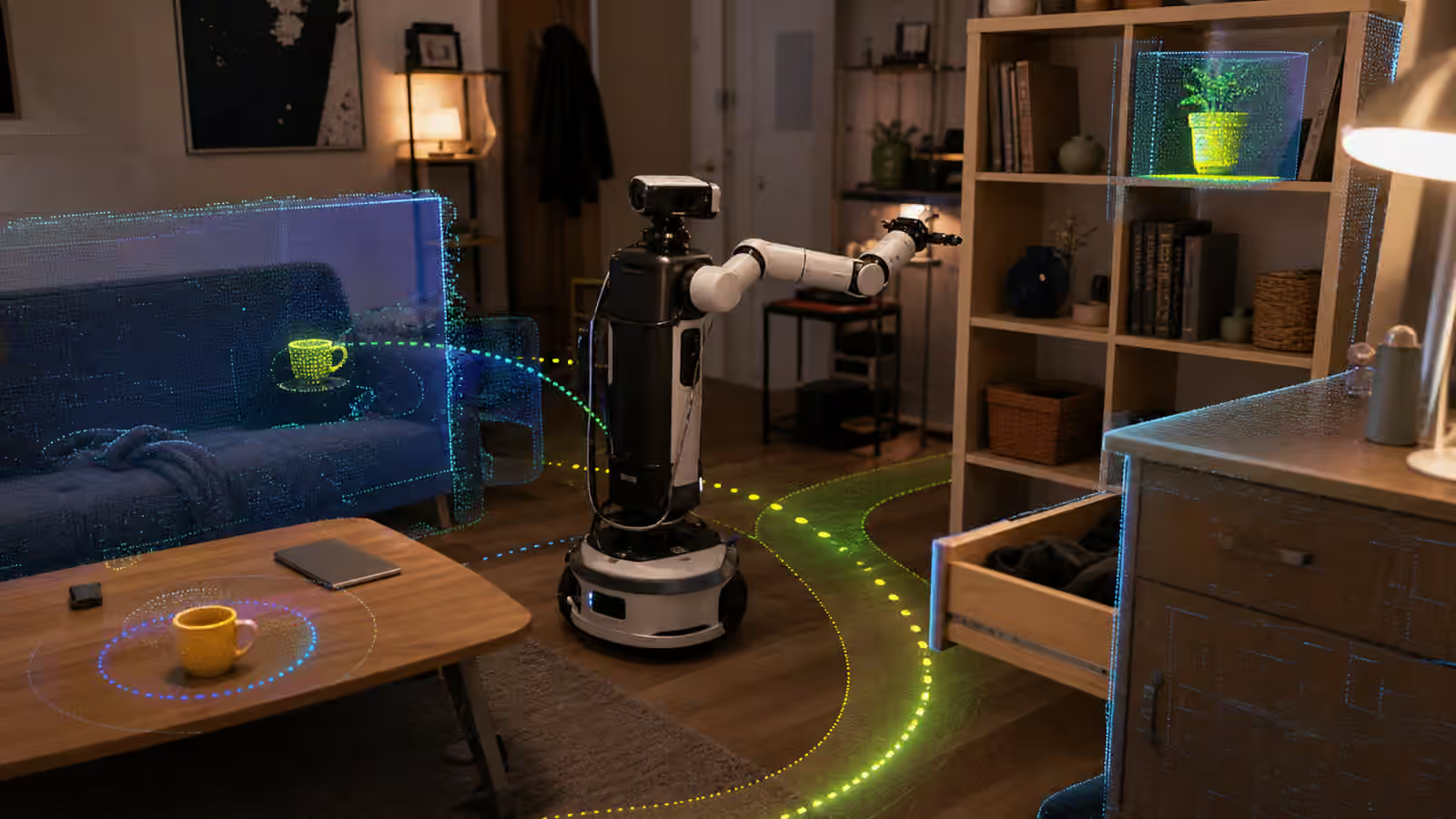
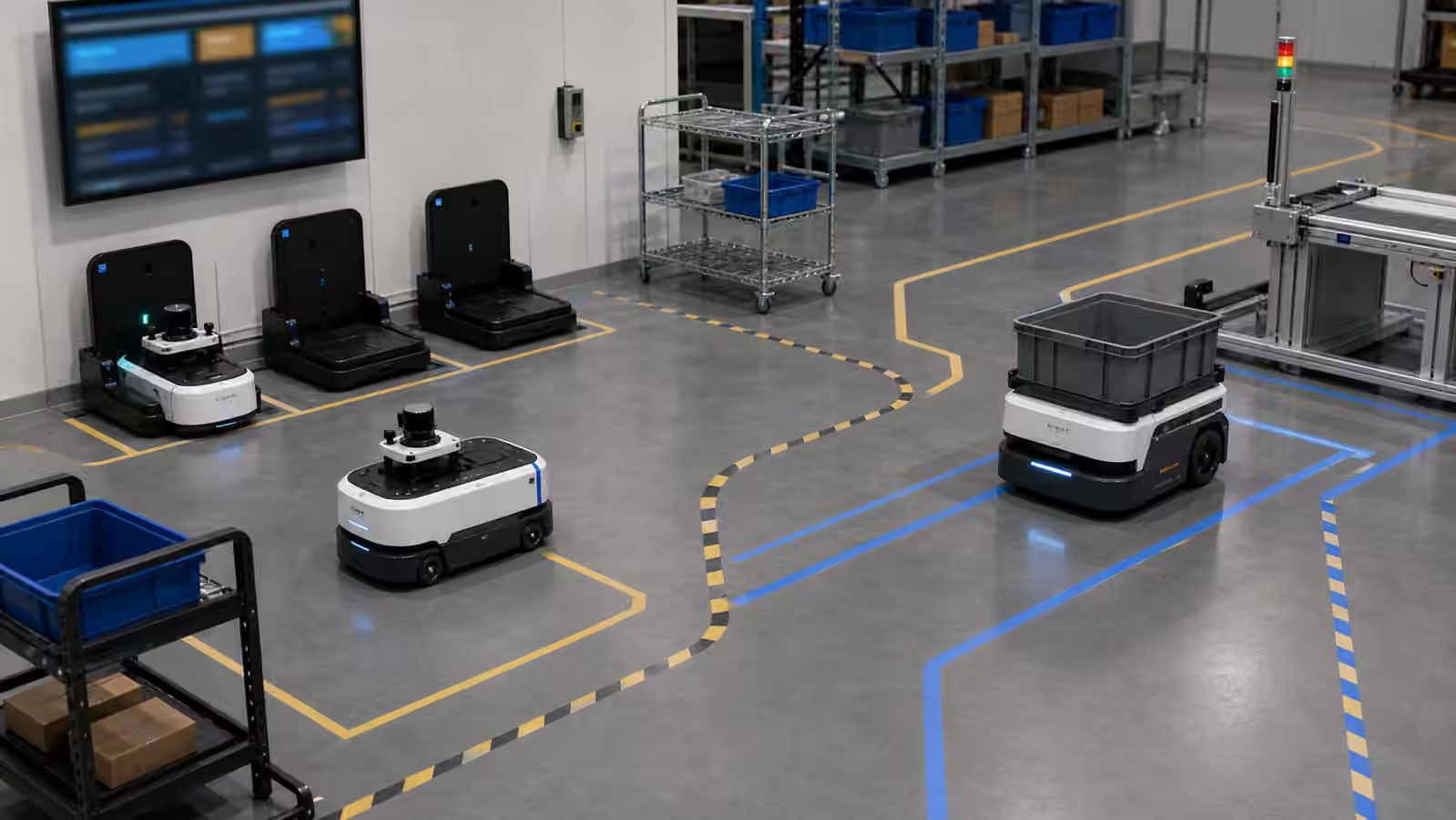
Robot maps come in different forms because robots have different jobs. A mobile base may use an occupancy map that marks free space and obstacles. A warehouse fleet may use a route graph with permitted lanes, docking areas, pickup zones, traffic rules, and human crossing points. A robot arm in a workcell may use a task frame that says where fixtures, bins, cameras, and tools sit. A home robot may build a loose room map that helps it return to a charger and remember where floor hazards often appear.
None of these maps is the truth. Each is a useful simplification. A wall may be stable, but a pallet is not. A painted lane may be clear during commissioning and blocked during a shift. A charger may be represented as a docking pose, but the robot still has to approach it with real wheels, real battery state, and real floor friction. A map becomes valuable when it preserves the details that matter for the robot’s task and leaves out details that would only add noise.
This is why mapping choices should follow the work. A robot that only patrols open corridors does not need the same map as a picking robot that must stop precisely beside shelves. A forklift-scale system cares about turn radius, blind corners, and protected zones. A small inspection robot may care more about traversable gaps, slopes, and repeatable viewpoints. Better mapping does not mean storing everything. It means storing the right structure for the motion that follows.
Localization Is A Continuing Estimate
Localization is the robot’s estimate of its own pose, usually position and orientation within some frame. The estimate is never finished. Every wheel turn, camera frame, lidar scan, IMU reading, detected landmark, and map comparison can change the belief. A useful robot is constantly asking whether its current belief still explains what it is sensing.
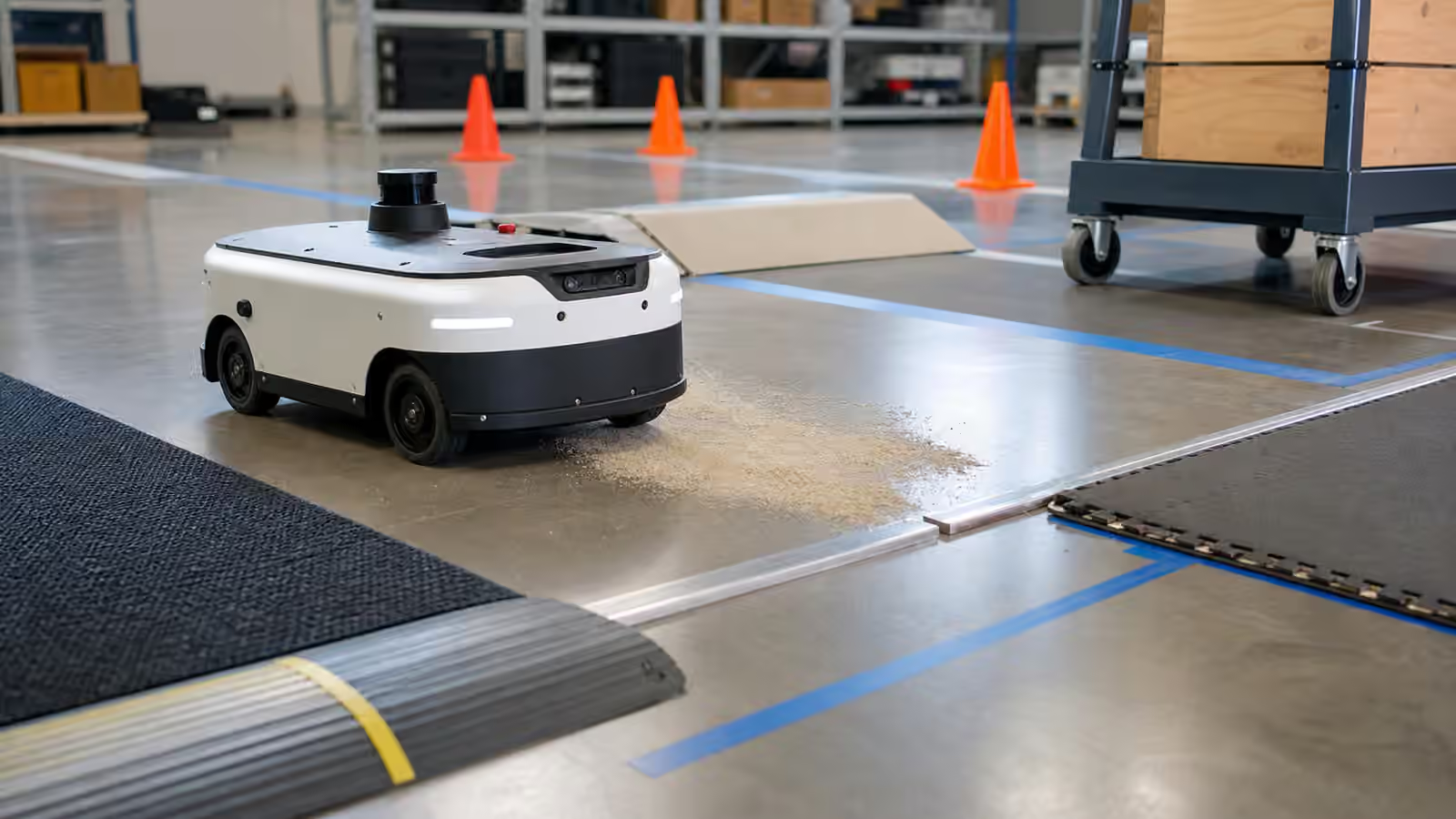
Wheel odometry gives a first clue. If the wheels turn a certain amount, the robot can estimate how far it moved. That estimate is cheap and continuous, but it drifts. Wheels slip. Tire diameter changes with wear. A turn on polished concrete may not match a turn on rubber flooring. A robot crossing a threshold may bounce just enough to make odometry less trustworthy.
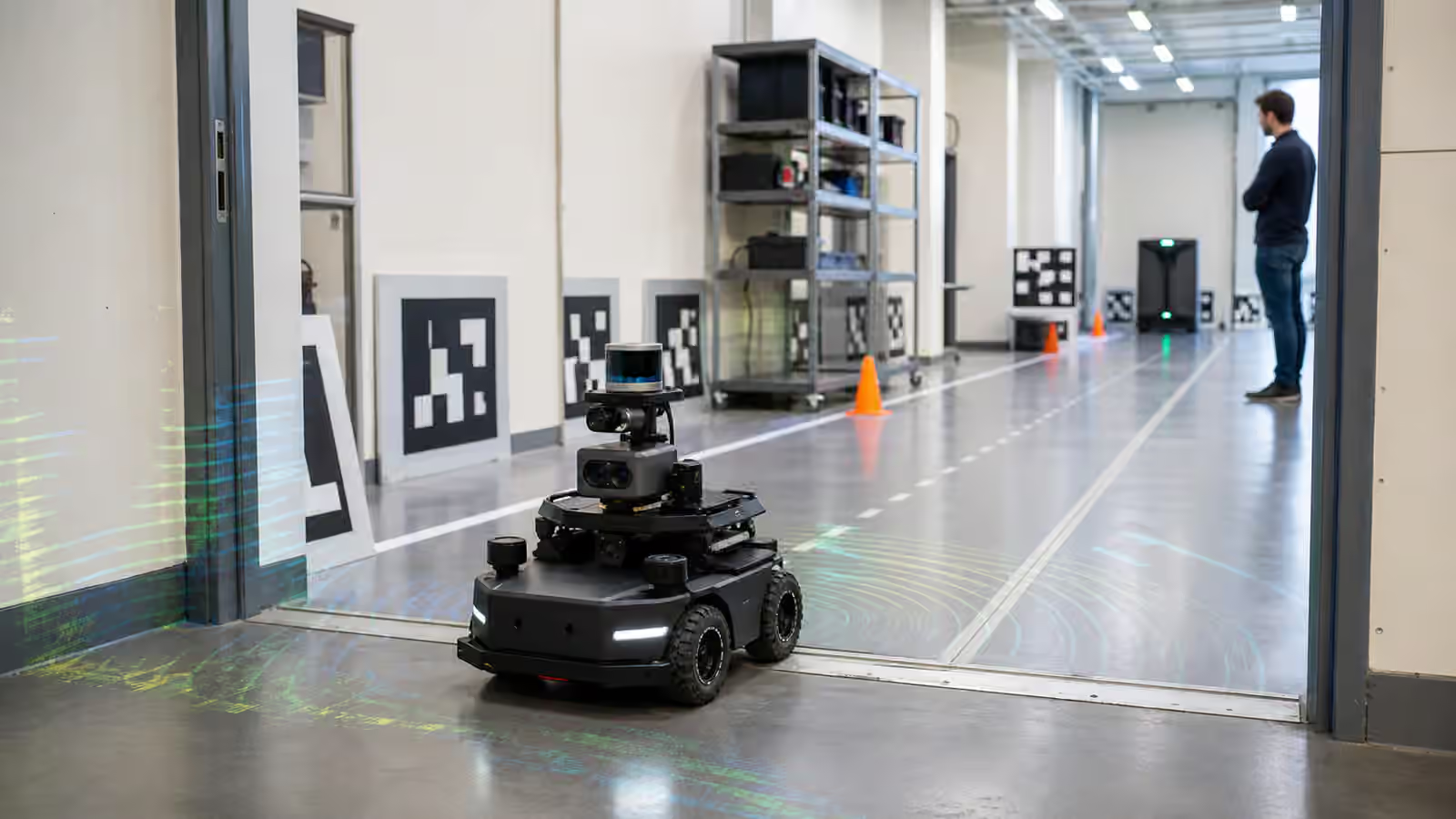
Sensors correct that drift. Lidar can compare a scan against known walls and columns. Cameras can recognize visual features, markers, or room geometry. Depth sensors can help distinguish open space from nearby surfaces. An IMU can help with short-term motion. Each signal has weaknesses. Glass may fool lidar. Repeating shelves can confuse visual matching. Low texture can starve a camera. A crowded aisle can hide the stable features the robot expected to see.
The robot therefore carries uncertainty, not certainty. It may believe it is near a dock with high confidence, or it may believe it is somewhere along a similar-looking aisle with low confidence. That uncertainty should shape behavior. A robot that is not sure where it is should slow down, widen margins, seek a landmark, ask for help, or stop in a safe place. The dangerous failure is not being uncertain. The dangerous failure is acting as if uncertainty does not exist.
Drift Is Ordinary Physics
Drift is not a bug that disappears after one clever algorithm. It is ordinary physics accumulating over time. A robot starts with a pose estimate, moves, senses, corrects, and moves again. If corrections are weak or misleading, small errors grow. A few centimeters may not matter in an open hallway. The same few centimeters can ruin docking, shelf approach, elevator entry, or a handoff to a person.
The scale of drift depends on the job. An autonomous mobile robot carrying totes may tolerate loose position in the middle of an aisle but need tighter alignment at pickup and dropoff stations. A cleaning robot may accept broad room coverage but still need reliable charging. A robot guiding a manipulator to a work surface needs the base, arm, camera, and task frame to agree closely enough that the arm is not correcting for a mobile base mistake.
This is where mapping connects with Robot Calibration and Alignment . A perfect map cannot rescue a robot whose sensors are mounted differently than the software believes. A well-calibrated sensor stack cannot rescue a stale map of a changed site. Geometry is shared across the whole machine. When one part drifts, the rest of the system starts paying interest on the error.
Drift also changes the meaning of a successful demo. A robot may navigate cleanly for one short route after being placed carefully at the start. The better question is how it behaves after hours of motion, partial occlusion, interrupted tasks, battery changes, human detours, and repeated docking attempts. A localization system earns trust when it can lose a little confidence, recover it, and explain when it cannot.
Landmarks Need Governance
Many deployments use landmarks to make localization more reliable. A landmark may be a fiducial marker, a reflective target, a unique shelf face, a charger pattern, a ceiling feature, a doorway geometry, or a known column. The robot uses landmarks as anchors. When it sees one, it can reduce uncertainty and align its belief with the map.
Landmarks sound like a shortcut, but they become part of the site. A marker that is taped to a wall can peel. A sign can be covered by a cart. A charger target can be scratched. A visual feature can change when a shelf is rebuilt. A door that was usually open can become usually closed. If the robot depends on a landmark, the deployment depends on keeping that landmark valid.
This is a governance problem as much as a perception problem. Someone has to know which markers matter, where they are, who may move them, and what happens after renovation, cleaning, seasonal layout changes, or maintenance. A robot can be technically sound and still fail because a site treated localization aids as decorative stickers.
The same discipline applies to natural landmarks. If a robot localizes against wall geometry and permanent shelving, the map should distinguish stable structure from temporary clutter. If a facility moves whole rows, changes route barriers, or swaps docking areas, localization should not be expected to absorb the change quietly. The map has become a contract between the robot and the building, and contracts need change control.
Dynamic Spaces Break Tidy Assumptions
Robots rarely operate in empty maps. People walk through the scene. Pallets appear where yesterday there was free space. Doors open and close. Chairs move. Carts park near chargers. Forklifts interrupt routes. Pets lie in hallways. A robot that treats every observed obstacle as a permanent wall will corrupt its map. A robot that treats every obstacle as temporary may ignore a real change to the environment.
The practical solution is layered belief. Some parts of the world are expected to be stable. Some are expected to move. Some are uncertain until seen repeatedly. A good system can keep a long-term map while maintaining a short-term local view for immediate motion. It can route around a temporary cart without deciding that the building has grown a new wall. It can notice repeated blockage without pretending the original plan still works.
This layered view is especially important in shared environments. A robot should not ask people to maintain a stage set. It should expect ordinary motion and clutter within the limits of the deployment. At the same time, the site should not expect magic. Robot Site Readiness matters because the environment can either help localization or constantly sabotage it. Clear routes, protected chargers, stable landmarks, controlled layout changes, and sensible storage habits all reduce the amount of uncertainty the robot must carry.
Relocalization Is Part Of The Product
Every mobile robot eventually loses confidence. It may be pushed, lifted, paused during service, blocked by a crowd, rebooted away from its dock, or driven through a scene that no longer matches the map. Relocalization is the process of finding itself again.
This process should be designed as user experience, not hidden engineering plumbing. If the robot needs to scan, it should do so in a way that does not surprise people nearby. If it needs to return to a known landmark, the route should be safe and obvious. If it needs operator help, the request should be specific enough that a person can act without guessing. “Place robot near charger facing aisle” is more useful than a vague localization error.
Relocalization is also a safety boundary. A robot that cannot confidently place itself in the map should not continue as if nothing happened. It may still be able to stop, signal, accept remote assistance, or move slowly under constrained supervision. It should not charge through a route whose protected zones, speed limits, and docking poses depend on a pose estimate it no longer trusts.
This connects directly to Robot Failure Recovery . Recovery is not only about clearing a fault. It is about deciding whether the robot has enough evidence to return to service. Localization evidence is often central to that decision. If the map changed, the robot may need remapping. If the robot was bumped, it may need a known pose. If the sensors are dirty, it may need maintenance before any software recovery makes sense.
Shared Maps Make Fleets More Powerful And More Fragile
One robot can learn from its own route. A fleet can share map updates, blocked areas, charger status, traffic constraints, and local discoveries. That shared memory is one reason fleets become useful. A robot that finds an obstruction can help another robot avoid wasting time on the same path.
Shared maps also spread mistakes. A bad update can affect every robot. A temporary obstacle can become a fleet-wide detour if the system does not classify it well. A map edit made for one shift can disrupt another shift. A charger moved for maintenance can create confusion if the fleet manager, site staff, and robots do not agree on the change.
Robot Fleet Management therefore depends on map operations. Versioning, approval, rollback, staged deployment, and route validation sound like software release habits because they are. A map is executable infrastructure for a robot fleet. Changing it can change where machines move, how close they pass to people, how they queue, how they dock, and how work gets scheduled.
The quiet deployments usually have clear map ownership. Operators know how to report blocked zones. Technicians know how to validate charger changes. Engineers can compare behavior before and after a map update. The fleet does not treat every local observation as a permanent truth, and the site does not treat map changes as casual decoration.
Good Map Tests Look Boring
Mapping and localization should be tested in the conditions where the robot will actually work. The tests do not need to be theatrical. A robot should start from its dock, drive normal routes, pass similar-looking areas, handle ordinary people and carts, approach workstations, relocalize after a pause, and return to charge. It should do this across the parts of the day that change lighting, traffic, and clutter.
The useful record is not only whether the robot arrived. It is how confident it was, where uncertainty grew, where it slowed, which landmarks mattered, whether it chose safe behavior when confused, and how often human help was needed. Robot Data Collection gives those tests memory. Without logs, a localization problem becomes an anecdote about the robot getting lost. With logs, it becomes a specific disagreement between map, sensors, motion, and site conditions.
Good tests also include map aging. A robot that works on commissioning day may struggle after shelves move, markers wear, wheels age, software changes, or people learn new habits around it. The map should be checked after meaningful physical change, not only after software change. If a building is part of the robot’s operating system, then building changes are system changes.
Knowing Where You Are Is A Form Of Humility
Mapping and localization are easy to underestimate because people solve them so casually. We recognize rooms, recover from wrong turns, and walk around moved furniture without naming the computation. Robots have to make that competence explicit. They have to attach measurements to coordinates, decide which features are stable, carry uncertainty, update maps carefully, and stop when the evidence is not good enough.
That humility is useful. A robot that knows the limits of its own location estimate is easier to trust than one that moves with false confidence. It can slow down before precision docking, ask for help after being moved, reject a stale map, and preserve a record of what confused it. The goal is not a robot that never gets lost. The goal is a robot whose map, sensors, behavior, and recovery process make getting lost less mysterious and less costly.
Physical AI becomes more practical when the machine and the site share a reliable sense of place. The robot needs a map that reflects the work. The site needs habits that preserve the map. The operators need recovery paths when the map and the world disagree. When those pieces are treated as part of the same system, navigation starts to look less like a trick and more like ordinary infrastructure.