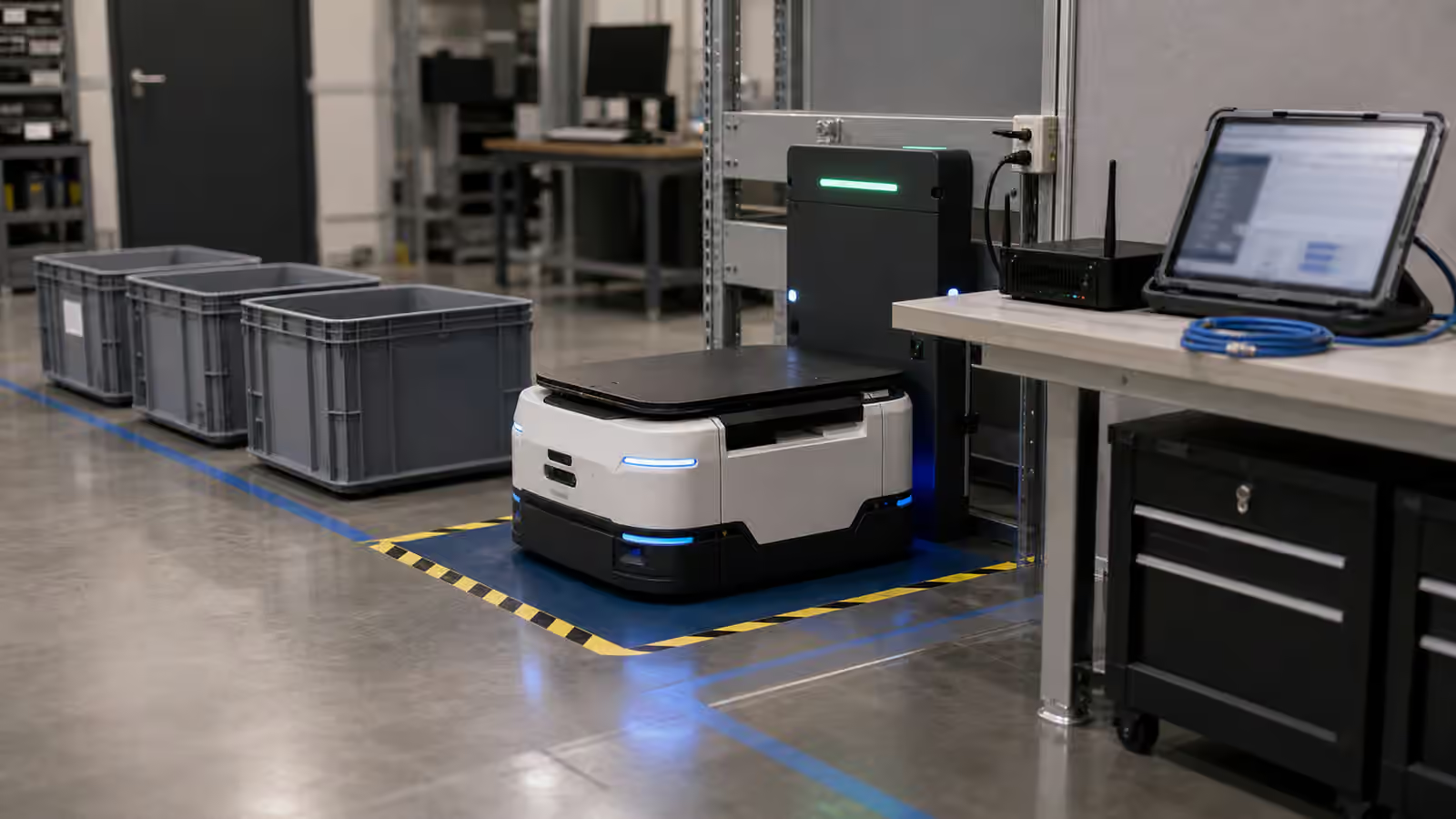
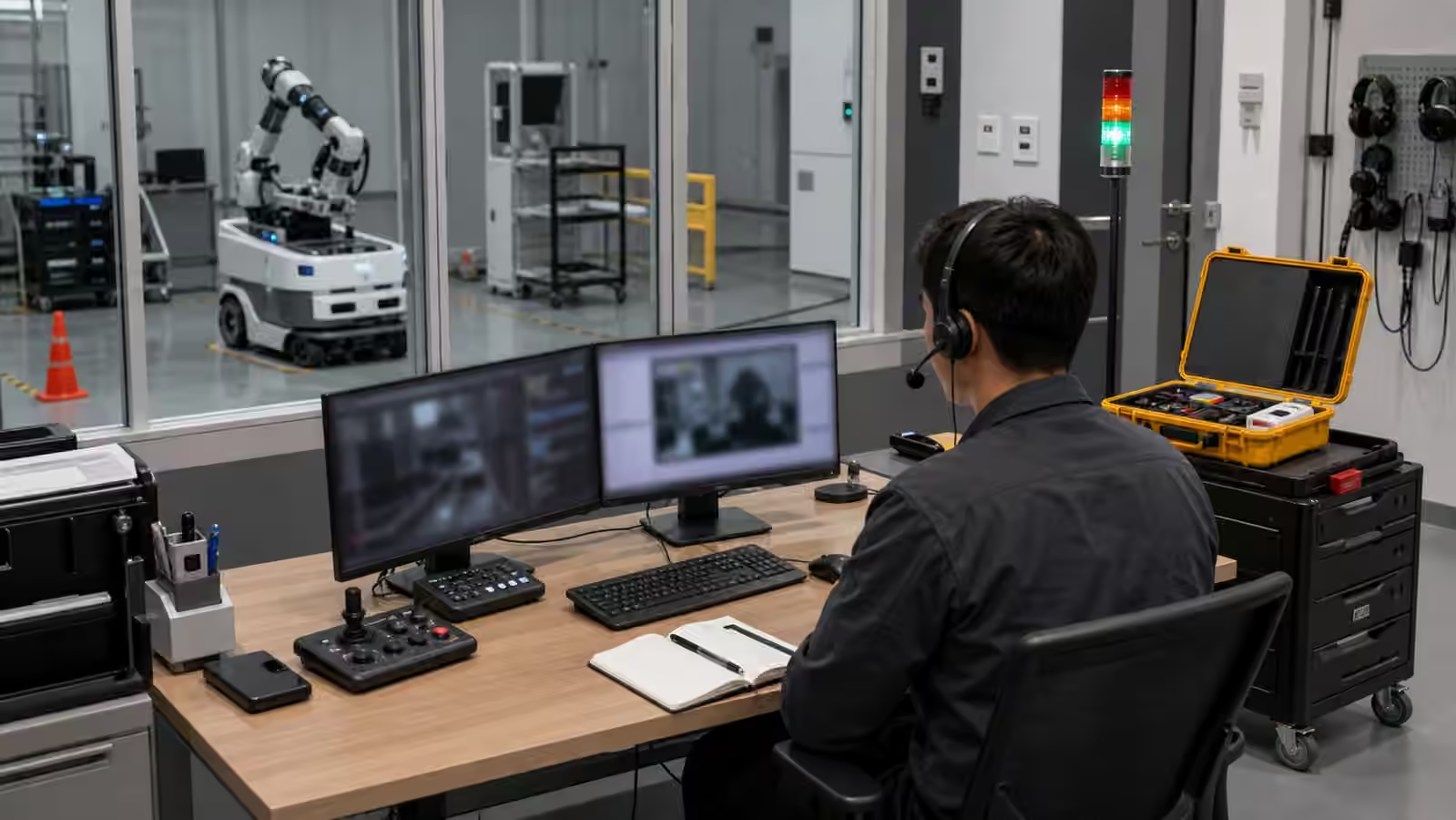
A robot deployment should not be planned only up to the first successful shift.
Robots age, move between tasks, receive updates, lose vendor support, gather logs, wear through parts, outgrow their first workflow, and sometimes need to be retired. A site that plans only for installation inherits a set of later questions under pressure. Who owns the data on the robot? Which parts can be reused? What happens to the batteries? Can the robot be redeployed to a simpler task? When is repair no longer sensible? Who decides that a machine is no longer allowed near people or production work?
Lifecycle planning sounds administrative, but it is part of engineering discipline. Physical AI is hardware, software, data, maintenance, training, safety, and operations inside one body. The end of a robot’s first job touches all of those layers. A responsible plan keeps useful machines in service where they still make sense and retires them without turning old assumptions into new risk.
Deployment Creates A Future Asset
The day a robot arrives, it becomes more than a device. It becomes an asset with a history. It has a configuration, a map, a maintenance record, a battery age, a software lineage, a set of task approvals, and a trail of incidents or interventions. That history can make the robot more valuable because the team understands its behavior. It can also make the robot harder to move because its assumptions are tied to one site.
Robot Maintenance and Reliability covers the upkeep that keeps a machine trustworthy during operation. Lifecycle planning asks what happens as that upkeep accumulates. A wheel module may be replaced. A sensor may be upgraded. A gripper may change. A battery may age. The robot may still be useful, but it is no longer the same machine described in the first commissioning document.
That is why records matter. A robot without a clear maintenance and configuration history is harder to redeploy safely. The team may not know whether an intermittent fault was fixed, whether calibration is current, whether a software update changed behavior, or whether the battery still supports the duty cycle. A good lifecycle plan treats the record as part of the robot, not paperwork outside it.
Refurbishment Is Not A Reset Button
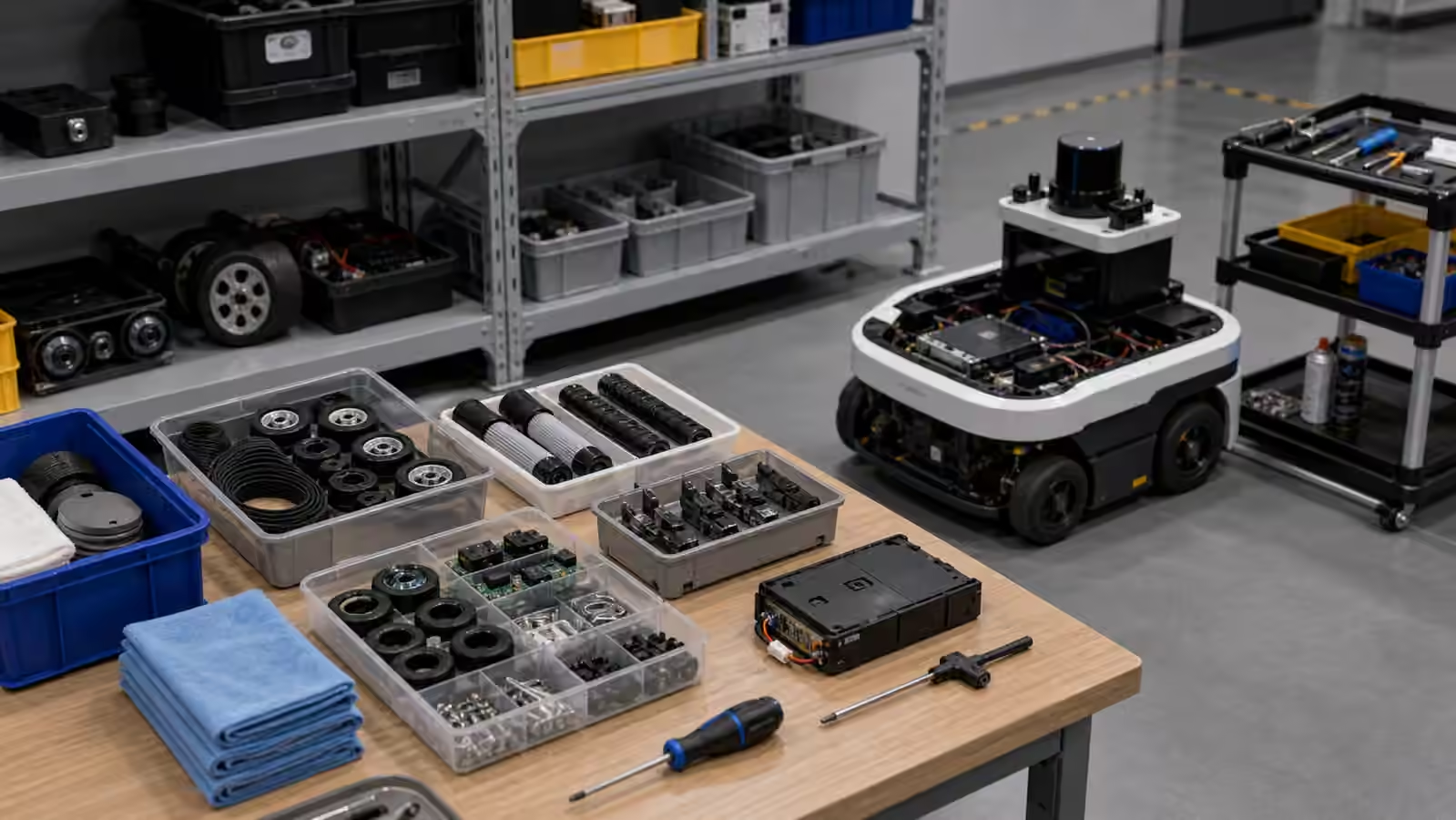
Refurbishment can extend a robot’s useful life. Worn wheels, gripper pads, batteries, covers, sensors, cables, filters, docks, and tool mounts can often be inspected, repaired, or replaced. The robot may return from service looking clean and capable. It still needs validation because refurbishment changes the physical system.
A new wheel material can change traction. A replaced camera can require calibration. A new battery can change charging behavior. A repaired lift may have different noise, stiffness, or alignment. A swapped gripper pad can change contact forces. The robot may be healthier than before, but the task should not assume nothing changed.
Robot Calibration and Alignment is useful after refurbishment because physical relationships need to be checked, not wished back into place. Robot Task Design and Acceptance Tests matters for the same reason. The refurbished robot should prove it can still satisfy the task it is being asked to do, especially if it will work near people or carry payloads.
Refurbishment also creates a parts question. Which components are new, reused, inspected, or unknown? Are spare parts genuine equivalents for the original design? Is the robot still inside the support assumptions of the vendor or internal engineering team? A site does not need elaborate ceremony for every small part, but it should know which changes can affect safety, reliability, or acceptance tests.
Redeployment Needs A New Fit Check
A robot that no longer fits one task may still fit another. A mobile robot that cannot keep up with peak warehouse transport may serve a quieter lab route. A manipulator that struggles with varied objects may handle a narrower fixture. A fleet unit that is too old for long shifts may become a training or test machine. Redeployment can be sensible, but it is not the same as moving furniture.
The new task deserves its own fit check. The route, payload, floor, people, network, dock, map, data policy, maintenance burden, and recovery procedure may all change. Robot Site Readiness should be revisited because the new environment may stress the robot differently from the old one. A robot retired from one site for environmental robustness problems should not be quietly moved to a harsher site because it is available.
Redeployment should also consider social memory. Workers may know the robot as the machine that always got stuck, even if the new task is different and easier. Clear scope matters. A redeployed robot should arrive with a narrow job, an honest explanation of its limits, and a commissioning process that lets the new site build trust from evidence rather than inheritance.
Data Has To Leave Carefully
Robots often store maps, logs, sensor data, credentials, calibration files, task records, operator actions, remote support history, and sometimes images or audio from sensitive places. Decommissioning or redeployment should include a data plan. The robot should not carry one site’s private information into another site, a repair depot, a resale channel, or storage.
Robot Data Collection explains why physical data is valuable. Robot Security and Access Control explains why access matters. Lifecycle planning joins those ideas at the end of a job. The team should know which data must be retained for safety, support, warranty, research, or operational review, and which data should be removed from the machine before it leaves the controlled environment.
This is not legal advice, and requirements vary by organization and setting. The evergreen engineering principle is simpler: know what the robot knows before it moves on. Maps can reveal building layouts. Logs can reveal workflows. Camera records can reveal people. Credentials can open systems that assumed the robot was still under local control. A decommissioning checklist should protect the next owner, the previous site, and the people whose spaces the robot recorded.
Batteries And Stored Energy Deserve Respect
Batteries are lifecycle items, not invisible boxes. They age with cycles, temperature, charging habits, storage, and load. A robot that is retired from active work may still contain enough stored energy to deserve careful handling. A battery that is removed, shipped, stored, refurbished, or recycled should be treated according to the appropriate technical procedures for that chemistry and product family.
Robot Charging and Energy Management covers the working battery layer. Decommissioning adds questions about end-of-service state. Is the battery healthy enough for reuse? Has it shown swelling, heat, unusual voltage behavior, or repeated charging faults? Should it remain installed during storage? Who is qualified to remove it? How are damaged or suspect packs isolated?
The point is not to make every operator a battery specialist. It is to avoid treating batteries as ordinary clutter after the robot stops being exciting. The same caution applies to springs, lifted mechanisms, pneumatic systems, sharp tools, and heavy parts. A robot that is off duty can still have stored energy, pinch points, and service risks.
Spare Parts Can Become Hidden Dependency
Robots can remain mechanically alive after the support ecosystem around them weakens. A vendor may change models. A part may become difficult to source. A software branch may stop receiving updates. A custom fixture may depend on drawings no one can find. A gripper pad may be replaced by a similar-looking material that behaves differently. The robot may still move, but the organization may no longer be able to maintain its original safety and reliability case.
Lifecycle planning should watch for that dependency before it becomes urgent. Critical spares, tooling, calibration aids, software access, documentation, and trained personnel all affect whether a robot can remain in service. A machine with no available safety-rated sensor replacement may need a narrower role or retirement even if most of its hardware still works.
This is where Robot Observability and Field Logs becomes useful after deployment. Field records can show whether an aging component is creating more exceptions, whether maintenance intervals are shortening, or whether a robot is consuming support time out of proportion to its value. Retirement should be based on evidence, not only age or frustration.
Decommissioning Should Be A Controlled Mode
A robot being removed from service should enter a controlled state. It should be taken out of task assignment, blocked from receiving normal jobs, disconnected or limited appropriately, inspected for stored energy and physical hazards, documented, and marked clearly for its next state. That next state may be storage, refurbishment, redeployment, parts recovery, return to vendor, resale, recycling, or disposal according to the organization’s process.
The important idea is that decommissioning is a mode, not an accident. A robot parked in a corner with old credentials, unknown battery state, stale maps, and ambiguous ownership is not retired in any meaningful sense. It is a future support problem waiting for someone to rediscover it.
Robot Operator Interfaces can support this by making service and retirement states visible. A machine that is not cleared for work should not look like a paused worker waiting for its next task. Fleet systems should know the difference between offline for maintenance, offline for storage, and removed from service. People near the robot should not have to guess.
End Of Life Feeds Back Into Design
The end of a robot’s first life can teach the next design. Which parts wore faster than expected? Which data was hard to remove? Which procedures were unclear? Which components could be reused? Which materials complicated recycling or repair? Which support tools were still available when the robot aged? Which field logs made retirement decisions easier?
These lessons belong upstream. A robot that is easier to inspect, repair, wipe, refurbish, and responsibly retire is easier to own. A deployment that plans for lifecycle from the beginning is less likely to discover at the end that the machine has become a bundle of unknowns.
Physical AI does not end at autonomy. It continues through maintenance, support, reuse, and retirement. A robot earns trust not only by acting well in its first task, but by leaving that task cleanly when the work changes. The best lifecycle plan is quiet because it prevents drama: the data is handled, the batteries are respected, the parts are known, the records are clear, and the machine either finds a fitting next job or leaves service without taking old assumptions with it.