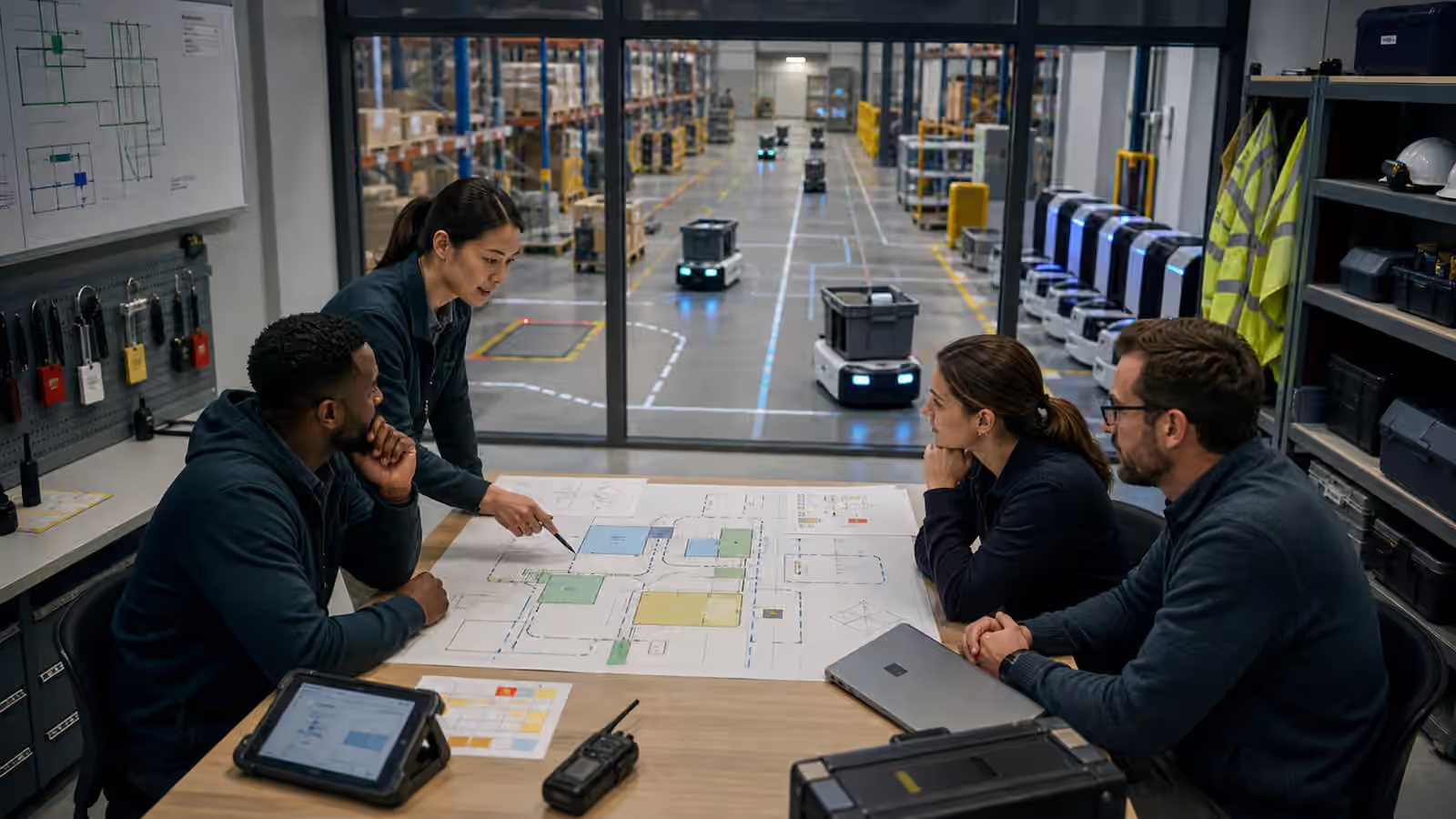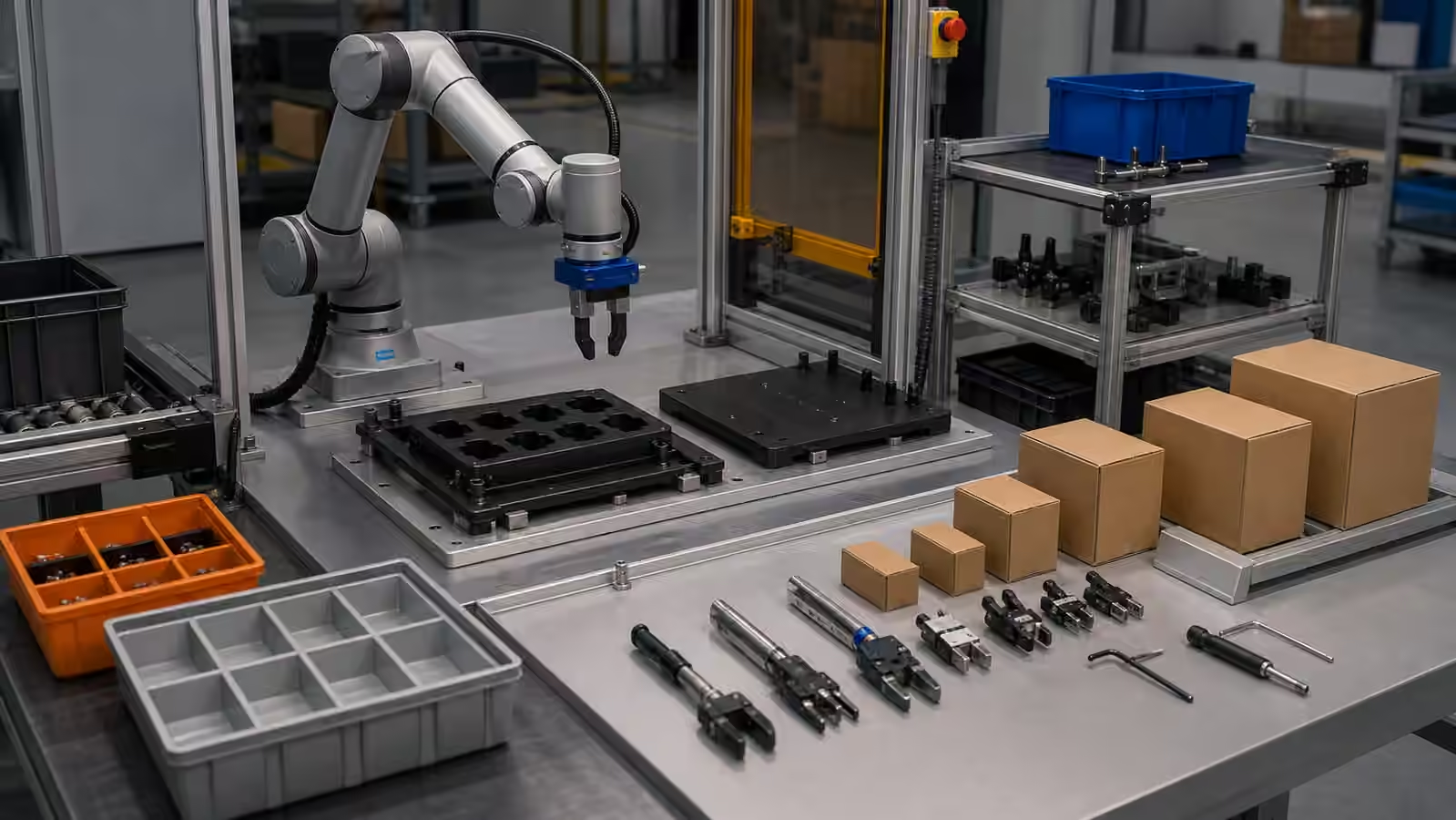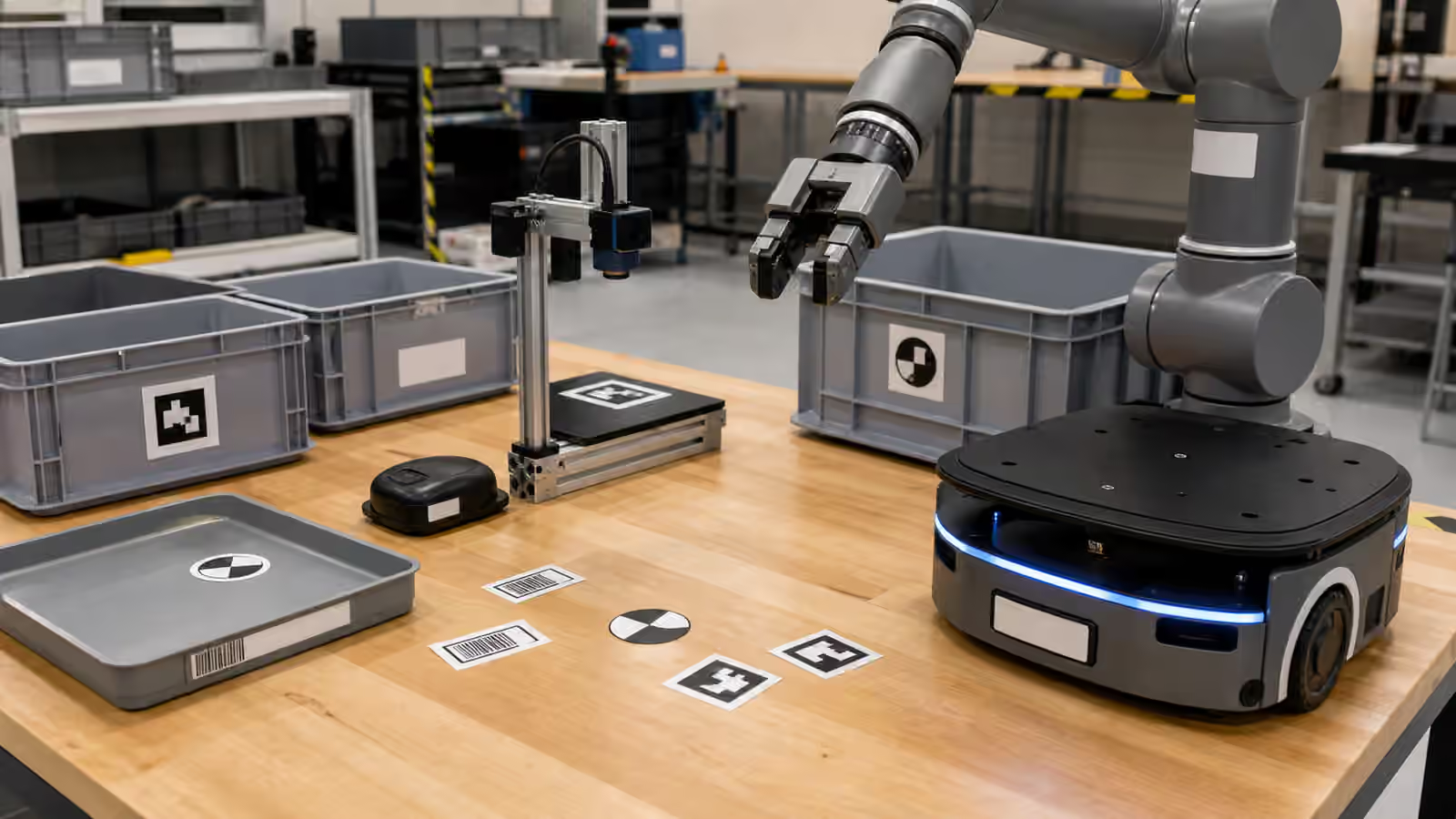
A robot can move through space and still be lost if the world around it has no names.
People work comfortably with informal identity. A worker knows this cart belongs to packing, that gray tote is for returns, the left shelf is the one used on night shift, and the scratched tray should not be trusted. A robot needs those meanings translated into a physical and digital system it can perceive, verify, and report. Labels, tags, markers, barcodes, fiducials, shelf names, cart IDs, tray versions, and object records are not clerical details. They are how physical AI connects the scene in front of its sensors to the operational truth behind the task.
This guide sits close to Robot Systems Integration because identifiers are where integration becomes physical. An API can say that job 1847 requires tote A to move to station B, but the robot still has to recognize the tote, trust the station, and prove that it handled the right thing. The label strategy is one of the quiet decisions that makes that possible.
Identity Is Not The Same As Appearance
Robots often begin by seeing appearance. A camera sees a gray bin. A depth sensor sees a rectangular volume. A model sees an object class. That is useful, but appearance rarely carries enough authority for operations. Two totes can look identical while belonging to different orders. Two carts can have the same shape but different destinations. Two trays can share dimensions while one is a revised fixture and the other is no longer approved for robot handling.
Physical identifiers add a second layer. They tell the robot that this thing is not merely a bin-shaped object, but a particular bin, in a particular state, connected to a record. That does not mean every robot needs to read every code directly. A fixed scanner, human confirmation, station sensor, or upstream system can sometimes provide the identity. The important part is that the task has a reliable way to bind physical object, digital record, and robot action.
Robot Task Design and Acceptance Tests explains why start states and end states need evidence. Identifiers are often the evidence. A robot that places the right-looking part in the wrong tray has not completed the task. A mobile robot that reaches the right area with the wrong tote has created a problem that may not be visible until later.
Labels Live In The Robot’s World
A label that works for a person may fail for a robot. It may be placed where a camera cannot see it from the robot’s approach direction. It may be printed on glossy material that flares under workcell lighting. It may curl at the edge, collect dust, sit on a curved surface, or wear away where hands grip the tote. It may be readable only when the object is empty, even though the robot usually sees it when loaded.
Good label placement starts from the actual task geometry. Where is the robot when it needs identity? Is the object moving or still? Is the label visible before the gripper commits to contact? Can the label be seen after a human loads the tray? Does a cart handle block the code at the docking angle? Does a shelf tag remain visible when inventory is full? These are perception questions and workflow questions at the same time.
Robot Object Presentation and Staging belongs here because presentation is not only about grasps. It is also about making identity easy to confirm. A tray that presents a stable edge, a visible tag, and a repeatable orientation can simplify the entire task. A label hidden behind ordinary clutter can turn a simple move into a guessing problem.
Durability Is A Data Quality Problem
Physical identifiers degrade. Labels fade. Adhesive loosens. Tags are cleaned with the wrong solvent. Barcodes scratch. Printed markers are covered by tape. A tote comes back from another site with a replacement label in a slightly different place. A technician swaps a fixture plate but forgets to move the ID. These changes look mundane, yet they can damage the robot’s data quality before anyone changes software.
The robot may respond in misleading ways. It may reject good work because it cannot read a label. It may accept risky work because a damaged marker is misread. It may route an item based on stale identity. It may create logs that say the task failed for perception when the actual failure was a maintenance issue on a label surface.
This is why identifier care belongs in maintenance. Robot Maintenance and Reliability usually brings wheels, batteries, sensors, and grippers to mind. Labels and markers deserve a place in that habit when they participate in robot decisions. A readable tag can be as important to uptime as a clean lens.
Markers Should Not Become Magic
Fiducial markers and machine-readable codes can make robotics work easier. They can help with pose, identity, docking, calibration, or fixture recognition. The risk is that teams start treating them as magic patches over unclear tasks. A marker can tell a robot where something is, but it cannot prove that the task is well designed. It can simplify alignment, but it cannot make an unstable object safe to grasp. It can identify a station, but it cannot decide whether the station is ready.
Markers should be used where they reduce real ambiguity. A docking target can help a mobile robot align more repeatably. A fixture marker can tell an arm which tray version is installed. A shelf location code can help bind a map position to an inventory location. These are good uses because the marker supports a defined relationship between place, object, and action.
The weaker use is decoration that hides uncertainty. If a robot requires markers on every object because it cannot otherwise handle the object class, that may still be acceptable for a bounded deployment, but the limitation should be named. The marker is then part of the Robot Operational Design Domain , not an invisible convenience.
Naming Has To Match The Floor
The digital name of an object should make sense to the people who handle it. If the robot calls a location “zone C-17” while workers call it “the returns bench,” the integration may be technically correct but operationally brittle. People will improvise translations, and those translations will fail during pressure.
Names also need enough precision. A station name that covers three physical sides of a table can create handoff confusion. A cart ID that moves between carts because someone reused a printed label can make history unreliable. A tray version that exists only in a spreadsheet can leave technicians guessing which physical part is installed.
The best naming systems are plain and boring. They connect the map, the robot interface, the maintenance record, the operations system, and the floor language without forcing people to memorize private codes. Robot Operator Interfaces becomes easier when the same names appear in the same way across alerts, task records, and local signage.
Identity Creates Accountability
Identifiers make robot work auditable. They allow a log to say which tote was moved, which fixture was installed, which dock was used, which map version applied, and which station accepted the result. Without that record, performance becomes anecdotal. A team may know that “the robot moved the wrong thing once,” but not which label failed, which sensor saw it, or which workflow allowed it.
Robot Observability and Field Logs depends on this accountability. A useful event record ties the robot’s belief to the physical evidence available at the time. If the robot scanned a label, the log should make that visible. If it inferred identity from location because the label was missing, that should be visible too. The difference matters during incident review, maintenance, and improvement.
Accountability also protects people. A clear identity system can show that a worker loaded the correct tray, the robot accepted the correct job, and the error came from a later routing mismatch. It can also show that an informal workaround broke the chain of identity. The goal is not blame. The goal is to keep the operation from learning the wrong lesson.
Privacy And Misuse Still Matter
Labels can reveal more than the task requires. A home robot, service robot, or workplace robot may encounter names, locations, inventory, customer records, room meanings, or schedule patterns. A physical ID strategy should not assume every code is harmless because it is small. When a robot records identifiers, those identifiers may become part of logs, images, support bundles, and analytics.
Robot Privacy and Data Governance gives the broader frame. For labels, the practical question is what the robot needs to know and what it merely happens to see. A robot may need to know that a cart is authorized for a route without preserving every human-readable detail around it. A support team may need a fixture version without seeing unrelated inventory codes in the background.
Good physical IDs make the world legible without turning the whole site into exposed data. They bind action to evidence, reduce guessing, and help people support the machine after the moment has passed. The quiet test is simple: when the robot says it did the job, can the site prove which physical thing it touched, where it was, and why the robot believed it was right?