A robot test is only as useful as the evidence behind it.
The machine says it reached the pose. The camera says it saw the object. The gripper says it closed. The planner says the path was clear. The log says the task succeeded. Those statements may be true inside the robot’s own model and still miss the physical truth. The part may be slightly misaligned. The contact force may be too high. The delivery may be late. The object may have moved during the pick. The robot may have completed the task only because a person corrected the scene between attempts.
Ground truth is the independent evidence used to decide what actually happened. In robotics, it is difficult because the truth is physical. It may involve position, time, force, contact, object identity, route clearance, human intervention, payload state, damage, or a subtle difference between “placed” and “almost placed.” Good measurement turns robot claims into testable deployment evidence.
The Robot’s Belief Is Not Enough
Robots need internal state. They estimate pose, confidence, battery, load, map position, object labels, task progress, and fault conditions. Those estimates are essential for autonomy, but they should not be the only judge of success. A robot that logs “delivered” may have stopped a few inches outside the handoff zone. A manipulator that logs “grasp complete” may have crushed soft packaging. A perception system that logs a correct label may have seen the object only after a person rotated it.
Robot Sensor Fusion and Uncertainty explains why the robot’s view of the world is uncertain. Ground truth measurement gives the team a way to compare that view with external evidence. The goal is not to distrust every internal signal. The goal is to know when the robot’s confidence tracks reality and when it becomes a persuasive fiction.
This distinction matters during procurement, pilots, and model changes. A vendor may report success rates from the robot’s logs. A site may count completed jobs from the workflow system. An engineer may count trial outcomes from a notebook. Without a shared measurement method, those numbers can describe different realities. The robot did something, the system recorded something, and the physical task may or may not have been completed acceptably.
Measurement Starts With The Task Boundary
Before measuring, the team has to decide what outcome matters. A mobile robot carrying sealed totes may be judged by arrival at a zone, payload integrity, timing, and whether it blocked people. A robot arm loading a fixture may be judged by part seating, orientation, force, cycle time, and the absence of collision. A home robot tidying a room may be judged by object class, placement surface, privacy boundaries, and recovery behavior.
Robot Task Design and Acceptance Tests is the foundation. Ground truth should match the acceptance test, not whatever is easiest to count. If the real requirement is “place the part within a tolerance and avoid scratching it,” then measuring only whether the gripper opened is too weak. If the requirement is “navigate without disrupting pedestrian flow,” then measuring only arrival time is incomplete.
The task boundary should also name the start state. Many robot claims look stronger because the start state is curated. Objects are centered, routes are clear, batteries are full, maps are fresh, and humans stand where they were told. There is nothing wrong with controlled tests, but the control should be stated. Ground truth includes the conditions under which the result was produced.
Fixtures Can Make Truth Repeatable
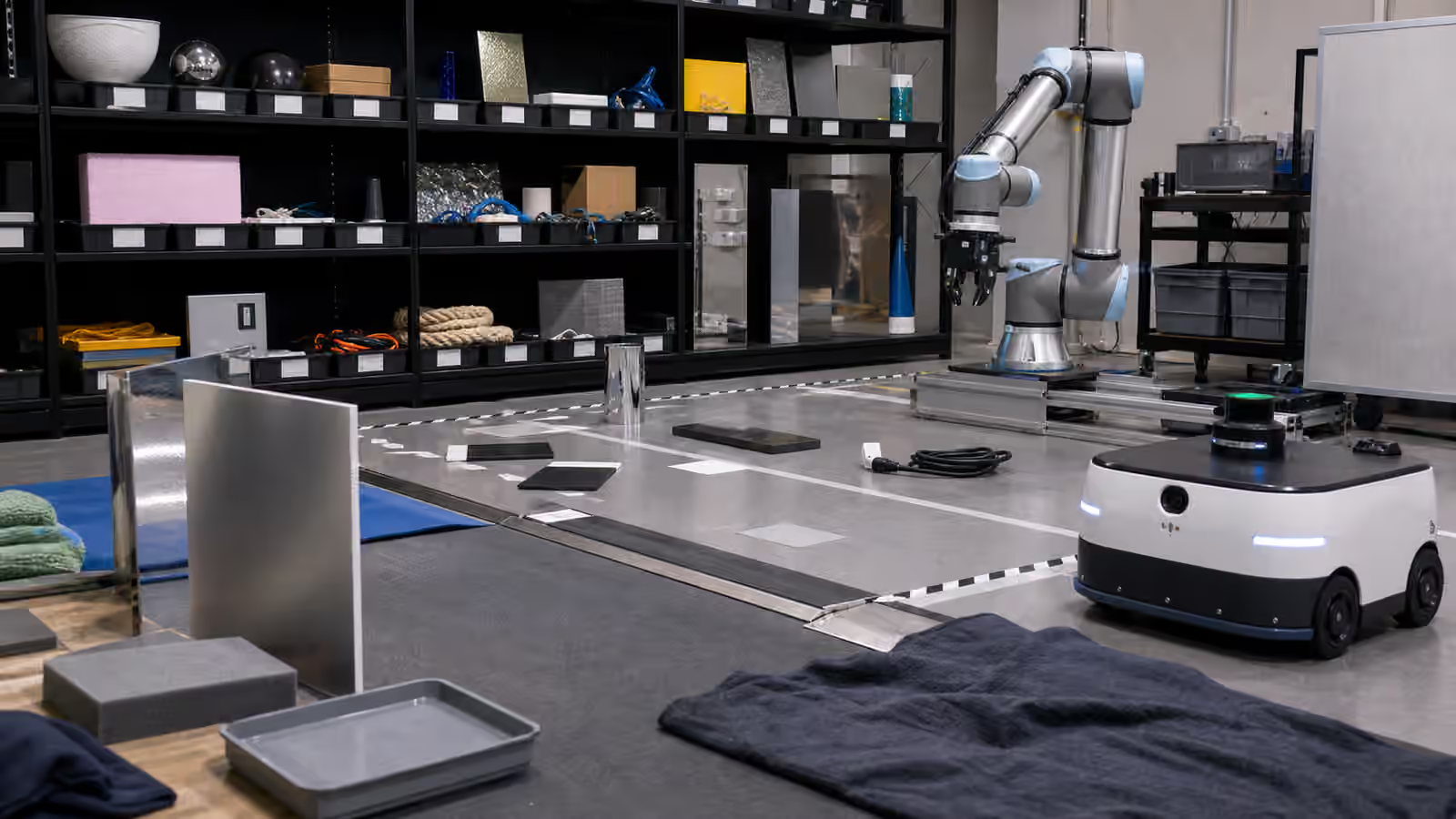
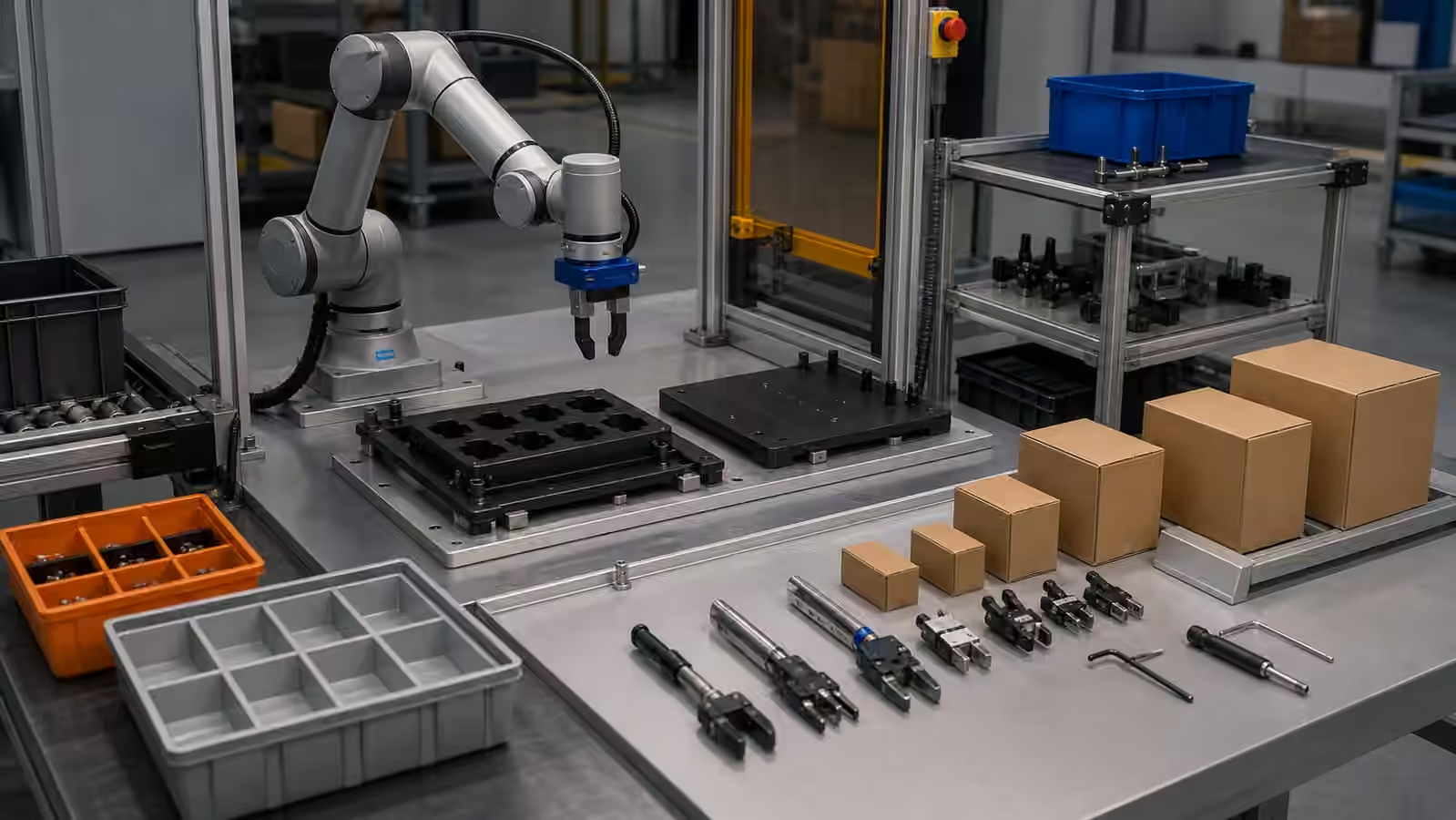
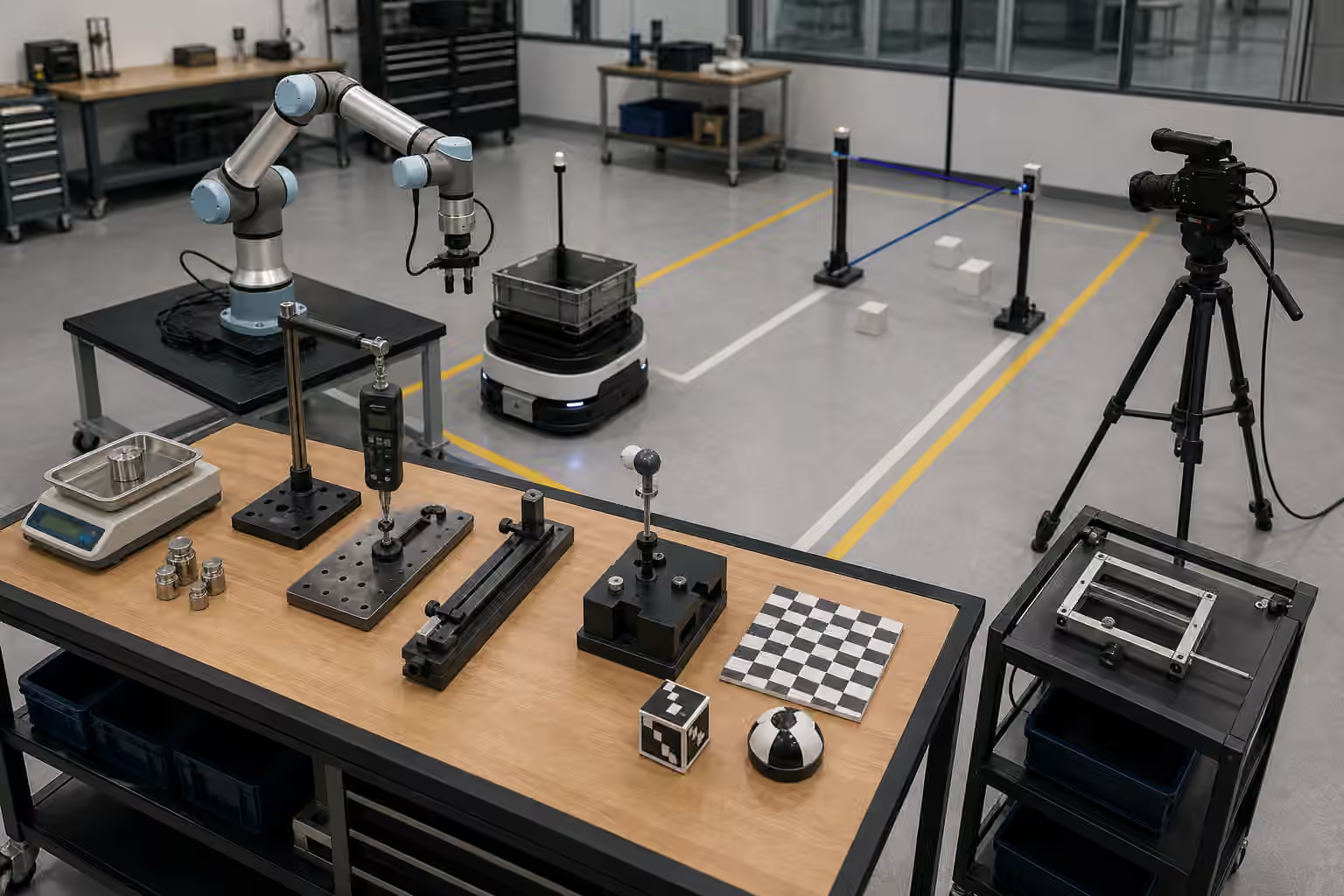
A good measurement fixture reduces argument. It seats an object in a known way, exposes reference points, constrains variation, or records whether the robot placed something correctly. A fixture can be as simple as a marked tray, a gauge block, a reference object, a scale, a force sensor, a timing gate, or an external camera view. It can also be a more elaborate test lane with known obstacles and route margins.
Robot Calibration and Alignment covers the geometry behind reliable motion. Measurement fixtures extend that geometry into evaluation. They give the team a stable outside reference. If the robot says the gripper reached a pose, the fixture can show whether the object was actually seated. If the mobile base says it localized correctly, an external reference can show whether it drifted near a threshold or dock.
Fixtures should not flatter the robot unless the deployment will use the same fixtures. A perfect lab jig may be useful for development and still too narrow for field claims. The measurement setup should be honest about what it proves. It may prove a component ability, a controlled task, or a site-ready workflow. Those are different levels of evidence.
Timing Is Physical Evidence
Robotics timing is more than software timestamps. The task may depend on when the robot starts moving, when it reaches a crossing, when a human handoff becomes available, when a gripper contacts an object, when remote support intervenes, or how long recovery takes. If timing is measured only inside one subsystem, the team may miss the delay that matters to operations.
Robot Queueing and Dispatch Priorities shows how timing affects fleet work. Ground truth measurement asks where the clock starts and stops. Does a delivery begin when the job is assigned, when the robot leaves the dock, when the payload is confirmed, or when the human finishes loading? Does a recovery time include the operator walking to the robot, or only the reset command? The answer changes whether the robot is improving the workflow or merely moving its waiting time into someone else’s day.
External timing can be simple. A camera view, event marker, timing gate, or synchronized log can reveal where delays accumulate. The important habit is consistency. A test that changes its timing definition midstream becomes hard to compare, especially after software updates, route changes, or new operator training.
Force And Contact Need Their Own Truth
Physical AI often touches the world. Contact turns success into more than position. A robot may reach the right place with too much force, hold an object too tightly, push a fixture out of alignment, scrape a surface, or miss a tactile event that a person would feel immediately. If the test cannot measure contact, it may certify a motion that is not acceptable in real work.
Robot Contact Sensing and Force Control explains how robots learn to touch carefully. Ground truth asks how that care is verified. A force gauge, instrumented fixture, sacrificial test part, pressure-sensitive film, or inspection protocol can reveal whether contact is inside the acceptable range. The choice depends on the task, but the principle is the same: do not let “the robot completed the move” stand in for “the physical interaction was acceptable.”
This is especially important with flexible, fragile, sharp, dirty, hot, or human-adjacent objects. The acceptable outcome may include not damaging packaging, not contaminating a surface, not spilling contents, not pinching a cable, and not forcing a person to intervene near motion. Measurement should reflect the thing the site actually values.
Annotation Should Preserve Context
Many robot tests produce video, logs, sensor records, and annotations. Those records are only useful if they preserve the context needed to interpret the outcome. A label that says “success” may hide whether the object was centered, the route was empty, remote help was used, lighting was controlled, or a person reset the scene. A label that says “failure” may hide whether the robot behaved correctly by refusing an unsafe condition.
Robot Dataset Curation and Annotation belongs here because evaluation data often becomes training data or vendor evidence. The annotation should distinguish task failure, safe refusal, site problem, object variation, human intervention, sensor issue, and measurement uncertainty. Those distinctions prevent the team from teaching the wrong lesson to the next model or making a purchase decision from a blurred result.
Context also protects honest robots. A robot that refuses an unsupported object may look worse in a naive success count than a robot that guesses. If the operating domain says refusal is correct, the measurement system should record it as such. Robot Operational Design Domains gives the boundary; ground truth records what happened at that boundary.
Measurement Should Survive Change
Robots change through software updates, calibration, hardware revisions, maps, fixtures, routes, and site habits. A measurement method that exists only in one engineer’s memory will not survive those changes. The lab needs repeatable tests, preserved fixtures, clear definitions, and records that make old and new results comparable.
Robot Software Updates and Change Control is the operational partner. When a model changes, the team should know which measurement set can reveal regressions. When a site changes a route, the team should know which timing and clearance evidence must be refreshed. When a gripper is replaced, the team should know which force and placement tests confirm that the physical behavior still fits the task.
Ground truth does not need to be elaborate to be useful. It needs to be independent enough, specific enough, and repeatable enough to answer the deployment question. A marked tray and a camera may be enough for one task. A force fixture and synchronized logs may be necessary for another. The measure should match the risk and the claim.
Evidence Is The Difference Between A Story And A Result
Robotics produces compelling stories because motion is persuasive. A robot picks, drives, waits, docks, or hands off, and the eye wants to believe the task is solved. Ground truth slows the story down long enough to ask what the robot actually did, under which conditions, with what help, and with what physical outcome.
That discipline is not cynical. It is how useful robots improve. Good measurement shows where the system is strong, where the site needs adjustment, where the model is overconfident, where the operator workflow adds delay, and where a claim is ready to expand. The lab that measures well is not less ambitious. It is less easily fooled by its own machines.