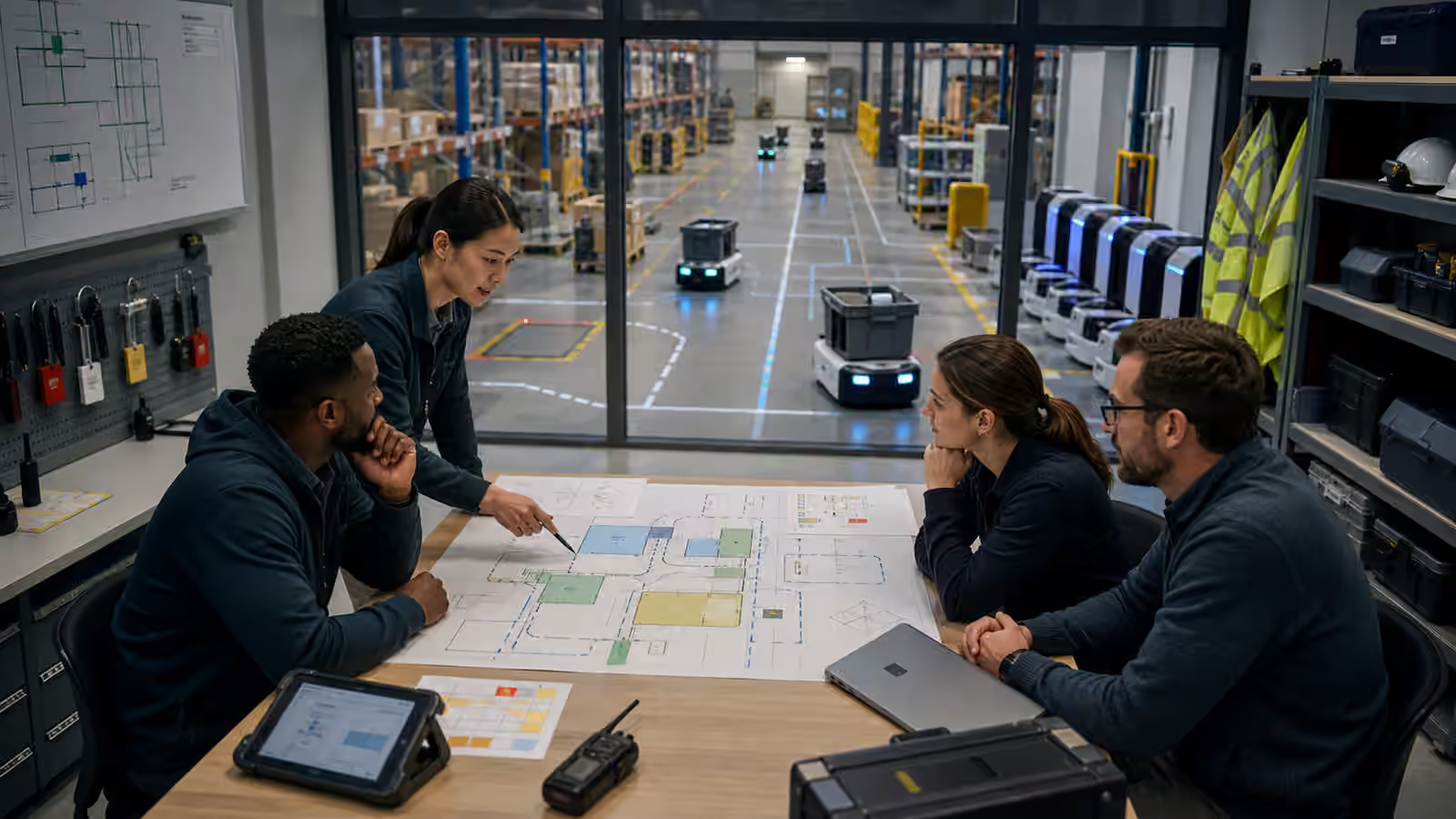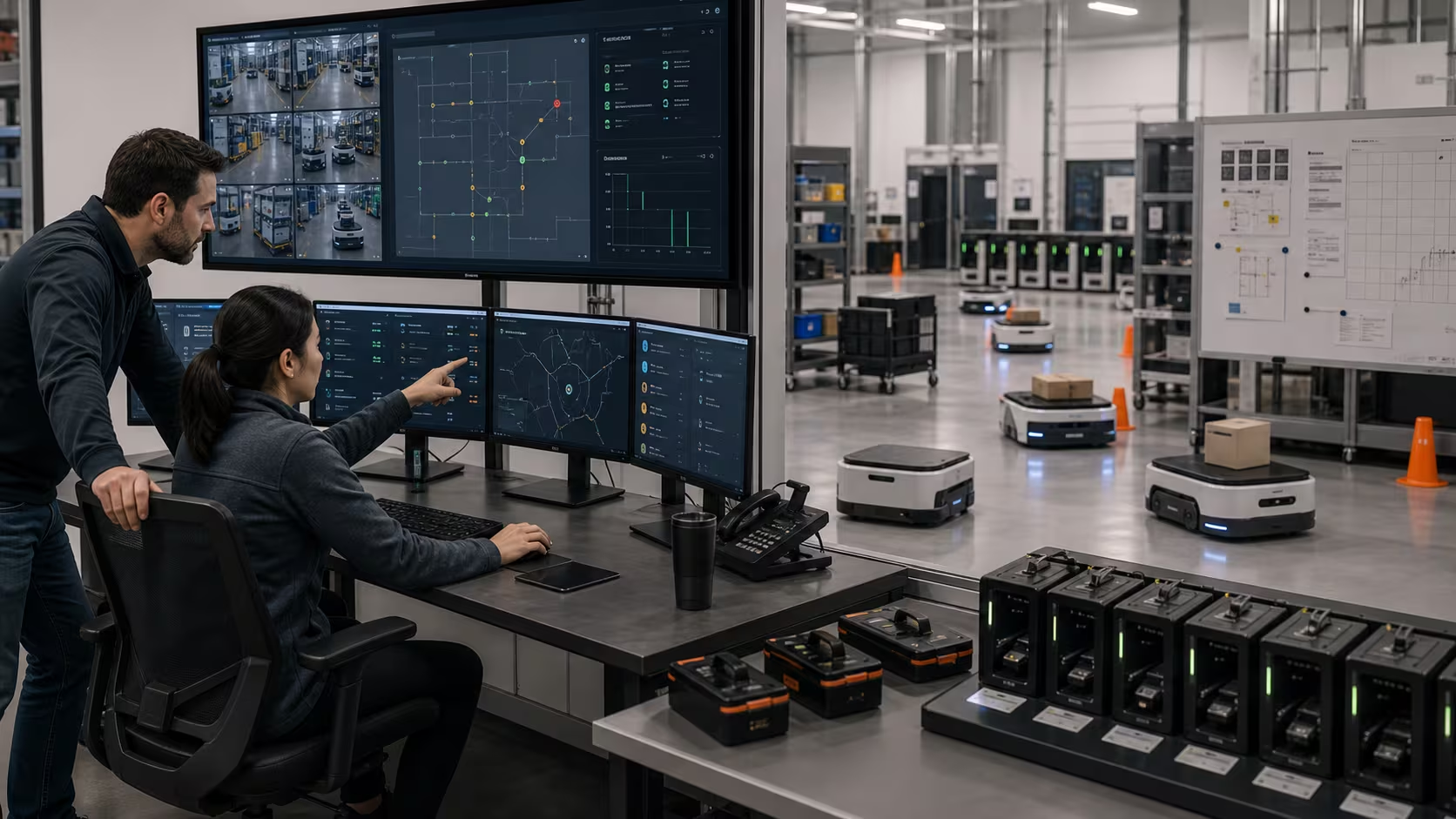
One robot can be treated like a machine. Ten robots become a system. The difference is not just arithmetic. A single robot can be watched, forgiven, rescued, charged, updated, and explained by people who know its quirks. A fleet has to share space, routes, chargers, tasks, maps, maintenance windows, safety rules, and human patience.
Fleet management is the work of making many robots useful without letting them become a crowd of expensive interruptions. It is where robotics stops being a demo and becomes operations. The robots may be autonomous mobile robots in a warehouse, delivery robots in a hospital, inspection robots in an industrial site, lab robots moving samples, cleaning robots in a large building, or agricultural robots working across fields. The details change, but the management problem appears quickly.
The first robot asks, “Can this task be automated?” The fleet asks, “Can this automation live inside a real organization?”
Dispatch is a promise about priorities
When multiple robots share work, someone or something has to decide what happens next. Which robot takes which task? Which task is urgent? Which route is available? Which robot has enough battery? Which robot is close enough? Which robot is due for maintenance? Which request can wait without hurting the operation?
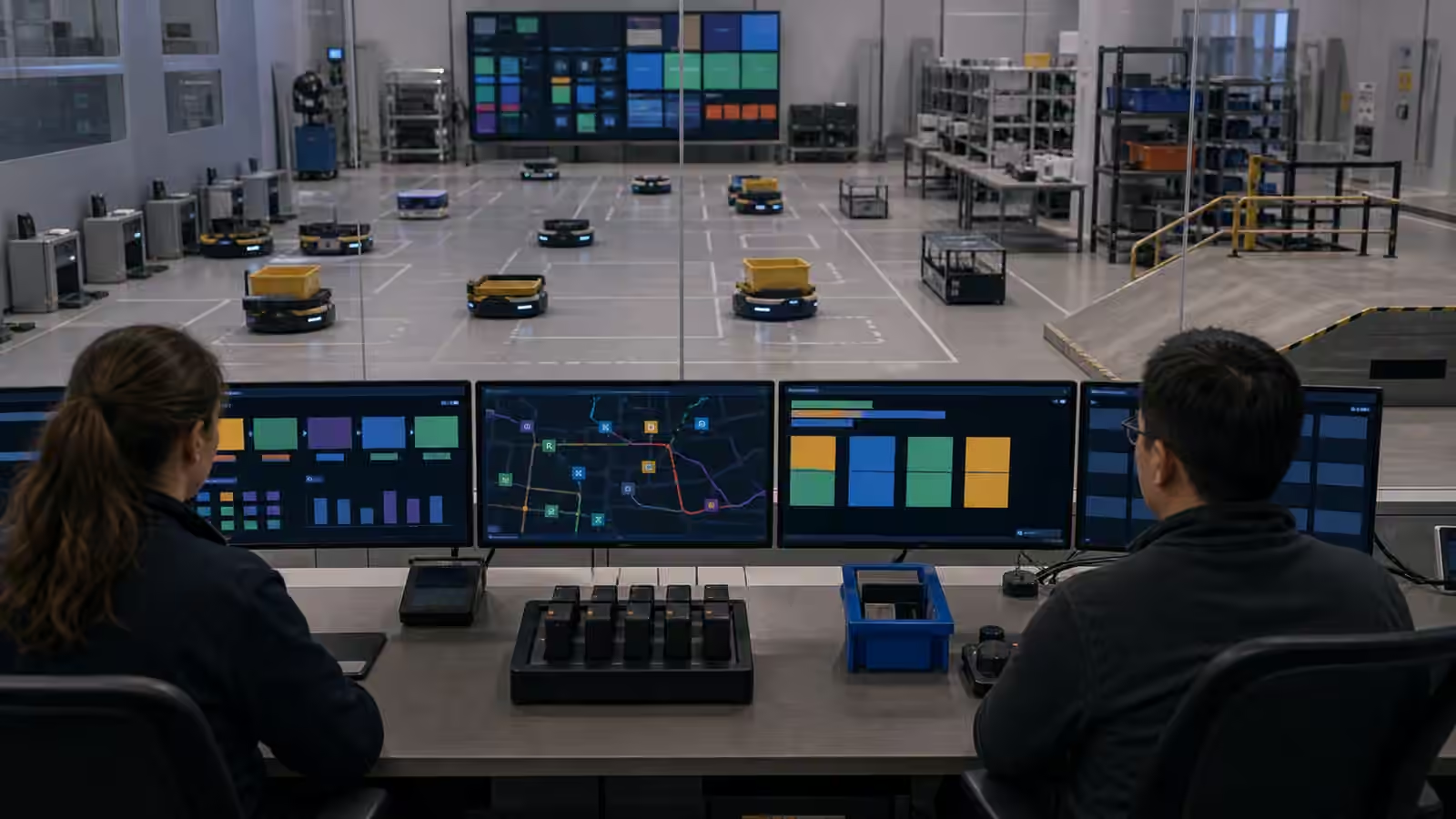
That decision layer is dispatch. It may be simple at first, but it becomes political in the small practical sense. A warehouse team may care about outbound orders more than internal moves. A hospital may prioritize medication delivery over linen. A lab may have time-sensitive samples. A cleaning fleet may need to avoid public areas during peak hours. Dispatch rules quietly encode the values of the workplace.
Bad dispatch makes robots look worse than they are. A robot may be technically capable but sent at the wrong time, along a crowded path, with too little battery, or to a task that creates more human workaround than value. Good dispatch makes the fleet feel calmer. The right robot appears at the right time often enough that people stop treating it as a special event.
Charging is part of the workflow
Charging looks like a support activity until it limits the day. A robot that cannot get to a charger, has to wait behind other robots, charges too slowly, or leaves the dock before it has enough energy will shape the whole operation. Fleet management has to treat energy as a shared resource.
This is not only a battery question. It is a space question. Where are the chargers? Do robots block aisles while docking? Can people still move safely around them? Are charging areas protected from clutter? Does the schedule leave enough reserve for urgent work? What happens during a power outage? Who notices when a charger fails?
The larger the fleet, the more charging becomes choreography. Some robots work while others recharge. Some tasks are delayed because a robot needs energy. Some sites use opportunity charging during natural pauses. Some need battery swaps. The fleet manager is really managing time, space, and attention, with electricity as the visible constraint.
Maps are living documents
Many robots depend on maps, routes, zones, or environment models. The problem is that buildings are not static. Pallets move. Doors close. Construction appears. Seasonal displays take over corridors. A warehouse changes slotting. A hospital changes a ward layout. A lab adds equipment. A home moves a chair, which is small for a person and large for a robot.
Fleet operations need a way to keep maps honest. If every robot discovers the same blocked route separately, the fleet is wasting time. If a temporary obstacle becomes a permanent change, the map should learn. If a route is technically passable but socially annoying because it sends robots through a busy human area, the route should be reconsidered.
The map is not merely geometry. It is a record of how work should flow. It includes no-go zones, preferred routes, speed areas, waiting places, charging locations, handoff points, and sometimes privacy boundaries. Treating maps as living operational documents helps the fleet fit the site instead of constantly surprising it.
People need predictable behavior
A robot fleet succeeds or fails partly through human trust. People working around robots need to know what the machines are likely to do. Will the robot stop if someone steps in front of it? Will it wait politely or reroute? Does it make sound? Does it signal turns? Does it block a doorway? Can a person move it safely if needed? What does a blinking light mean?
Humans are good at adapting to tools, but they resent tools that behave mysteriously. If the robots pause in strange places, change routes without explanation, or create small delays all day, people may start working around them. They may block them, move tasks back to manual processes, or treat every robot issue as proof the system is not ready.
Predictability does not require the robot to be simple. It requires legible behavior. A fleet with clear signals, sensible routes, and good exception handling will feel more intelligent than a fleet with more advanced autonomy and worse manners.
Maintenance scales differently
One robot can be maintained by memory. A fleet needs records. Which robot has a worn wheel? Which one had a sensor fault twice this week? Which batteries are aging? Which unit took a bump? Which software version is installed? Which robots are safe to return to service?
Robot Maintenance and Reliability covers the machine-level story. Fleet management adds coordination. A robot that is down for maintenance may force dispatch changes. A pattern across multiple robots may reveal a route problem, charger problem, training issue, or design flaw. Spare parts become inventory. Updates become rollout decisions. A bad update across one robot is annoying. A bad update across a fleet can stop the operation.
Good fleet maintenance is boring in the best way. The team knows what is healthy, what is degraded, what is offline, and what needs attention before the shift breaks. The robots stop being mysterious individuals and become managed assets.
Utilization can mislead
Fleet dashboards often show utilization: how much the robots are working. High utilization sounds good, but it can hide trouble. A robot that is always busy may leave no room for urgent tasks, charging, maintenance, or recovery. A fleet that is constantly moving may be compensating for poor task design. A robot may spend time traveling empty because dispatch is inefficient.
The useful question is not whether robots are busy. It is whether they are reducing the right kind of work. Are people walking less? Are orders moving faster? Are nurses spending more time with patients? Are technicians interrupted less? Are errors lower? Is the site safer? Are the robots creating hidden labor for supervisors?
A fleet can look impressive on a dashboard while making daily work more brittle. It can also look underused while providing exactly the right coverage for peak moments. Metrics need interpretation by people who understand the site.
Scaling should be earned
The temptation after a successful pilot is to buy more robots. Sometimes that is right. Sometimes the pilot worked because everyone gave the first robot special attention. Scaling removes the special treatment. The fleet has to work when managers are busy, new staff are hired, equipment is dirty, routes change, and the novelty is gone.
A mature scale-up asks what broke during the pilot and whether the fixes are operational, not heroic. Can ordinary staff recover common faults? Can support handle more units? Can maps be updated without a research project? Can the charging area handle growth? Can the safety case handle more traffic? Can the business case survive maintenance and supervision costs?
Robot fleet management is not glamorous, but it is one of the places where physical AI becomes real. The future will not be made only by more capable robots. It will be made by robots that can share space, energy, tasks, records, and trust with the organizations that use them.
One robot can be a promise. A fleet has to become a habit.