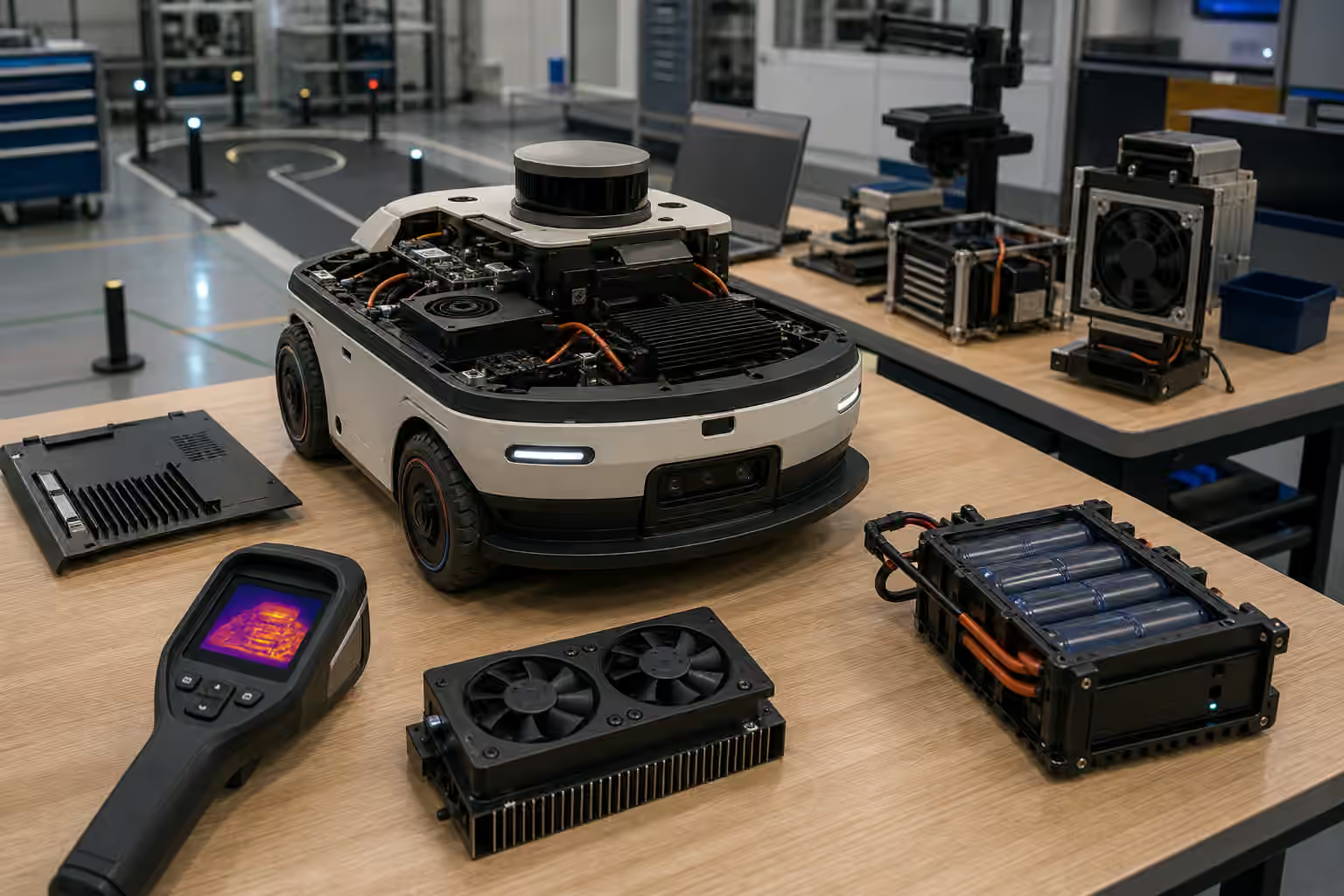
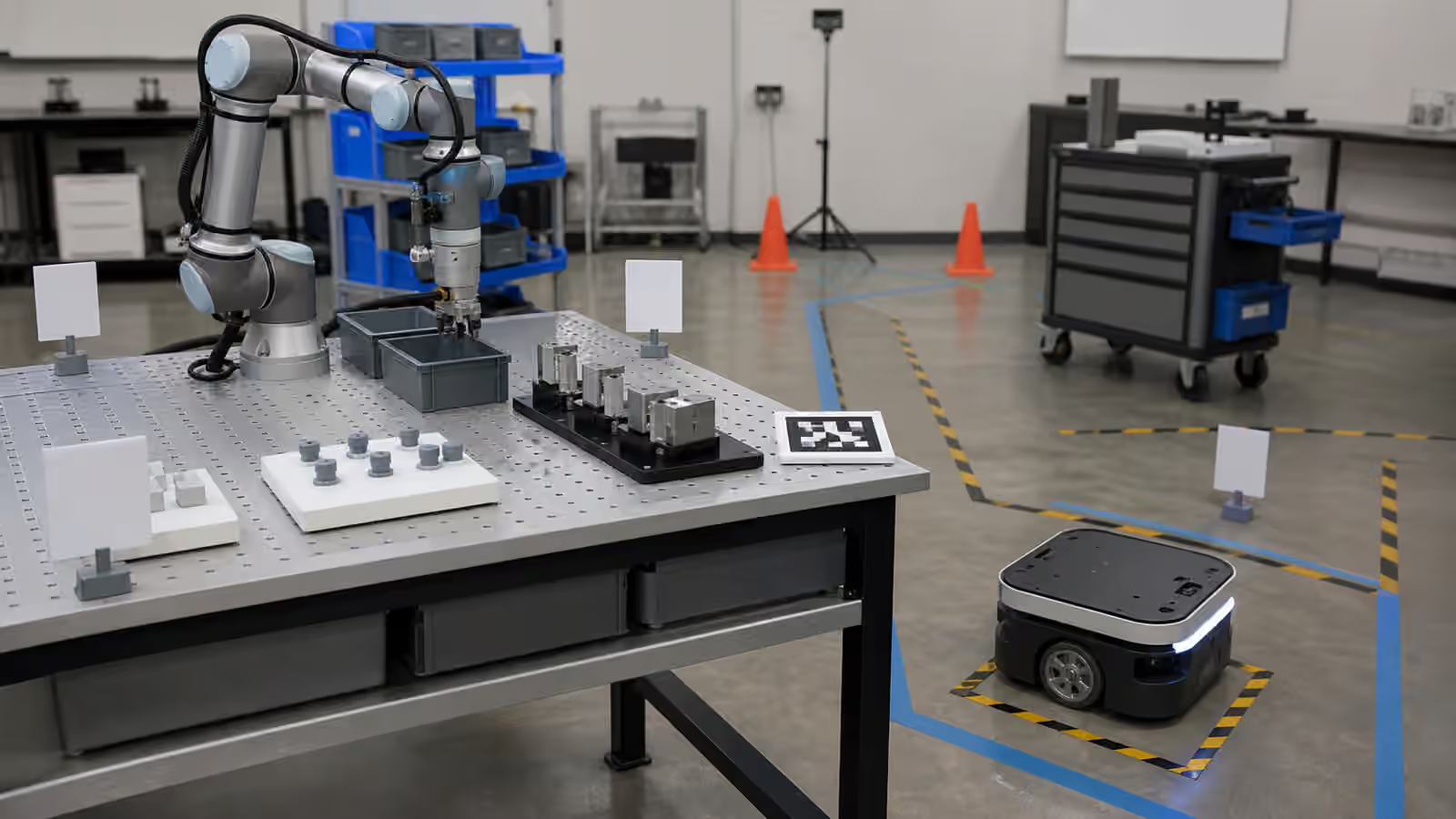
A robot does not meet the real world all at once. It meets the real world through dust on a lens, glare on a floor, a wet mat near receiving, warm air inside an enclosure, a loose cable after service, and a wheel that behaves differently after weeks of fine grit. These details are easy to dismiss when the demo works. They become harder to ignore when the same robot has to run through a shift, a season, a cleaning cycle, or a building that was never designed around robotics.
Environmental robustness is the discipline of asking what the workplace does to the machine before calling the machine autonomous. It is not separate from intelligence. A perception model that works only under friendly light is part of the environmental story. A motor controller that overheats after repeated stops is part of it. A map that survives layout changes but not reflective glass is part of it. Physical AI is always a negotiation between software, hardware, and surroundings.
This guide belongs beside Robot Site Readiness because a building can either protect a robot’s capability envelope or constantly push against it. It also belongs beside Robot Maintenance and Reliability , Robot Perception , and Robot Compute and Connectivity because environment shows up as sensor error, worn parts, thermal margin, network trouble, and confusing field logs. The useful question is not whether the robot worked once in the lab. The useful question is what changes when the place stops being polite.
The Environment Is A Requirement
Robots are often described by their capabilities: carry this payload, navigate this route, pick this object, dock automatically, recognize this scene, run for this many hours. Those claims only mean something inside an environment. A small mobile robot that navigates clean office floors may be the wrong machine for a loading area with concrete dust, floor drains, pallet wrap, and sunlight flashing across polished patches. A manipulator that handles cartons in a dry cell may need different gripper materials, covers, and cleaning rules in a chilled food area. The task and the environment are not two separate specifications. They are one specification.
That is why robustness starts with boundaries. The team should know the surfaces, lighting, temperatures, humidity, debris, cleaning chemicals, floor transitions, vibration, human traffic, and storage habits the robot is expected to tolerate. A vague claim like “works in warehouses” hides too much. One warehouse may be clean, climate controlled, and carefully marked. Another may have dock doors open to rain, forklifts spreading grit, and seasonal overflow that changes traffic patterns every month.
The boundary does not have to be heroic. A robot can be useful inside a narrow envelope if that envelope is honest. Trouble begins when a narrow envelope is sold as general competence. The site then discovers the limits through stoppages, support calls, damaged parts, and frustrated operators. Environmental robustness is partly engineering and partly truth in labeling.
Light Can Change The Robot Without Touching It
Lighting is one of the quietest ways to change a robot. Nothing has moved, no hardware has broken, and the floor looks ordinary to people, but the sensor input can be different enough to shift behavior. Sunlight may wash out a camera. A shiny floor may reflect a ceiling light as a false shape. A glass wall may confuse depth sensing. A dark aisle may turn familiar objects into low-confidence silhouettes. A seasonal shift in sun angle can make a route harder at one hour of the day than another.
Robot Perception in Messy Homes explains this problem in domestic rooms, but the same principle applies in warehouses, labs, hospitals, and factories. Humans adapt to lighting with context and expectation. Robots turn light into measurements. If the measurements change, the rest of the autonomy stack has to absorb the uncertainty.
Robust systems do not assume one perfect lighting condition. They test across the hours and rooms that matter. They record when perception confidence falls. They avoid placing critical markers where glare is predictable. They may combine cameras with lidar, depth, inertial sensing, wheel odometry, tactile cues, or conservative stop behavior. The point is not to remove every difficult visual condition. The point is to notice which conditions change the robot’s decisions and decide whether the task should continue, slow down, ask for help, or stay out of that zone.
Dust And Debris Become Sensor Problems
Dust looks minor until it becomes a layer between the robot and the world. It collects on lenses, lidar windows, charging contacts, cooling vents, wheel treads, fan filters, gripper pads, and exposed connectors. It changes traction, weakens suction, softens edges in camera images, blocks airflow, and turns a clean docking contact into an intermittent electrical problem. Debris does the same thing with more drama. A strip of plastic wrap can tangle a wheel. A shard of pallet wood can raise one side of a base. A loose label can stick to a sensor window.
This is where environmental robustness and maintenance become the same conversation. A robot may be well designed but still need inspection intervals that match the site. A sensor cover that stays clean for weeks in an office may need daily attention near cardboard dust. A wheel that works on sealed concrete may wear differently on rough or gritty floors. A gripper pad that was reliable in the lab may lose friction after oil, powder, or packaging residue builds up.
The robot should help the team see these patterns. Logs that connect stops to place, time, sensor confidence, wheel slip, docking retries, and service events can reveal that a “software issue” is actually a dust zone. A maintenance habit that sounds simple, such as wiping a sensor window or checking wheel tread, becomes part of the robot’s intelligence in practice because it preserves the quality of the inputs the software depends on.
Water, Cleaning, And Ingress
Water is not one problem. It can be a puddle, mist, humidity, condensation, a mop trail, a rain-wet threshold, a washed floor, or a cleaning process that exposes seams and connectors. A robot does not need to be submerged for water to matter. Moisture can change traction, fog optics, corrode contacts, soften labels, affect batteries, and make ordinary floor conditions less predictable.
Cleaning adds another layer. Many workplaces are cleaned on schedules that do not match robot testing. Floors may be wet before a shift. Chemicals may leave films that change wheel grip or sensor reflections. Workers may move docks, chargers, cones, mats, or fixtures to clean beneath them. A robot that runs well during the afternoon pilot may meet a different building after the overnight cleaning crew has finished.
Ingress protection is useful language, but a rating alone does not solve the deployment. The body still needs drain paths, sensible connector placement, service procedures, and rules about when the robot should operate. A mobile robot that should never cross wet floors needs detection, route policy, and operator training. A robot expected to work around washdown or outdoor transitions needs hardware built for that fact, not optimism after purchase.
Robot Safety matters here because water changes consequences. A slippery floor can turn a normal stop into a skid. A wet handoff surface can change object handling. A worker cleaning around a robot may be focused on the floor rather than the machine. Robustness is not only whether the robot survives moisture. It is whether its behavior remains legible and conservative when moisture changes the scene.
Heat, Cold, And Duty Cycle
Temperature changes the robot from the inside. Batteries deliver and accept energy differently across conditions. Motors warm during repeated motion. Gearboxes, belts, seals, tires, and gripper materials change with heat and cold. Compute modules throttle when cooling margin disappears. Fans pull more dust when they work harder. Adhesives, cable jackets, and plastic covers age differently under repeated thermal cycles.
The hard part is that temperature problems often look like something else. A robot that docks poorly late in the day may appear to have a localization issue when the deeper cause is battery sag, wheel behavior, or thermal throttling. A manipulation task that drifts after hours of operation may look like a bad perception estimate when warm mechanics have changed the relationship between command and motion. Robot Actuators and Motion Control covers the movement side of this, but deployment adds time. A short lab run rarely reveals what a long duty cycle does.
Robust testing should include the beginning, middle, and end of work. The first cold start matters. The tenth hour matters. The return from charging matters. The route near a sunny door or cold storage entrance matters if the robot will actually go there. A machine that passes one clean route at room temperature has provided useful evidence, but it has not answered the environmental question.
Vibration And Small Impacts
Robots are full of alignments that seem stable until the body has lived in motion. Cameras, lidar units, antenna mounts, wheel modules, bumpers, grippers, tool changers, covers, and connectors all depend on mechanical relationships staying within tolerance. Vibration and small impacts work patiently against those relationships. A mobile base crossing floor seams all day is doing a durability test. A collaborative arm stopping near a hard fixture is doing one too.
Small shifts can create large symptoms. A camera that moves a few millimeters may degrade object pose estimates. A loose cover may rattle into a sensor field. A connector that intermittently loses contact may create faults that look random. A slightly bent bracket may make calibration pass in one posture and fail in another. Robot Calibration and Alignment explains why geometry matters; environmental robustness asks how the geometry survives being carried through a real site.
Good design makes inspection possible. If a technician cannot easily see whether a sensor window is cracked, a bracket has shifted, a fastener is loose, or a wheel module has collected debris, small environmental damage will hide until it becomes behavior. Good operations make inspection routine. A robot that sounds different, docks differently, or asks for help in one zone more often than another is giving the team environmental evidence.
Testing The Envelope
Environmental testing should not be theater. Sprinkling dust near a robot for a photograph or driving once across a threshold does not prove much. The useful test is tied to the job. If the robot will work in a receiving area, the test should include the floors, light, debris, route changes, dock behavior, human traffic, and cleaning habits that receiving actually produces. If the robot will carry samples in a lab, the test should include narrow aisles, carts, doorways, spill protocols, quiet alerts, and the moments when people are busy with something more important than the robot.
The best tests look a little repetitive because robustness is about repeatability under variation. Run the route at different times. Change the payload within the allowed range. Let ordinary workers interact with the machine. Include realistic stops and recoveries. Record sensor confidence, thermal state, battery behavior, wheel slip, docking retries, intervention count, and anything that needed cleaning or adjustment. Robot Demo Evaluation is useful here because it teaches the habit of asking for the denominator. Environmental claims need the same discipline. How many runs, across which conditions, with which failures counted?
A good environmental test can also narrow the deployment. That is not failure. It may show that the robot should avoid one route during wet cleaning, use a protected dock location, require a different wheel material, add a sensor-cleaning reminder, slow down near glare, or keep a particular task inside a prepared workcell. The goal is not to force the robot through every condition. The goal is to discover which conditions belong inside the product promise and which require a boundary.
Robustness Is How A Robot Becomes Ordinary
The robot that works only under demonstration conditions remains a demonstration machine. The robot that survives the ordinary environment starts to become equipment. That transition is not glamorous. It is made from sealed covers, stable mounts, honest light testing, clean sensor windows, serviceable wheels, thermal margin, conservative wet-floor behavior, records that explain stops, and operators who know when the site has changed.
Environmental robustness does not replace autonomy. It protects autonomy from bad assumptions. A better model can help the robot interpret a difficult scene, but it cannot make a dirty lens clean, turn a slippery floor dry, cool an overheated enclosure, or tighten a bracket after impact. The physical side has to be designed, tested, maintained, and documented with the same seriousness as the software.
When evaluating a robot, ask what the environment is allowed to do to it. Ask what happens after dust, glare, cleaning, heat, vibration, water, and months of ordinary use. Ask which conditions are supported, which are warnings, and which are outside the envelope. The answers will often explain more about the deployment than the smoothest demo ever could.